

Getting found online isn't rocket science, but it does require consistent effort in the right places. If you're running a business and wondering why you're not showing up when people search for what you offer, chances are you're missing one or more of these fundamentals.
Local SEO isn't about gaming the system. It's about making it easy for search engines to understand what you do, where you do it, and why you're worth recommending. Here are five straightforward ways to boost your rankings without needing a PhD in digital marketing.
1. Keep Your NAP Information Consistent Everywhere
NAP stands for Name, Address, and Phone number. Search engines use this information to verify your business is legitimate and trustworthy. When they find conflicting information across different websites, they get confused about which version is correct.
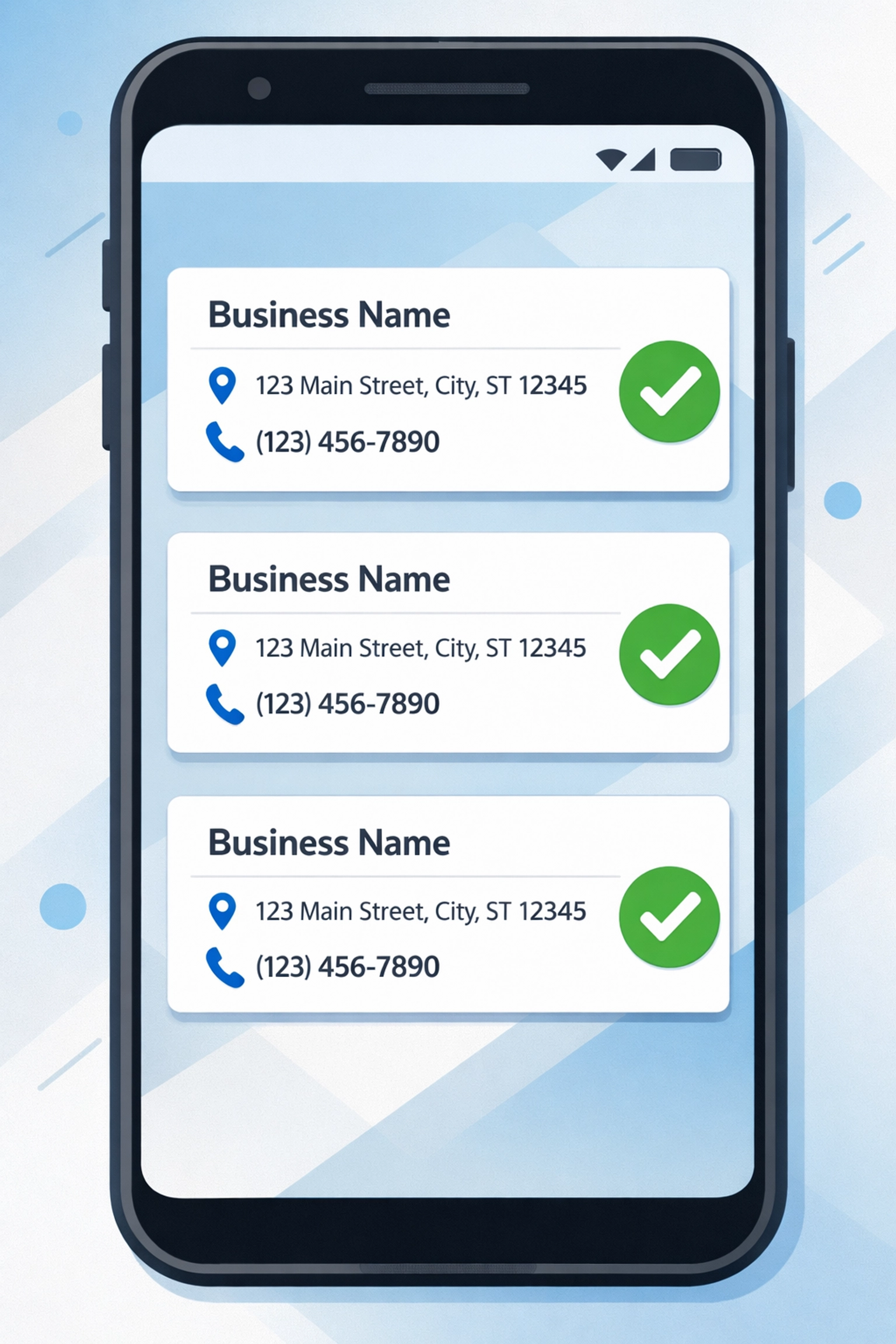
Check every place your business is listed online. Your website, Google Business Profile, Facebook page, Yelp, industry directories: all of these need to match exactly. And we mean exactly. If your address is "123 Main Street Suite 5" on one listing, don't write "123 Main St Ste 5" somewhere else.
Small differences like abbreviations, punctuation, or phone number formatting can create inconsistencies that hurt your rankings. Pick one format and stick with it everywhere.
This might sound tedious, but it's one of the easiest wins you can get. Set aside an afternoon to audit all your listings and make corrections. Search engines reward businesses that provide clear, consistent information.
2. Optimize Your Google Business Profile Like Your Rankings Depend On It (Because They Do)
Your Google Business Profile is responsible for about 32% of your Maps rankings and 7% of your organic search visibility. That's a massive chunk of your online presence.
Start with the basics. Make sure every field is filled out completely. Add your business hours, phone number, website, and a detailed description of what you do. Choose the most accurate business categories: these help Google understand who should see your listing.
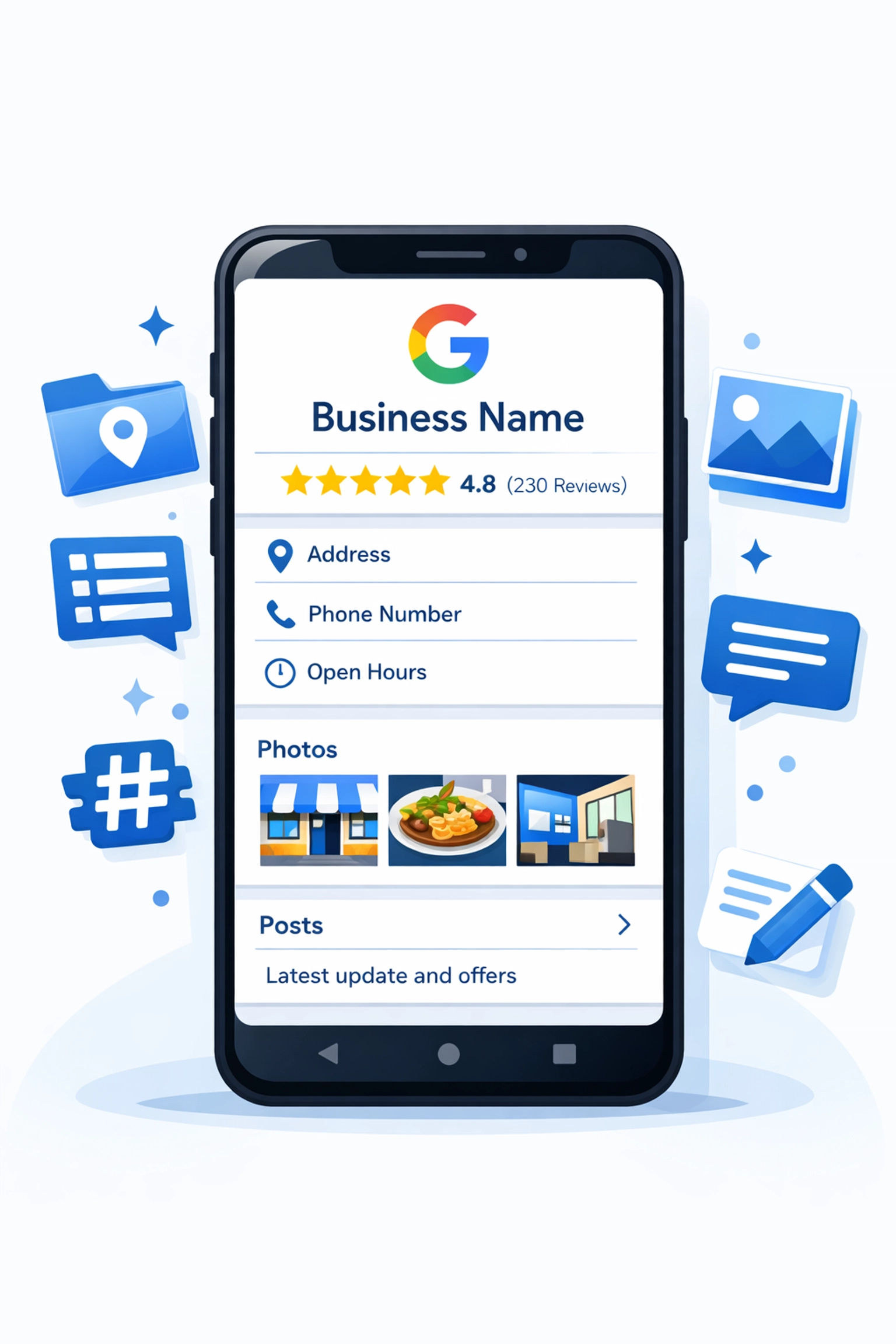
Upload high-quality photos of your business, your team, your products, or your work. Businesses with photos get more engagement than those without. Update these regularly to show you're active and current.
Post updates to your profile at least once a week. Share company news, special offers, helpful tips, or anything relevant to your industry. These posts keep your profile fresh and give people more reasons to choose you over competitors.
If you're looking for help with your overall search engine optimization strategy, this is where you should start. Your Google Business Profile is free and directly impacts how often potential customers see your business.
3. Build a Steady Stream of Customer Reviews
Reviews make up 20% of your Maps rankings and 6% of your organic rankings. But here's what most businesses get wrong: it's not just about having lots of reviews. It's about getting new reviews consistently over time.
Search engines care about review velocity. Getting two new reviews every month beats getting 20 reviews all at once and then going silent for six months. The algorithm sees consistent new reviews as a sign that you're actively serving customers and doing good work.

Ask satisfied customers to leave reviews. Make it easy by sending them a direct link to your Google Business Profile review page. Don't offer incentives for reviews: that's against Google's guidelines and can get you penalized.
Respond to every review, positive or negative. Thank people for their feedback and address any concerns publicly. This shows potential customers you care about their experience and helps you stand out from competitors who ignore their reviews.
Bad reviews happen to everyone. How you handle them matters more than the review itself. A thoughtful, professional response to a negative review can actually improve your reputation.
4. Show Up and Engage on Social Media
Social media activity signals to search engines that you're an active, legitimate business connected to your community. Regular posting on platforms like Facebook and Instagram builds trust and encourages the kind of engagement that feeds back into your SEO.
Share updates about your business, helpful tips related to your industry, and community events you're involved with. Tag other businesses you work with or support. Respond to comments and messages promptly.
When customers tag your business or check in at your location, engage with those posts. Thank them, share their content, and keep the conversation going. This creates a digital trail that connects your business to real people and real interactions.

Social signals aren't direct ranking factors, but they influence things that are. More engagement leads to more reviews, more website visits, and more brand searches: all of which boost your SEO.
You don't need to be on every platform. Pick one or two where your customers actually spend time and focus your effort there. Consistency beats sporadic activity on five different platforms.
5. Keep Your Business Hours Accurate and Updated
This seems obvious, but accurate business hours have become a critical ranking filter. Search engines prioritize businesses that provide reliable information about when they're open.
Update your hours immediately when they change. Seasonal adjustments, holiday closures, special hours for events: all of these need to be reflected across your Google Business Profile and other listings.
Inaccurate hours frustrate potential customers and damage your reputation. Someone who drives to your business based on what Google says, only to find you closed, isn't coming back. And they might leave a negative review about it.
Set a reminder to review your business hours monthly. Even if nothing has changed, this regular check ensures you catch any errors or outdated information before they cause problems.
The Bottom Line
Local SEO isn't complicated, but it does require attention to detail and consistent effort. These five strategies work because they focus on the fundamentals that search engines actually care about: accurate information, active engagement, and positive customer experiences.
You don't need to implement everything at once. Start with auditing your NAP consistency and optimizing your Google Business Profile. Those two alone will make a noticeable difference.
Then work on building a review strategy and maintaining an active social media presence. Finally, make sure your business information stays current everywhere it appears online.
Need help implementing these strategies or want to discuss your overall digital presence? Check out our web design and digital marketing services or get in touch to see how we can help boost your local rankings.