

If you're running a business in Michigan, chances are you've thought about SEO at least once. Maybe you've even invested some time and money into it. But here's the thing: a lot of Michigan businesses are making the same preventable mistakes that tank their online visibility and cost them customers
The good news? These mistakes are fixable. Let's break down the seven most common SEO errors we see and exactly how you can turn things around
Mistake #1: Letting Your Google Business Profile Collect Dust
Your Google Business Profile is often the first thing potential customers see when they search for your services. If yours hasn't been updated in weeks or months, Google's algorithm is already pushing you down the rankings
Outdated hours, missing categories, low-quality photos, or zero recent posts create a ghost town effect. And ghost towns don't attract customers
How to Fix It
Think of your Google Business Profile like a storefront window: it needs regular attention. Here's what to do:
- Check it weekly for accuracy
- Add fresh photos of your work, team, or location
- Post updates about promotions, news, or helpful tips
- Make sure your hours are always current (especially around holidays)
- Keep your business categories accurate and complete
Consistency matters too. If your information differs across directories, Google gets confused and your trustworthiness takes a hit

Mistake #2: Targeting Generic, Overused Keywords
We get it: you want to rank for "web design" or "marketing services." But so does everyone else. Broad keywords bring fierce competition and often attract people who aren't ready to buy
Most businesses aren't showing up for the queries that actually convert: service-specific problems, questions, or neighborhood-based searches that signal real buying intent
How to Fix It
Stop using industry jargon and start using customer language. What would someone actually type when they need your services?
Focus on:
- Long-tail keywords with clear intent ("how to fix slow website loading")
- Problem-based searches ("why isn't my website showing up on Google")
- Specific service combinations ("website redesign for small business")
Conduct keyword research based on how your customers talk, not how your industry talks. The difference in conversion rates is massive
Mistake #3: Ignoring Mobile Performance
Here's a reality check: most of your potential customers are searching on their phones. If your site loads slowly, looks wonky on mobile, or has tiny buttons that are impossible to tap, you're losing people before they even give you a chance
Core Web Vitals, mobile usability, bounce rate, and time on page all affect your visibility. Users leave quickly when they don't understand what you offer or don't trust the design
How to Fix It
Start with a mobile performance audit. Check your site on multiple devices and look for:
- Load times (aim for under 3 seconds)
- Responsive design that adapts to screen sizes
- Easy-to-tap buttons and readable text
- Clear messaging that tells visitors what you do immediately
A professional web design approach ensures your site performs well everywhere, not just on desktop

Mistake #4: Sloppy Title Tags and Meta Descriptions
Title tags and meta descriptions are your first impression in search results. Duplicate titles confuse search engines. Overly long titles get cut off. And neglected meta descriptions? Google rewrites about 60-70% of them anyway
When these elements are weak, your click-through rates suffer: even if you're ranking well
How to Fix It
Follow these guidelines:
- Title tags: Keep them between 50-60 characters. Include your primary keyword naturally. Make each page unique
- Meta descriptions: Aim for 150-160 characters. Accurately summarize what's on the page. Encourage clicks without overpromising
Every page on your site needs its own optimized title and description. No shortcuts here
Mistake #5: Inconsistent Business Information Across the Web
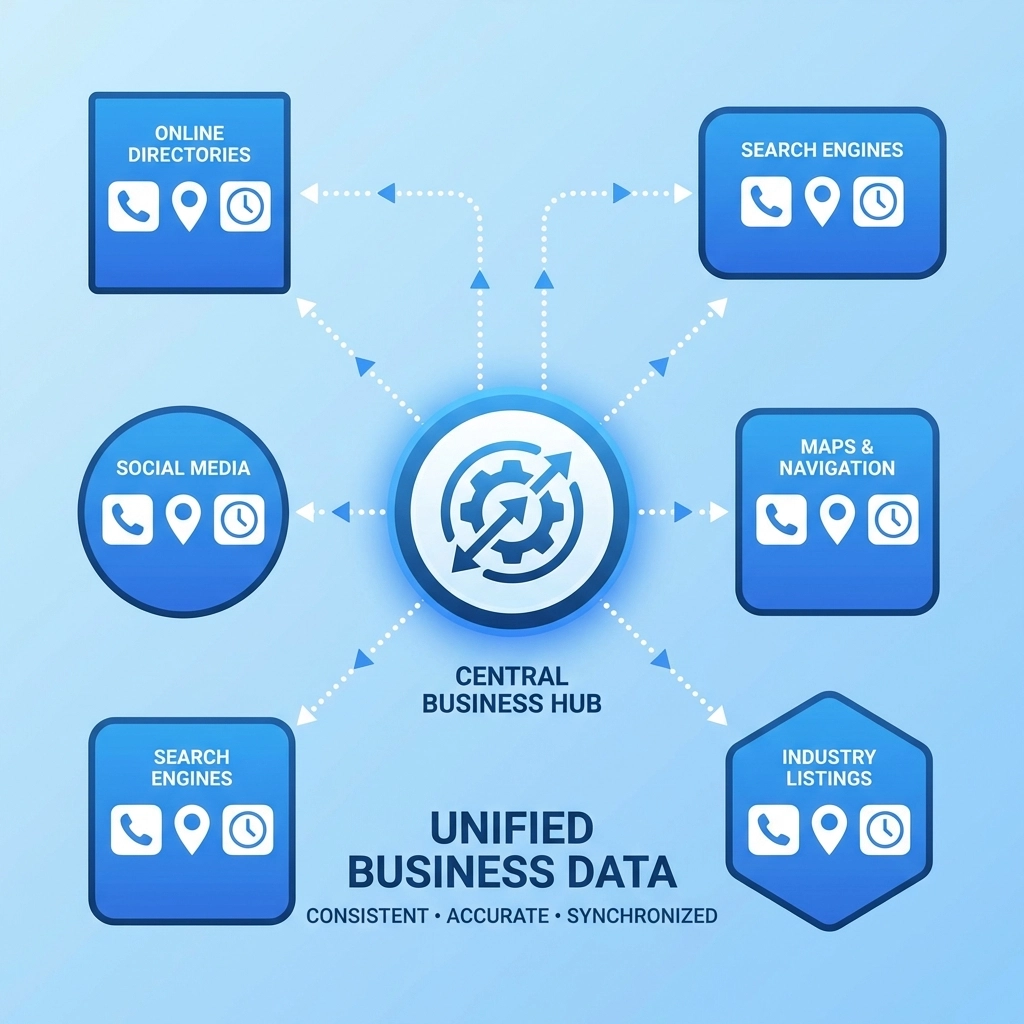
Your name, address, and phone number (NAP) need to be identical everywhere: Google Business Profile, Yelp, Facebook, industry directories, everywhere. When details don't match, search engines lose confidence in your data
This limits your local rankings and confuses potential customers. About 32% of people search for local businesses multiple times weekly, and inconsistent info makes you look unreliable
How to Fix It
Create a master document with your exact business information formatted consistently. Then:
- Audit all your existing listings
- Correct any discrepancies in hours, addresses, phone numbers, or business names
- Claim and update profiles you may have forgotten about
- Set a reminder to check listings quarterly
While you're at it, encourage happy customers to leave reviews. They build credibility and boost local search performance
Mistake #6: Chasing Rankings Instead of Conversions
Ranking #1 for a keyword feels great. But if that traffic isn't converting into leads, calls, or sales, what's the point?
Many businesses create the illusion of growth with increased traffic while actual leads and ROI decline. This happens when content doesn't match what users are actually looking for
How to Fix It
Build your marketing strategy around user journeys and conversions, not just rankings. Match your content to search intent:
- Informational searches need depth and clarity (blog posts, guides, FAQs)
- Commercial searches need trust signals (testimonials, case studies, comparisons)
- Local searches need relevance and credibility (location pages, reviews, local partnerships)
Measure success with metrics that matter: form submissions, phone calls, appointment bookings. Vanity metrics like "we rank #3 for this keyword" don't pay the bills
Mistake #7: Missing the Multi-Platform Search Opportunity
Here's something a lot of businesses overlook: your website isn't always the first touchpoint. Most customers decide whether to trust you before they ever land on your site
They're checking Google Maps, reading reviews, asking voice assistants, scrolling Instagram, or searching Apple Maps. If you're only optimizing for traditional Google search, you're invisible on half the platforms where people actually look
How to Fix It
Expand your optimization beyond Google search:
- Claim and optimize your Apple Maps listing
- Ensure your site works well with voice search queries (natural language, question-based content)
- Keep social profiles updated with current information
- Build a content strategy that's genuinely helpful and locally relevant
Generic, cookie-cutter pages duplicated for each city don't work anymore. Search engines are smarter now. Create content that genuinely connects with your audience and addresses their specific needs
Ready to Fix These Mistakes?
SEO isn't magic: it's a combination of technical work, smart content, and consistent effort. The businesses that get this right don't just rank higher; they attract better leads and close more deals
If you're looking at this list and realizing your business has some work to do, that's actually a good sign. Awareness is the first step
Need help developing a strategy that actually moves the needle? We've helped businesses across Michigan fix these exact issues and build sustainable search visibility. Get in touch and let's talk about what's holding your site back