

Search engine optimization isn't rocket science, but it's easy to mess up when you're running a small business. You've got a million things on your plate, and SEO often gets pushed to the bottom of the list.
Here's the thing though: 96.55% of content gets zero traffic from Google. That's a lot of wasted effort.
Most small businesses make the same mistakes over and over. The good news? They're fixable. Let's walk through the seven most common SEO errors and how to sort them out before they tank your rankings.
1. Publishing Duplicate or Unreviewed AI Content
AI writing tools are everywhere now, and they're tempting. Hit a button, get a blog post, done. Except it's not that simple.
The problem starts when you publish AI-generated content without checking it first. These tools often rehash what's already out there, copying competitor phrasing or restating common knowledge without adding anything new. Google's algorithm spots this immediately and penalizes pages that don't provide unique value.
How to fix it:
Read everything before you publish. Check that your content actually differs from what competitors are saying. Add your own insights, real examples from your business, or data that readers can't find elsewhere. The goal isn't just to rank: it's to give visitors a reason to stay on your page instead of hitting the back button.

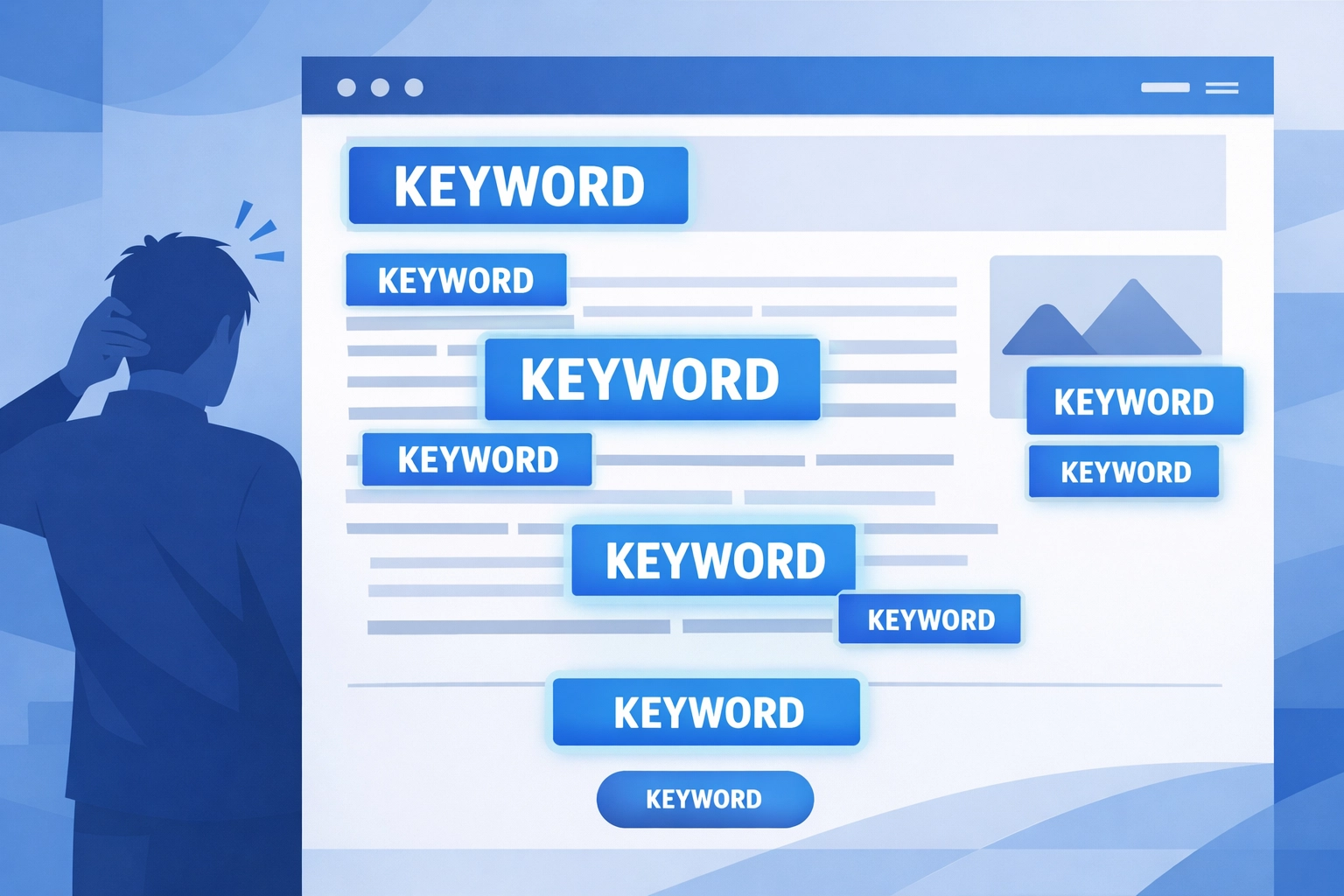
2. Stuffing Keywords Until It Sounds Robotic
Remember when SEO meant cramming your keyword into every sentence? Those days are gone, but plenty of businesses still write like this:
"Our search engine optimization services provide search engine optimization solutions for businesses needing search engine optimization help."
It sounds terrible. Worse, it doesn't work anymore.
Modern search algorithms are sophisticated enough to understand context and synonyms. When you overuse exact-match keywords, you're not gaming the system: you're actively hurting your rankings and driving readers away.
How to fix it:
Write for humans first. Read your content out loud. If it sounds awkward or unnatural, rewrite it. Use your main keyword where it fits organically, then use variations and related terms throughout the rest of the content. Your readers will appreciate it, and search engines will too.
3. Ignoring Technical SEO and Mobile Performance
Your website could have the best content in your industry, but if it loads slowly or breaks on mobile devices, none of that matters.
Page speed and mobile optimization are core ranking signals. When someone clicks your link and waits more than three seconds for the page to load, they're gone. High bounce rates tell search engines your page isn't worth ranking.
How to fix it:
Run your site through PageSpeed Insights. It'll show you exactly what's slowing things down. Common culprits include oversized images, bloated code, and missing compression.
Check Google Search Console for mobile usability issues. Make sure your design is responsive and actually works on phones and tablets, not just desktops.
While you're at it, add an SSL certificate if you haven't already. Submit a sitemap. Fix broken links. These fundamentals matter more than most businesses realize.
If this sounds overwhelming, professional web design services can handle the technical heavy lifting while you focus on running your business.
4. Operating Without a Clear Strategy
Posting random blog articles whenever you feel like it isn't a strategy. Neither is targeting keywords because they "seem important" without understanding search intent or competition.
Most businesses approach SEO like throwing spaghetti at the wall. They create content without a plan, miss opportunities, and wonder why nothing's working.
How to fix it:
Start with defined goals. What are you actually trying to accomplish? More leads? Higher brand awareness? Better rankings for specific services?
Build a content calendar. Research keywords before you write, focusing on terms your actual customers are searching for. Look at search volume, competition, and what kind of content currently ranks.
Prioritize based on impact. A well-planned strategy beats random effort every time. If you need help building this framework, a strategic approach to SEO makes all the difference.
5. Missing Internal Links and Poor Page Structure
Search engines crawl your site by following links. When your pages don't link to each other, you're making it harder for search engines to understand your site structure and topic relevance.
Poor heading hierarchy creates the same problem. If you're using H2 tags randomly or skipping heading levels, search engines struggle to understand which content is most important.
How to fix it:
Use proper heading structure. One H1 per page (usually your title), then H2s for main sections, H3s for subsections. It's not just good for SEO: it makes your content easier to read.
Link to related pages on your site when it makes sense. If you mention a service you offer, link to that service page. If you reference another article, link to it. These internal connections help search engines understand topic relationships and keep visitors on your site longer.
Add external links to credible sources when you reference data or claims. It builds trust with both readers and search engines.

6. Neglecting Off-Page and Local SEO
On-page optimization is only half the battle. If you're not building backlinks, maintaining your Google Business Profile, or ensuring consistent business information across the web, you're missing major ranking opportunities.
This is especially critical for small businesses that rely on customers finding them through search. Your competitors are probably already doing this work.
How to fix it:
Claim your Google Business Profile if you haven't. Add your hours, photos, services, and categories. Keep it updated.
Ask satisfied customers for reviews and respond to every review you get: positive or negative. Reviews impact both rankings and whether people choose to contact you.
Check that your business name, address, and phone number match everywhere they appear online. Inconsistent information confuses search engines and potential customers.
Build backlinks through partnerships, guest posts, or creating content worth linking to. Quality beats quantity here: one link from a respected industry site beats dozens from random directories.
7. Making Decisions Without Data
Flying blind is expensive. If you're not tracking what's working and what isn't, you're wasting time and money on tactics that might not move the needle.
Too many businesses guess at what their customers want or assume certain pages are performing well without actually checking the numbers.
How to fix it:
Set up Google Analytics and Google Search Console if you haven't already. They're free and essential.
Monitor your page load times, especially on mobile. Check which pages are getting traffic and which keywords are driving visitors. Look for crawl errors, broken links, and indexing issues.
Track your local search visibility if you serve a specific area. See where you rank for important keywords and whether you're appearing in map results.
Use this data to guide your decisions. If certain content performs well, create more like it. If pages aren't getting traffic, figure out why and fix it. Data removes the guesswork and helps you allocate resources where they'll actually make an impact.

The Bottom Line
These seven mistakes are common, but they're not permanent. Small adjustments often create significant results over time.
SEO isn't about perfection: it's about consistent improvement. Fix the technical issues. Create useful content. Build a strategy that aligns with your business goals. Monitor your results and adjust accordingly.
The businesses that rank well aren't necessarily smarter or better funded. They're just more consistent about doing the fundamentals right. Start with these seven fixes, and you'll be ahead of most of your competition.
Need help sorting through this? Get in touch and we'll figure out what's holding your site back.