
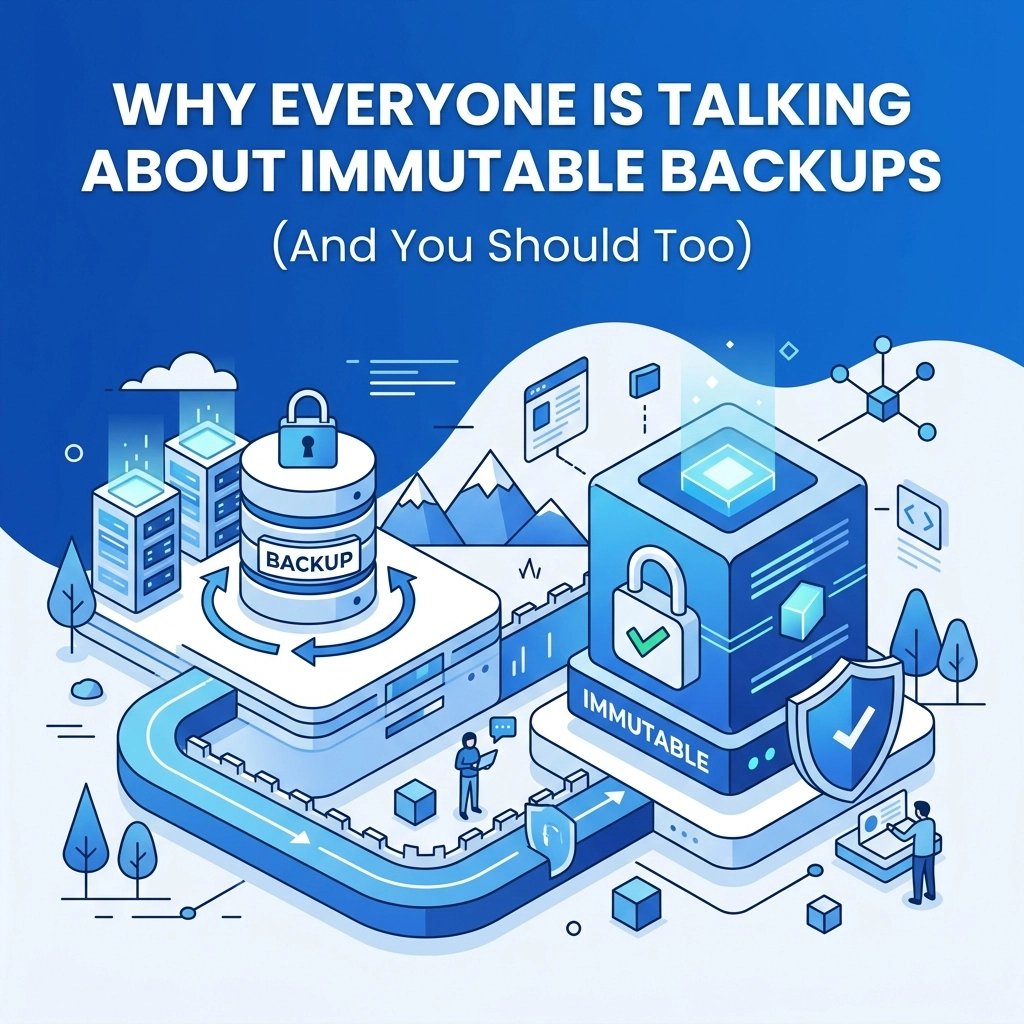

You probably think your data is safe because you have a backup system in place. Most business owners feel this way until they get hit with a ransomware attack and realize their backups were the first thing the hackers destroyed. This is why the conversation in cybersecurity has shifted entirely toward immutable backups. If your data cannot be changed or deleted it cannot be held for ransom.
The problem with traditional backups
Standard backups are usually "mutable" which means they can be modified. If your server has the permission to write data to a backup drive it also has the permission to delete or overwrite that data. Hackers know this. Modern ransomware does not just encrypt your live files anymore. It spends days or weeks quietly finding your backup repositories and deleting them or encrypting them first. Once your safety net is gone the attackers launch the main event and lock your production systems. At that point you have no choice but to pay.
This is a massive vulnerability for small and medium businesses. We see many companies relying on simple external hard drives or basic cloud sync services. These are not true backups because they are vulnerable to the same credentials that manage your main network. If an admin account is compromised the backups are essentially gone.

What exactly is an immutable backup
The word immutable simply means unchangeable. In the context of data storage it refers to a backup file that cannot be modified, deleted, or overwritten for a specific period of time. This is often achieved using WORM technology which stands for Write Once, Read Many.
When you create an immutable backup the system applies a lock to that data. Even if a hacker gains full administrative access to your network they cannot bypass this lock. The cloud provider or the storage hardware prevents any deletion commands from executing until the "retention period" has expired. This creates a "gold copy" of your data that is guaranteed to be there when you need it.
Why hackers hate immutable storage
Cybercriminals rely on leverage. Their leverage is your desperation to get back to work. If you have a clean copy of your data that they cannot touch their leverage disappears.
Recent studies show that in over 90% of ransomware attacks the threat actors attempted to target backup repositories. When they find immutable storage they hit a brick wall. They can try to delete the files but the system simply says "no." This turns a potentially business-ending catastrophe into a standard recovery procedure. You can visit WorldWise Computer Support to see how we help businesses set up these resilient structures.
The 3-2-1-1-0 rule of data protection
You might have heard of the 3-2-1 backup rule. It suggests having three copies of your data on two different media types with one copy offsite. In 2026 this is no longer enough. The industry has moved to the 3-2-1-1-0 rule.
- 3 copies of data (Production and two backups)
- 2 different media types (Cloud and local)
- 1 offsite copy
- 1 immutable or air-gapped copy
- 0 errors after automated backup testing and recovery verification
The "1" for immutability is the most critical part of this chain. Without it your offsite and local copies are just as vulnerable as your main server if they are connected to the same network.

Compliance and legal requirements
If you operate in healthcare, finance, or legal services you probably have strict compliance rules like HIPAA or GDPR. These regulations require you to ensure data integrity. If a hacker can modify your backups you are not meeting those integrity standards.
Insurance companies are also driving this change. If you apply for a cyber insurance policy today the application will likely ask if you use immutable backups. If the answer is no your premiums will be significantly higher or you might be denied coverage entirely. Insurers have realized that paying ransoms is expensive but recovering from an immutable backup is predictable. They want you to have that "gold copy" because it reduces their financial risk.
Protection against human error and inside threats
It is not just about hackers. Sometimes the threat comes from inside the house. An angry employee with admin access could attempt to wipe your servers and backups on their way out the door. Or a well-meaning IT person could accidentally run a script that deletes the wrong directory.
Immutable backups protect you from these scenarios too. Because the data is locked at the hardware or cloud level no human: no matter their rank in the company: can delete those files until the timer is up. It is a fail-safe against the "human element" of business.

How to implement immutable backups
You do not need to replace your entire IT infrastructure to get this protection. Most modern backup software supports immutability through features like "S3 Object Lock" in the cloud or hardened Linux repositories for local storage.
- Identify critical data: Decide what you absolutely cannot live without.
- Select a platform: Use a provider that supports object-level locking.
- Define the lock period: Usually 7 to 30 days is sufficient for most ransomware protection.
- Automate the process: Ensure every daily backup is automatically locked as it is written.
- Test recovery: A backup is only as good as your ability to restore it.
We recommend checking out our strategy services to help map out which data sets need the highest level of protection.
The cost of doing nothing
Many business owners worry about the cost of adding immutable storage. While there is a slight premium for this technology the cost of a single day of downtime far outweighs it. The average small business faces a recovery cost of over $100,000 after a ransomware attack when you factor in lost productivity, forensic fees, and legal costs.
Investing in immutable backups is a one-time setup that provides ongoing peace of mind. It allows you to focus on growing your business instead of worrying about the "what if" of a cyber attack. If you are also looking to improve your online presence while securing your backend you might find our web design services useful for creating a modern and secure customer-facing platform.

Moving toward data resilience
The goal is no longer just "having a backup" but achieving "data resilience." Resilience means your business can absorb a shock and keep moving. Immutable backups are the foundation of that resilience.
When you know your data is unchangeable you can make bolder moves in your digital strategy. You can expand your digital marketing efforts and grow your customer base knowing that your history and operational data are safe from any threat.
Final thoughts
The world has changed and the way we protect data must change too. Hackers are getting smarter and they are coming for your backups. Don't wait until you see a ransom note on your screen to find out if your data is actually safe.
If you have questions about how to secure your business data or need a consultation on your current setup feel free to reach out to us at WorldWise Support. We help businesses navigate these technical challenges so they can stay focused on what they do best.
Ready to secure your business? You can get started here and we will help you build a plan that works for your specific needs. Stop worrying about backups and start trusting them again.