
You spend time and money getting people to your website. You check your analytics and see the visitor count going up. But the sales numbers stay the same. This is a common problem for many businesses today. You have traffic but you do not have conversions.
Conversion rate optimization (CRO) is the process of turning those visitors into customers. Many people think CRO requires a massive redesign or complex coding. It does not. Sometimes the most effective changes are the smallest ones.
We suggest starting with the basics. A simple adjustment to how you present your offer can change everything. If your website is hard to use or confusing, people will leave. They found what they were looking for but they could not figure out how to buy it.
Master the 3-Second Rule
The most important part of your website is the area people see first. This is called "above the fold." You have about three seconds to capture a visitor's attention. If they cannot understand what you do in that time, you have lost them.
We suggest reviewing your hero section immediately. Your headline should state the primary benefit you offer. Do not be vague. Instead of saying "We provide excellence," say "We help you get more leads in 7 days."
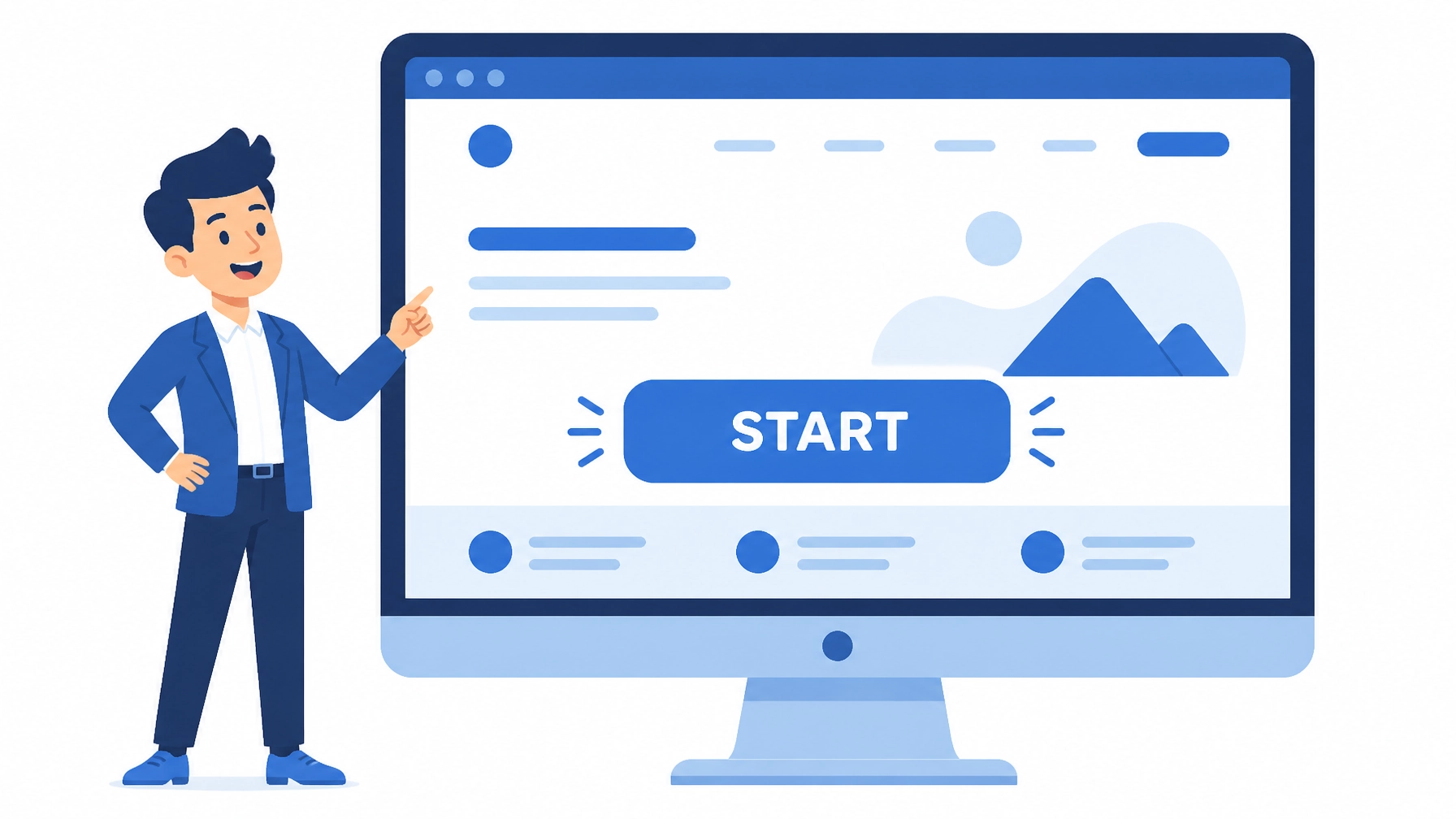
Your sub-headline should support this claim. List one or two key benefits that solve a specific problem. Then, you need a clear call to action (CTA). This is the "simple trick" that many miss. You only need one primary action for the user to take. Having too many buttons creates "analysis paralysis."
If you need help with your initial layout, our custom website design services focus on this exact clarity. We build sites that guide the user's eyes exactly where they need to go.
The Trick: Remove the Friction
Friction is anything that slows down a user. It is the extra step in a checkout process. It is the long form with twenty fields. It is the slow-loading image that prevents a button from appearing.

If you want to improve your conversion rate right now, remove the friction. Look at your contact forms. Do you really need their middle name and their fax number? Probably not. We suggest cutting your forms down to the absolute minimum. Usually, a name and an email address are enough to start a conversation.
If you must ask for a lot of information, use a multi-step form. Show a progress bar at the top. This makes the task feel manageable. People are more likely to finish a task once they have started it.
Friction also comes from confusing navigation. If a user has to click five times to find your pricing, they will go to a competitor. Keep your navigation simple and intuitive. You can learn more about how we structure sites for success on our strategy page
Use Social Proof to Build Trust
People are hesitant to buy from a brand they do not know. They want to see that others have had a good experience. This is why social proof is so powerful for CRO.

We suggest placing reviews and testimonials near your CTAs. If someone is about to click "Buy Now," seeing a 5-star review right next to the button gives them the final nudge they need.
Other forms of social proof include:
- Client logos for B2B companies
- "As seen in" media mentions
- Total number of customers served
- Real-time notifications of recent purchases
Trust signals also include security badges. If you are asking for credit card information, you must show that your site is secure. This is part of our comprehensive digital marketing approach where we focus on building authority and trust for our clients.
Performance and the Mobile Experience
In 2026, most of your traffic likely comes from mobile devices. If your site is not optimized for a smartphone, your conversion rate will be low. Mobile users are often in a hurry. They want information fast and buttons that are easy to tap.

Check your site speed today. A one-second delay in page load time can lead to a significant drop in conversions. We suggest compressing your images and removing any heavy scripts that you do not need.
Mobile CTAs should be large and easy to find. Avoid tiny text links that are hard to click with a thumb. Use a "sticky" CTA that stays at the bottom of the screen as the user scrolls. This ensures the option to convert is always visible.
How to Start Testing Today
You should never guess what works. You should test it. This is called A/B testing. You create two versions of a page and see which one performs better.
We suggest starting with your headline. Change the wording and see if more people stay on the page. Then test your button color. Sometimes a bright blue button converts better than a grey one because it stands out more.
Do not change everything at once. If you change the headline, the image, and the button at the same time, you will not know which change caused the improvement. Change one element at a time and track the results for at least a week.

Suggested Action Plan
If you want to see results quickly, follow these steps:
- Check your "above the fold" area for clarity
- Reduce your contact form fields to three or less
- Add one strong testimonial near your main CTA
- Test your site speed on a mobile device
- Remove any secondary buttons that distract from your main goal
CRO is not a one-time task. It is an ongoing process of refinement. As user behavior changes, your site must adapt. We have been helping businesses succeed online since 1994 by staying ahead of these trends.
If you are ready to stop losing visitors and start gaining customers, we can help. You requested a professional review of your digital presence and we are here to provide it. Contact us today to discuss your project and see how we can align your website with your brand goals
Our team is ready to help you implement these changes and more. We focus on results that move the needle for your business. Whether you need a full redesign or just a marketing tune-up, we have the expertise to get it done.