
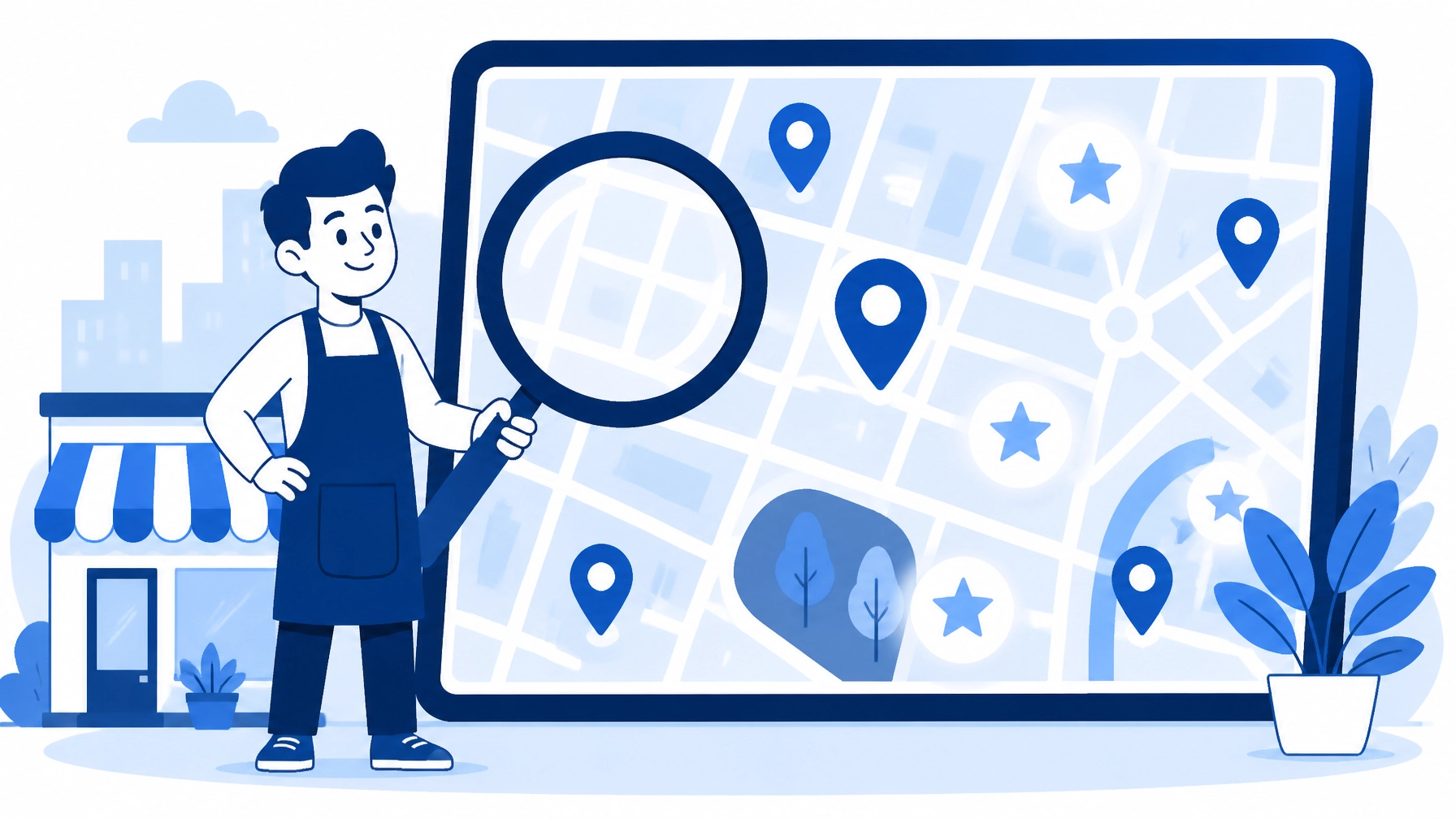

Most local businesses struggle to get found online because they focus on broad keywords instead of local intent. You want customers who live near you to find your shop or service immediately. If you are not appearing in the top results on digital maps, you are losing money to competitors every day
We suggest a direct approach to local search engine optimization (SEO) that builds your visibility where it matters most. Follow these five steps to fix your rankings and start attracting more local leads
Step 1: Maximize Your Google Business Profile

Your Google Business Profile (GBP) is the most important tool for local growth. It is the profile that appears when someone searches for a service in their area. Many businesses create a profile but never finish it. This is a mistake because Google prioritizes complete profiles
You requested a way to dominate the local market and this is where you start. You must ensure your business name, address, and phone number are exactly correct. We found that even small differences in spelling or formatting can confuse search engines
Complete every section
Fill out every field available in your dashboard. This includes your business hours, your service area, and your website link. If you offer specific products or services, list them individually with descriptions and prices. This helps Google match your business to very specific search queries
Use high-quality visuals
Upload photos of your building, your team, and your work regularly. People want to see who they are doing business with before they visit. We suggest adding at least one new photo every week to keep your profile active
Post regular updates
Use the "Posts" feature on your profile to share news, offers, or events. These posts appear directly in search results and can encourage people to click your website link. Treat your profile like a small social media page for your local audience
Step 2: Build a System for Customer Reviews

Reviews are a major ranking factor for local search. If two businesses have similar profiles, the one with more positive reviews usually wins the top spot. You need a consistent stream of new reviews to show both Google and customers that you are a reliable choice
Ask every customer
Don't wait for customers to leave reviews on their own. We suggest asking every happy customer for a review immediately after you complete a job or a sale. You can send a simple text message or email with a direct link to your review page. This makes the process easy for them
Respond to everyone
You should respond to every review you receive. Thank people for positive feedback and address negative reviews professionally. When you respond, you show potential customers that you care about their experience. It also provides another opportunity to use local keywords naturally in your replies
Focus on keywords
When customers leave reviews, encourage them to mention the specific service they received. Reviews that say "Great plumber" or "Best pizza" help search engines understand exactly what you do. This context improves your relevance for those specific searches
Step 3: Turn Your Website into a Local Lead Machine

Your website must support your local presence. It is not enough to just have a site; it needs to be optimized for local users. If your site is slow or hard to use on a phone, people will leave before they call you
At WorldWise, we specialize in custom website design that focuses on conversions. We suggest making your contact information very easy to find
Optimize for mobile users
Most local searches happen on smartphones while people are on the go. Your site must load fast and look good on small screens. Ensure your phone number is a "click-to-call" button so users can reach you with one tap. If they have to copy and paste your number, they might give up
Create location-specific content
If you serve multiple areas, create separate pages for each one. Do not just copy and paste the same text. Write unique content that describes your work in that specific neighborhood. Mention local landmarks or community events to prove you are part of the local fabric. This is a core part of our marketing and SEO services
Use local schema markup
Schema markup is a piece of code that helps search engines understand your data. It tells them exactly what your address, phone number, and hours are. Adding local business schema to your site is a technical step that provides a big boost to your local rankings
Step 4: Claim Your Local Citations and Directories

A citation is any mention of your business name, address, and phone number online. These usually appear in business directories like Yelp, Yellow Pages, or industry-specific sites. Google uses these citations to verify that your business is legitimate and active
Ensure consistency
The most important rule for citations is consistency. Your information must be identical across every site. If one site lists "Street" and another lists "St.", it can create confusion for search algorithms. We suggest keeping a master document of your business info and using it for every listing
Target niche directories
Don't just stick to the big sites. Look for directories that are specific to your industry or your local area. Being listed on a local chamber of commerce site or a neighborhood guide carries a lot of weight. These links are highly relevant and help build your local authority
Audit your current listings
You should periodically search for your business name to see what is already out there. If you find old or incorrect information, claim the listing and fix it. We found that cleaning up old data is often the fastest way to improve local rankings
Step 5: Prepare for AI-Powered Search and Local Content

Search is changing because of artificial intelligence. In 2026, many people use AI assistants to find local services. These assistants pull information from your website and your reviews to give direct answers to users
Answer customer questions
Think about the questions your customers ask most often. Create a "Frequently Asked Questions" section on your site and provide clear, direct answers. AI search engines love this type of structured information because it is easy to summarize for users
Use conversational language
Write your content the way people talk. Instead of just targeting "Plumber," target phrases like "Who is the best plumber for a leaky faucet?" This conversational style matches how people use voice search and AI tools. It makes your business the obvious answer for the AI to provide
Update your content regularly
Freshness matters. If your website has not been updated in a year, search engines might think your business is less active. We suggest adding a blog or a news section where you share local project updates or tips. This keeps your site relevant and gives you more opportunities to rank for local keywords
Start Dominating Your Local Market Today
Local SEO is not a one-time task. It requires consistent effort across your profile, your reviews, and your website. If you follow these five steps, you will see a steady increase in local traffic and phone calls
We suggest starting with your Google Business Profile today because it offers the fastest results. If you need help with the technical side or want a professional team to manage your digital marketing, reach out to us at WorldWise. We have been helping businesses succeed online since 1994 and we know what works
If you also need managed IT support to keep your office running while you handle all your new customers, we can help with that too. Your local success is our priority