


Google's December 2025 core algorithm update launched on December 11 and is still rolling out. This isn't just another routine update - it's a major shift that's hitting websites hard. With 59% of sites losing rankings and average traffic drops of 17.3%, this update is changing how Google evaluates content quality and expertise.
The rollout continues through early January, which means you still have time to adapt before your competition figures it out. Here's what you need to know and do.
What Actually Changed This Time
Content Quality Got Stricter
Google is now heavily penalizing mass-produced AI content that lacks expert oversight. Sites using AI-generated content without proper review are seeing 87% negative impacts. Thin affiliate content is getting hit with 71% traffic drops. Generic SEO content written primarily for rankings rather than users is facing 63% ranking losses.
The algorithm now requires clear author attribution with verifiable credentials. Even lifestyle and entertainment sites need to show expertise for competitive rankings. This means your content team needs real qualifications, not just writing skills.
User Behavior Matters More
Google is weighing user satisfaction metrics more heavily. Dwell time, return visits, and whether people immediately bounce back to search results (pogosticking) now significantly impact rankings. Content that doesn't fully satisfy user intent gets demoted, regardless of technical SEO.
Technical Standards Rose
Core Web Vitals requirements got tougher. Previously acceptable page speeds and mobile performance aren't cutting it anymore. Sites need better Largest Contentful Paint, Interaction to Next Paint, and Cumulative Layout Shift scores to compete.
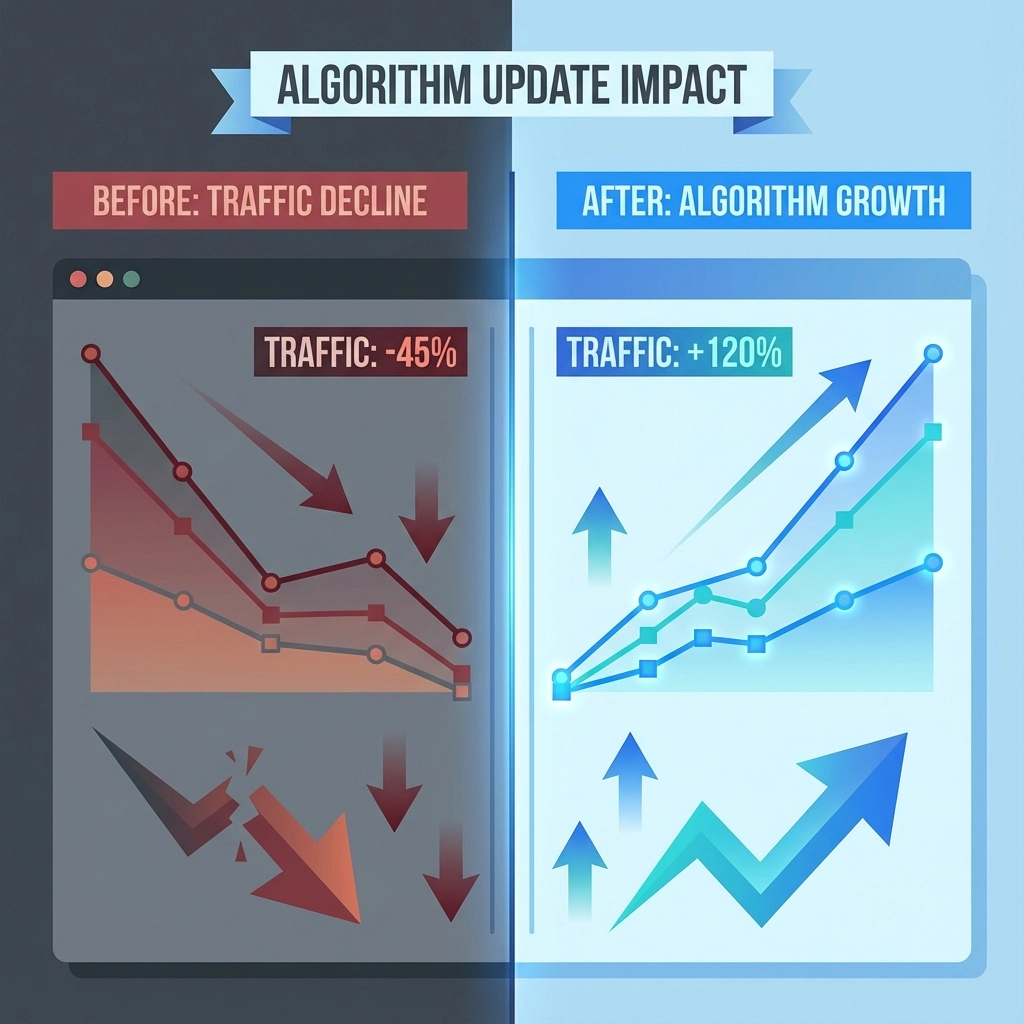
The Real Impact Numbers
The data shows clear winners and losers:
- 23% of sites gained 15%+ traffic
- 18% saw minimal changes
- 59% lost 15%+ traffic
- 12% experienced catastrophic losses over 70%
Average ranking positions dropped 3.2 spots across affected keywords. Sites that adapted quickly are gaining ground while others struggle.
One medical news site with a 15-person editorial team of board-certified physicians saw 67% traffic growth and 83% revenue increases. They gained an average of 5.3 ranking positions because they demonstrated real expertise.
What's Working Now
Deep, Expert-Backed Content
Long-form content with comprehensive coverage and semantic richness is winning. Hub pages and roundup-style content are capturing broad searches through topical clustering. But the key difference is expert oversight and first-hand experience.
Entity-Rich Structure
Content that clearly connects related concepts and entities performs better. Google rewards sites that demonstrate topical authority through interconnected content structures rather than standalone pages.
Professional Editorial Processes
Sites with rigorous editorial teams and fact-checking processes are seeing substantial gains. Clear author bios with professional credentials and relevant experience are now essential for competitive queries.
Technical Excellence
Fast-loading sites with excellent mobile experiences are maintaining or gaining rankings. Core Web Vitals optimization isn't optional anymore - it's a competitive requirement.

Your Recovery Strategy
Start With Content Audit
Review your highest-traffic content first. Identify pages losing visibility and categorize by content type. Prioritize thin content, outdated materials, and AI-generated content without expert review.
Look at your top-performing competitor pages. What expertise signals do they show? How comprehensive is their coverage compared to yours?
Fix Expertise Signals
Add clear author attribution with credentials across all competitive content. Include detailed author bios showing professional qualifications and relevant experience. For multi-author content, establish editorial oversight that demonstrates human expertise.
If you don't have in-house experts, consider partnering with industry professionals or hiring subject matter experts as consultants or contributors.
Technical Implementation Priority List
- Optimize Core Web Vitals - focus on Largest Contentful Paint, Interaction to Next Paint, and Cumulative Layout Shift
- Improve mobile responsiveness and test across devices
- Reduce ad intrusiveness and optimize loading speeds
- Implement CDN for faster global performance
- Fix broken links and optimize internal linking structure
Content Structure Improvements
Create logical heading hierarchies that show topical organization. Add comprehensive internal linking with descriptive anchor text. Implement table of contents for long-form content. Optimize images with compression and descriptive alt text.
Your search engine optimization strategy needs to focus on user value first, search engines second.

What Not to Do Right Now
Don't panic and start removing content wholesale. Don't double down on keyword optimization tactics. Sites using manipulative link schemes, content farms, and unedited AI content are getting severely penalized.
Avoid directing efforts toward manipulation. Generic SEO content optimized for keywords rather than user needs consistently faces ranking losses.
Don't ignore technical performance while focusing only on content. Both elements work together in this update.
Moving Forward Strategy
Create Ongoing Maintenance Framework
Set up a content update schedule for key pages, especially in competitive niches. Implement broken link monitoring and establish fact-checking protocols. Consider publishing transparent correction policies for when updates are needed.
Monitor and Measure
Track your Core Web Vitals scores regularly. Monitor user behavior metrics like bounce rate and time on page. Watch for ranking changes in your most important keywords.
Build Long-term Authority
Focus on building genuine expertise and authority in your industry. This update rewards businesses that demonstrate real knowledge and provide comprehensive user value.
The strategic shift is clear: businesses building content around genuine expertise and comprehensive user value will gain advantage over those still optimizing primarily for search engine signals.
Timeline Advantage
The update rollout continues for another 2-3 weeks. Sites that adapt quickest will establish competitive advantages that persist beyond this update cycle. Your competition is likely still figuring this out - use that window.
The December 2025 update isn't just changing rankings temporarily. It's establishing new baseline requirements for competitive SEO. Businesses that align with these changes now will be positioned for long-term success as Google continues prioritizing expertise, user satisfaction, and technical excellence.
Start with your highest-impact content, fix your technical foundation, and demonstrate real expertise. The sites making these changes while competitors wait are gaining market share right now.