

AI search is changing everything. ChatGPT, Claude, Perplexity, and other AI-powered platforms are becoming the go-to sources for answers, but most businesses are still optimizing like it's 2019.
The result? You're invisible when potential customers ask AI systems about your industry. While your competitors figure out AI search optimization, you're losing traffic and leads every day.
Here are the seven biggest mistakes businesses make with AI search optimization and exactly how to fix them.
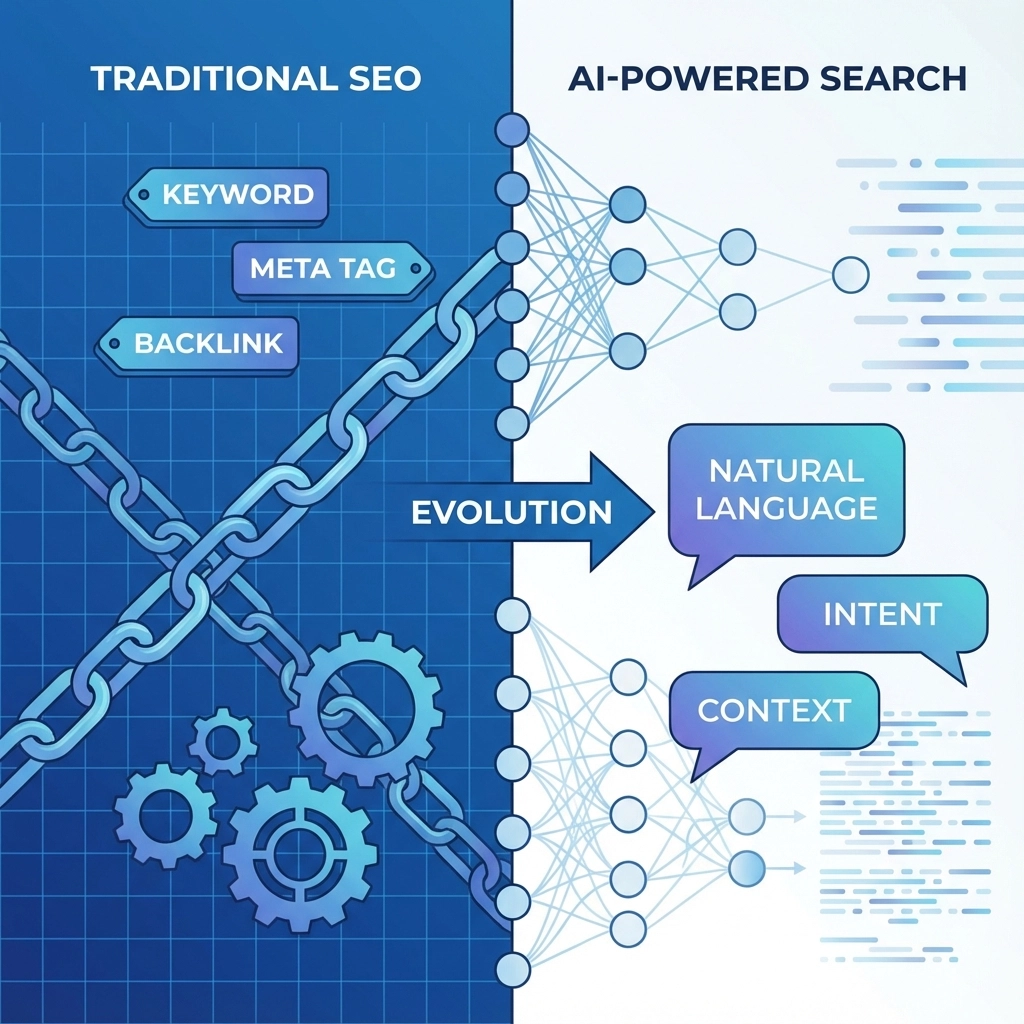
1. Treating AI Search Like Traditional SEO
The Problem: You're still hunting for keywords and building backlinks, but AI systems don't work that way. They're trained on massive datasets and look for authoritative, context-rich content that directly answers user questions.
Keywords matter less. Context matters more.
How to Fix It:
- Focus on context optimization instead of keyword density
- Answer the "why" and "how" behind every topic, not just the "what"
- Include relevant background information in every piece of content
- Structure information hierarchically: main concepts → supporting details → specific examples
Instead of targeting "web design services," create content that explains why modern web design matters, how it impacts user experience, and what makes effective design work.
2. Ignoring Conversational Query Optimization
The Problem: AI search queries look nothing like traditional Google searches. Users type longer, conversational queries with background context because they expect personalized recommendations.
Traditional search: "best CRM software" AI search: "I run a 50-person consulting firm and need CRM software that integrates with our existing project management tools and doesn't require extensive training for non-technical staff"
How to Fix It:
- Optimize for natural language queries instead of short keyword phrases
- Think about how people would actually ask AI assistants your questions
- Create content addressing complex, real-world scenarios your customers face
- Include context about different business sizes, industries, and use cases
Write like you're having a conversation with someone who needs detailed guidance, not someone looking for quick facts.
3. Neglecting Structured Data and Technical Preparation
The Problem: About 34% of AI crawler requests result in 404 errors because websites aren't technically ready for AI discovery. Many AI crawlers can't render JavaScript like Google's systems can.
Your content might be great, but if AI systems can't access it properly, you're invisible.
How to Fix It:
- Add comprehensive schema markup for your products and services
- Ensure critical content loads without JavaScript dependency
- Create clear site structure with logical information hierarchy
- Implement XML sitemaps specifically optimized for AI crawler access
- Test your site's performance across different AI crawler types
- Prioritize site speed and valid structured data markup
Technical preparation isn't optional anymore. AI systems need clean, accessible data to understand and recommend your content.

4. Creating Content for Clicks Instead of Answers
The Problem: You're still writing clickbait headlines and hiding information to force page visits. AI systems prioritize content that fully addresses user queries over engagement tactics designed to generate traffic.
"You Won't Believe These Web Design Trends" gets ignored. "How to Choose Web Design Elements That Increase Conversion Rates" gets referenced.
How to Fix It:
- Provide complete, direct answers to user questions
- Remove unnecessary friction that forces clicks for basic information
- Lead with value, not curiosity gaps
- Structure content so the main answer is clear upfront, with supporting details following
AI systems reward helpfulness, not cleverness. Make your content genuinely useful.
5. Overlooking AI-Specific Content Formats
The Problem: AI systems excel at extracting information from well-structured, hierarchical content but struggle with dense paragraphs and complex formatting. Content hidden in tabs or expandable menus often gets skipped entirely.
How to Fix It:
- Break content into clear, scannable sections with descriptive headings
- Avoid walls of text and overloaded sentences
- Keep important information visible, not hidden behind interactive elements
- Remove decorative symbols and excessive punctuation
- Use standard HTML instead of relying on PDFs for core information
- Structure lists and processes in numbered or bulleted formats
Think about how AI systems "read" your content. They prefer clean, logical structures over creative formatting.
6. Publishing Unedited AI Content
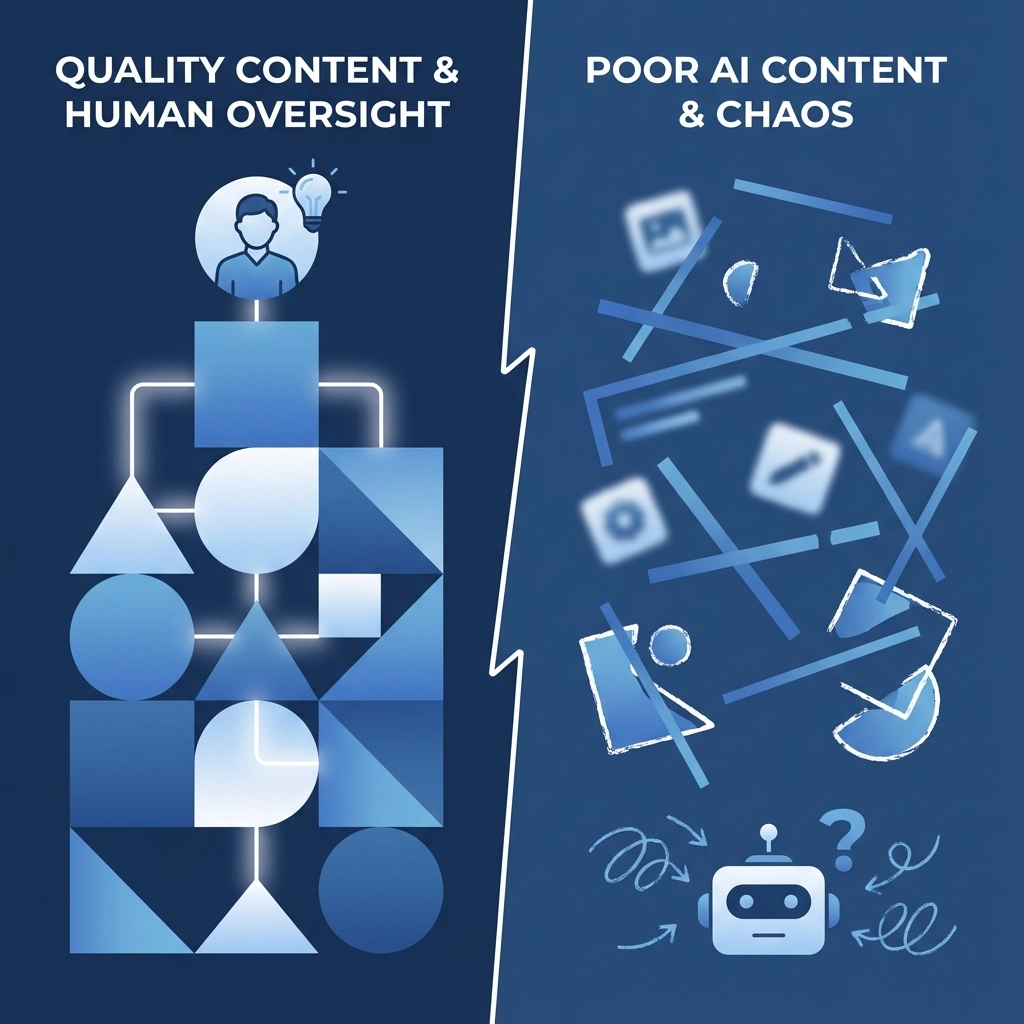
The Problem: You're using AI to generate content but publishing it without human oversight. Google's scaled content abuse policy penalizes low-quality AI text, and AI-generated content without quality control hurts your search performance.
How to Fix It:
- Always have human editors improve tone, accuracy, and factual integrity
- Use AI to assist content creation, not replace human expertise
- Add unique data, insights, and expert perspectives to AI-generated drafts
- Remove or improve low-value AI-generated pages that add no unique value
- Focus on quality over quantity
AI is a powerful tool for content creation, but it needs human judgment to create truly valuable content that other AI systems will trust and recommend.
7. Not Building Topical Authority in Your Niche
The Problem: You're creating scattered content across random topics instead of building deep expertise in your core areas. AI systems rely heavily on domain authority and topical expertise when deciding which sources to cite and recommend.
How to Fix It:
- Create concentrated content that demonstrates consistent expertise in your specific market
- Develop a content strategy focused on your core service areas
- Build authority through regular publication of detailed, expert-level content
- Connect related topics to show comprehensive understanding of your field
- Reference and build upon your previous content to show knowledge depth
Instead of writing about "marketing tips" and "productivity hacks" and "business trends," focus on becoming the definitive source for your specific area of expertise.

The Bottom Line
AI search optimization requires a completely different approach from traditional SEO. The businesses that recognize this shift early and optimize accordingly will dominate their markets while competitors struggle with outdated tactics.
These seven mistakes cost you visibility every day AI systems fail to find, understand, or recommend your content. But each fix moves you closer to being the source AI systems trust and cite when users ask questions in your industry.
Start with technical preparation and structured data, then move to content format and conversational optimization. Building topical authority takes time, but the other fixes can improve your AI search visibility within weeks.
The AI search revolution is happening now. Your competitors are either figuring this out or falling behind. Which side do you want to be on?
Ready to optimize your website for AI search? Our digital marketing team specializes in helping businesses adapt to the latest search technologies and stay ahead of algorithm changes.