
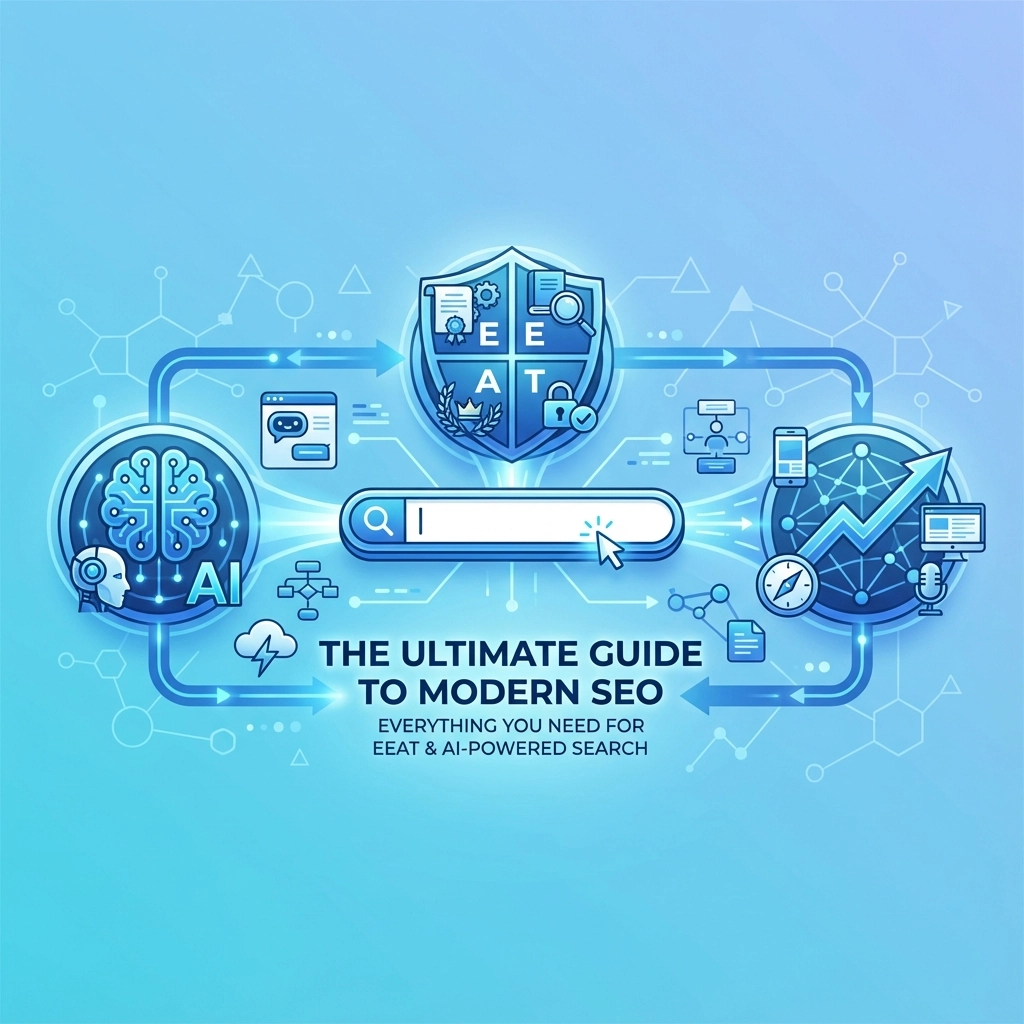

SEO in 2025 looks completely different than it did even two years ago. Google's AI updates have shifted the game from keyword stuffing to genuine expertise, and businesses that haven't adapted are getting left behind.
The truth is, over 53% of all website traffic still comes from organic search - but only if you understand what actually works now. This guide covers everything you need to know about modern SEO, from Google's E-E-A-T requirements to optimizing for AI-powered search algorithms.
What Changed in SEO (And Why It Matters)
Search engines now use sophisticated AI to understand content quality and user intent. They're not just looking for keywords anymore - they want proof that real humans with actual expertise created your content.
This shift happened because Google got tired of AI-generated fluff and thin content that provided no real value. Their solution was E-E-A-T: a framework that prioritizes Experience, Expertise, Authoritativeness, and Trustworthiness.
If your current SEO strategy relies on pumping out generic blog posts or buying cheap backlinks, you're already falling behind competitors who understand these new rules.
Understanding E-E-A-T: Your New SEO Foundation
E-E-A-T isn't just another SEO acronym - it's become Google's primary method for separating quality content from garbage. Here's what each element means and how to demonstrate it:
Experience means showing you've actually done what you're writing about. Don't write about web design trends if you've never built a website. Include case studies, screenshots, and real examples from your work.
Expertise requires demonstrating specialized knowledge. List your credentials, certifications, and relevant background. If you're giving business advice, mention your years in the industry or successful projects you've completed.

Authoritativeness comes from recognition by others in your field. This includes industry mentions, speaking engagements, and quality backlinks from respected sources in your niche.
Trustworthiness means being transparent about who you are and making it easy for users to verify your claims. Include author bios, contact information, and clear sources for any statistics or claims you make.
The businesses winning in search results now are those that can prove their content comes from real experts with genuine experience - not content mills or AI generators.
AI-Powered Search Optimization
Google's AI doesn't just look at keywords anymore. It analyzes the entire context of your content, understands user intent, and evaluates whether your page actually answers what people are searching for.
Semantic SEO has replaced keyword density as the primary ranking factor. Instead of repeating the same phrase over and over, you need to cover topics comprehensively using natural language that AI can understand.
Create topic clusters around your main services. If you offer web design, don't just write about "web design" - cover user experience, responsive design, conversion optimization, and related concepts that demonstrate depth of knowledge.
Search Intent Modeling means understanding what users actually want when they type specific queries. Someone searching "web design" might want to hire a designer, learn about design principles, or see examples of good websites. Your content needs to match their intent.
Multimodal Search is becoming increasingly important as users combine voice, visual, and text searches. Optimize your content for conversational queries and include descriptive alt text for images.
The key is creating content that feels natural to both human readers and AI algorithms - which means focusing on comprehensiveness and user value rather than gaming the system.
Technical SEO: The Foundation That Can't Be Ignored
Your content strategy won't matter if search engines can't properly crawl and index your website. Technical SEO forms the foundation that everything else builds on.
Core Web Vitals remain critical ranking factors. These measure how fast your pages load (Largest Contentful Paint), how quickly they become interactive (Interaction to Next Paint), and how stable they are while loading (Cumulative Layout Shift).
Most websites fail these metrics because they haven't optimized images, use too many plugins, or have poorly coded themes. Fix these issues first before worrying about content strategy.
Mobile-First Indexing means Google primarily uses your mobile version for ranking, even for desktop searches. If your mobile site is slow or difficult to navigate, your rankings will suffer across all devices.
Site Architecture affects how both users and search engines navigate your content. Use clear URL structures, logical internal linking, and organized navigation menus. Your website development should prioritize user experience above everything else.
Security and Speed are table stakes now, not competitive advantages. HTTPS is mandatory, and page speed directly impacts rankings. Slow websites lose both search visibility and user engagement.
Content Strategy for the "Helpful Content" Era
Google's Helpful Content updates eliminated the effectiveness of thin, repetitive content created solely for search traffic. Content that doesn't provide genuine value to humans gets filtered out of results.
Information Gain has become the new standard for content evaluation. Your content needs to offer something unique that can't be found elsewhere - whether that's original research, personal case studies, or expert analysis.
Stop rewriting existing articles with slightly different keywords. Instead, add original data, unique perspectives, or practical examples from your own experience. This is especially important for competitive topics where hundreds of similar articles already exist.

On-Page Optimization still matters, but it needs to feel natural. Include your target keywords in titles, headers, and content, but focus on readability and user experience first. Search engines can detect when content has been artificially optimized at the expense of quality.
Content Depth beats content volume every time. One comprehensive, well-researched article that thoroughly covers a topic will outperform ten shallow articles that barely scratch the surface.
User Engagement Signals like time on page, scroll depth, and return visits have become important ranking factors. Create content that keeps people reading and encourages them to explore more of your site.
Local SEO and Personalization
Even if you serve clients globally, local SEO principles can improve your visibility. Google personalizes results based on user location, search history, and behavior patterns.
Google My Business optimization remains crucial for businesses with physical locations or local service areas. Complete your profile, encourage reviews, and keep information updated.
Local Content doesn't mean mentioning specific cities in every article. Instead, create content that addresses regional business challenges, local industry trends, or area-specific regulations that affect your clients.
Hyper-Personalization means Google shows different results to different users based on their previous searches and interests. This makes traditional ranking tracking less reliable and emphasizes the importance of comprehensive content that appeals to various user segments.
Link Building in 2025
The days of buying cheap backlinks or participating in link schemes are over. Google's algorithms can easily detect artificial link patterns and will penalize sites that use them.
Digital PR has become the most effective link building strategy. Create newsworthy content, conduct original research, or provide expert commentary on industry trends that other sites want to reference.
Content-Driven Links happen naturally when you create genuinely useful resources. In-depth guides, case studies, and industry reports earn links because other creators find them valuable enough to cite.
Relationship Building with other professionals in your industry leads to natural link opportunities through guest posts, podcast appearances, and collaborative content.
Quality beats quantity every time. One link from a respected industry publication provides more value than dozens of links from low-quality directories or blog networks.
Measuring Success in Modern SEO
Traditional metrics like keyword rankings and domain authority don't tell the complete story anymore. Modern SEO success requires tracking metrics that reflect actual business impact.
Organic Traffic Quality matters more than quantity. Focus on attracting visitors who convert rather than just increasing overall traffic numbers.
User Engagement metrics like average session duration, pages per session, and conversion rates indicate whether your SEO strategy attracts the right audience.
Brand Search Volume shows whether your SEO efforts are building brand awareness and authority in your industry.
Featured Snippet Appearances demonstrate that Google considers your content authoritative enough to highlight in search results.
Getting Started with Modern SEO
The shift to E-E-A-T and AI-powered search doesn't require starting over completely. Most businesses can improve their SEO performance by focusing on three key areas:
First, audit your existing content for E-E-A-T signals. Add author bios, credentials, and case studies that demonstrate expertise. Remove or update thin content that doesn't provide genuine value.
Second, improve your technical foundation. Fix Core Web Vitals issues, ensure mobile optimization, and create a logical site structure that both users and search engines can navigate easily.
Third, develop a content strategy based on your actual expertise rather than keyword research alone. Focus on topics where you can provide unique insights or practical advice based on real experience.

Modern SEO rewards businesses that prioritize user value over search engine manipulation. The companies that understand this shift and adapt their strategies accordingly will dominate search results while their competitors struggle with outdated tactics.
The investment in quality content and technical excellence pays off through increased organic visibility, better user engagement, and ultimately more business growth. If you need help implementing these strategies, consider working with experienced professionals who understand both the technical and strategic aspects of modern SEO.