
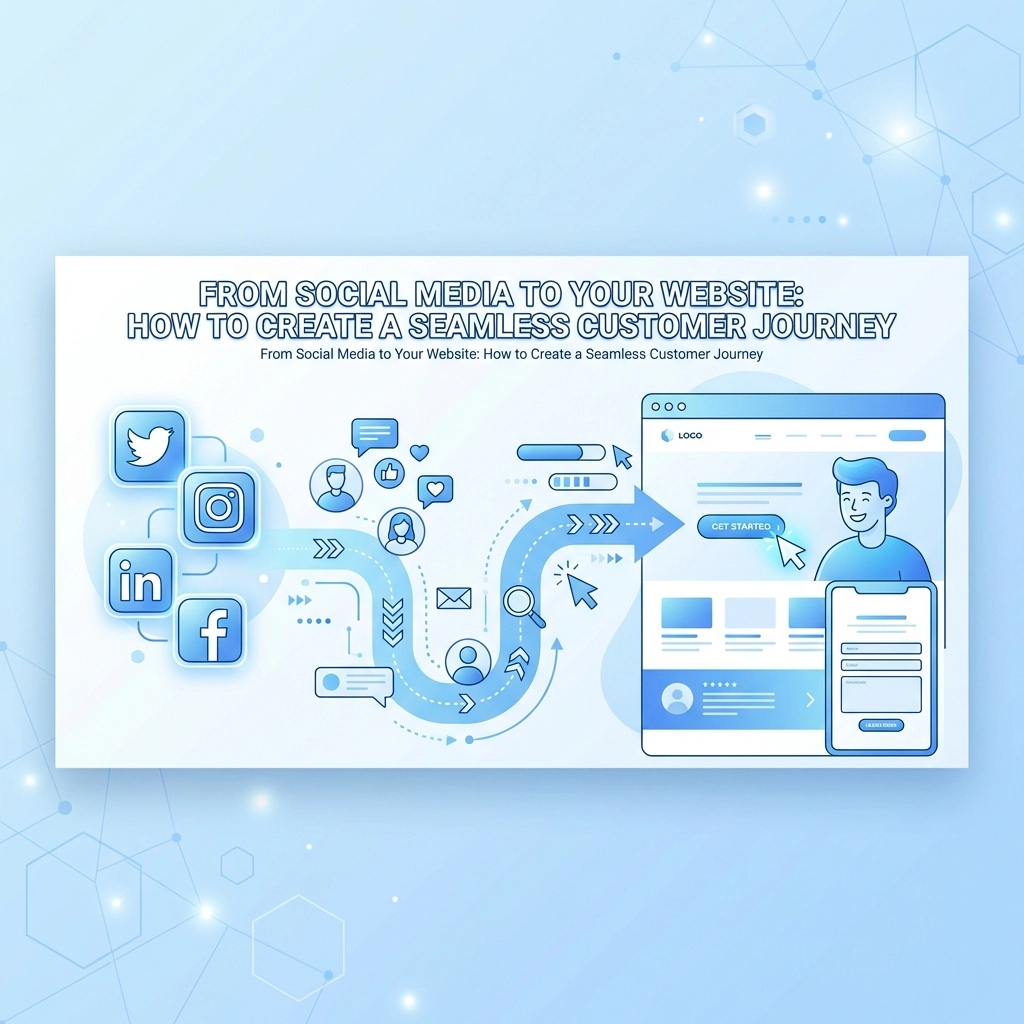

Your potential customers are scrolling through social media right now. Some of them just discovered your brand. Others are considering whether to buy from you. A few are ready to make a decision today
The question is: are you making it easy for them to get from that first scroll to your website checkout or contact form?
If there's friction anywhere in that journey, you're losing business. Plain and simple
Let's break down how to create a smooth, connected experience that guides people from social media to your website without losing them along the way
Understanding the Customer Journey
Before you can improve anything, you need to understand how people actually move from "never heard of you" to "take my money"
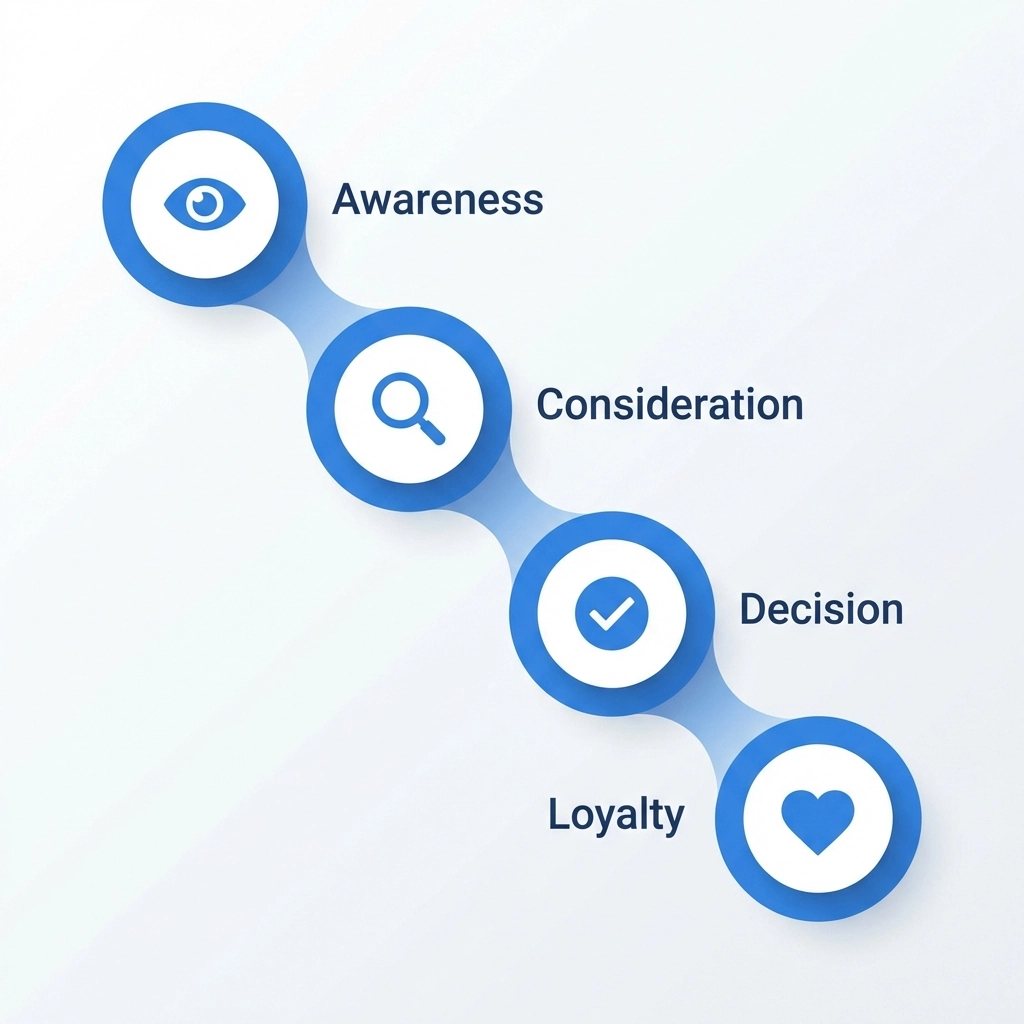
The customer journey has four main stages:
Awareness – This is where someone first discovers your brand. Maybe they saw a post in their feed, a friend shared your content, or an ad caught their attention
Consideration – Now they're curious. They're checking out your profile, reading your posts, maybe clicking through to your website to learn more
Decision – They're ready to act. This could mean making a purchase, booking a consultation, or filling out a contact form
Loyalty – After the sale, they become repeat customers and recommend you to others
Here's a stat that might surprise you: 54% of consumers use social media to research products online. And 29% of social media users are likely to buy on the same day they discover a product. That's a lot of potential business flowing through your social channels
Why Consistency Matters More Than You Think
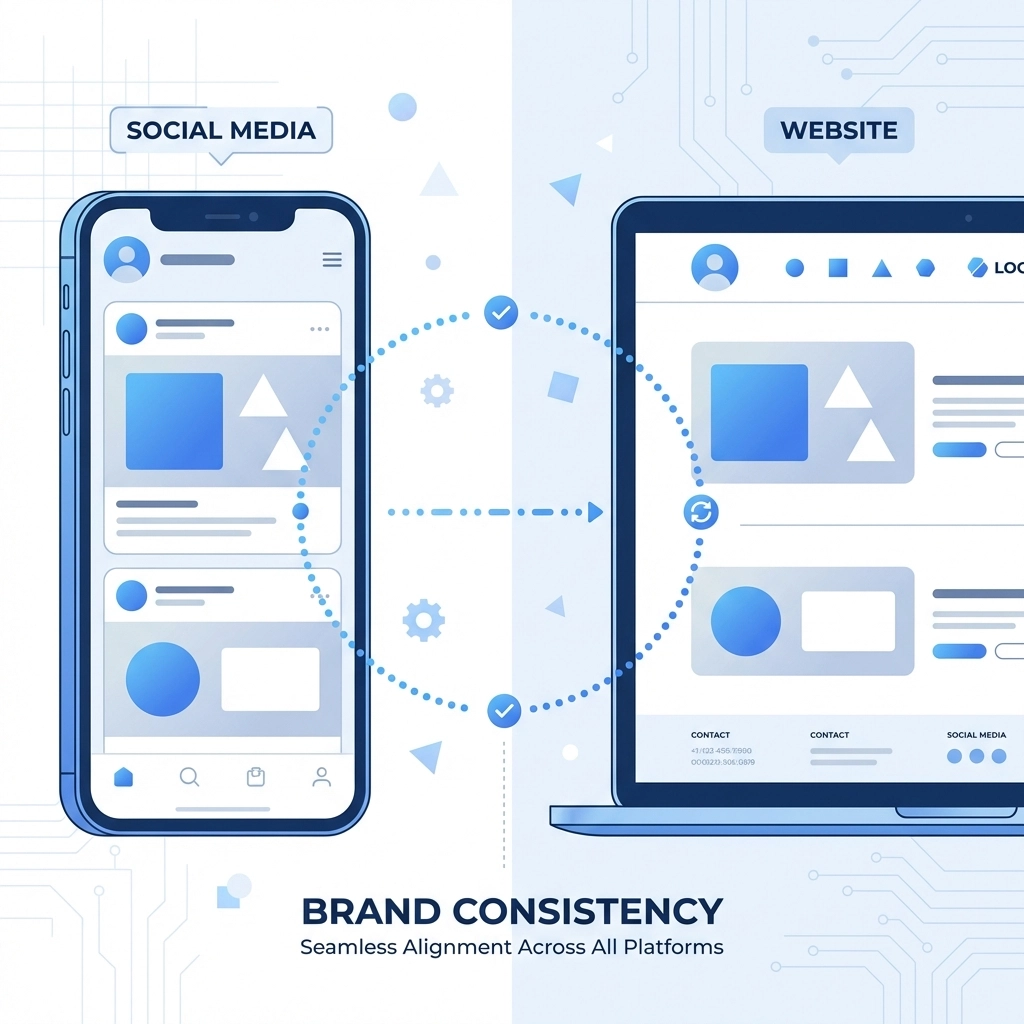
Ever click on a social media ad that looked amazing, only to land on a website that felt completely different? The colors were off. The tone was wrong. The offer wasn't quite what you expected
That disconnect kills conversions
When your social media presence and website don't match, people get confused. Confusion creates doubt. Doubt makes people leave
Here's what needs to stay consistent across platforms:
- Visual branding – Same colors, fonts, and overall aesthetic
- Tone of voice – If you're casual on Instagram, don't suddenly sound like a law firm on your website
- Value proposition – The promise you make on social should be reinforced when they arrive at your site
- Offers and messaging – If you're promoting a specific service or deal, make sure it's front and center when they click through
Think of it like this: your social media is the storefront window. Your website is the actual store. They need to feel like the same place
Mapping Your Social Media Touchpoints
A touchpoint is any interaction someone has with your brand. On social media, that includes:
- Seeing your post in their feed
- Reading comments on your content
- Watching your stories or reels
- Clicking your bio link
- Engaging with your ads
- Receiving a DM response from you
Each of these moments shapes how someone feels about your business. And each one is an opportunity to guide them closer to your website
Take some time to list out every touchpoint across all your social platforms. Ask yourself:
- What emotion does someone feel at this point?
- Is this moment helping them move forward or creating friction?
- How can I make this interaction smoother?
Connecting Social Media to Your Website
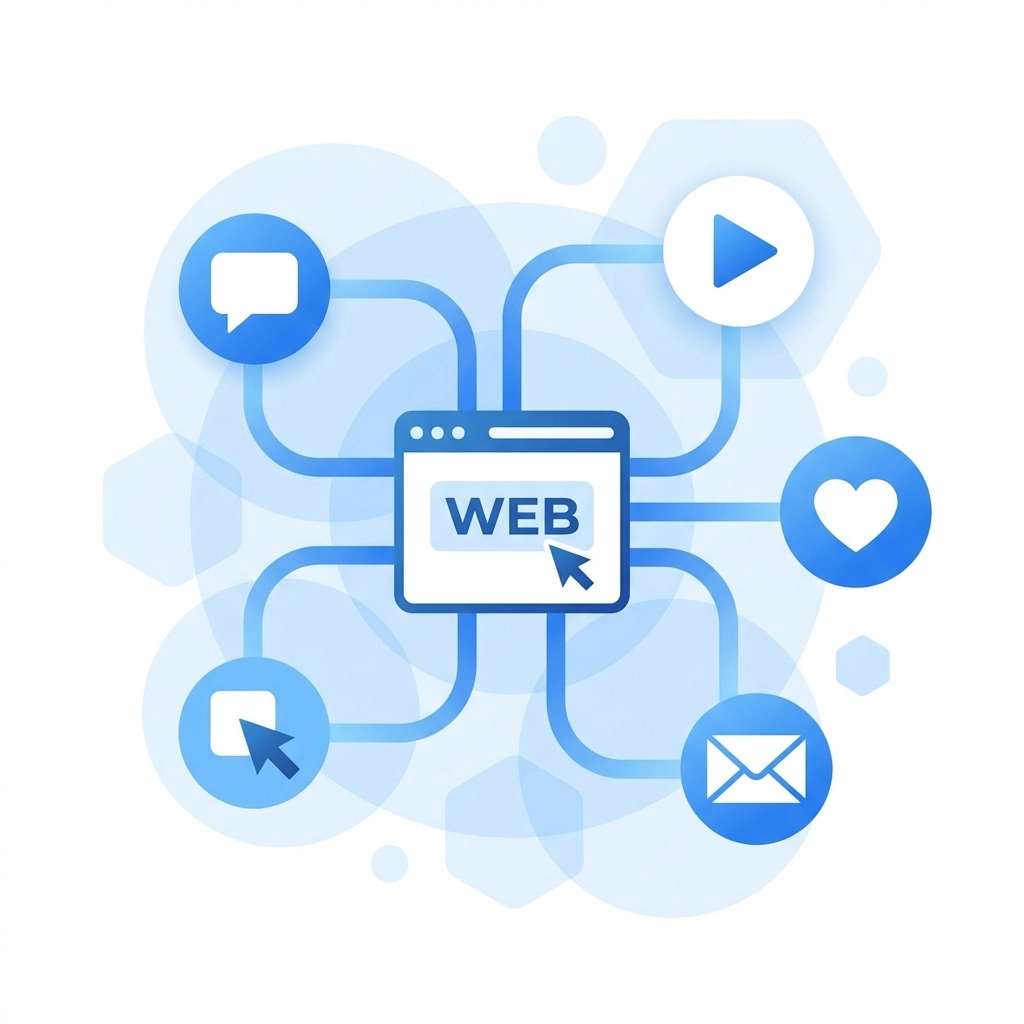
Now for the practical stuff. How do you actually get people from scrolling to clicking to converting?
Optimize Your Bio Links
Your bio is prime real estate. Don't waste it with a generic homepage link. Instead, direct people to a specific landing page that matches what you're promoting
If you're running a campaign about web design services, link to your web design page. If you're pushing digital marketing content, send them to your marketing page
Match the link to the content you're posting
Create Clear Calls to Action
Every post should have a purpose. Tell people exactly what you want them to do:
- "Click the link in bio to learn more"
- "Visit our website to get started"
- "Check out our portfolio for examples"
Don't assume people will figure it out on their own. Guide them
Use Landing Pages That Deliver
When someone clicks through from social media, they should land on a page that:
- Matches the promise made in the post or ad
- Loads quickly (slow sites kill conversions)
- Has a clear next step (contact form, booking button, purchase option)
- Works perfectly on mobile (most social users are on their phones)
If you need help building landing pages that convert, working with a professional web development team can make a big difference
Using Retargeting to Bring People Back
Not everyone converts on the first visit. That's normal. But you don't have to let them disappear
Retargeting tools like Facebook Pixel track visitors who came to your site but didn't complete an action. You can then show them targeted ads reminding them to come back
For example, if someone visited your services page but didn't fill out a contact form, you can serve them an ad saying "Still thinking it over? Let's chat about your project"
This keeps your brand top of mind and gives people a gentle nudge back to your site
Building Trust Through Social Proof
People trust other people more than they trust brands. That's just human nature
Use social proof to bridge the gap between social media and your website:
- Share customer testimonials in your posts
- Highlight reviews and ratings
- Post case studies or before-and-after results
- Feature user-generated content when customers share about you
When someone sees real results from real people, they're more confident clicking through to learn more. Make sure your portfolio page showcases your best work so visitors can see what you're capable of
Nurturing Loyalty After the Sale
The journey doesn't end when someone becomes a customer. In fact, that's when the real relationship begins
Use social media to stay connected with past customers:
- Respond to comments and messages promptly
- Share exclusive content or early access to new offerings
- Ask for feedback and actually use it
- Celebrate customer wins and milestones
Happy customers become your best marketers. They'll share your content, recommend you to friends, and come back for more

Quick Checklist for a Seamless Journey
Here's a simple checklist to audit your current setup:
- Bio links match current campaigns and promotions
- Visual branding is consistent across social and website
- Tone of voice matches on all platforms
- Landing pages load quickly and work on mobile
- Every post has a clear call to action
- Retargeting is set up to capture lost visitors
- Social proof is visible on both social and website
- Post-purchase engagement strategy is in place
If you're missing any of these, that's your starting point
Getting Started
Creating a seamless customer journey isn't complicated, but it does require intention. You need to think about every step someone takes from discovering you on social media to becoming a loyal customer
Start by auditing your current touchpoints. Identify where people might be getting stuck or confused. Then work on smoothing out those rough spots one at a time
If you need help connecting your social media strategy with a website that actually converts, get in touch with our team. We specialize in building digital experiences that work together, not against each other
Your customers are already on social media. Make it easy for them to find their way to you