
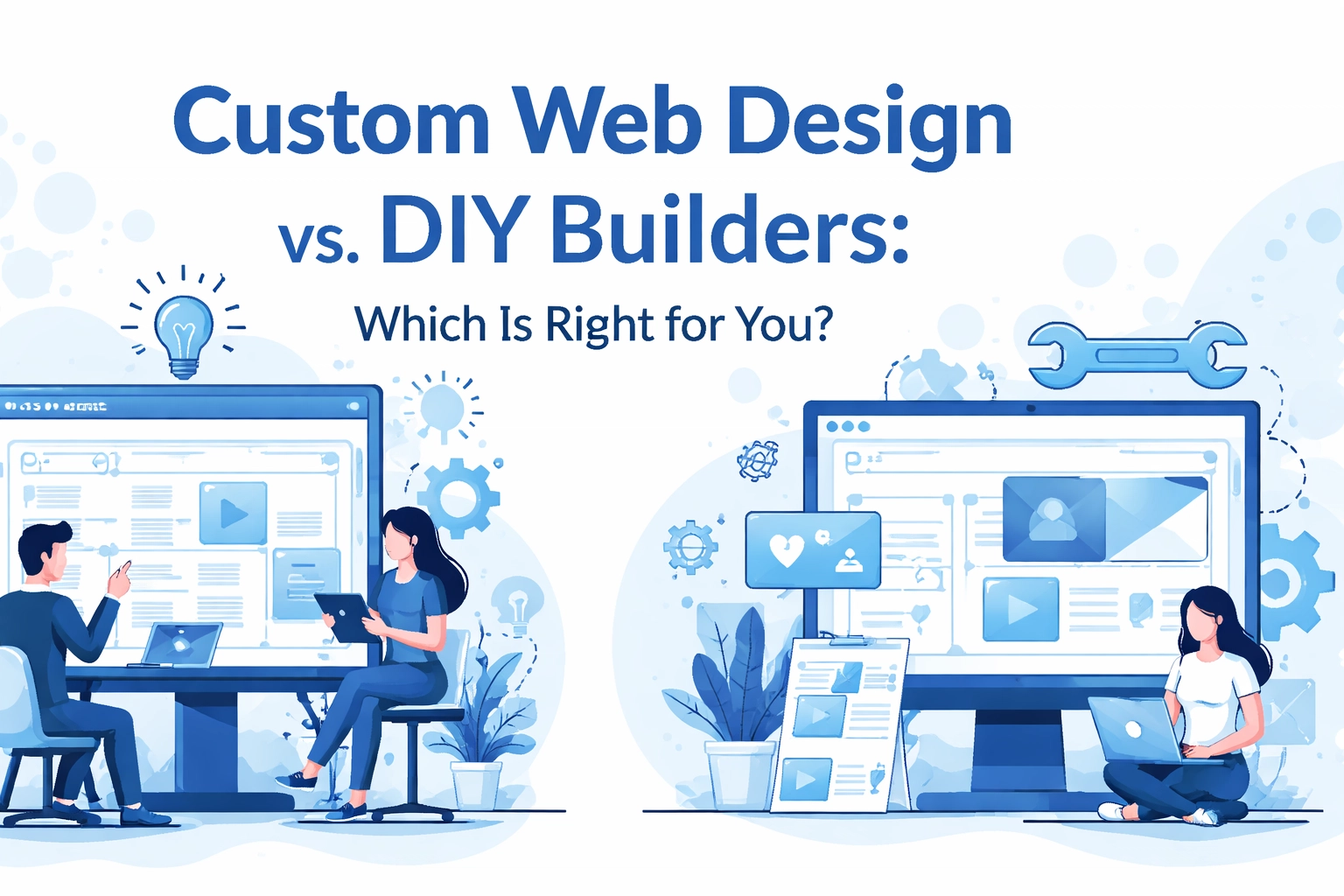

So you need a website. You've probably seen the ads for those drag-and-drop builders promising a professional site in under an hour. Sounds pretty tempting, right?
But then someone mentions custom web design and suddenly you're wondering if you're about to make a huge mistake going the DIY route
Here's the thing: neither option is universally better. It really comes down to where your business is right now, what you actually need, and how much you're willing to invest
Let's break it all down so you can make a decision that makes sense for you
What Are We Actually Comparing Here?
Before we dive in, let's get clear on what we're talking about
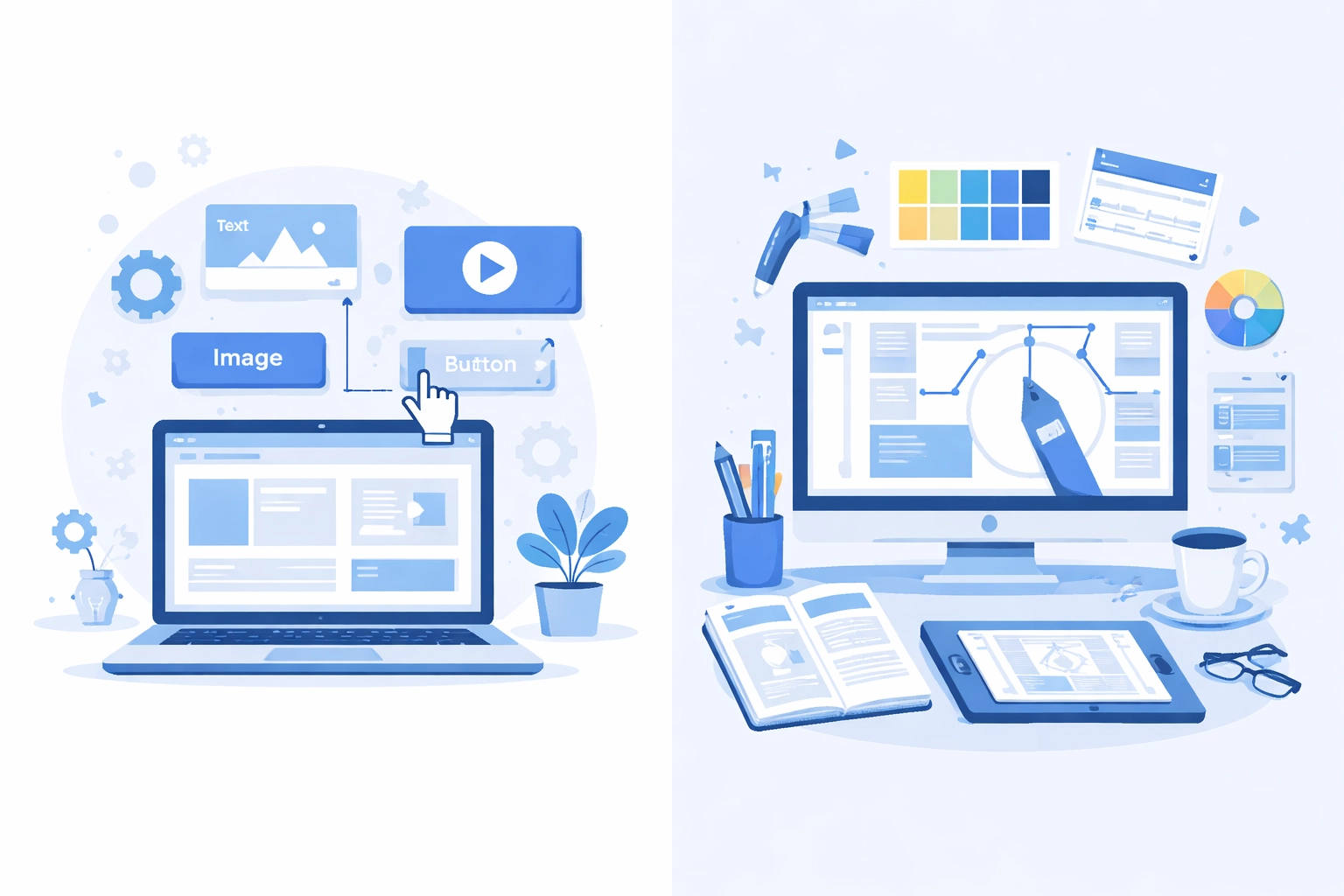
DIY website builders are platforms like Wix, Squarespace, or WordPress.com. They give you pre-made templates and drag-and-drop tools. You pick a design, plug in your content, and boom: you've got a website
Custom web design means working with a professional team (like the folks at WorldWise) to build a site from scratch. Every element is designed specifically for your business, your goals, and your brand
Both get you a website. But the experience and results can be wildly different
The Cost Factor
Let's talk money first because that's usually the biggest concern
DIY builders are cheap. We're talking $10 to $50 per month for most plans. Some even have free tiers, though those come with serious limitations like ads on your site and a clunky URL
Custom websites require a bigger upfront investment. Depending on complexity, you might be looking at $1,000 or more to get started. That number goes up as you add features
But here's what people forget: with a custom site, you're not locked into monthly subscriptions forever. Once it's built, it's yours. With builders, you're paying rent on your own website for as long as you use it
Over five years, those $30/month payments add up to $1,800. And you still don't actually own the underlying platform
Design and Customization
This is where things get interesting
Website builders give you templates. They look nice and they're professionally designed. But you're working within guardrails. You can change colors, swap images, and move things around a bit. That's about it
Want your navigation to work differently? Tough luck. Need a specific layout that doesn't exist in the template options? You're stuck
Custom web design flips this completely. Everything gets built around what you actually need. Your brand, your user flow, your specific requirements. Nothing is off the table
If you've ever felt frustrated that your website looks like a hundred other sites out there, that's the template limitation showing
Functionality and Features
Most DIY builders come loaded with basic features. Contact forms, image galleries, simple e-commerce tools. For a lot of businesses, especially early on, this covers the basics just fine
But what happens when you need something more specific?
Maybe you need a customer portal where clients can log in and check their project status. Or custom analytics that track metrics unique to your business. Or multilingual support because your customer base speaks more than one language
This is where builders start to crack. They weren't designed for your specific business. They were designed for everyone, which means they're optimized for no one
Custom development through a team like WorldWise opens up possibilities that simply don't exist with templates. Complex integrations, specialized features, functionality that fits how your business actually operates
The Maintenance Question
Here's a point for the DIY side: maintenance is easy
Website builders handle updates, security patches, and hosting automatically. You don't have to think about it. The platform takes care of everything behind the scenes
Custom websites need more hands-on attention. Someone has to manage updates, monitor security, and handle technical issues when they pop up. That's either you, someone on your team, or a support partner you can rely on
For some business owners, this is a dealbreaker. For others, the trade-off is worth it for the flexibility and ownership that comes with custom work
Speed to Launch
Need a website by tomorrow? A builder is your friend
You can legitimately have something live within a few hours. Pick a template, add your content, connect your domain, done. It won't be perfect, but it'll exist
Custom web design takes longer. There's a discovery process, design phases, development, testing. Depending on complexity, you're looking at weeks or months
If speed is your top priority right now, that's a real consideration. But remember that a quick launch doesn't always mean a good foundation for growth
When a DIY Builder Makes Sense
Let's be real. Not every business needs a custom website
A website builder is probably your best bet if:
- You're just getting started and need something online fast
- Your budget is tight and you need to conserve cash for other priorities
- Your website needs are straightforward (basic pages, contact info, maybe a blog)
- You're comfortable handling small updates yourself
- You don't anticipate major changes to your business model anytime soon
There's no shame in starting here. Plenty of successful businesses launched with a simple template site
When Custom Web Design Is Worth It
On the flip side, there are clear signals that you've outgrown the DIY approach
Consider custom web design if:
- You're scaling fast and your current site can't keep up
- You need features that don't exist in standard templates
- Your brand identity matters and you want to stand out from competitors
- You have the budget for a long-term investment in your digital presence
- Your business has complex requirements (custom portals, integrations, specific workflows)
- You're planning for significant growth and need a foundation that can handle it
This is where working with a professional web design team starts paying dividends. You're not just getting a website. You're getting a strategic asset built specifically for your business goals

The Hidden Cost of "Good Enough"
Here's something worth thinking about
A lot of businesses start with a DIY builder because it's cheap and easy. Makes total sense. But then they grow. Their needs change. And suddenly that template site is holding them back
Maybe it's slow and hurting their search rankings. Maybe it looks dated compared to competitors. Maybe they need functionality the platform simply can't provide
So they end up rebuilding everything from scratch anyway. That "cheap" solution ended up costing more in the long run because of the delay and the double effort
Not saying this happens to everyone. But it's worth considering where you see your business in two or three years, not just where it is today
Making Your Decision
So which route should you take?
Start by asking yourself a few questions:
- What's my realistic budget for this project?
- How quickly do I need to launch?
- What specific features does my business actually need?
- How much do I want to handle myself vs. delegate?
- Where do I see this business growing?
Your answers will point you in the right direction
If you're leaning toward custom work and want to explore what that looks like, reach out to WorldWise. We can talk through your specific situation and figure out whether custom design makes sense for you right now: or if you should start simpler and scale up later
No hard sell. Just an honest conversation about what actually fits your business
The Bottom Line
DIY builders are practical, affordable, and perfect for businesses just starting out or those with straightforward needs
Custom web design is an investment that pays off when you need flexibility, advanced functionality, and a site that truly represents your brand
Neither is inherently better. The right choice depends entirely on you
Just make sure you're choosing based on where your business is headed, not just where it is today