
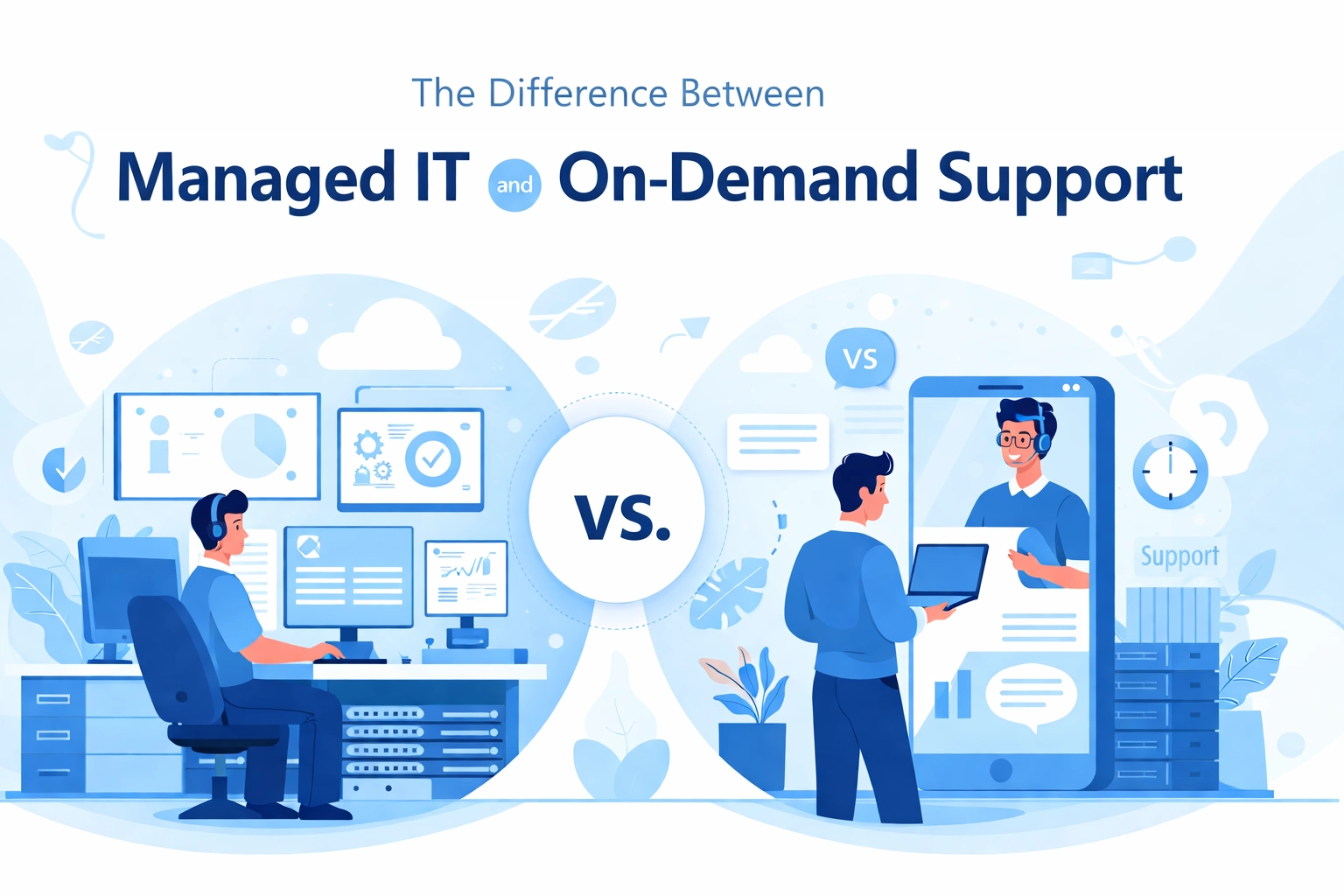

Your business relies on technology. When something breaks, you need it fixed. But how you get that fix matters more than you might think
There are two main ways to handle IT support: managed IT services and on-demand support. Both keep your systems running. Both solve problems. But they work in completely different ways
Understanding the difference helps you pick the right fit for your business. Let's break it down
What Is Managed IT Support?
Managed IT support means hiring a team to handle your technology on an ongoing basis. They monitor your systems constantly. They fix issues before you even notice them. They become an extension of your business
Think of it like having a full-time IT department without the overhead of hiring employees. You pay a fixed monthly fee. In return, you get continuous coverage and proactive maintenance
The goal is prevention. Managed IT providers watch your network, update your software, patch security vulnerabilities, and optimize performance around the clock. Problems get caught early. Downtime stays minimal

What Is On-Demand IT Support?
On-demand IT support works differently. You call when something breaks. A technician shows up or logs in remotely. They fix the problem. You pay for that specific service
There's no ongoing relationship. No monitoring. No monthly fee. You only pay when you need help
This model is reactive. Something goes wrong, then you respond. It works well for businesses with simple setups or those who already have an internal IT person handling day-to-day tasks
The Core Differences
Proactive vs Reactive
This is the biggest difference between the two models
Managed IT takes a proactive approach. Your provider constantly monitors your systems looking for warning signs. They spot a failing hard drive before it crashes. They notice unusual network activity that could signal a security threat. They apply updates during off-hours so your team isn't interrupted
On-demand support is reactive. Nothing happens until you report a problem. By then, the damage might already be done. Data could be lost. Systems could be down. Your team sits idle waiting for a fix
Pricing Structure
Managed IT services use a fixed monthly fee. You know exactly what you're paying each month. Budgeting becomes predictable. There are no surprise bills when something major breaks
On-demand support charges by the hour or by the project. This seems cheaper at first. But costs add up fast when problems pile up. One bad month with multiple issues can blow your budget
Here's a simple comparison:
| Factor | Managed IT | On-Demand Support |
|---|---|---|
| Pricing | Fixed monthly fee | Pay per incident |
| Predictability | High | Low |
| Budget surprises | Rare | Common |
Availability
Managed IT providers offer continuous support. Many provide 24/7 monitoring and response times. Your systems are watched even when you're sleeping
On-demand support responds when you reach out. Response times vary. If you call during a busy period, you might wait. There's no one watching your systems overnight or on weekends unless you specifically request it

System Familiarity
A managed IT team gets to know your business. They understand your network setup. They know your software. They remember past issues and patterns. This familiarity speeds up troubleshooting and improves recommendations
On-demand technicians start fresh each time. They don't know your history. They need to learn your setup before they can help. This takes time and can lead to solutions that don't fit your specific situation
Contract Terms
Managed IT agreements typically run 1-3 years. This provides stability for both parties. The provider invests time learning your systems. You get consistent service and pricing
On-demand arrangements are more flexible. No long-term commitment. You can switch providers easily. But you also lose continuity. Every new technician needs to start from scratch
Which One Is Right for Your Business?
There's no universal answer. The right choice depends on your situation
Choose Managed IT If:
- Your business depends heavily on technology
- Downtime costs you money or customers
- You don't have internal IT staff
- You're growing and need scalable support
- Security and compliance matter to your industry
- You want predictable monthly costs
Managed IT makes sense for businesses where technology failures create real problems. If your team can't work when systems are down, prevention beats reaction every time
Choose On-Demand Support If:
- Your IT needs are minimal
- You already have someone handling basic IT tasks
- Your budget is tight and inconsistent
- You only need occasional specialized help
- Your systems are simple and rarely have issues
On-demand works for smaller operations or businesses with existing IT resources. If you just need someone to call when the printer won't connect, a full managed agreement might be overkill

The Hidden Costs of Reactive Support
On-demand support looks cheaper on paper. You only pay when something breaks. But there are hidden costs to consider
Downtime losses: Every hour your systems are down, your team can't work. Sales don't happen. Customers wait. Productivity tanks
Data loss risks: Without monitoring, problems escalate. A small issue becomes a major failure. Data gets lost. Recovery is expensive
Security vulnerabilities: Unpatched systems are targets. Without regular maintenance, hackers find easier entry points. A breach costs far more than monthly monitoring
Inefficient fixes: Technicians unfamiliar with your setup take longer to solve problems. You pay for their learning curve
These costs don't show up on the invoice. But they hit your bottom line
Making the Transition
If you're currently using on-demand support and considering managed IT, the switch is straightforward. A good provider will audit your current systems, document your setup, and create a transition plan
The first few months focus on stabilization. They'll update outdated software, patch security holes, and optimize performance. After that, maintenance becomes routine. Problems decrease. Your systems run smoother
If you need help evaluating your options, our support team can walk you through what managed IT looks like in practice
A Hybrid Approach
Some businesses use both models. They have managed IT for core systems and on-demand support for specialized projects
For example, you might have managed monitoring and maintenance for your network and servers. But when you need a one-time website migration or custom software installation, you bring in an on-demand specialist
This hybrid model works well for businesses with diverse needs. It provides ongoing protection where it matters most while keeping flexibility for unique situations
Final Thoughts
The choice between managed IT and on-demand support comes down to how important technology is to your operations and how much risk you're willing to accept
Managed IT costs more upfront but prevents expensive disasters. On-demand support costs less initially but leaves you vulnerable to bigger problems
Most growing businesses eventually move toward managed IT. The predictability, security, and peace of mind outweigh the monthly fee. But every business is different
Think about your current setup. Consider your growth plans. Evaluate how much downtime would actually cost you. Then make the choice that fits
Need help figuring out what's right for your business? Get in touch and we can talk through your options