
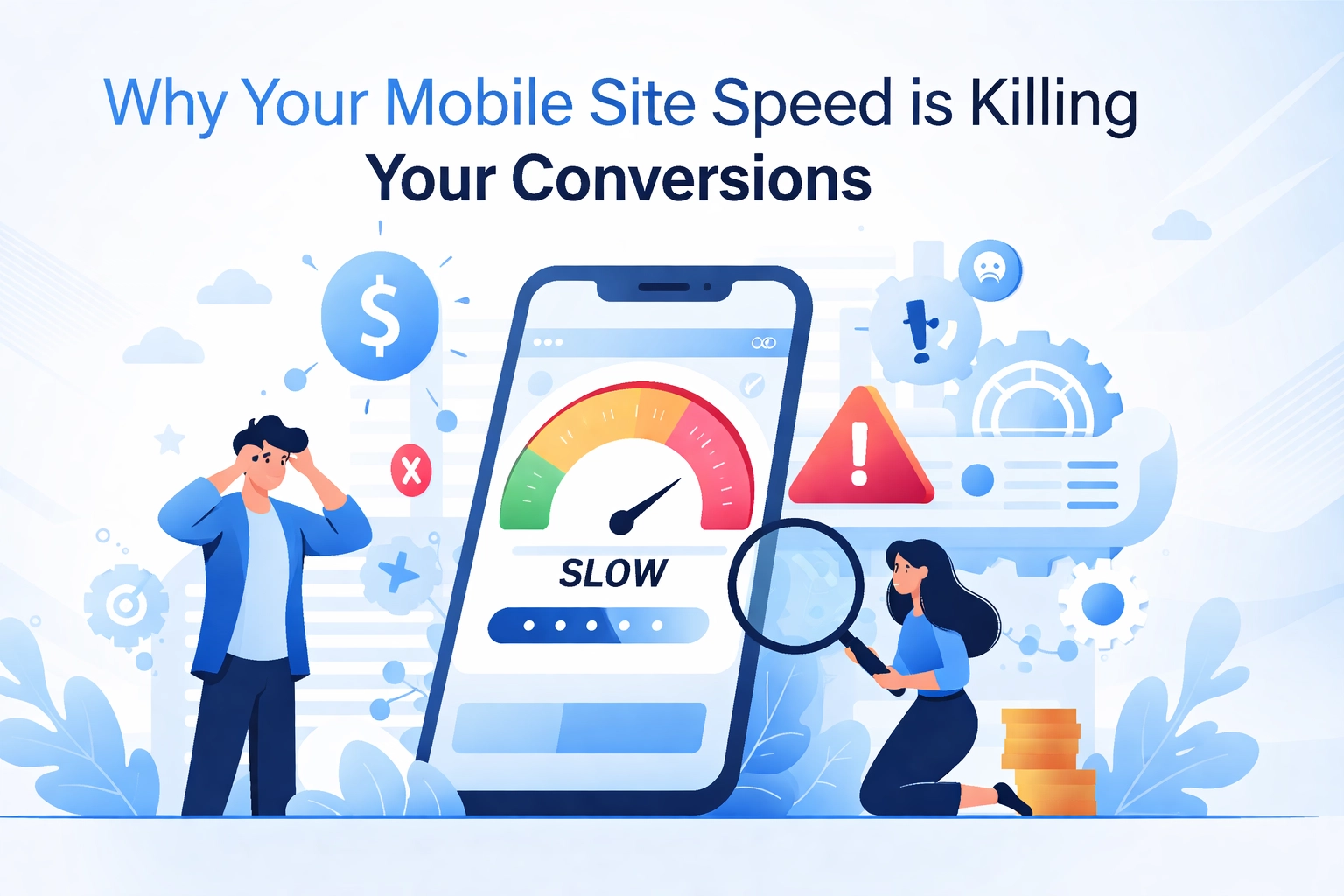

Your mobile site is probably slower than you think. And that slowness is costing you money every single day.
Here's the reality: a one-second delay in mobile load time can drop your conversion rates by 20%. Every 0.1-second slowdown can reduce conversions by 8.4%. That's not a typo. Fractions of a second are making or breaking your bottom line.
Let's break down why this happens and what you can do about it.
The Numbers Don't Lie
People are impatient. We all know this. But the data paints a brutal picture of just how impatient mobile users really are.
63% of visitors will bounce from a page that takes more than four seconds to load. Pages loading in three seconds have a 32% higher bounce rate than pages loading in one second. That's a massive chunk of potential customers walking away before they even see what you're selling.

Think about your own behavior. When was the last time you waited patiently for a slow website to load on your phone? You probably hit the back button and moved on to the next option. Your customers do the same thing.
Mobile is Worse Than Desktop
Here's where it gets interesting. Mobile websites consistently struggle more with speed than desktop versions. The average mobile page load time in 2023 was 8.6 seconds. Desktop? Just 2.5 seconds.
That's a massive gap. And it matters because mobile traffic now accounts for the majority of web visits. If your mobile experience is slow, you're losing the majority of your potential customers.
A lack of speed optimization specifically for mobile devices can result in up to a 22% drop in conversions. That's not a small leak in your sales funnel. That's a gaping hole.
What's Actually Happening
When someone visits your mobile site and it loads slowly, here's what goes through their mind:
- Frustration builds with each passing second
- They question whether your site is trustworthy
- They wonder if their time is being wasted
- They remember they have other options
- They leave
Every extra tap, every loading spinner, every second of waiting creates friction. Friction kills conversions. It's that simple.
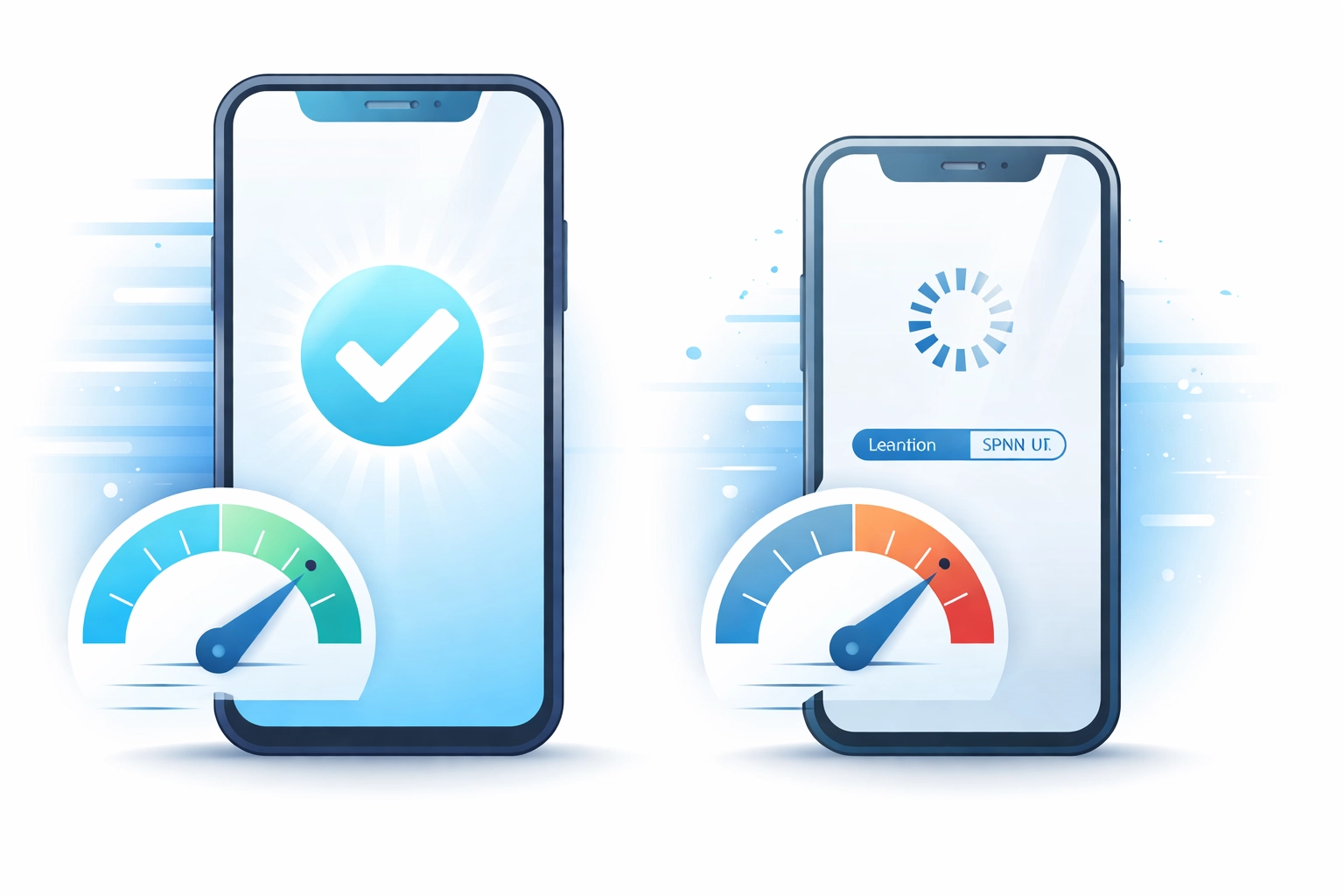
Your beautiful design doesn't matter if nobody waits long enough to see it. Your compelling copy is worthless if visitors bounce before reading a single word. Your amazing product or service never gets a chance.
The Financial Impact
Let's put some real numbers to this.
Websites that load in one second have three times higher conversions than pages loading in five seconds. Five times higher than pages loading in ten seconds.
Now multiply that across every visitor. Every day. Every week. Every month.
If you're getting 1,000 mobile visitors per day and your site loads in five seconds instead of one, you're potentially losing two-thirds of your conversions. If each conversion is worth $100 to your business, that's roughly $66,000 in missed revenue per day.
The math is rough, but the point stands. Slow mobile speed isn't just an inconvenience. It's expensive.
Why Your Mobile Site is Slow
Several common culprits are probably dragging down your load times:
Unoptimized images - Large image files are one of the biggest speed killers. That high-resolution photo might look great, but if it's 5MB, it's destroying your load time.
Too much code - Bloated CSS, JavaScript, and HTML slow everything down. Every unnecessary line of code adds weight.
Third-party apps and plugins - These account for nearly 4% of page load time on average. Each tracking pixel, chat widget, and social media plugin adds up.
Poor hosting - Cheap hosting often means slow servers. Your site is only as fast as the infrastructure supporting it.
No mobile optimization - Serving the same heavy desktop site to mobile users is a recipe for disaster.

How to Fix It
Good news: mobile speed is fixable. Here's where to start.
Optimize Your Images
Compress every image on your site. Use modern formats like WebP. Implement lazy loading so images only load when users scroll to them. This single change can cut load times dramatically.
Clean Up Your Code
Remove unnecessary plugins. Minify your CSS and JavaScript. Eliminate render-blocking resources. A leaner codebase means faster loading.
Audit Your Third-Party Tools
Do you really need that analytics tool you never check? What about the social sharing buttons nobody uses? Each one adds load time. Keep only what's essential.
Upgrade Your Hosting
Quality hosting costs more but pays for itself in speed and reliability. Consider a content delivery network (CDN) to serve your site from locations closer to your users.
Test on Real Devices
Don't just check your site on your fancy new phone. Test on older devices with slower connections. That's where many of your customers are browsing.
The Target to Aim For
Research shows conversion rates peak when load times fall between 3.3 and 3.5 seconds. That's your goal. Not instantaneous (though faster is always better), but fast enough that users don't bail.
Getting from 8.6 seconds to under 4 seconds might sound daunting. But each improvement compounds. Shave off a second here, half a second there. The cumulative effect on your conversions will be significant.

What This Means for Your Business
Mobile speed isn't a technical issue you can ignore. It's a business issue that directly impacts revenue.
Every day your mobile site is slow, you're losing customers. Not because your product isn't good. Not because your prices are wrong. Simply because people won't wait.
The fix requires investment: time, money, or both. But the return on that investment is clear. Faster sites convert better. Period.
Take Action
Start by testing your current mobile speed. Google's PageSpeed Insights is free and gives you a baseline. Then work through the fixes systematically.
If speed optimization sounds overwhelming, that's understandable. It involves technical work that takes expertise to do right. The team at WorldWise specializes in web and mobile development that prioritizes performance alongside design.
Whether you tackle it yourself or bring in help, don't let mobile speed continue killing your conversions. The data is clear. The solution exists. The only question is how long you'll wait to fix it