
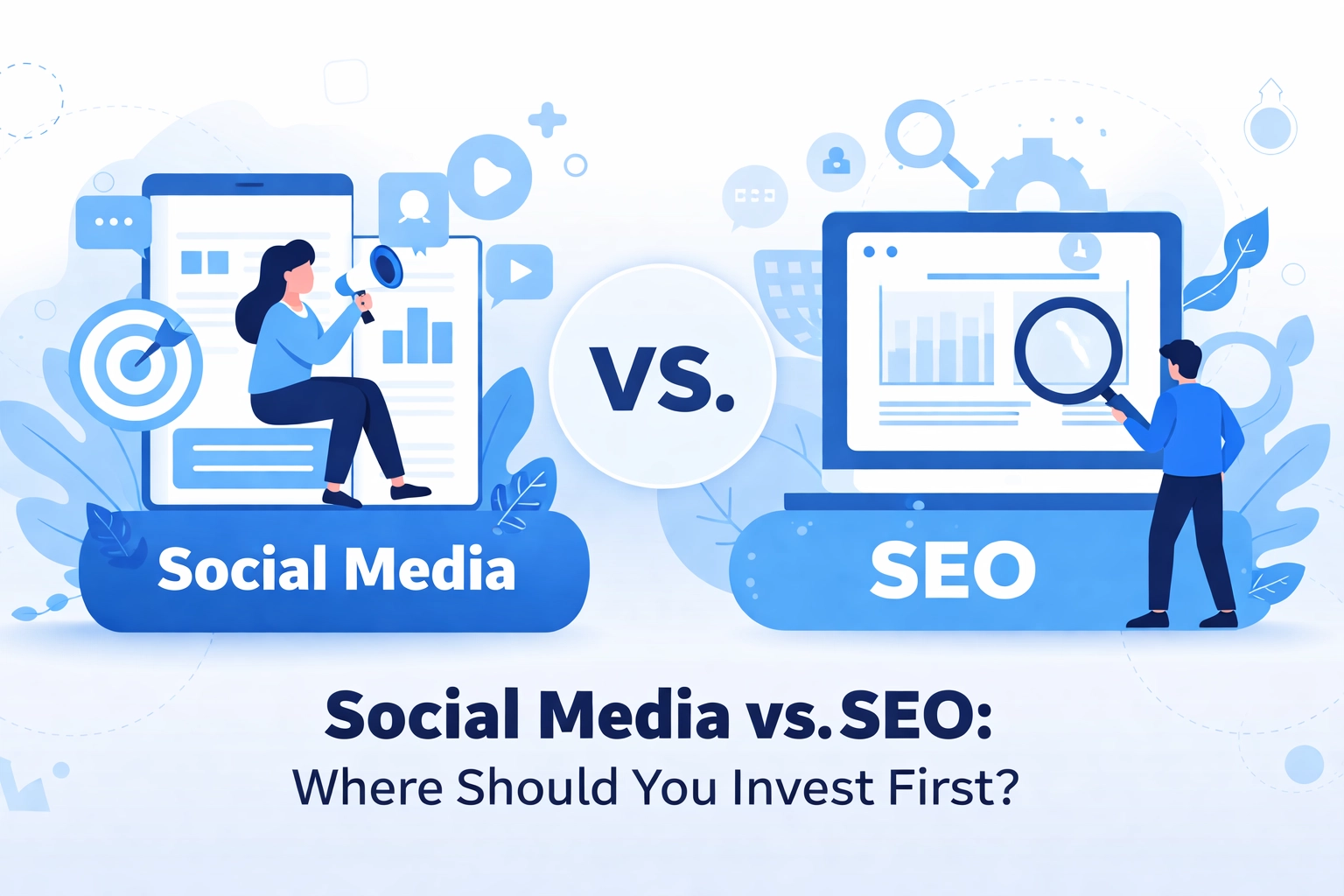

It's a question that comes up all the time. You've got a limited budget and limited hours in the day. Do you pour your energy into building a social media presence or invest in search engine optimization?
The honest answer: it depends
But that's not very helpful on its own. So let's break down what each strategy actually does, when each one makes the most sense, and how to figure out where your money should go first
What SEO Actually Does
SEO (search engine optimization) is the process of making your website easier to find on search engines like Google. When someone types "best project management software" or "how to fix a leaky faucet," SEO determines which websites show up first
Good SEO involves:
- Creating useful content that answers real questions
- Making sure your site loads fast and works on mobile
- Building credibility through backlinks from other sites
- Using the right keywords naturally throughout your pages
The payoff? When SEO works, people find you while actively searching for what you offer. They're already interested. They're already looking
But here's the catch: SEO takes time. We're talking 6 to 12 months before you see meaningful results. It's a long game
What Social Media Marketing Does
Social media marketing is about building visibility and engagement on platforms like Instagram, LinkedIn, Facebook, and TikTok. You're putting your brand in front of people while they scroll
Social media lets you:
- Build brand awareness quickly
- Engage directly with your audience
- Test messaging and see immediate feedback
- Create shareable content that spreads organically
The payoff? Instant visibility. Post something today and people can see it today. Comments, likes, shares: you get real-time engagement
The downside? That visibility fades fast. Social posts have a short shelf life. Yesterday's post is already buried. You have to keep feeding the machine
The Real Differences
Let's put these side by side
| Factor | SEO | Social Media |
|---|---|---|
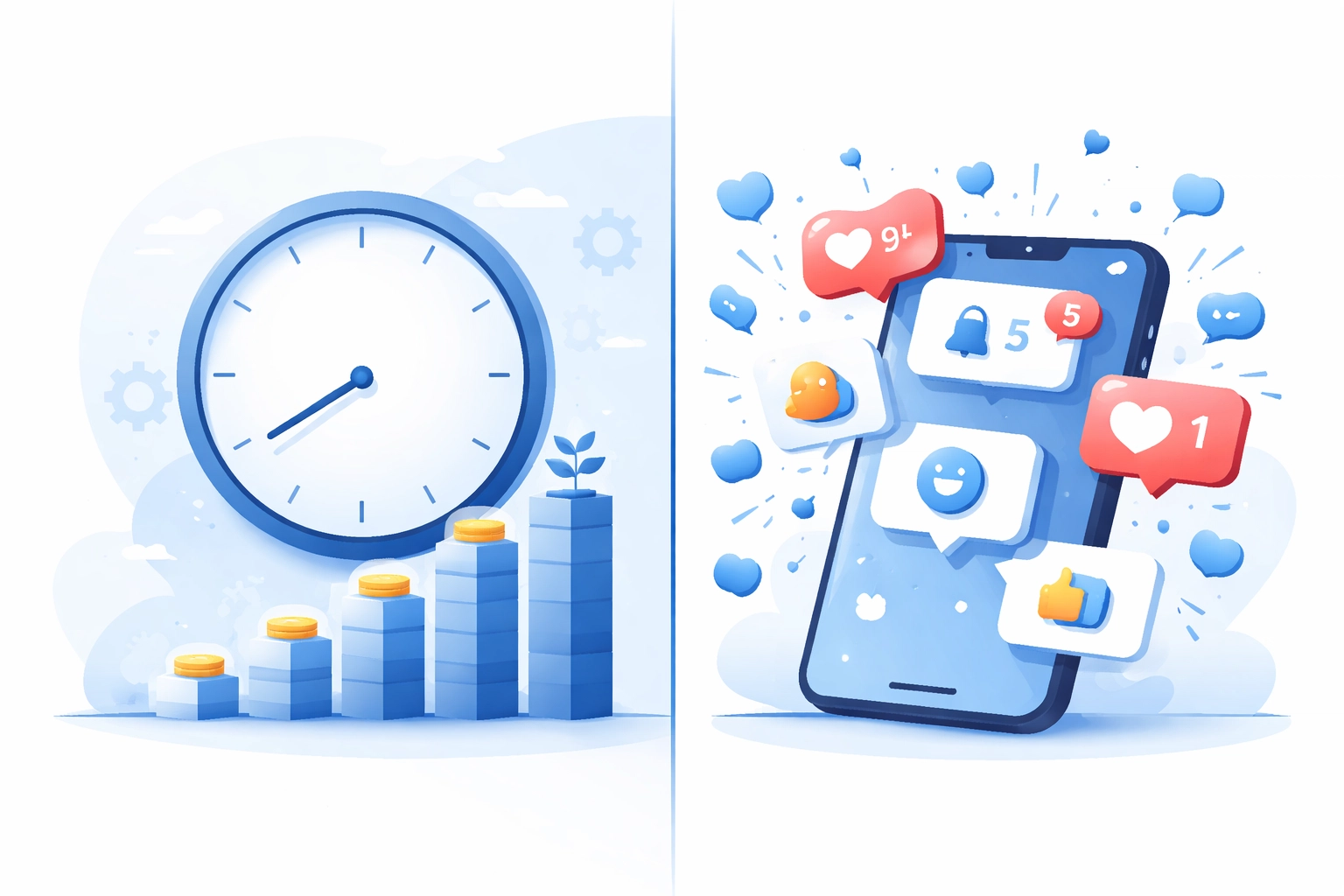
| Time to see results | 6-12 months | Immediate |
| Content lifespan | Years (a good blog post keeps ranking) | Hours to days |
| Long-term ROI | Compounds over time | Requires constant investment |
| Audience intent | High (they're searching for answers) | Low (they're browsing) |
| Best for | Service businesses, B2B, info-heavy industries | Lifestyle brands, retail, visual products |
Neither one is universally better. They serve different purposes at different stages
When Social Media Should Come First
If you're just starting out, social media often makes more sense as your first priority
Here's why:
You need to validate your idea. Before investing months into SEO, you want to know people actually care about what you're offering. Social media lets you test messaging, see what resonates, and build an initial audience without a huge time commitment
You need results now. Maybe you're launching something new or running a promotion. SEO won't help you this month. Social media can
Your product is visual. If you sell something people need to see: fashion, food, art, home decor: social platforms built around images and video are your natural home
You're building a personal brand. Coaches, consultants, creators: these businesses often live or die on personality. Social media lets people get to know you
For early-stage businesses testing the waters, social media provides the fastest feedback loop. You can learn what works before committing serious resources to SEO
When SEO Should Come First
If you're past the validation stage and thinking about sustainable growth, SEO starts to look really attractive
You want compounding returns. A blog post you write today can bring traffic for years. Social posts from last week are basically invisible. With SEO, your work stacks up over time
Your customers are searching. If people are actively Googling problems you solve, SEO puts you in front of them at exactly the right moment. That's high-intent traffic
You're in a service industry. Legal services, healthcare, consulting, professional services: these businesses often rely on search. People don't usually find their accountant on TikTok
You want lower customer acquisition costs long-term. SEO requires upfront investment but the cost per lead drops over time. Paid social and ads require continuous spending to maintain the same results
The Hybrid Approach (The Real Answer)
Here's what smart businesses actually do: they use both, but adjust the balance based on where they are
Early stage: 70% social, 30% SEO. Build awareness, test messaging, get quick wins. Start laying the SEO foundation but don't expect it to carry the load yet
Growth stage: 50/50. Ramp up content marketing and SEO efforts while maintaining social presence. Your earlier SEO work should start paying off
Established: 30% social, 70% SEO. Let organic search do the heavy lifting. Use social to amplify your best content and stay connected with your audience
The beauty of this approach? Your efforts feed each other
Create a cornerstone piece of content for SEO: a detailed guide or how-to article. Then break it into bite-sized pieces for social. A blog post becomes a carousel, a video, a series of tips. You're not doing double the work. You're repurposing strategically
Your social content can also inform your SEO strategy. See what topics get the most engagement? Write longer, more detailed content about those topics for search
Practical Steps to Get Started
If you're ready to stop debating and start doing, here's a simple framework:
Step 1: Define your timeline. Need leads this month? Lean into social and paid ads. Planning for next year? Start building your SEO foundation now
Step 2: Know your audience's habits. Where do they spend time? What do they search for? Let their behavior guide your investment
Step 3: Audit what you have. Maybe you've got a blog that's been neglected. Maybe you have social accounts with decent followings. Start where you have existing assets
Step 4: Create a content system. Don't treat SEO and social as separate universes. Build workflows where one piece of content becomes many
Step 5: Track and adjust. Neither strategy is set-and-forget. Monitor what's working and shift resources accordingly

The Bottom Line
Social media gives you speed. SEO gives you staying power
If you need momentum now, social media gets you visible fast. If you're building for the long haul, SEO delivers compounding returns that get better with time
Most businesses shouldn't choose one exclusively. The question isn't really "which one?" but "what's the right mix for where I am right now?"
Start with your goals. Work backward from there
And if you need help building a digital marketing strategy that balances both, that's exactly what we do. Reach out when you're ready to figure out your next move