
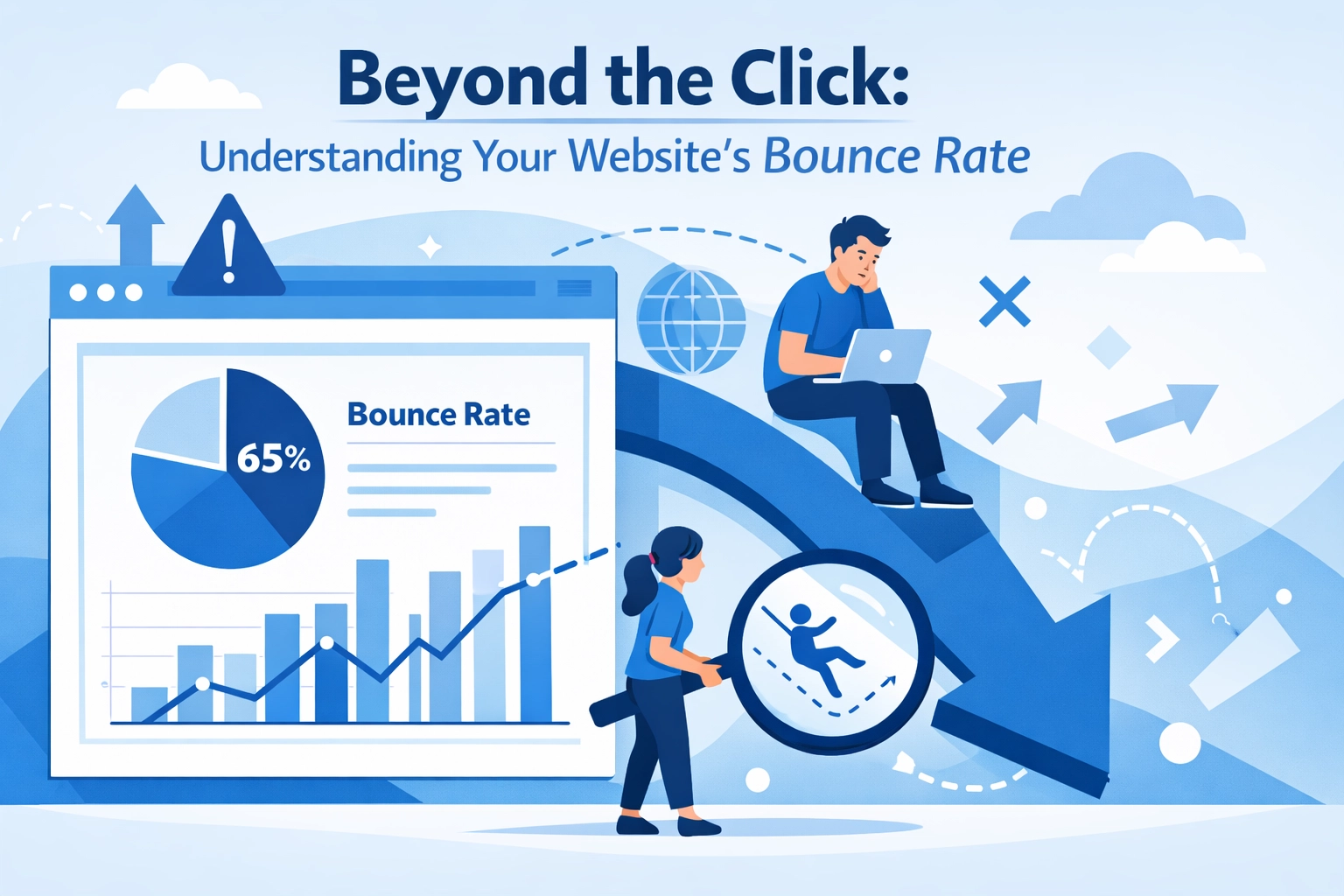

You spent time and money getting people to your website. They clicked. They landed. And then... they left. No second page. No contact form. No sale. Just gone.
That's a bounce. And if it's happening a lot, your bounce rate is trying to tell you something
Let's break down what bounce rate actually means, why it matters, and what you can do to keep visitors sticking around long enough to become customers.
What Is Bounce Rate, Exactly?
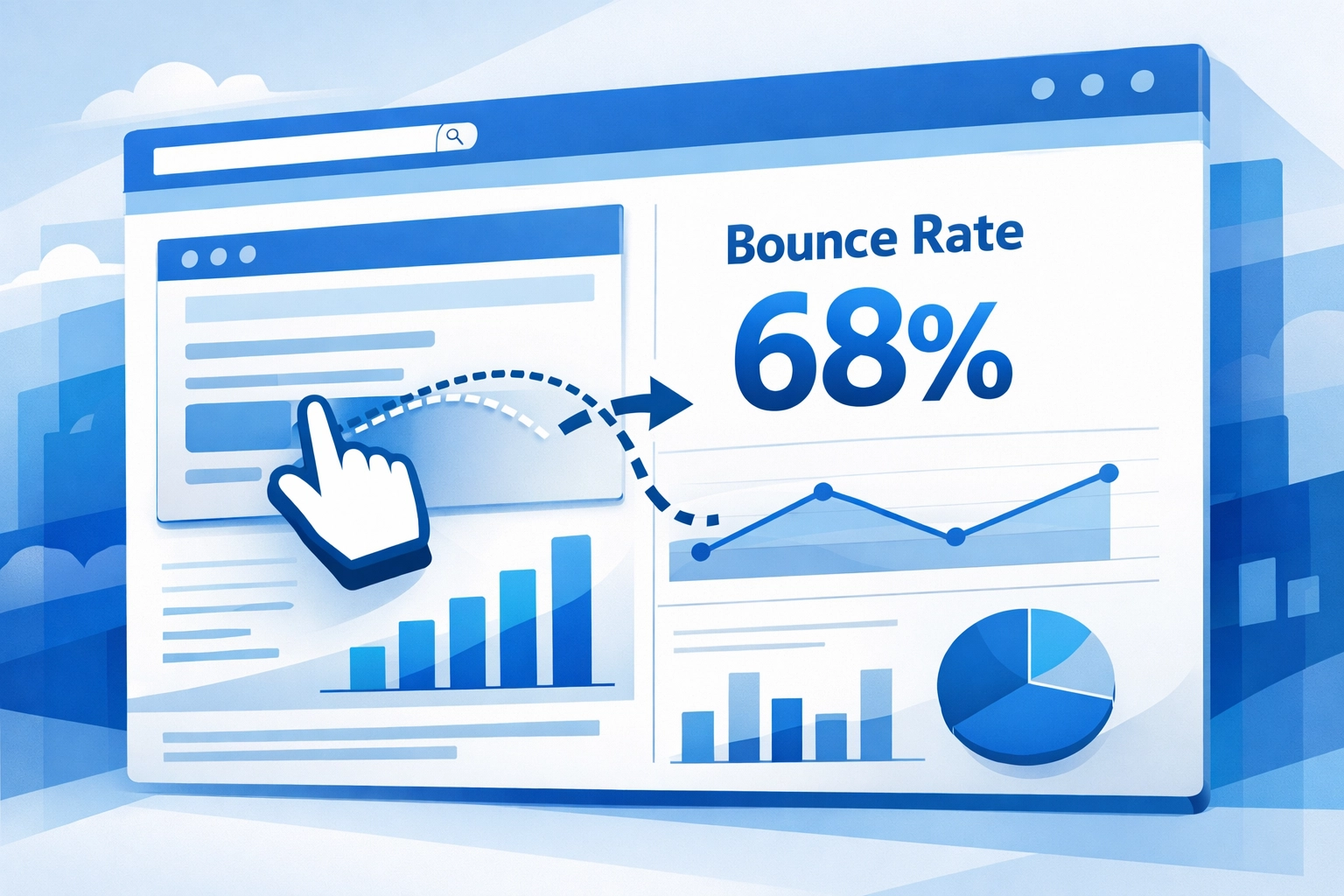
Bounce rate is the percentage of visitors who land on your website and leave without taking any action or viewing another page. They came, they saw, and they bounced
The math is simple: divide the number of single-page visits by your total visits, then multiply by 100. If 1,000 people hit your homepage and 500 leave without clicking anything else, your bounce rate is 50%.
A "bounce" can happen in a few different ways:
- Clicking the back button
- Closing the browser tab
- Typing in a new URL
- Clicking a link that takes them off your site
- Just letting the session time out
In Google Analytics 4 (GA4), the definition got a bit more specific. A session counts as a bounce if it:
- Lasts less than 10 seconds
- Doesn't trigger a conversion event
- Doesn't include at least two pageviews
So if someone lands on your blog, reads for 15 seconds, and leaves, that's not necessarily a bounce anymore. Small wins
Why Should You Care About Bounce Rate?
Bounce rate is one of those metrics that can feel a little abstract until you connect it to real outcomes. Here's the deal: a high bounce rate often signals a disconnect between what visitors expect and what they find
Maybe your ad promised one thing and your landing page delivered another. Maybe your site loads too slowly. Maybe your design is confusing. Or maybe, and this one stings, your content just isn't resonating
Whatever the reason, a bounce means a missed opportunity. That visitor could've become a lead. A customer. A repeat buyer. Instead, they're gone
Now, bounce rate isn't the only metric that matters. But it's a solid indicator of first impressions. And online, first impressions happen fast
What's a "Good" Bounce Rate?
This is where things get nuanced. There's no universal "good" bounce rate because it depends heavily on your industry, your content type, and your goals
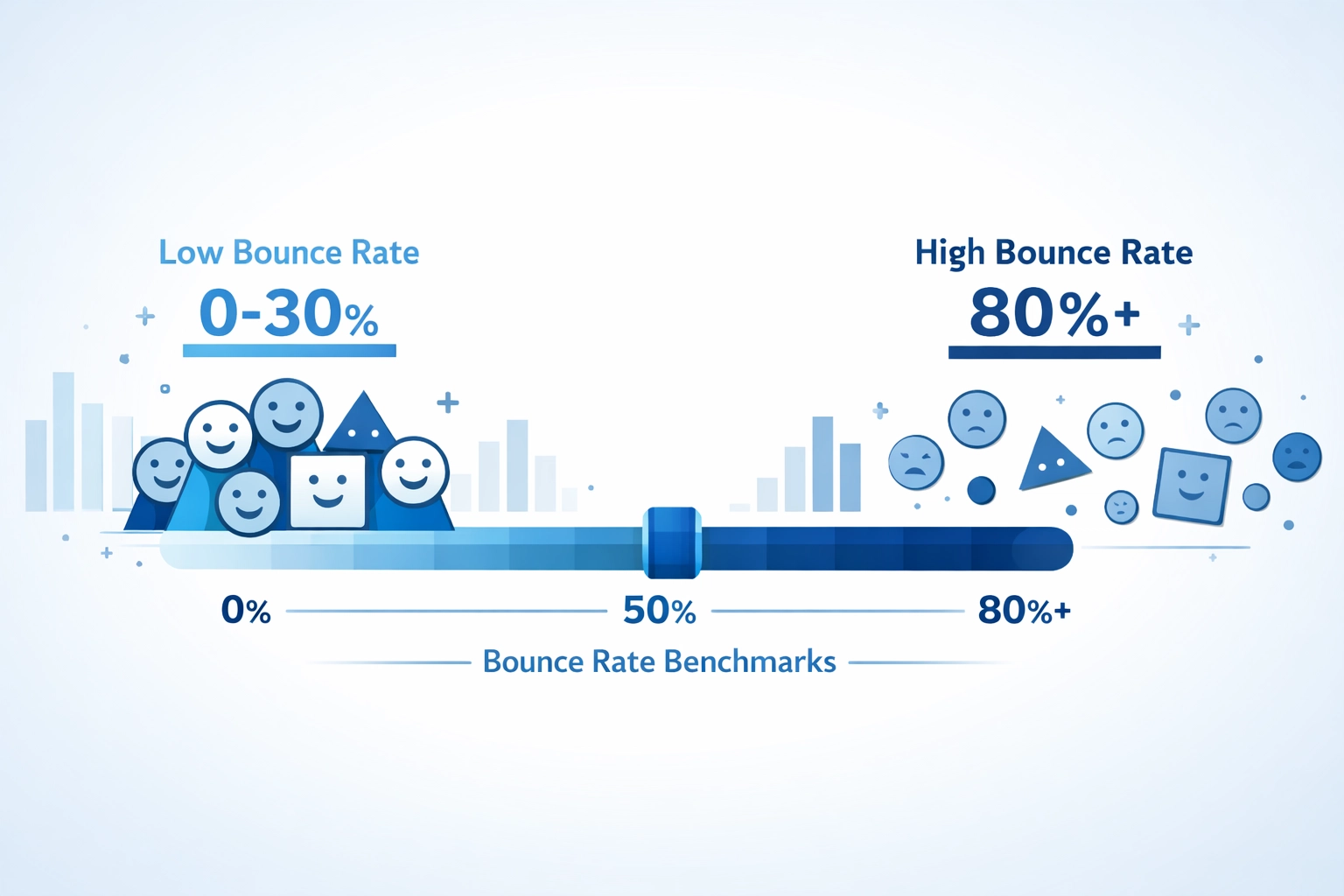
Here are some general benchmarks:
- Blog posts and content pages: 70–90% (people often read one article and leave, totally normal)
- Service websites: 10–30%
- E-commerce/retail sites: 20–40%
- B2B websites: Around 56%
- B2C websites: Around 45%
The median bounce rate across all industries sits at about 44%. A rate of 40% or lower is generally considered solid. If you're hitting 55% or higher, it might be time to dig into what's going wrong
But here's the thing: context matters. A high bounce rate on a blog post isn't alarming. A high bounce rate on your services page or product page? That's a red flag worth investigating
Common Reasons Visitors Bounce
Let's get practical. If your bounce rate is higher than you'd like, one of these culprits is probably to blame
1. Slow Load Times
People are impatient. If your site takes more than a few seconds to load, visitors will leave before they even see your content. Mobile users are especially unforgiving here
2. Poor Mobile Experience
Speaking of mobile, if your site doesn't work well on phones and tablets, you're losing a huge chunk of potential customers. Responsive design isn't optional anymore
3. Confusing Navigation
If visitors can't figure out where to go next, they won't go anywhere. Clear menus, logical page structure, and obvious calls-to-action make a big difference
4. Mismatched Expectations
This happens a lot with paid ads. Someone clicks expecting one thing and lands on something completely different. That disconnect causes instant bounces
5. Weak or Irrelevant Content
Your content needs to answer questions, solve problems, or provide value. If it doesn't, visitors have no reason to stick around
6. Too Many Distractions
Pop-ups, autoplay videos, cluttered layouts, these things annoy people. A clean, focused design keeps attention where it belongs
7. No Clear Next Step
Every page should guide visitors toward something. A contact form. A related article. A product page. If there's no obvious next action, people leave
How to Lower Your Bounce Rate
Alright, enough about the problems. Let's talk solutions
Speed Things Up
Run your site through Google PageSpeed Insights or GTmetrix. Compress images, enable caching, and consider upgrading your hosting if needed. Every second counts
Make Mobile a Priority
Test your site on multiple devices. Make sure buttons are easy to tap, text is readable without zooming, and forms are simple to fill out on a small screen
Improve Your Content
Write for your audience, not for search engines. Answer real questions. Use headings and bullet points to make content scannable. And keep it updated: stale content doesn't inspire confidence

Use Internal Links Strategically
Guide visitors deeper into your site by linking to related content. If someone's reading about SEO basics, point them toward your piece on small business marketing strategy. Keep them exploring
Add Clear Calls-to-Action
Every page needs a purpose. Whether it's "Get a Free Quote," "Read More," or "Contact Us," make sure visitors know what to do next. And make those CTAs easy to find
Match Your Landing Pages to Your Ads
If you're running paid campaigns, make sure the landing page delivers exactly what the ad promised. Consistency builds trust: and trust keeps people on your site
Simplify Your Design
Less is more. A clean layout with plenty of white space helps visitors focus on what matters. Ditch the clutter and let your content breathe
Bounce Rate vs. Exit Rate: What's the Difference?
These two get confused a lot, so let's clear it up
Bounce rate measures single-page sessions. Someone lands on a page and leaves without doing anything else
Exit rate measures where people leave your site, regardless of how many pages they viewed first. Every visit has an exit: it's just a matter of where
A high exit rate on your "Thank You" page after a form submission? Totally fine. A high exit rate on your pricing page? That might be a problem
Both metrics are useful, but they tell different stories. Don't mix them up
How WorldWise Approaches Bounce Rate
At WorldWise, we build websites with conversion in mind. That means thinking about bounce rate from the very first wireframe
Our web design process focuses on:
- Fast load times
- Mobile-first responsiveness
- Clear navigation and user flow
- Strategic calls-to-action
- Content that actually connects with your audience
We don't just make sites that look good. We make sites that perform. Because getting traffic is only half the battle: keeping it is where the real work happens
If your current site is hemorrhaging visitors, it might be time for a conversation. Get in touch and let's figure out what's going on
The Bottom Line
Bounce rate isn't a vanity metric. It's a window into how well your website is doing its job. A high bounce rate means something's off: whether it's speed, design, content, or expectations
The good news? Most bounce rate issues are fixable. With the right adjustments, you can turn those single-page visits into real engagement
Start by understanding where your bounces are happening. Then work backward to figure out why. Test changes, track results, and keep optimizing
Your website should be working for you, not against you. Every visitor who sticks around is one step closer to becoming a customer