
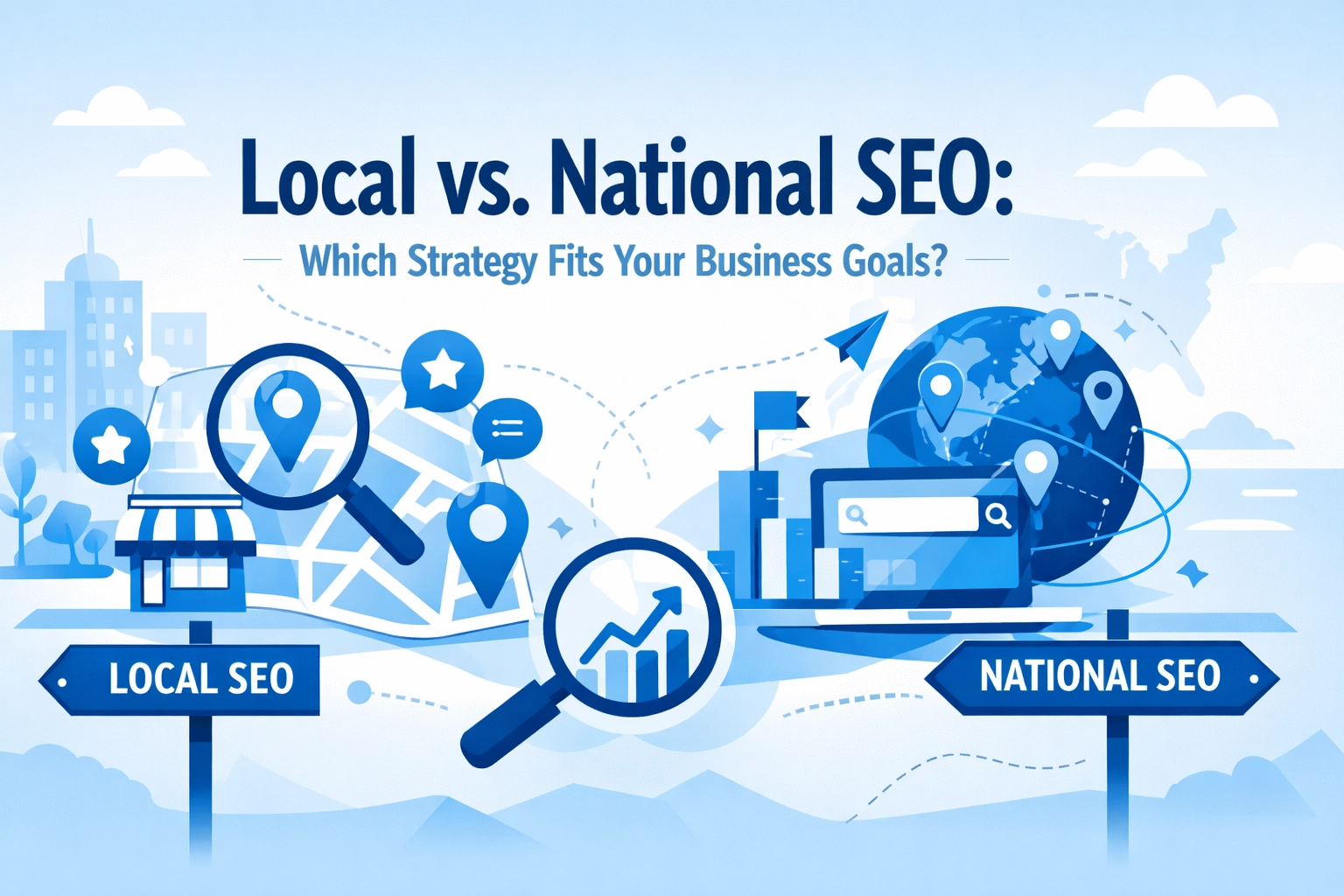

The SEO landscape isn't one-size-fits-all. You've got two main approaches: local SEO that targets customers in specific areas, and national SEO that casts a wider net across the country. Pick the wrong one and you're wasting time, money, and effort on a strategy that doesn't match how your business actually works.
Here's the thing: understanding which approach fits your business model makes the difference between showing up when customers search and getting buried on page three of Google.
What Local SEO Actually Does
Local SEO focuses on getting your business visible to people searching in a specific geographic area. Think "coffee shop near me" or "emergency plumber open now."
This strategy revolves around:
Google Business Profile optimization - Your name, address, and phone number need to be accurate and consistent everywhere they appear online. One wrong digit tanks your credibility with Google.
Location-based keywords - You're targeting searches that include geographic modifiers. People looking for services "near me" or in their city are ready to act fast.

Local citations and directories - Getting listed in local business directories, chamber of commerce websites, and industry-specific platforms builds your local authority.
Reviews and reputation management - Local searchers check reviews before they visit or call. Your star rating directly impacts whether someone chooses you over the competitor down the street.
Map pack visibility - Those three businesses that show up in Google Maps results? That's prime real estate for local SEO. Getting into that pack means more phone calls and foot traffic.
Local SEO works for businesses with physical locations or defined service areas. Hair salons, restaurants, dental offices, HVAC companies, law firms with local clients: if your customers need to visit you or you need to visit them, local SEO is your play.
What National SEO Actually Does
National SEO targets broad, high-volume keywords without geographic limitations. You're competing on a national or international level for industry-wide terms.
This approach emphasizes:
Competitive keyword targeting - You're going after terms with massive search volume. "Web design" instead of "web design in downtown." The competition is fiercer but the audience is bigger.

Domain authority building - National SEO requires serious credibility. That means high-quality content, authoritative backlinks from respected sites, and a website that Google trusts across the board.
Technical SEO excellence - Site speed, mobile optimization, clean code, proper schema markup: the technical foundation matters more when you're competing nationally. One slow page load and visitors bounce to a competitor.
Content marketing at scale - National SEO needs consistent, valuable content that positions you as an industry authority. Blog posts, guides, resources, videos: content that attracts links and establishes expertise.
E-commerce optimization - If you're selling products online and shipping nationwide, national SEO helps you compete with everyone from boutique stores to major retailers.
National SEO fits businesses operating online or serving customers regardless of location. E-commerce stores, SaaS companies, online service providers, remote consultants: if geography doesn't limit who you can serve, national SEO makes sense.
How to Choose Your Strategy
The decision comes down to understanding your business model and revenue sources.
Choose local SEO when:
You operate a brick-and-mortar location that depends on foot traffic. Customers need to physically visit your store, office, or facility.
You provide services within a specific service radius. Plumbers, electricians, landscapers, home repair: if you can't service someone three states away, you don't need to rank there.
Your customer base makes decisions based on proximity. When convenience and location drive purchasing decisions, local visibility matters more than national awareness.
Your budget is limited. Local SEO typically requires less investment than competing nationally because you're targeting a smaller, more defined audience.

Choose national SEO when:
You run an e-commerce business shipping products nationwide. Geographic location doesn't limit who can buy from you.
You offer digital services or products. Online courses, software, digital consulting: anything delivered remotely benefits from national reach.
You're building a brand that serves multiple markets. Even if you have local offices, your target customer could be anywhere in the country.
You have the resources to compete. National SEO requires more content, more link building, and more technical optimization than local efforts.
Why Not Both?
Here's where it gets interesting: local and national SEO aren't mutually exclusive. They actually work together when implemented correctly.
A strong national SEO foundation improves your overall domain authority. That authority makes your local pages more competitive in regional searches. When Google trusts your website as a whole, your location-specific pages benefit from that trust.

Conversely, solid local SEO creates high-quality localized content and earns backlinks from regional sources. Those signals boost your overall domain strength, helping national pages rank better.
National brands use this hybrid approach by creating location-specific landing pages. Your main site competes for national terms while dedicated pages target local searches in each market you serve.
This works if you have multiple locations or serve different geographic markets. One website, multiple strategies working in parallel.
The key is maintaining consistency. Your national content establishes authority and expertise. Your local pages apply that expertise to specific markets with location-relevant information, local testimonials, and area-specific solutions.
Making Your Choice Work
Once you've identified which strategy fits your business, commit to it properly.
For local SEO, claim and optimize your Google Business Profile immediately. Keep your NAP information identical everywhere it appears online. Get reviews from real customers. Build citations in relevant local directories. Create content that addresses local customer needs and questions.
For national SEO, invest in comprehensive SEO strategy that includes technical optimization, content creation, and link building. Build relationships with industry publications for backlinks. Create genuinely useful resources that other sites want to reference. Optimize for competitive keywords methodically.
For hybrid approaches, maintain clear separation between national content and location pages. Don't dilute your national pages with local information or stuff location pages with irrelevant national content. Each page serves a specific purpose for a specific audience.
The Bottom Line
Your business model tells you which SEO strategy to pursue. Physical locations and service areas point to local SEO. Online businesses and nationwide services indicate national SEO. Multiple locations suggest both strategies working together.
Don't overthink this decision. Look at where your customers are, how they find businesses like yours, and what action they need to take after finding you. That tells you everything you need to know about which SEO approach fits your goals.
Need help figuring out the right search engine optimization approach for your specific situation? The strategy that works for one business fails for another. Get it right from the start and you'll see results faster.