

If you're still treating video as optional in your content strategy, you're leaving serious rankings on the table. In 2026, video isn't just a nice-to-have: it's become one of the most reliable ways to dominate search results and actually keep people on your site.
Here's why video has become an SEO powerhouse and what you need to know to use it effectively.
The Numbers Don't Lie
Embedding video on your pages increases your chances of landing on Google's first page by 53%. That's not a small bump: that's a game-changer for visibility.
Even more telling: YouTube videos show up in 70% of the top 100 Google search results for commercial queries. When someone searches for product reviews, how-to guides, or service comparisons, they're seeing video front and center. If you're not there, your competitors probably are.
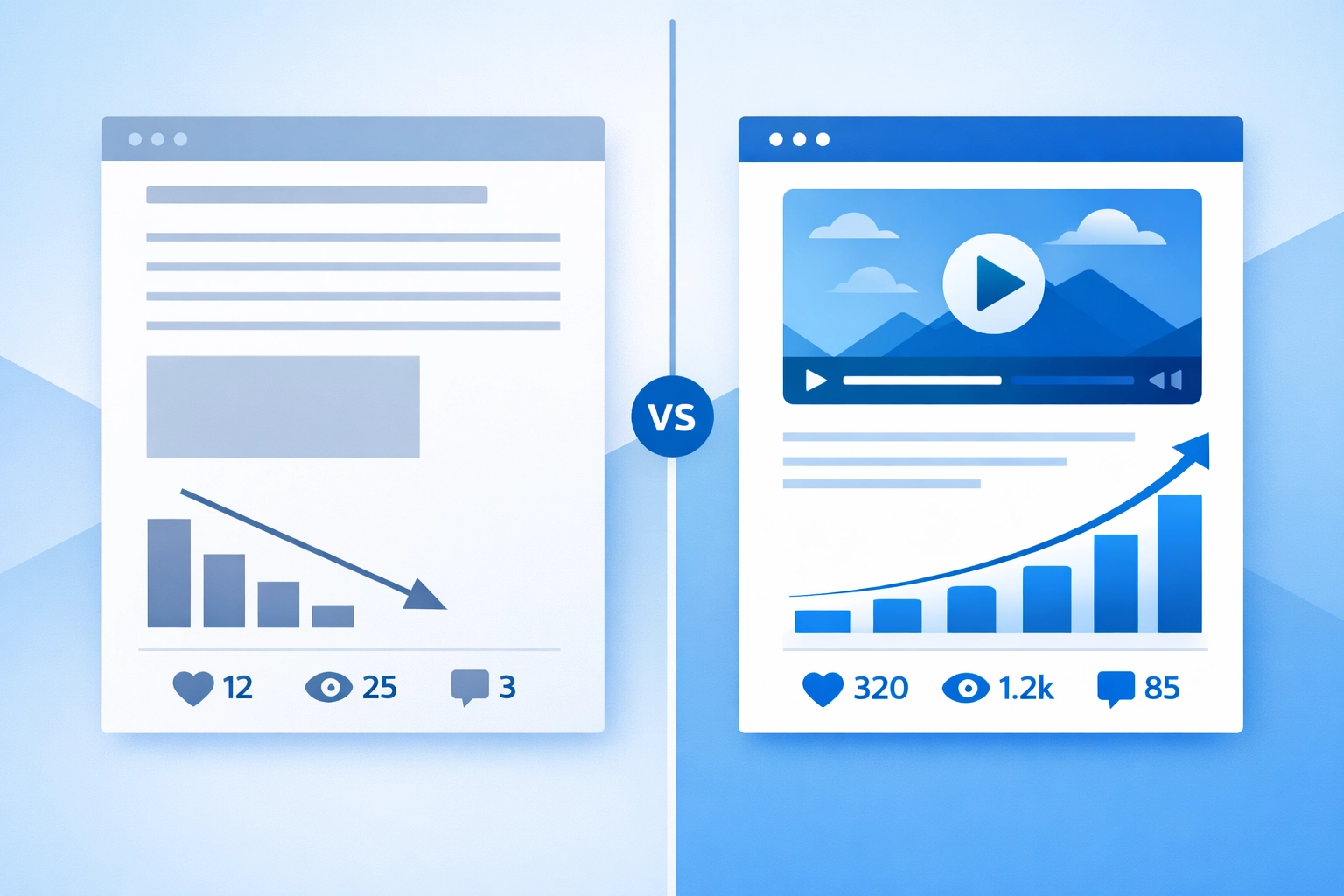
Channels that consistently apply modern YouTube SEO practices see 2-3x higher organic view growth compared to those that just upload and hope for the best. The difference between optimized and unoptimized video content is massive.
Video Keeps People Around
Search engines care about one thing above all else: whether your content actually helps users. Video delivers on that promise better than almost any other format.
Pages with video generate 5.2x longer on-page time compared to text-only content. Think about that. Someone lands on your page and sticks around five times longer because there's a video explaining what they need to know.
Bounce rates drop by 40% when video is present. People aren't immediately clicking the back button and moving on to the next result. They're staying, watching, and engaging with your content.
Click-through rates improve across the board. When video thumbnails show up in search results or email campaigns, people click. In fact, including video in emails boosts click rates by 65%.
All of these engagement signals tell search algorithms that your content is valuable. That reinforces your rankings and keeps you visible.
Search Engines Actually Understand Video Now
Here's where things get interesting. In 2026, search engines don't just see video as a black box of content they can't interpret. They're analyzing everything.
AI-powered systems examine visual elements, audio quality, transcript accuracy, and user engagement patterns to determine relevance. They're looking at how long people watch, where they drop off, and whether they take action afterward.
This means optimized videos: with accurate transcripts, proper metadata, schema markup, and captions: get treated very differently than poorly optimized content. Search engines can index your spoken words, understand your visual content, and match it to user queries with scary accuracy.

Videos with structured data and proper optimization show up in more search features: video carousels, featured snippets, and rich results. That's more real estate on the search results page, which means more opportunities for clicks.
Authenticity Matters More Than Ever
Google's E-E-A-T framework: Experience, Expertise, Authoritativeness, and Trustworthiness: has become central to how content gets evaluated. Video lets you demonstrate all four in ways that text simply can't match.
Real people, genuine voices, and natural expressions signal credibility. In a world increasingly filled with AI-generated content, authentic video stands out. People can see your face, hear your voice, and judge whether you actually know what you're talking about.
Creator-led videos often outperform slick, brand-produced content because they feel conversational and real. You don't need a Hollywood production budget. You need to show up as a real human who knows their stuff.
This authenticity builds trust faster than any blog post or infographic ever could. Trust leads to longer engagement, more shares, and better conversion rates.
How to Actually Use Video for SEO
Understanding why video works is one thing. Using it effectively is another. Here's what actually moves the needle.
Start with YouTube. It's the second-largest search engine in the world and owned by Google. Uploading to YouTube gives you dual visibility: both on YouTube itself and in Google search results. Optimize your titles, descriptions, and tags. Use timestamps in descriptions to help both users and algorithms understand your content structure.
Embed video on your key pages. Don't just throw videos in a separate resources section. Put them on product pages, service descriptions, and landing pages. This is where they'll have the biggest impact on engagement metrics and rankings.

Add transcripts. Search engines can index text easily. Providing a full transcript means your spoken content becomes searchable. This doubles the SEO value of every video you create.
Use schema markup. Video schema tells search engines exactly what your video is about, how long it is, when it was published, and what thumbnail to use. This increases your chances of appearing in rich results and video carousels.
Create videos that answer questions. Focus on the actual searches your audience is making. How-to content, product demonstrations, and explainer videos perform exceptionally well because they match user intent perfectly.
Optimize for mobile. Most video views happen on mobile devices. Make sure your videos load fast, play smoothly, and have captions for people watching without sound.
The Multi-Platform Advantage
Video content isn't just good for Google. It performs across every platform where your audience spends time.
Social media algorithms favor video heavily. LinkedIn, Facebook, Instagram, and Twitter all push video content to more viewers than static posts. Creating one video gives you content you can repurpose across multiple channels.
Email marketing gets a massive boost from video. Just mentioning "video" in a subject line increases open rates. Including a video thumbnail in the email body drives click-through rates up significantly.
Your SEO strategy becomes more efficient when video is part of the mix because you're creating assets that work harder across more channels.
What Makes Video Different in 2026
The landscape has shifted in some important ways. AI-generated content has flooded the internet, making genuine, human-created video more valuable than ever. Search engines are getting better at detecting synthetic content, and they're rewarding authentic material.
Short-form video has proven staying power. People's attention spans haven't magically gotten longer, but they will watch quick, valuable content that solves a problem or answers a question immediately.
Live video and interactive content are gaining traction. These formats generate massive engagement signals and can't be easily replicated by AI, making them especially valuable for SEO.

Video content also feeds into AI search assistants and chat-based interfaces. When someone asks ChatGPT, Bard, or another AI assistant a question, well-optimized video content can be cited as a source. This creates a new type of visibility that didn't exist even a year ago.
The Bottom Line
Video has moved from "nice extra content type" to "critical SEO asset." The stats are clear: better rankings, longer engagement, lower bounce rates, and higher conversions across the board.
You don't need expensive equipment or a production team to get started. You need a clear message, basic optimization knowledge, and consistency.
The businesses dominating search results in 2026 aren't necessarily the ones with the biggest budgets. They're the ones showing up on video, providing real value, and optimizing for how search actually works now.
If you're not using video yet, you're competing with one hand tied behind your back. If you're using it but not optimizing it properly, you're leaving most of the value on the table.
The good news: it's not too late to start. The better news: your competitors probably haven't figured this out yet either.
Want help building a content strategy that actually works in 2026? Let's talk.