
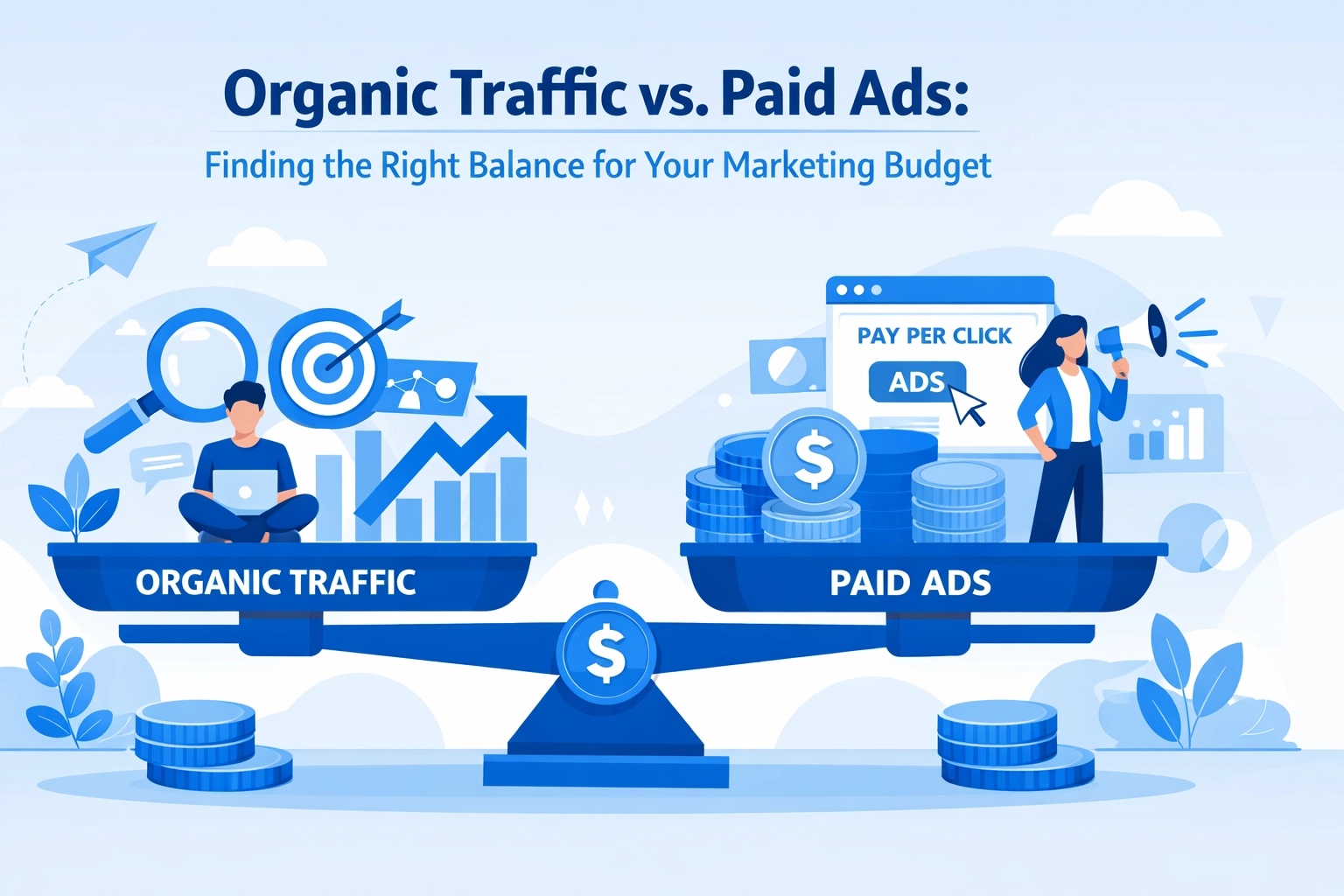

If you're trying to figure out how to split your marketing budget, you've probably hit the classic debate: organic search (SEO) or paid ads (Google Ads, social media ads, etc.)
The short answer? You probably need both. But the ratio depends on where your business is right now and what you're trying to accomplish.
Let's break down the real differences, when each makes sense, and how to build a strategy that actually works.
What's the Actual Difference?
Organic traffic comes from people finding your site through unpaid search results. They Google something, your website shows up in the results, and they click. No money changes hands for that click.
Paid traffic means you're running ads. Google Ads, Facebook Ads, LinkedIn: whatever the platform, you're paying to put your business in front of people.
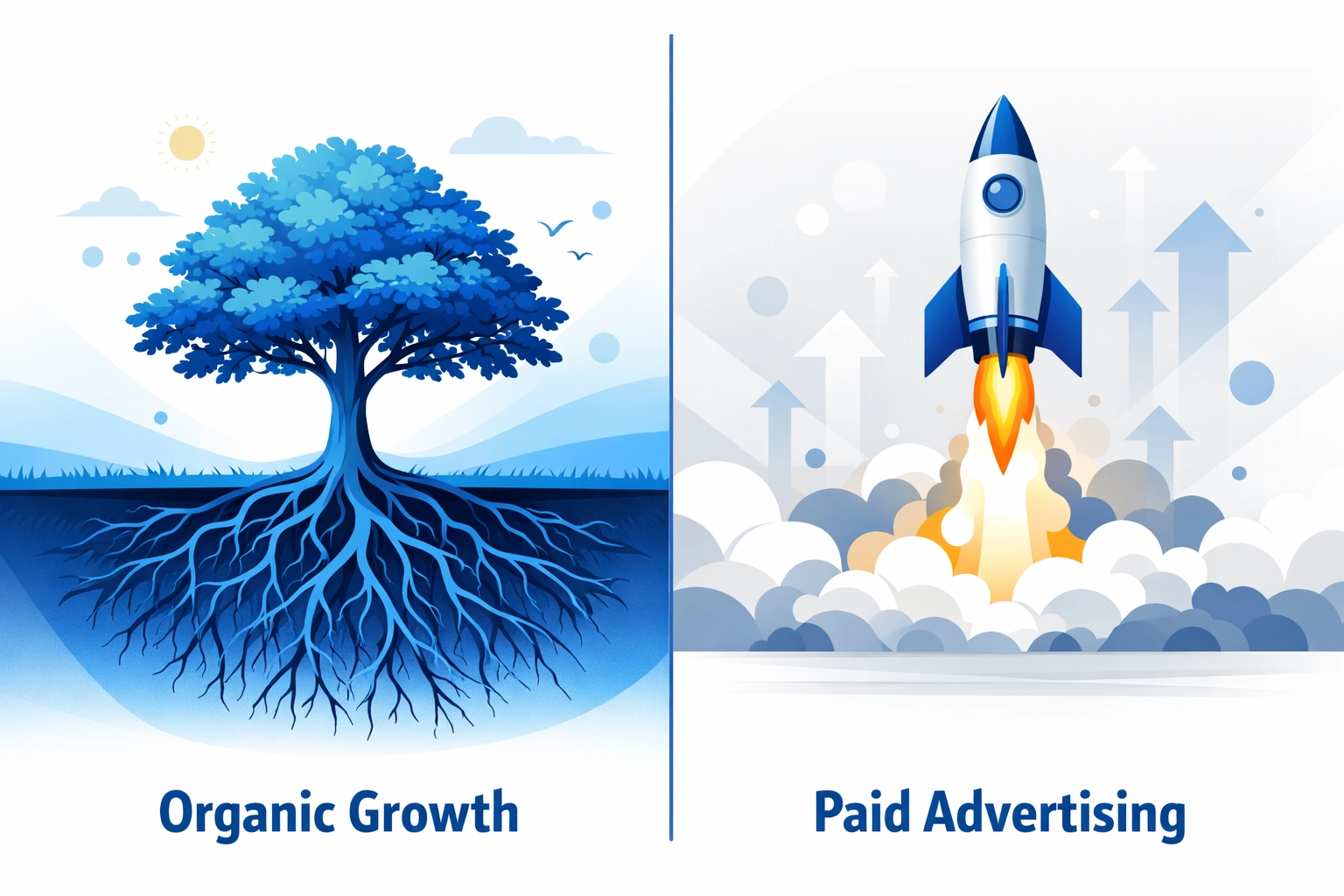
Here's what the numbers look like when you compare them side by side:
Speed to results: Organic takes about 6 months to see meaningful traction. Paid can get you traffic in about 2 months.
Monthly costs: SEO typically runs $8,000–$15,000 per month when you're working with an agency. Paid ads can range from $5,000–$20,000 depending on your industry and competition.
ROI: Organic delivers an average ROI of 748%. Paid ads average around 36%.
Conversion rates: Organic traffic converts at about 2.4%. Paid traffic converts at 1.3%.
What happens when you stop paying: Organic traffic keeps coming with minimal ongoing investment. Paid traffic stops the second you pause the campaign.
That last point is huge. With organic, you're building an asset. With paid, you're renting attention.
When Paid Ads Make Sense
Paid advertising isn't just for companies with deep pockets. There are specific situations where it's the right move.
You need results fast. Maybe you're launching a new product, running a limited-time promotion, or trying to generate leads quickly. Organic won't cut it when you're working on a tight timeline.
You're in a competitive space. If your competitors have been doing SEO for years, it's going to take time to catch up organically. Paid ads let you compete for visibility right now.
You want precise control. Paid platforms give you real-time data and the ability to adjust targeting, budgets, and messaging on the fly. You can test different audiences, ad copy, and landing pages quickly.
You need to protect your brand. Sometimes competitors bid on your brand name in paid search. Running your own brand campaigns ensures you control that space.
Paid ads are also useful when you're testing new markets or messaging. The feedback loop is fast, so you can figure out what resonates before committing to a longer-term organic strategy.
When Organic Search Makes More Sense
Organic is playing the long game. If you can afford to wait for results, the payoff is significantly better.
You're targeting evergreen topics. If people are searching for the same things month after month, year after year, organic is the move. Once you rank, you keep getting traffic without paying for each click.
You have at least 6 months before you need results. Organic takes time to build momentum. If your timeline is tight, it's not the right tool.
Cost efficiency matters. As your organic rankings improve, your cost per acquisition drops. Over time, it becomes much cheaper than paid ads.
Credibility is important. People trust organic results more than ads. If you're trying to establish authority in your space, ranking organically sends a stronger signal.
For most businesses, organic should be the foundation of your strategy. It's sustainable, scalable, and gets more cost-effective over time.
The Real Strategy: Use Both
Here's the thing: you don't have to choose. The best approach combines both channels strategically.
Dominate the search results. When you show up in both paid and organic results for the same search term, you take up more real estate on the page. That increases the chances someone clicks on your site instead of a competitor's.
Use paid to remarket. Someone visits your site through organic search but doesn't convert? Use paid ads to bring them back. Retargeting campaigns are incredibly effective at turning visitors into customers.
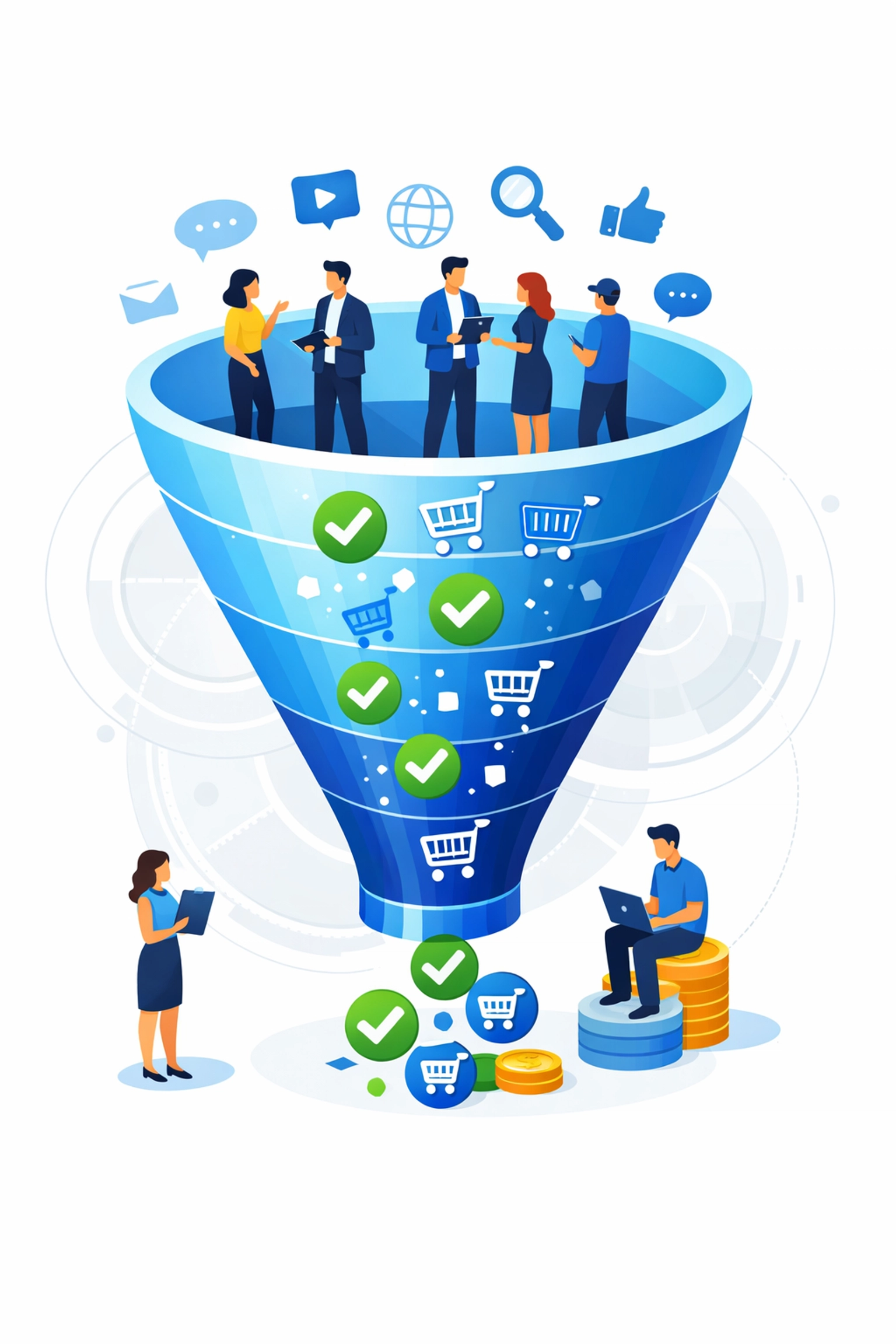
Test with paid, scale with organic. Paid campaigns give you fast feedback on what messaging works. Once you identify winning angles, incorporate them into your organic content strategy.
Find new keyword opportunities. Your paid search data shows you exactly what people are searching for and what converts. Use that intel to guide your organic content creation.
This integrated approach means paid handles your immediate needs while organic builds long-term value.
How to Actually Split Your Budget
If you're wondering what the typical split looks like, companies that have invested in organic for 1–3 years usually see about 62% of their traffic from organic channels, 21% from paid, 13% from email and social, and 4% from other sources.
That doesn't mean you should allocate your budget the same way. Your traffic mix is an outcome, not a budget target.
Here's a more practical way to think about it:
If you're just starting out: Put more budget toward paid to get immediate traction while you build your organic foundation. You need traffic now, and organic won't deliver that yet.
If you've been around for a while: Shift more budget to organic. You're past the initial startup phase, and the long-term ROI is significantly better.
If you're launching something new: Use paid to test demand and messaging. Once you validate the market, invest in organic to capture ongoing interest.
If you're in crisis mode: Paid ads can solve immediate problems: traffic drops, seasonal downturns, unexpected competition. But don't let short-term thinking derail your long-term organic strategy.
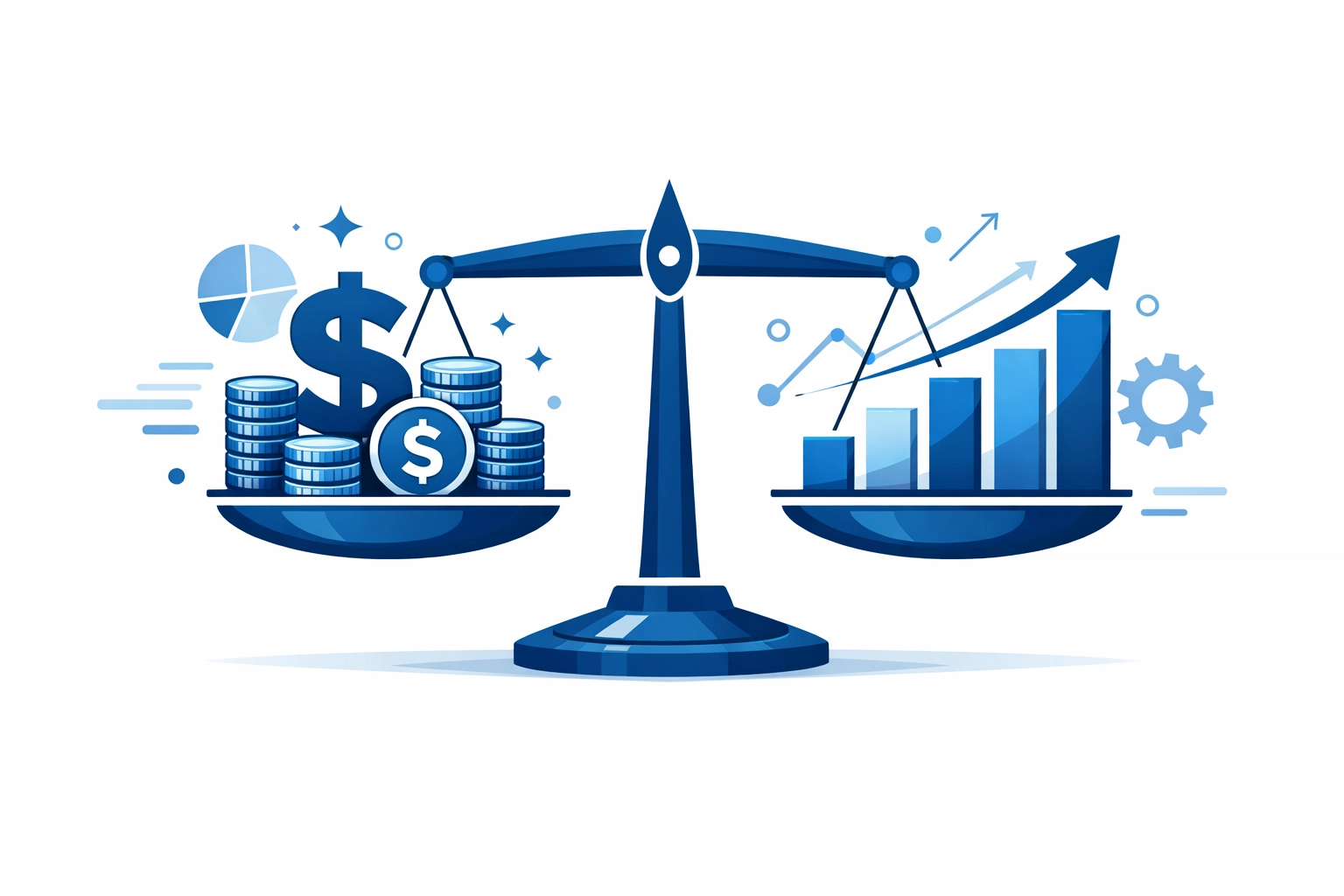
The key is matching your spend to your timeline and goals. Paid solves immediate problems. Organic builds sustainable growth.
What This Looks Like in Practice
Let's say you run a B2B software company with a $15,000 monthly marketing budget.
You might put $5,000 toward paid campaigns focused on high-intent keywords and retargeting. That gets you leads today and protects your brand in search results.
The other $10,000 goes toward organic strategy: content creation, technical SEO, link building. This won't pay off immediately, but in 6–12 months, you'll start seeing significant organic traffic that compounds over time.
As your organic traffic grows, you can gradually reduce paid spend or reallocate it to testing new markets and products.
The Bottom Line
Most businesses waste money by treating organic and paid as competing options. They're not. They're complementary tools that work better together.
Paid ads give you speed, control, and immediate results. Organic gives you sustainability, credibility, and significantly better long-term ROI.
The right strategy uses paid to handle short-term needs and test new opportunities while building organic as your primary long-term traffic driver. Your exact split depends on your timeline, competitive landscape, and how long you've been investing in organic.
If you need help figuring out the right balance for your business, get in touch. We can look at your current traffic, competition, and goals to build a strategy that actually makes sense for your budget.