
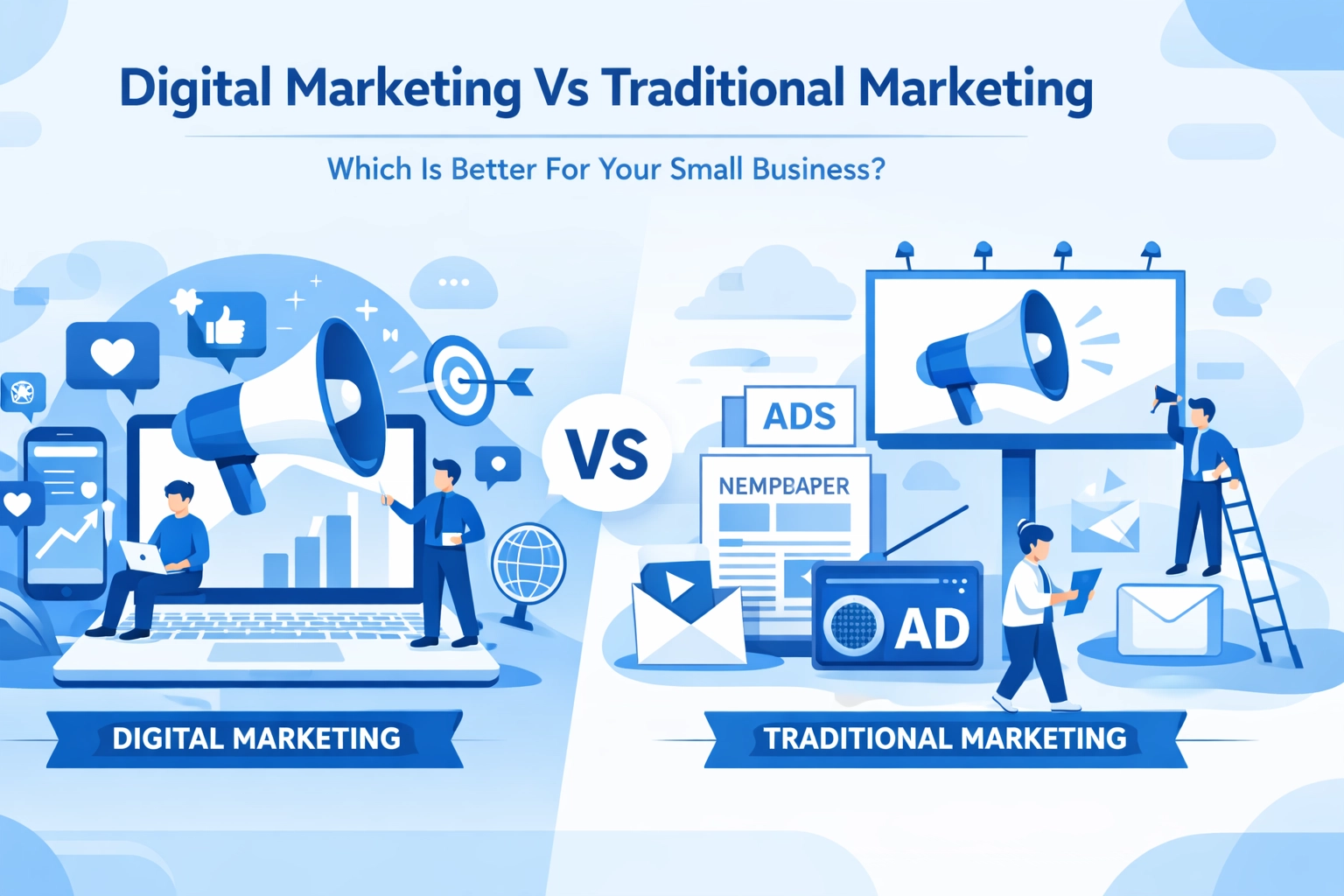

You're a small business owner trying to figure out where to spend your marketing budget. Should you invest in Facebook ads and Google search campaigns, or stick with tried-and-true methods like print ads and direct mail? It's a question that keeps a lot of entrepreneurs up at night.
The truth is, there's no one-size-fits-all answer. But if you're working with a limited budget and want to see measurable results quickly, digital marketing usually offers better value. Let's break down why, and when traditional marketing still makes sense.
What Is Digital Marketing?
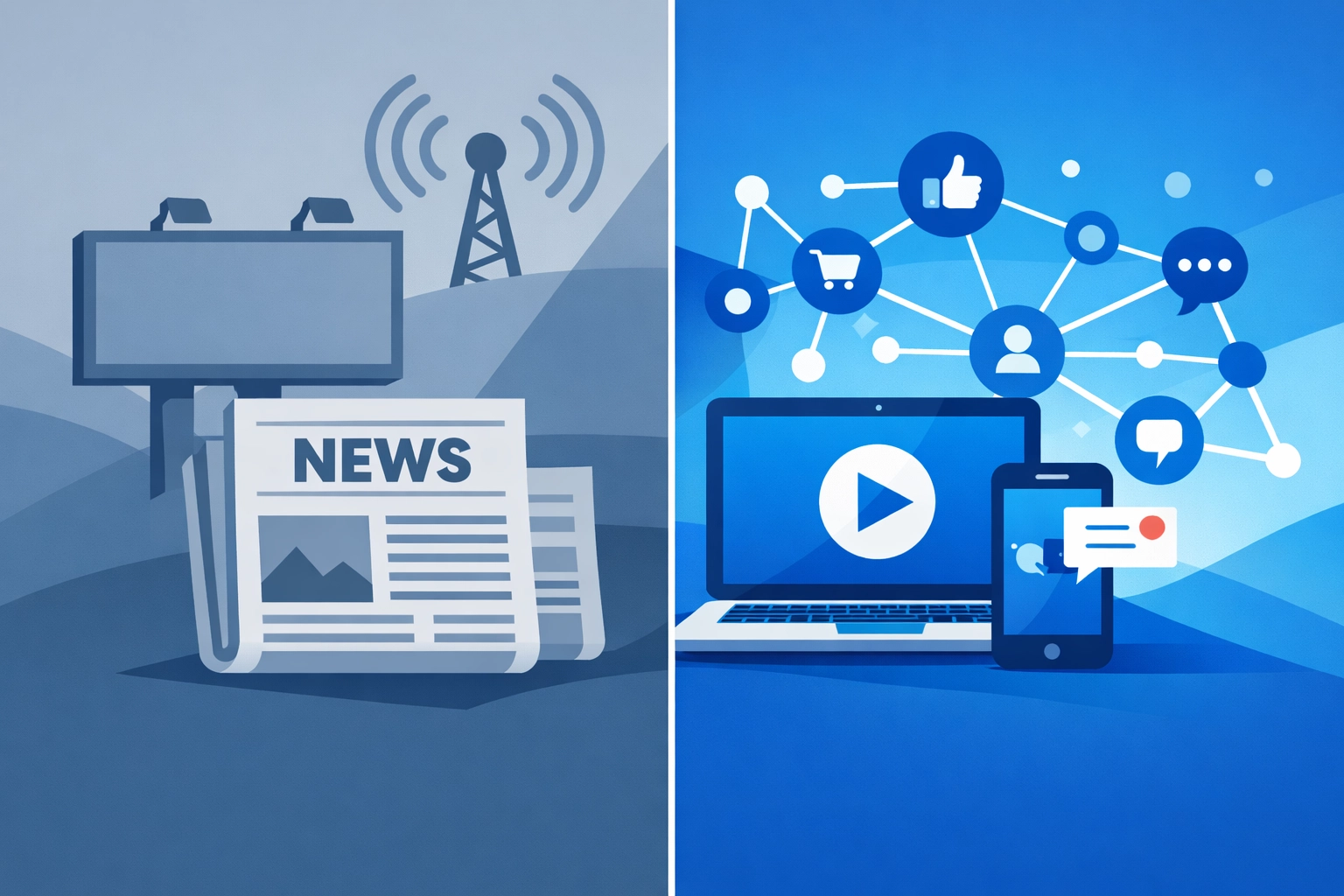
Digital marketing is any promotional activity that happens online. We're talking about:
- Search engine optimization (SEO) to rank higher on Google
- Pay-per-click advertising on search engines and social media
- Email marketing campaigns
- Social media posts and engagement
- Content marketing like blogs and videos
- Website optimization to convert visitors into customers
The beauty of digital marketing is that it lives where your customers already spend their time, on their phones, tablets, and computers.
What Is Traditional Marketing?
Traditional marketing refers to promotional methods that existed before the internet became dominant:
- TV and radio commercials
- Print ads in newspapers and magazines
- Direct mail postcards and catalogs
- Billboards and outdoor signage
- Trade shows and networking events
- Cold calling
These methods have been around for decades and still work in certain situations. They're particularly effective for reaching local audiences and building broad brand awareness.
The Cost Factor: Where Your Budget Goes Further
Here's where digital marketing really shines for small businesses. With traditional marketing, you typically need a substantial upfront investment. A single newspaper ad might cost hundreds of dollars, and a radio spot can run into thousands.
Digital marketing lets you start small and scale as you see results. You can launch a Facebook ad campaign with $50 and test what works before committing more money. With pay-per-click advertising, you only pay when someone actually clicks on your ad, not for impressions that may or may not reach your target audience.
This cost efficiency makes digital marketing accessible to businesses of all sizes. You don't need a massive budget to compete. You need smart strategy and consistent effort.
Measurement and Analytics: Knowing What Works
Traditional marketing operates somewhat in the dark. Sure, you can track coupon codes or ask customers how they heard about you, but you're never quite certain which billboard or radio ad actually drove the sale.
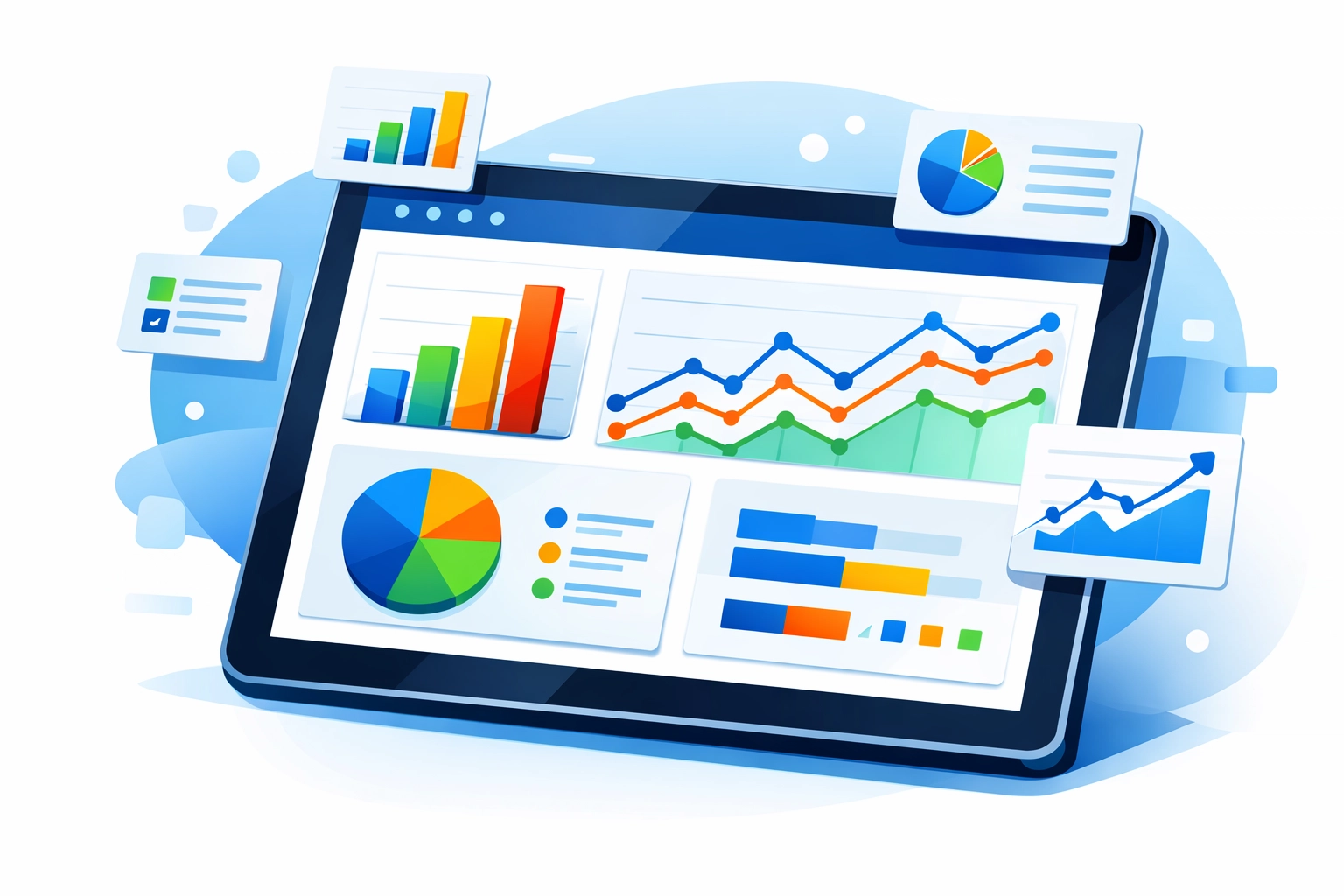
Digital marketing provides crystal-clear data. Tools like Google Analytics show you exactly how many people visited your website, which pages they viewed, how long they stayed, and whether they completed a purchase or filled out a contact form. You can see your ROI in real-time and adjust your strategy accordingly.
This measurement capability means you can continuously improve your campaigns. If something isn't working, you know immediately and can pivot. That kind of agility is invaluable when you're trying to maximize every marketing dollar.
Targeting Precision: Reaching the Right People
Traditional marketing casts a wide net. When you place a newspaper ad, you're hoping the right people see it among thousands of readers who may have zero interest in your product or service.
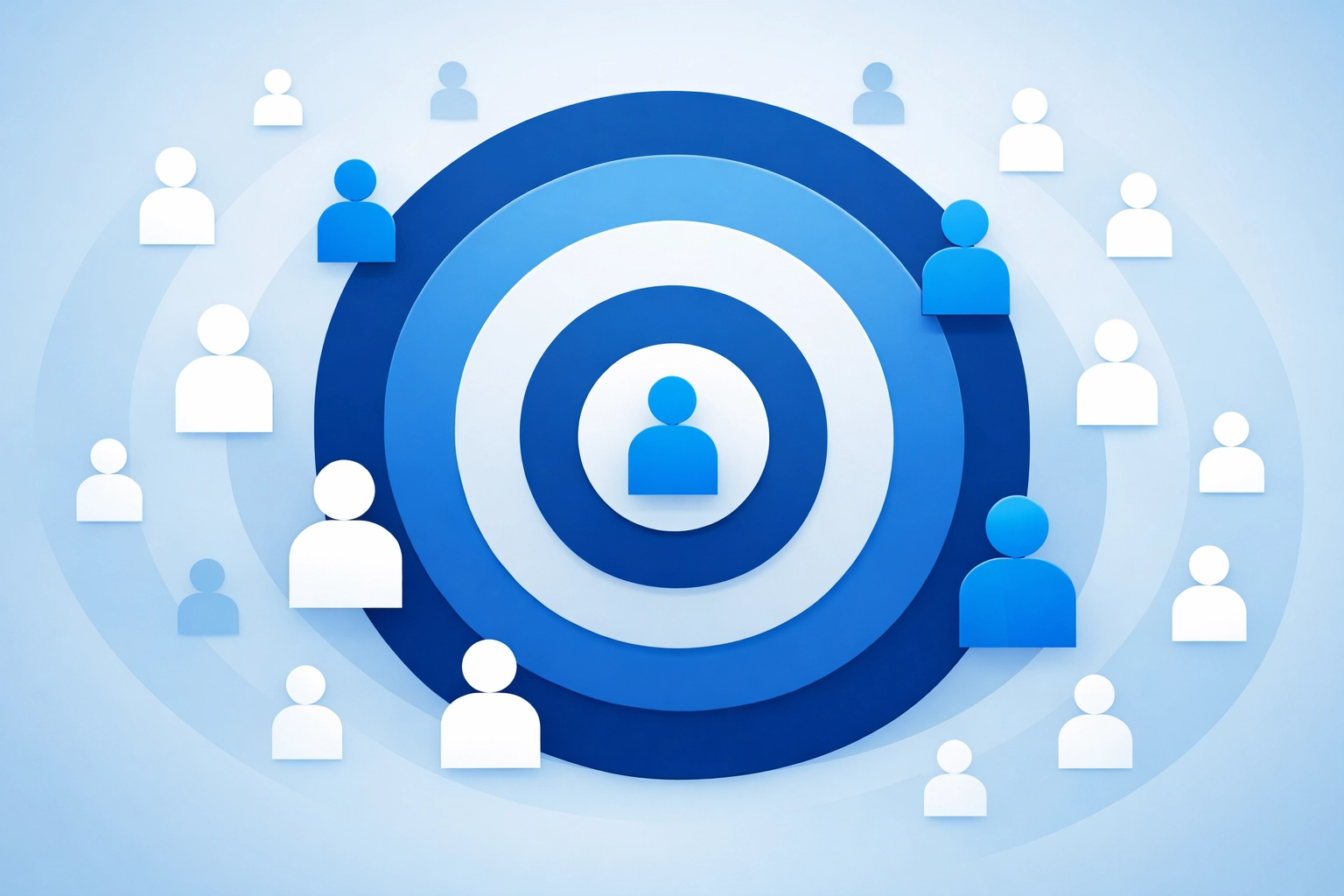
Digital marketing lets you get laser-focused with your targeting. You can show ads to people based on:
- Age, gender, and location
- Interests and online behavior
- Job titles and income levels
- Previous interactions with your website
- Search history and intent
This precision dramatically increases your conversion rates. Instead of shouting into the void, you're having targeted conversations with people who are already interested in what you offer.
For example, if you run a web design business, you can target small business owners who have recently searched for "website redesign" or visited competitor websites. That's a qualified audience that traditional marketing simply can't match.
Engagement and Relationship Building
Traditional marketing is mostly one-way communication. You create an ad, people see it (hopefully), and that's the end of the interaction.
Digital marketing opens up two-way conversations. Customers can comment on your social media posts, reply to your emails, leave reviews, and share your content with their networks. This engagement builds relationships and loyalty in ways that billboards never could.
When someone comments on your Facebook post asking a question about your services, you can respond immediately. That personal touch creates trust and often leads to sales. It's relationship marketing at scale.
When Traditional Marketing Still Makes Sense
Despite digital marketing's advantages, traditional methods aren't obsolete. They excel in specific situations:
Local brand awareness: If you're trying to become a household name in your community, local newspaper ads and sponsorships still carry weight. People trust businesses they see supporting local events and publications.
Older demographics: Some audiences, particularly older generations, still consume traditional media more than digital platforms. If your target customer is 65+, a direct mail piece might outperform an Instagram ad.
Tangible credibility: There's something about seeing your business in print or on TV that adds perceived legitimacy. A magazine feature or radio interview can boost your credibility in ways that digital ads can't replicate.
Complement to digital efforts: Traditional marketing can drive people to your digital properties. A billboard with your website address or a TV commercial that encourages social media follows creates a bridge between offline and online marketing.
The Winning Strategy: An Integrated Approach
Here's the real answer to which is better: use both strategically.
Most successful small businesses blend digital and traditional marketing based on their specific goals, audience, and budget. The key is understanding what each method does best and using them in complementary ways.
Start with digital as your foundation. Build a solid website with good SEO, maintain active social media profiles, and run targeted ads to drive traffic and conversions. This gives you measurable results and steady lead generation.
Layer in traditional marketing for brand building and local credibility. Sponsor a community event, place strategic print ads, or invest in direct mail to high-value prospects. Use these traditional touchpoints to drive people to your digital properties where you can track their behavior and nurture them toward a sale.
Getting Started With Digital Marketing
If you're ready to leverage digital marketing for your small business, here's where to focus first:
1. Optimize your website: Your website is your digital storefront. Make sure it loads fast, looks professional, and makes it easy for visitors to contact you or make a purchase. Professional web design matters more than ever.
2. Claim your local listings: Get your business on Google Business Profile, Bing Places, and relevant directories. This helps you show up when people search for businesses like yours.
3. Start creating content: Blog posts, videos, and social media content establish you as an authority in your field and improve your search rankings over time.
4. Test paid advertising: Start small with Google Ads or Facebook Ads targeting your ideal customer. Track results and scale what works.
5. Build an email list: Email marketing consistently delivers the highest ROI of any digital channel. Collect emails through your website and nurture those leads regularly.
The Bottom Line
For most small businesses, digital marketing offers better value, more precise targeting, and clearer measurement than traditional marketing alone. The ability to start small, test quickly, and scale based on results makes it ideal for businesses with limited budgets.
That doesn't mean you should ignore traditional marketing entirely. Use it strategically where it adds the most value: building local brand awareness, reaching specific demographics, and complementing your digital efforts.
The businesses that win are those that understand their audience, test different channels, and continuously optimize based on real data. Whether you go all-in on digital marketing or blend both approaches, the key is staying consistent and measuring what matters.
Need help developing a marketing strategy that works for your specific business? Get in touch and let's figure out the right mix for your goals and budget.