

Let's be honest - your business is probably at risk right now.
The average data breach costs $4.88 million in 2026, and most of them happen because of preventable mistakes. Not sophisticated hacker operations or complex vulnerabilities. Just basic security errors that businesses make every single day.
The good news? You can fix most of these issues without a massive budget or a PhD in computer science. Here are the seven cybersecurity mistakes that could be putting your business in danger.
1. Using Weak Passwords Without Multi-Factor Authentication
We need to talk about passwords. If your team is still using "Password123" or recycling the same credentials across multiple accounts, you're basically leaving the front door wide open.
Cybercriminals have access to billions of stolen credentials from previous breaches. They use automated tools to try these credentials across thousands of websites. Without multi-factor authentication (MFA), they can get into your systems in seconds.

Here's what you need to do: Enforce strong password requirements and implement MFA across all business accounts. But don't just use any MFA - authenticator apps like Authy or Google Authenticator are way more secure than SMS or email codes, which can be intercepted.
Think of MFA as a second lock on your door. Even if someone steals your key, they still can't get in.
2. Treating Employee Training Like a Checkbox
Most businesses handle cybersecurity training the same way they handle compliance training - schedule one boring session per year, make everyone sit through it, and call it done.
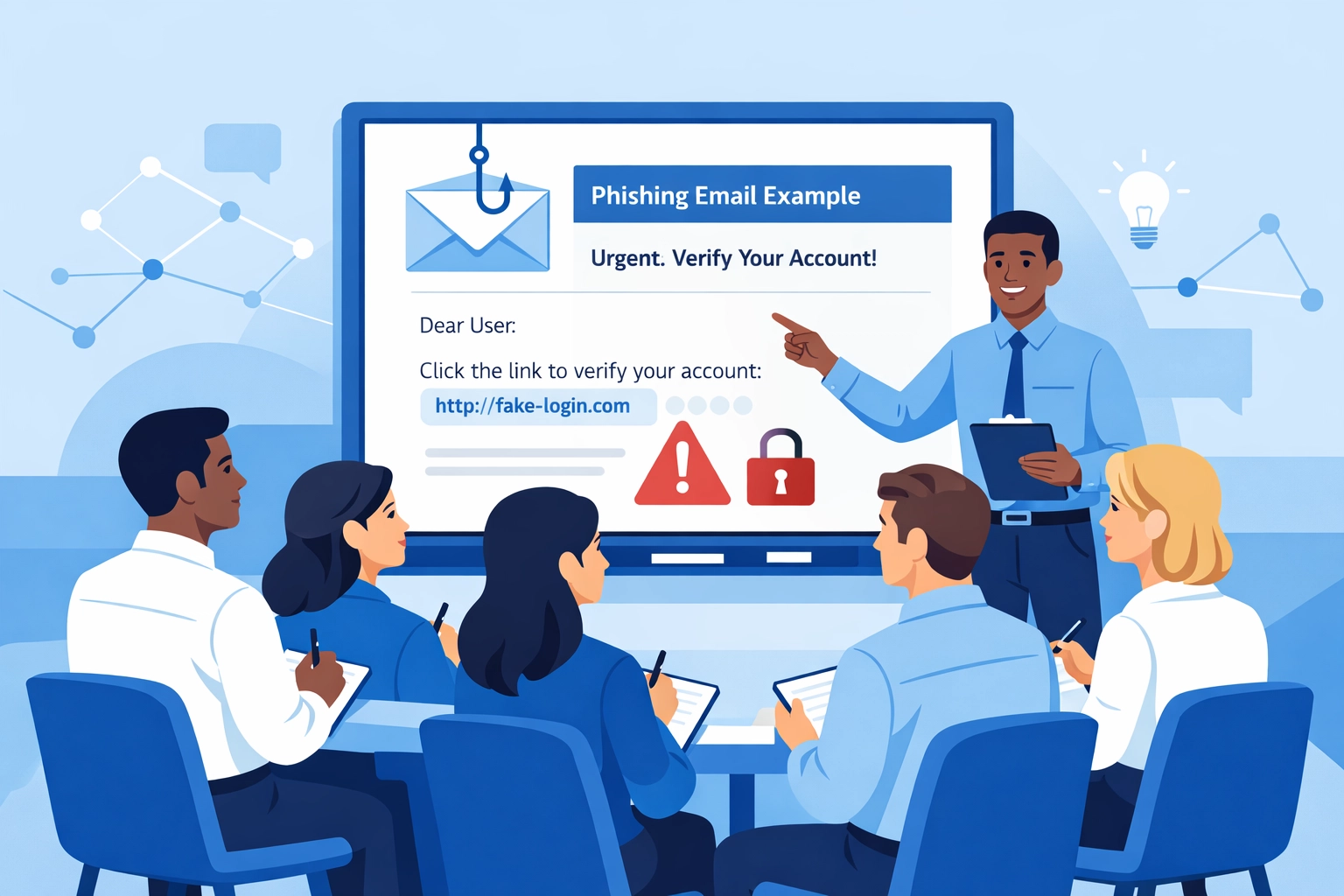
That's not enough. Human error plays a role in over 80% of successful cyberattacks. Your employees face threats every single day: phishing emails disguised as legitimate messages, fake urgency tactics, social engineering attempts that sound completely believable.
Your team needs ongoing education, not an annual checkbox. Regular training sessions should cover recognizing suspicious links, identifying CEO fraud patterns (where attackers impersonate executives), and practicing safe remote work habits.
Make it relevant and practical. Show real examples of phishing emails your industry receives. Run simulated phishing tests. Keep the conversation going throughout the year.
3. Skipping Software Updates and Patches
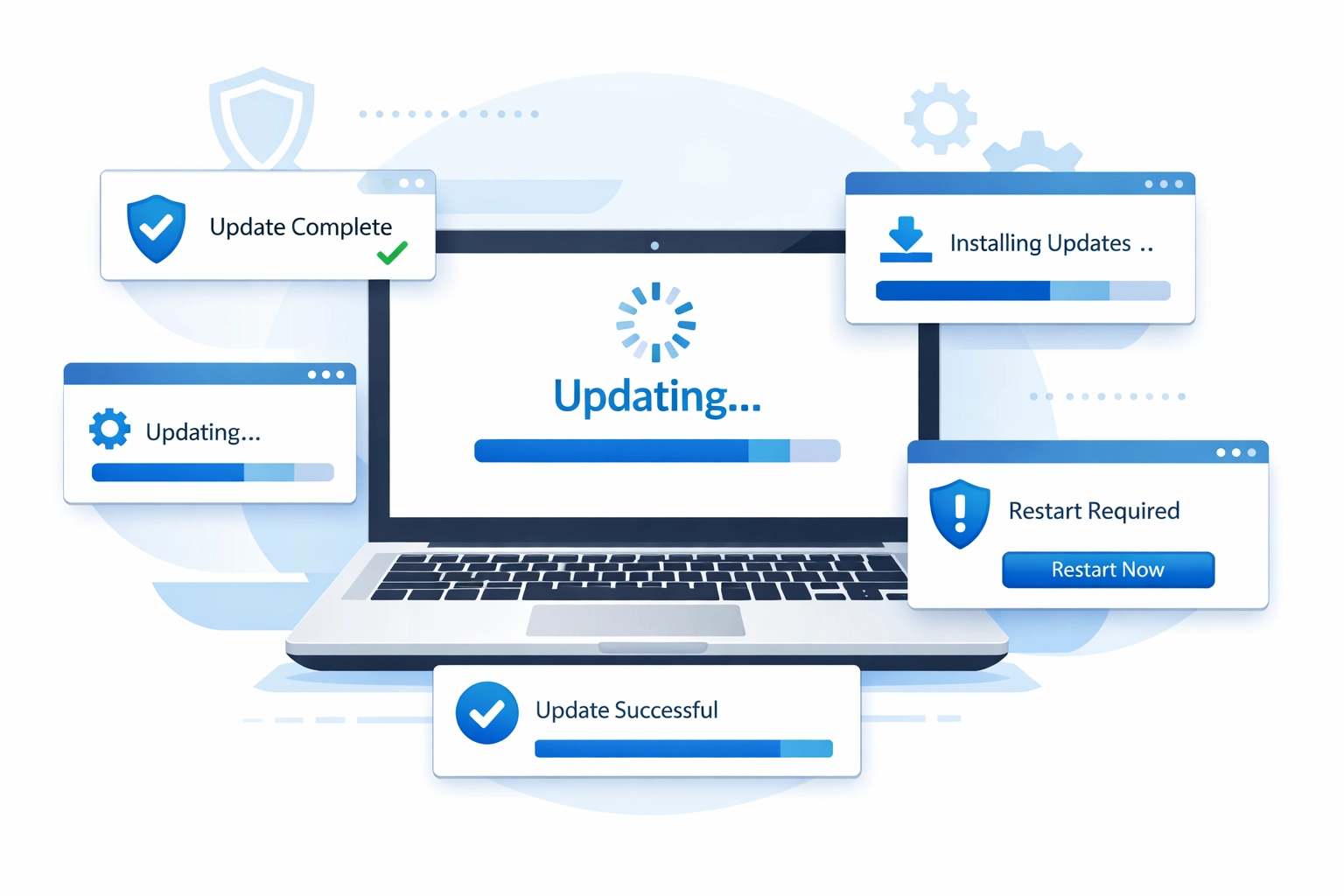
Those software update notifications popping up on your screen? They're not just annoying reminders - they're critical security fixes.
Every delayed or skipped update leaves a vulnerability that attackers can exploit. Small and medium businesses are specifically targeted because cybercriminals know they often run outdated, unpatched systems.
Automate your software updates wherever possible. Set up patch management systems to ensure all devices receive the latest security fixes without relying on individual employees to remember.
Yes, updates can be inconvenient. Yes, they sometimes cause temporary disruptions. But a 10-minute update is way better than a $4.88 million data breach.
4. Taking a "Set It and Forget It" Approach to Security
Installing security software and walking away is like buying a gym membership and expecting to get fit without actually going to the gym.
Cybercriminals constantly evolve their tactics. New vulnerabilities emerge. Your business changes - you add new software, new employees, new ways of working. Without regular security assessments, you have no idea if your defenses actually work or if new gaps exist in your protection.
Security evaluations should happen regularly, not just once when you first set things up. At WorldWise, we help businesses conduct ongoing security assessments because we know that cybersecurity is never a one-and-done project.
5. Ignoring Insider Threats
Everyone focuses on external hackers breaking in, but what about the people who already have access to your systems?
Insider threats from employees, contractors, and business partners represent a significant portion of data breaches. This doesn't always mean malicious intent - sometimes it's accidental. An employee clicks the wrong link, uses an unsecured device, or accidentally shares sensitive information.
But insiders can cause major damage because they bypass traditional security perimeters. They already have credentials, they know where valuable data lives, and their actions often go unnoticed longer.
Implement the principle of least privilege - give people access only to what they need for their jobs. Monitor unusual access patterns. Have clear policies about data handling and consequences for violations. And when employees leave, immediately revoke their access to all systems.
6. Relying Only on Traditional Perimeter Security
Firewalls and antivirus software are important, but they're not enough anymore.
Traditional security models assumed everything dangerous was outside your network and everything inside was safe. That model doesn't work when your employees work from home, access data from mobile devices, and use cloud platforms that exist outside your traditional network boundaries.
Today's security needs to be layered and distributed. You need protection at every level: network security, endpoint protection, application security, data encryption, and access controls that work regardless of where your employees are located.
Think about it - how many of your employees work remotely? How many business applications run in the cloud? Your security strategy needs to account for these distributed environments.
7. Misunderstanding Cloud Security Responsibilities
Here's a common misconception: "We use cloud services, so security is the provider's problem."
Wrong. Cloud security operates on a shared responsibility model. Your provider secures the infrastructure, but you're responsible for configuring access controls, managing permissions, and protecting your data.
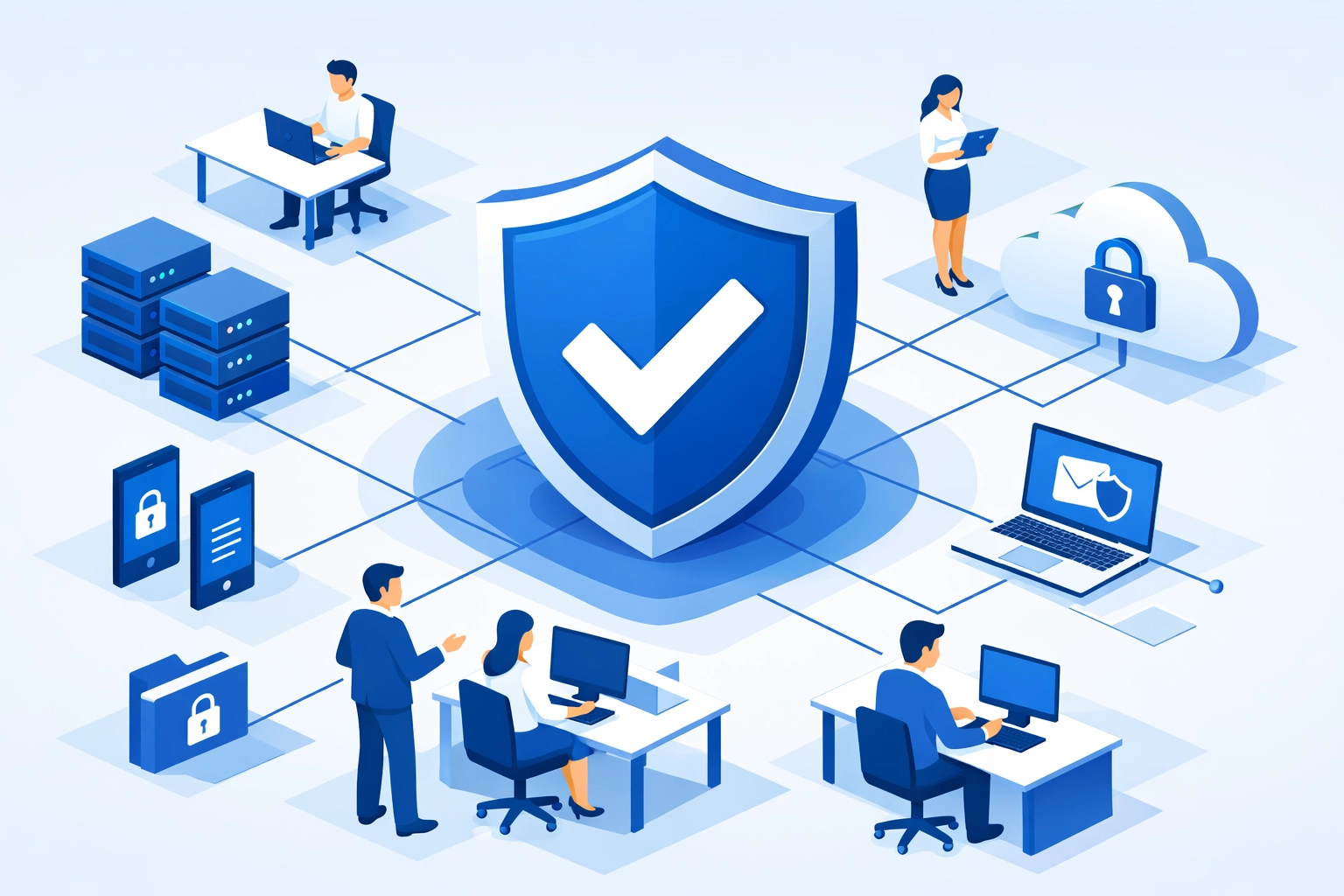
Many data breaches happen because of misconfigured cloud storage or overly permissive access settings. Someone accidentally makes a private database public. Someone gives a contractor more access than needed. Someone forgets to remove access for a former employee.
Implement Cloud Security Posture Management (CSPM) tools to continuously monitor your cloud configurations. Review access permissions regularly. And before you sign contracts with vendors, thoroughly evaluate their security practices - their vulnerabilities become your vulnerabilities.
What You Should Do Right Now
Don't get overwhelmed. You don't need to fix everything overnight.
Start with the fundamentals: implement strong passwords with MFA, schedule regular employee training, and automate your software updates. These three changes alone will significantly reduce your risk.
Then build toward more comprehensive solutions. Regular security assessments, insider threat monitoring, layered security approaches, and proper cloud security management.
Treat cybersecurity as an ongoing business practice, not a one-time project. The threats evolve constantly, so your defenses need to evolve too.
If you're not sure where to start or need help implementing these security measures, that's exactly what we do at WorldWise. We help businesses protect themselves without the confusion or overwhelming technical jargon.
The question isn't whether you can afford to invest in cybersecurity. The question is whether you can afford not to. At $4.88 million per breach, the math is pretty clear.
Don't wait until you're the next statistic. Fix these mistakes now.