

Every few years, someone declares SEO dead. Usually right after a Google algorithm update tanks their traffic.
The truth? SEO isn't dead. It's just evolved past the point where traffic numbers tell you anything meaningful about success.
If you're still judging your SEO strategy by visitors alone, you're missing the bigger picture. And probably wasting money on tactics that don't move the needle for your business.
The Problem With Traffic as a Metric
Here's what nobody tells you about traffic numbers: they're easy to manipulate and terrible at measuring actual business value.
You can rank for hundreds of keywords and drive thousands of visitors without generating a single qualified lead. We've seen it happen countless times. A site pulls 10,000 monthly visitors but converts at 0.2%. Meanwhile, a competitor gets 2,000 visitors and converts at 3%.
Guess which business is winning?
Traffic spikes from viral content or trending topics create impressive graphs for client reports. But if those visitors bounce immediately or never come back, what did you actually accomplish?
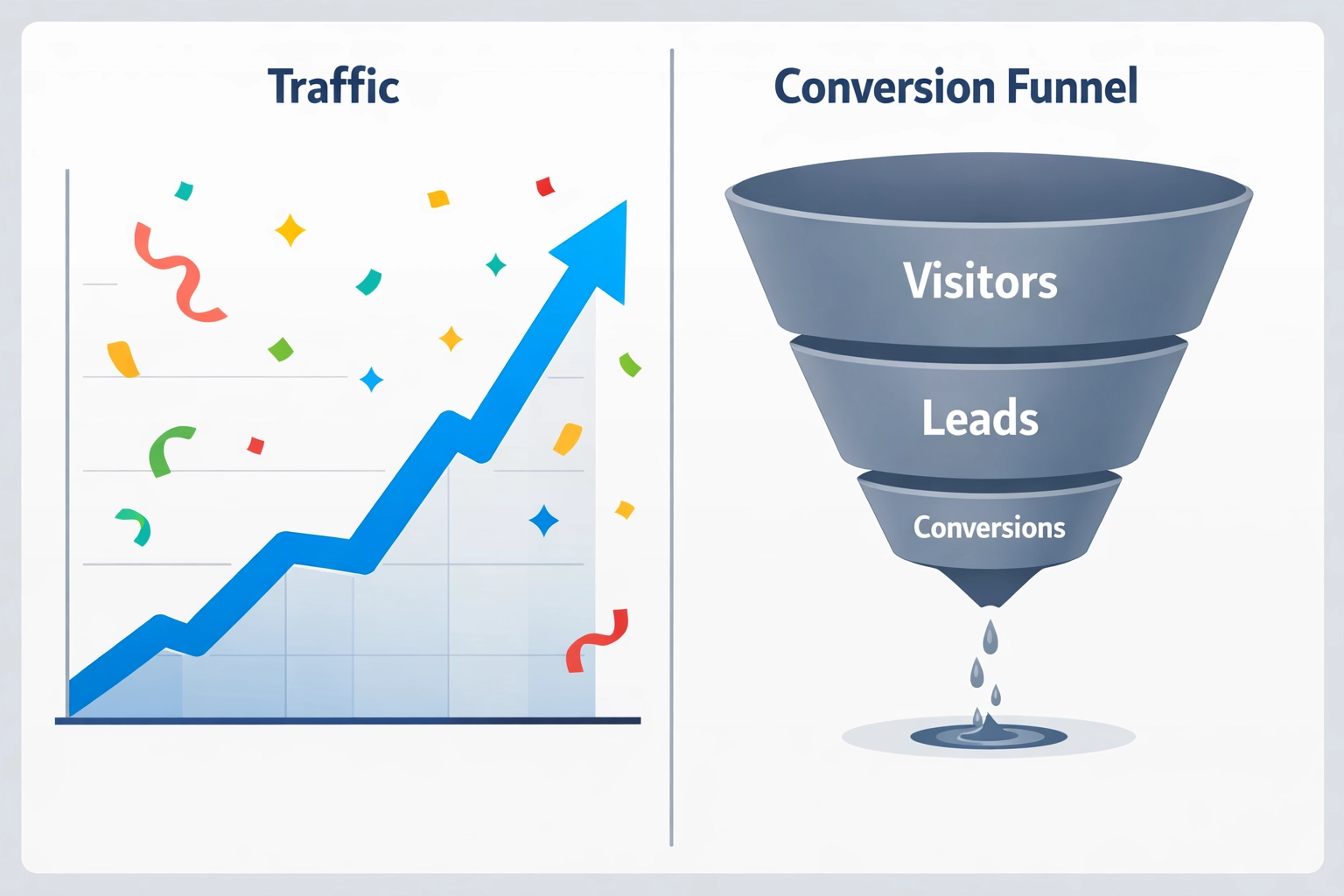
Google knows this too. That's why the algorithm has shifted toward rewarding sites that keep users engaged, answer their questions completely, and build genuine authority. Raw traffic generation is no longer the goal: serving user intent is.
What Actually Matters in 2026
SEO success in 2026 comes down to a handful of metrics that most businesses ignore:
Conversion rate from organic traffic. If your SEO visitors aren't converting at roughly the same rate as your paid traffic, something's broken. Either you're ranking for the wrong keywords or your site experience isn't delivering what searchers expect.
Average session duration and pages per session. These signals tell Google whether your content actually helps people. A 10-second average session means you're attracting the wrong audience or your content doesn't match search intent.
Return visitor rate. When people come back to your site multiple times, it signals brand trust and content value. This is the metric that separates commodity service providers from trusted authorities.
Quality backlink growth. Not just any backlinks: links from relevant, authoritative sites in your industry. Five links from respected sources beat 500 links from random directories.
Brand search volume. Are people actually searching for your company name? If your SEO strategy isn't building brand awareness over time, you're just renting traffic instead of owning it.
The Shift From Tactics to Foundation
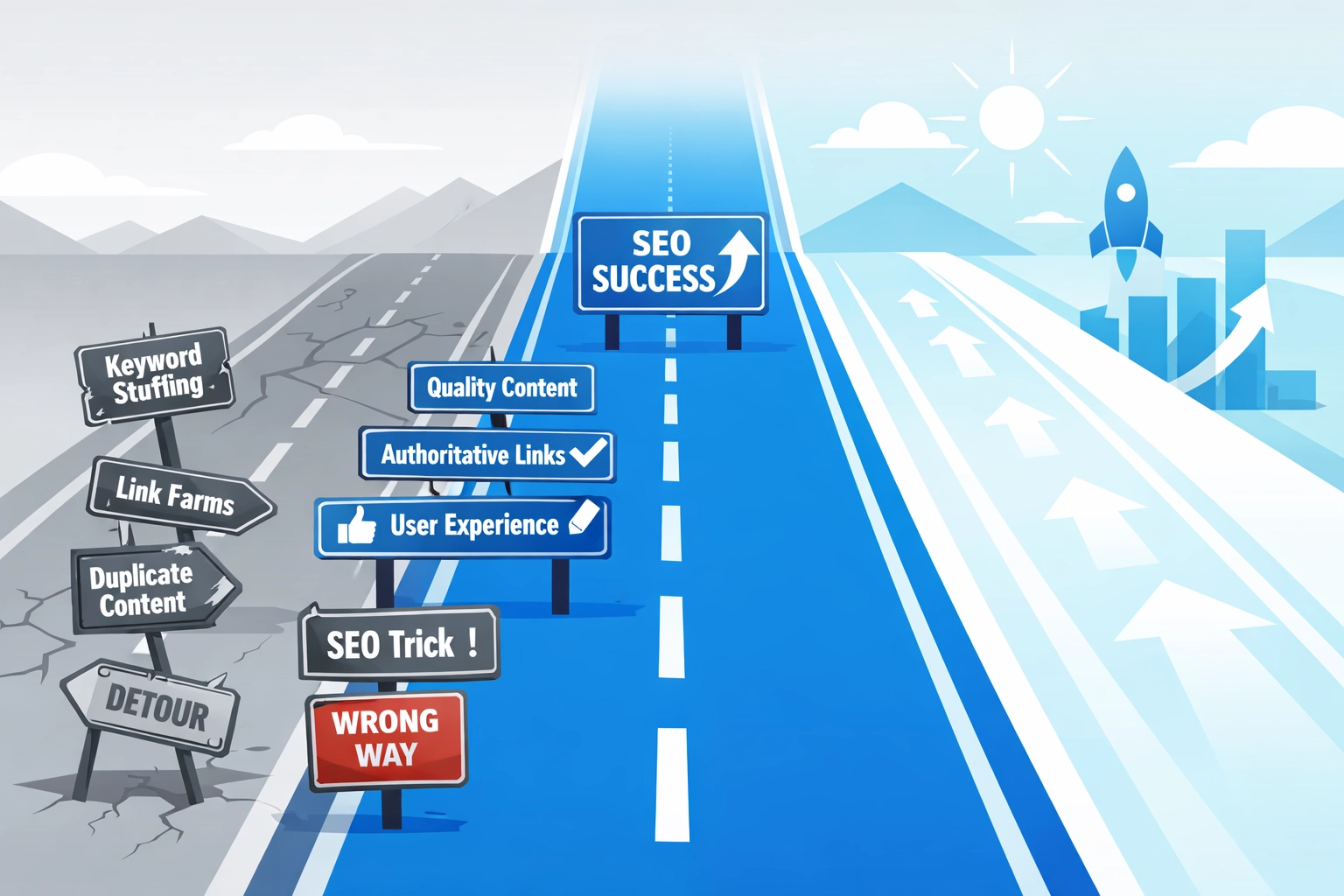
Old SEO was about technical shortcuts. Keyword stuffing. Link schemes. Gaming the algorithm.
That approach died years ago. What replaced it is more strategic and harder to fake.
Modern SEO is about building digital foundations that support long-term growth. Site architecture that makes sense to both users and crawlers. Content that genuinely answers questions and solves problems. Technical performance that keeps pace with user expectations.

Think of it like building versus decorating. Old SEO was decorating: adding keywords and links to make things look good superficially. New SEO is building: creating solid infrastructure that supports everything else you do online.
This is why search engine optimization now overlaps so heavily with web design, content strategy, and brand positioning. You can't separate them anymore.
Why "SEO is Dead" Keeps Coming Back
The "SEO is dead" narrative resurfaces because people confuse tactics with strategy.
When Google kills a specific tactic: like exact-match domains or guest post networks: practitioners who relied on that shortcut see their results disappear. From their perspective, SEO died. In reality, the tactic died. SEO adapted.
This happens because most businesses approach SEO as a channel instead of a foundation. They want quick wins and immediate traffic bumps. When those tactics stop working, they declare the whole discipline broken.
But companies that treat SEO as a long-term investment in digital infrastructure keep seeing results year after year. Their traffic might plateau temporarily during algorithm updates, but their overall trajectory stays positive because they're building something sustainable.
The Real ROI of Modern SEO
Here's what proper SEO investment actually delivers:
Reduced dependency on paid advertising. Every dollar you spend on ads is gone once you stop paying. SEO compounds over time. The content and authority you build today keeps working for years.
Higher quality leads. Organic search visitors are actively looking for solutions. They're further along in the buyer journey than social media scrollers or display ad clickers. When you rank for the right terms, the leads you generate are already qualified.
Brand authority and trust. Ranking consistently for industry topics positions your business as an authority. People assume the top results know what they're talking about. That perception carries over into every sales conversation.
Asset value. A well-optimized website with strong rankings is a business asset. If you ever sell, that organic traffic has tangible value. Paid traffic disappears the moment you stop spending.
What This Means for Your Business
If you're still chasing traffic numbers, it's time to rethink your approach.
Start by auditing what your current organic traffic actually does. Look at conversion rates, lead quality, and customer lifetime value by channel. You might find that your organic traffic: even if it's smaller than other channels: generates your most valuable customers.
Then shift your SEO strategy toward the metrics that matter. Focus on ranking for terms your ideal customers actually search for, not terms that just drive volume. Build content that answers complete questions instead of keyword-stuffed blog posts. Improve your site's technical foundation so it loads fast and works smoothly on every device.
This approach takes longer to show results. You won't see hockey-stick traffic growth in 30 days. But what you build compounds over time instead of requiring constant maintenance and inflated ad budgets.
The Foundation Matters Most
SEO in 2026 is both an art and a science. The science is understanding how search engines crawl, index, and rank content. The art is creating content and experiences that genuinely serve user needs.
Companies that master both aspects don't worry about algorithm updates or traffic fluctuations. They've built digital foundations that weather changes because they're aligned with what search engines actually want to deliver: helpful, trustworthy, clear information that matches search intent.
The fundamentals haven't changed. Fast site performance. Proper indexing. Clear technical structure. Trustworthy content. These elements create the foundation that enables everything else.

If your current web design or SEO strategy focuses on traffic numbers above all else, you're optimizing for the wrong metric. The goal isn't visits: it's building a digital presence that consistently attracts and converts your ideal customers.
That's not dead. It's just harder to fake than it used to be.
Next Steps
Ready to shift your SEO strategy from traffic chasing to foundation building? Start by auditing what your organic traffic actually delivers. Look beyond the vanity metrics and dig into conversion data, lead quality, and customer value.
If you need help building a sustainable SEO strategy that focuses on business results instead of traffic reports, let's talk. We'll show you what's actually working in 2026 and how to build digital foundations that compound over time.