
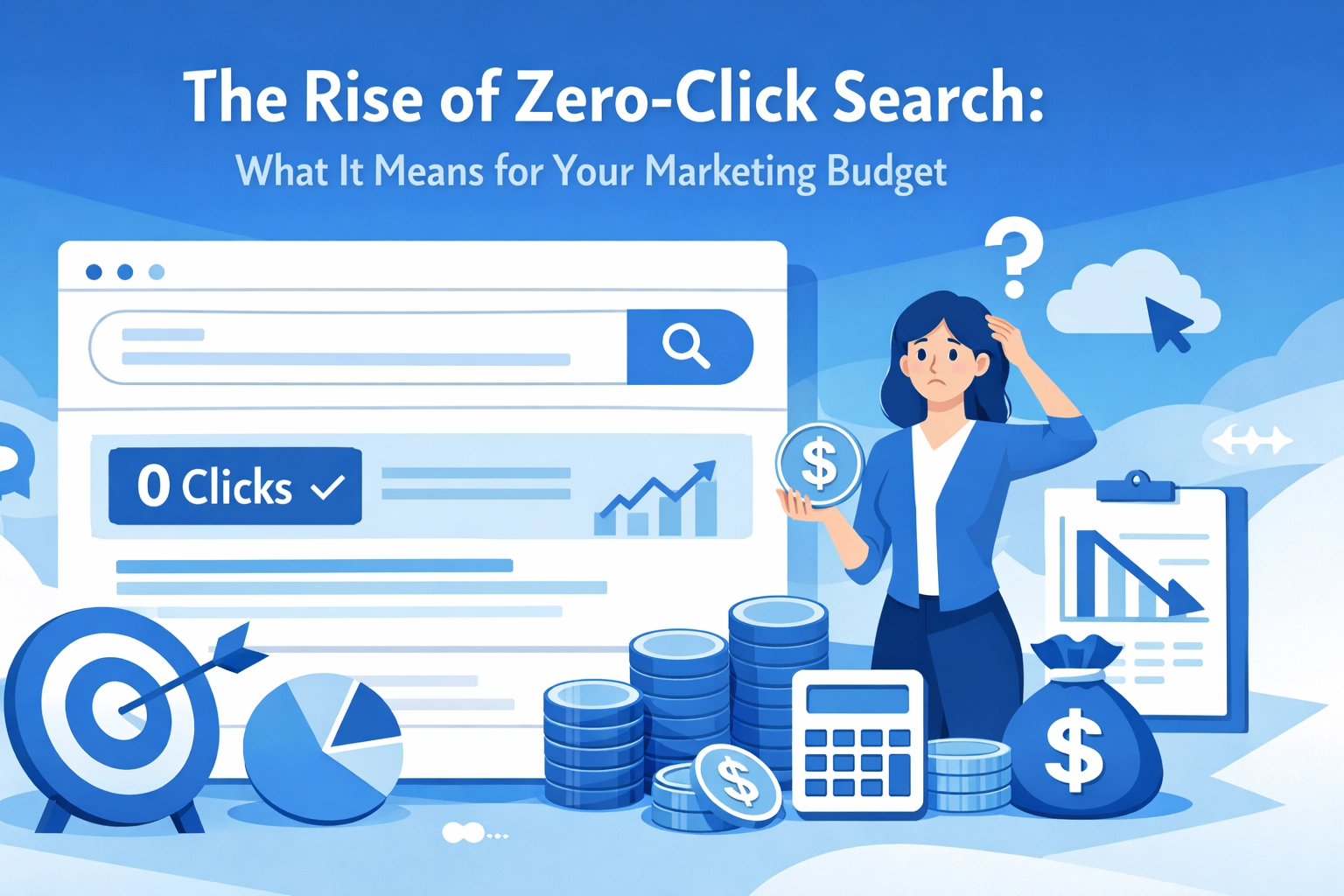

Google is answering questions before anyone clicks your link. It's not a bug: it's the new reality of search.
Zero-click searches now account for 60-63% of all Google searches. That means more than half of the people searching for your services never leave the search results page. They get their answer right there, scroll on, and move on with their day.
For marketing budgets built around clicks and conversions, this is a problem.
What Zero-Click Search Actually Means
When someone searches "how to improve website speed," Google doesn't just show ten blue links anymore. It displays a featured snippet at the top with a quick answer. Sometimes it's a knowledge panel. Sometimes it's an AI-generated overview that pulls from multiple sources.
The user gets what they need without clicking anything.
This isn't happening occasionally: it's become the default experience. And it's cutting organic web traffic by 15-25% across the board.

Your Traffic Is Down (And It's Not Your Fault)
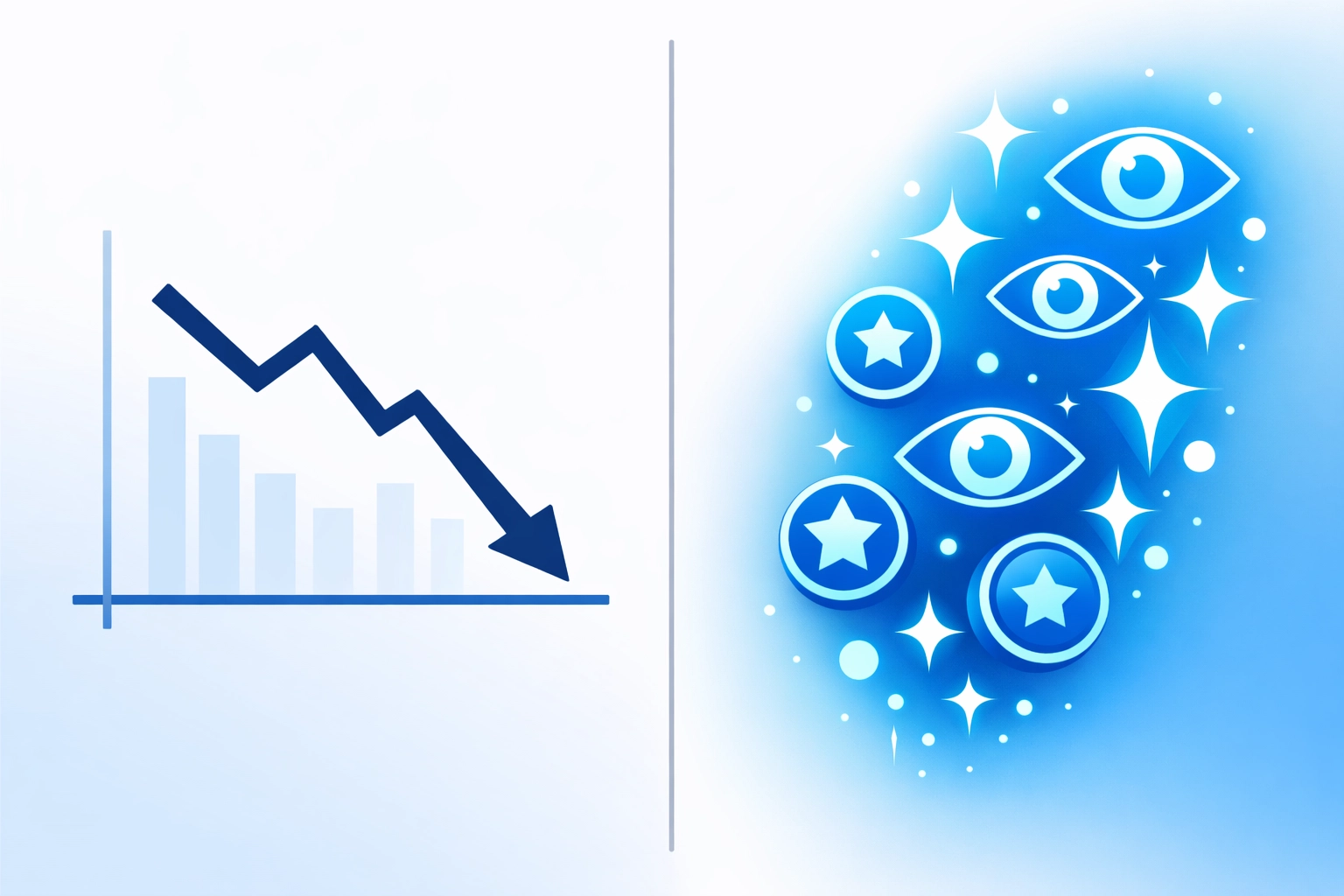
HubSpot saw their organic search traffic drop from 13.5 million visits in November 2024 to 8.6 million in December. That's a massive drop for one of the most well-optimized sites on the internet.
If you've been watching your analytics and wondering why traffic keeps declining despite ranking well, this is why. You're not doing anything wrong. The game changed.
Keywords that trigger AI Overviews see an average clickthrough rate decline of 15.5%. That's not a small dip: that's a fundamental shift in user behavior.
Traditional Metrics Are Broken
Here's where it gets tricky for your marketing budget. The old way of measuring success doesn't work anymore.
You could rank #1 for a valuable keyword and still see minimal traffic. Your content could be featured in the AI overview, and you might not get a single click.
But here's what most people miss: visibility still matters.
When your brand shows up in featured snippets, knowledge panels, or AI-generated summaries, you're building authority. People see your name. They recognize you as a credible source. They might not click today, but they remember you exist.
The problem is that your analytics dashboard doesn't capture any of that value. It just shows declining visits and conversions.
What's Happening to Paid Search
Paid ads aren't immune either. When Google answers questions directly, users scroll right past the ads at the top of the page.
The data shows non-branded keywords took a 20% hit in clickthrough rates. That means if you're bidding on generic industry terms, you're getting fewer clicks for the same spend.
Interestingly, branded keywords actually improved: up 18.7% in CTR. People who already know your name are still clicking. Everyone else is getting their answer from Google and leaving.
This creates a weird paradox for your ad budget. The keywords that should introduce you to new customers are becoming less effective. The keywords targeting people who already know you are working better than ever.
How to Reallocate Your Budget
Abandoning search marketing isn't the answer. You just need to spend differently.
Focus on Position Zero instead of clicks. Featured snippets still provide massive value even without direct traffic. Budget for content specifically designed to capture these spots. Structure your content with clear, concise answers to common questions. Use proper heading hierarchy. Format lists and tables that Google can easily extract.
Shift paid spend toward branded campaigns. Since branded keywords are still driving clicks, allocate more budget there. Protect your brand name from competitors bidding on it. Consider this defensive spending: it keeps people who already want to find you from getting intercepted.
Redefine what conversion means. Stop measuring everything by website visits. Track branded search volume increases. Monitor phone calls and form submissions separately from page views. Look at offline actions like store visits or sales calls that happen after someone sees your snippet but doesn't click.
Prioritize commercial intent keywords. Informational searches ("what is SEO") are most affected by zero-click. Transactional searches ("SEO services quote") still drive clicks because people need to complete an action. Your budget should reflect this reality.
What This Means for Content Strategy
You need content that works in two different ways now.
First, create content designed to be consumed without clicking. That sounds counterintuitive, but it's essential. Write comprehensive answers that could appear in AI overviews. Make your meta descriptions work as standalone snippets. Structure data so Google can extract and display it easily.
Second, create content that positions you as the obvious next step. Even if someone reads your answer in a snippet, they should understand that you're the expert who can help them implement it. Include your brand name naturally. Reference your services in context.
The goal isn't just visibility: it's memorable visibility.
The New ROI Model
Traditional ROI calculations don't account for zero-click value. You can't measure a featured snippet the same way you measure a landing page conversion.
Start tracking these metrics instead:
Share of voice in zero-click features. How often does your content appear in snippets, panels, and AI overviews compared to competitors? This measures visibility even without traffic.
Branded search growth. Are more people searching your brand name directly after seeing you in search features? This indicates growing awareness and authority.
Assisted conversions. How many people view your content in search results, don't click, but convert through another channel later? Google Analytics can track this multi-touch path.
Domain authority increases. Are more sites linking to you as a credible source? Zero-click visibility often leads to increased backlinks as other content creators reference your expertise.
These metrics won't show immediate revenue impact, but they indicate long-term brand value that eventually drives business.
What to Do This Week
Stop panicking about declining traffic numbers. Start adapting.
Review your current keyword portfolio. Identify which ones trigger zero-click features. Don't abandon them: optimize specifically for those features instead.
Audit your content for snippet-friendly formatting. Add clear, concise answers at the top of relevant pages. Use bullet points and numbered lists. Structure data with proper schema markup.
Reallocate some paid search budget from generic keywords to branded terms. Protect your brand visibility and capture people actively looking for you.
Expand your conversion tracking beyond page visits. Set up goals for phone calls, email inquiries, and branded searches. Build a fuller picture of how search visibility leads to business outcomes.
The Bottom Line
Zero-click search isn't killing search marketing. It's changing what success looks like.
Your marketing budget should reflect this new reality. Less focus on raw traffic numbers. More focus on visibility, authority, and brand recognition. Different measurement frameworks that capture value beyond the click.
The businesses that adapt their spending now will own the search landscape in this zero-click era. The ones still optimizing for 2020 metrics will keep wondering why their traffic keeps declining.
The search results page is the new landing page. Your budget should treat it that way.
Need help restructuring your search engine optimization strategy for this new landscape? That's exactly what we help businesses navigate every day.