

Google rankings used to be the whole game. Rank on page one, get traffic, win. But something fundamental has shifted in how people find information online.
ChatGPT answers questions without sending users to websites. TikTok's search feature pulls up videos before Google results. Voice assistants cite sources without requiring a click. Your potential customers are searching everywhere except traditional search engines.
This isn't the death of SEO. It's evolution into something bigger: Search Everywhere Optimization.
What Search Everywhere Optimization Actually Means
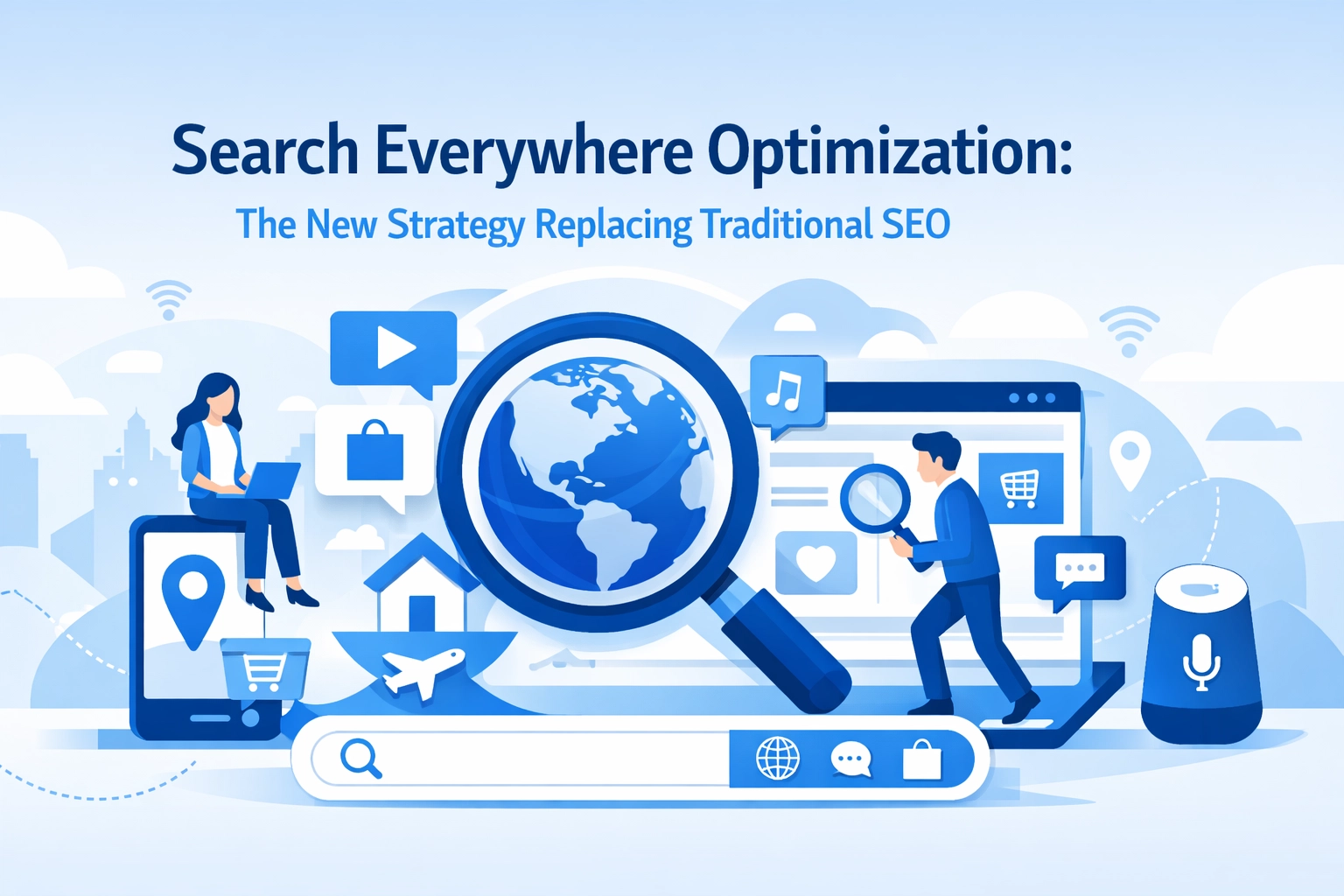
Search Everywhere Optimization (SEvO) is an answer-centric strategy that prioritizes visibility across multiple platforms, social media, AI assistants, voice search, and yes, still Google. The goal isn't just driving traffic to your website anymore. It's being recognized as the authoritative source that gets cited, shared, and referenced across every platform where your audience searches.
Traditional SEO focuses on URLs. You optimize pages to rank for keywords so people click through to your site. SEvO focuses on answers. You create content that AI systems cite, that voice assistants read aloud, that social platforms surface, regardless of whether someone ends up on your website.

This sounds radical, but it's already happening. When someone asks Siri a question, they get an answer pulled from somewhere. When ChatGPT responds to a query, it's synthesizing information from sources it considers credible. Your business either shows up in these answers or it doesn't.
The Core Differences That Matter
The shift from traditional SEO to SEvO involves three fundamental changes in how you approach online visibility.
From keywords to context. Traditional SEO taught us to identify keywords people search for and build content around those terms. SEvO requires understanding user intent at a deeper level. AI systems don't just match keywords, they evaluate whether content actually answers the question being asked. Keyword stuffing doesn't work when an AI is deciding whether your content deserves to be cited.
From backlinks to authority. Backlink profiles still matter, but they're not enough. SEvO demands establishing genuine expertise through well-researched, in-depth content. AI systems evaluate content quality based on accuracy, depth, and trustworthiness. Surface-level blog posts optimized for keywords don't cut it anymore.
From single-platform to multi-platform. Traditional SEO meant optimizing for Google (and maybe Bing). SEvO requires content optimized for social media algorithms, voice assistants, video platforms, and AI chatbots. Each platform has different requirements for how content needs to be structured to be discoverable.

Why Traditional SEO Still Forms the Foundation
Here's the critical part most people miss: SEvO doesn't replace traditional SEO. It builds on top of it.
If your website doesn't rank on Google, AI systems can't find your content to cite it. Most AI tools scrape Google's index to pull information. No Google presence means no AI citations. The foundation still matters, you just need to optimize that foundation differently.
Think of it this way: traditional SEO gets your content indexed and findable. SEvO makes that content "ingestible" by the AI systems and platforms that will actually surface it to users.
You still need solid on-page optimization, clean site structure, and quality backlinks. But those elements now serve a dual purpose: helping you rank in traditional search results and ensuring AI systems can access and trust your content enough to cite it.
Strategic Changes Your Business Needs to Make
Moving to a Search Everywhere Optimization approach requires adjusting both content creation and distribution strategies.
Create comprehensive, authoritative resources. Short blog posts hitting a keyword target won't establish the expertise AI systems look for. Develop in-depth guides, detailed case studies, and well-researched resources that thoroughly address topics in your industry. Length matters less than depth and accuracy.
Optimize for voice search queries. People speak differently than they type. Voice searches tend to be conversational questions rather than keyword phrases. Your content needs to directly answer questions in natural language. Including FAQ sections with clear, concise answers helps both voice assistants and AI chatbots find relevant information.

Make visual content searchable. On platforms like TikTok and Instagram, Optical Character Recognition (OCR) technology reads text within images and videos. That text becomes searchable content. If you're creating video content, include relevant text overlays. Design infographics with actual text rather than just images. Visual content isn't decorative anymore, it's discoverable.
Structure content for easy extraction. AI systems pull specific answers from your content. Using clear headings, bullet points, and concise paragraphs makes it easier for AI to extract and cite relevant information. Wall-of-text content gets passed over even if it contains great information.
Building Multi-Platform Presence
Traditional SEO let you focus solely on your website. SEvO requires strategic presence across platforms where your audience actually searches.
Social media as search engines. People search on Instagram, TikTok, LinkedIn, and Facebook before ever opening Google. Each platform needs optimized content that's native to how that platform works. You can't just share links to your website, you need content that provides value within the platform itself.
Video platforms matter more. YouTube is the second-largest search engine. TikTok's search function is increasingly popular, especially with younger demographics. Creating video content that addresses common questions in your industry increases your chances of being the source AI systems cite.
Voice assistant optimization. Structure some content specifically to answer the kinds of questions people ask Siri, Alexa, or Google Assistant. These tend to be "how to," "what is," and "why does" queries. Clear, direct answers to these questions position your business as a credible source.
The key is maintaining consistent expertise and messaging across platforms while adapting content format to each platform's strengths. Your LinkedIn content shouldn't be identical to your TikTok content, but both should demonstrate the same level of knowledge and authority.

Measuring Success Differently
Traditional SEO metrics, keyword rankings, organic traffic, click-through rates, still matter. But they don't tell the complete story anymore.
Track brand mentions and citations across platforms. Monitor whether your content gets referenced in AI-generated responses. Pay attention to voice search visibility. Look at engagement metrics on social platforms where your content appears in search results.
Success in SEvO means being the source people find regardless of where they're searching. That's harder to measure with traditional analytics tools, but it's increasingly what drives actual business results.
Getting Started with Search Everywhere Optimization
You don't need to abandon your current SEO strategy. Start by expanding it.
Audit your existing content to identify pieces that could be expanded into more comprehensive resources. Add FAQ sections to key pages with conversational answers to common questions. Create social media content that provides genuine value rather than just promoting your website.
If you're already doing search engine optimization well, you have a foundation to build on. The next step is making that optimized content accessible and citable across the platforms where your customers actually search.
The businesses that adapt to Search Everywhere Optimization won't abandon what works about traditional SEO. They'll extend their visibility beyond a single search engine into every platform where potential customers look for answers. That's not replacing SEO; it's finally fulfilling the promise of being found online.