

Your website exists. That's great. But if no one can find it on Google, you're basically invisible
Search engine optimization sounds complicated, but it doesn't have to be. Here are 10 practical things you can do right now to improve your rankings without hiring an expensive agency or learning to code
1. Start With Keyword Research
You need to know what people are actually typing into Google when they're looking for businesses like yours
Ask your existing customers how they found you. Write down 20-50 phrases they mention. These are your keywords. Use tools like Google's Keyword Planner (it's free) or just start typing in Google and see what it suggests
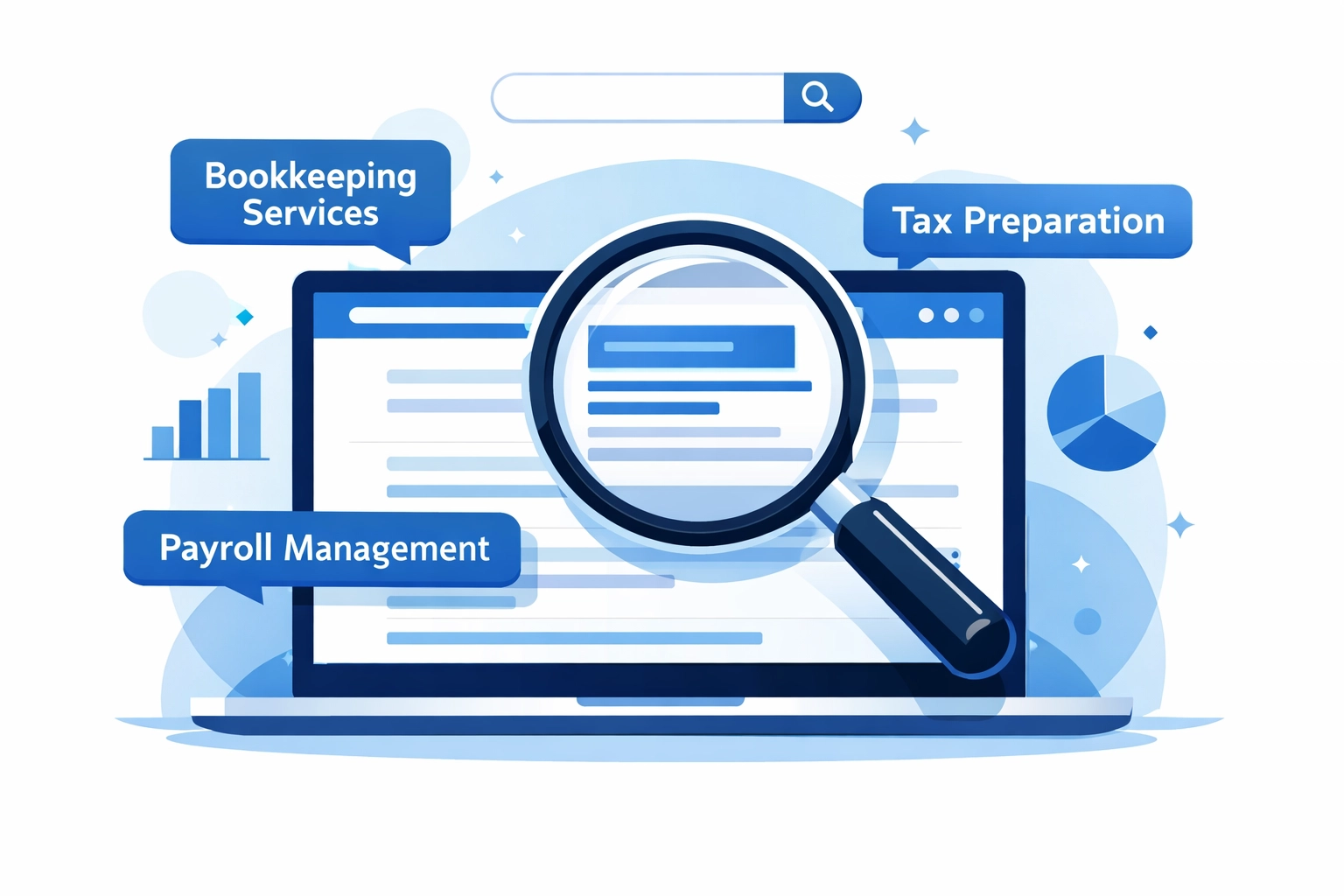
Don't overthink this. If you sell accounting services, your keywords might be "small business bookkeeping," "tax preparation services," or "payroll management." Simple stuff
2. Fix Your Title Tags and Meta Descriptions
These show up in Google search results before anyone clicks on your site. They're your first impression
Keep title tags under 60 characters and include your main keyword. Your meta description should be 140-160 characters, tell people what they'll get, and end with a call-to-action like "Get started today" or "Learn more"
Most website platforms let you edit these without touching code. If yours doesn't, you need a better platform
3. Structure Your Content Properly
Google likes organized content. So do humans
Use one H1 heading per page (usually your page title). Break up your content with H2 and H3 subheadings. Keep paragraphs short: three sentences max. Use bullet points. Add tables when they make sense
Your content should be scannable. Most people don't read every word. They skim looking for what they need
4. Make Your Pages Load Fast
Slow websites lose customers and rankings. Google cares about speed
Compress your images before uploading them. Most images on websites are way bigger than they need to be. Use a free tool like TinyPNG or ImageOptim
Check your site speed with Google PageSpeed Insights. It'll tell you exactly what's slowing you down and how to fix it

5. Optimize for Mobile
More than half of web traffic comes from phones now. If your site doesn't work well on mobile, you're losing business
Most modern website builders are mobile-responsive by default, but test yours anyway. Pull it up on your phone. Can you read everything? Do the buttons work? Is the navigation easy?
If anything's broken or annoying, fix it. This isn't optional anymore
6. Create Actually Useful Content
Generic "About Us" pages and bare-bones service descriptions don't cut it
Write content that answers the questions your customers actually ask. If you're a plumber, write about "How to prevent frozen pipes" or "What to do when your water heater breaks." Real problems with real solutions
This is where search engine optimization really happens: creating content people want to read and share
7. Set Up Your Google Business Profile
This is the box that shows up on the right side of Google when someone searches for your business. It's free and essential
Fill out everything: business name, address, phone number, hours, services, photos, and description. Keep it updated. Add new photos regularly
The more complete your profile, the better you'll rank in local searches

8. Get More Reviews (and Respond to Them)
Reviews are trust signals to both customers and Google. You need them
Ask satisfied customers to leave reviews. Make it easy: send them a direct link. Respond to every review, good or bad. It shows you're paying attention
Don't buy fake reviews. Google will catch you and you'll tank your rankings
9. Build Internal Links
Link between your own pages. If you mention a service in a blog post, link to that service page. If you're talking about web design, link to your web design services
This helps Google understand how your site is organized. It also keeps people on your site longer, which is good for rankings
Don't go crazy: two or three relevant internal links per page is plenty
10. Keep Your Information Consistent Everywhere
Your business name, address, and phone number should be identical across your website, social media, directories, and anywhere else you're listed online
Inconsistent information confuses Google and hurts your rankings. If your website says "WorldWise Inc" but Facebook says "World Wise" and Yelp says "World-Wise," you've got a problem
Pick one format and use it everywhere

The Reality Check
SEO isn't a one-time project. It's ongoing maintenance
You can't just optimize your site once and forget about it. Google changes its algorithm constantly. Your competitors are working on their SEO too. You need to keep at it
But here's the good news: small consistent effort beats massive sporadic effort every time. Spend an hour a week on SEO and you'll see results
The businesses that rank well aren't necessarily doing anything magical. They're just doing these basics consistently over time
What Actually Matters
If you're feeling overwhelmed, focus on these three things first:
Create good content. Write for humans, not robots. Answer real questions. Be helpful
Make your site fast and mobile-friendly. This affects both user experience and rankings
Be consistent. Keep your information accurate everywhere. Update your content regularly
Everything else builds on these foundations. Get these right and you're already ahead of most small businesses
Need help implementing these strategies? Our team handles web design and SEO optimization for small businesses every day. We know what works and what doesn't
The bottom line: SEO doesn't have to be complicated or expensive. Start with these 10 essentials and you'll be on the right track