

Let's get straight to it: if your website was designed with desktops in mind first and mobile as an afterthought, you're already behind. Way behind.
In 2026, mobile-first design isn't a nice-to-have feature or a trendy buzzword. It's the baseline expectation for anyone who wants their website to actually work for their customers: and for Google.
The Mobile Takeover is Complete
Over 60% of all web traffic now comes from mobile devices. That's not a projection or an estimate: it's the reality of how people browse, shop, and make decisions online today.
Think about your own behavior. When was the last time you pulled out a laptop to find a restaurant's hours, compare product prices, or look up a service provider? You probably grabbed your phone. Your customers do the same thing.
This shift isn't slowing down. Mobile usage continues to climb year over year, and the businesses that haven't adapted are watching potential customers bounce off their clunky, hard-to-navigate sites every single day.

Google Doesn't Care About Your Desktop Site Anymore
Here's where it gets serious for your bottom line: Google uses mobile-first indexing. That means when Google's crawlers evaluate your site to determine where you rank in search results, they look at your mobile version first: not your desktop site.
Your desktop site could be gorgeous, fast, and perfectly optimized. But if your mobile experience is slow, cluttered, or broken, Google will rank you accordingly. Lower rankings mean less visibility. Less visibility means fewer customers finding you when they search for what you offer.
This is especially painful for businesses that invested heavily in web design years ago but haven't updated their approach. That beautiful desktop site you're proud of? It might actually be hurting your SEO performance if the mobile version doesn't measure up.
Speed Matters More Than Ever
Mobile users are impatient. They're on-the-go, multitasking, and expect instant results. If your site takes more than a few seconds to load on their phone, they're gone.
Sites designed with a mobile-first approach improve loading speeds by 30-50% through optimized code structure and better resource management. That's not a small difference: it's the gap between someone staying on your site or hitting the back button to find your competitor.

Fast load times directly impact conversions. Studies show that mobile-first responsive design can increase repeat website visits by 75%. When people have a smooth, quick experience on your site, they come back. When they don't, they remember: and they don't return.
User Experience Determines Business Success
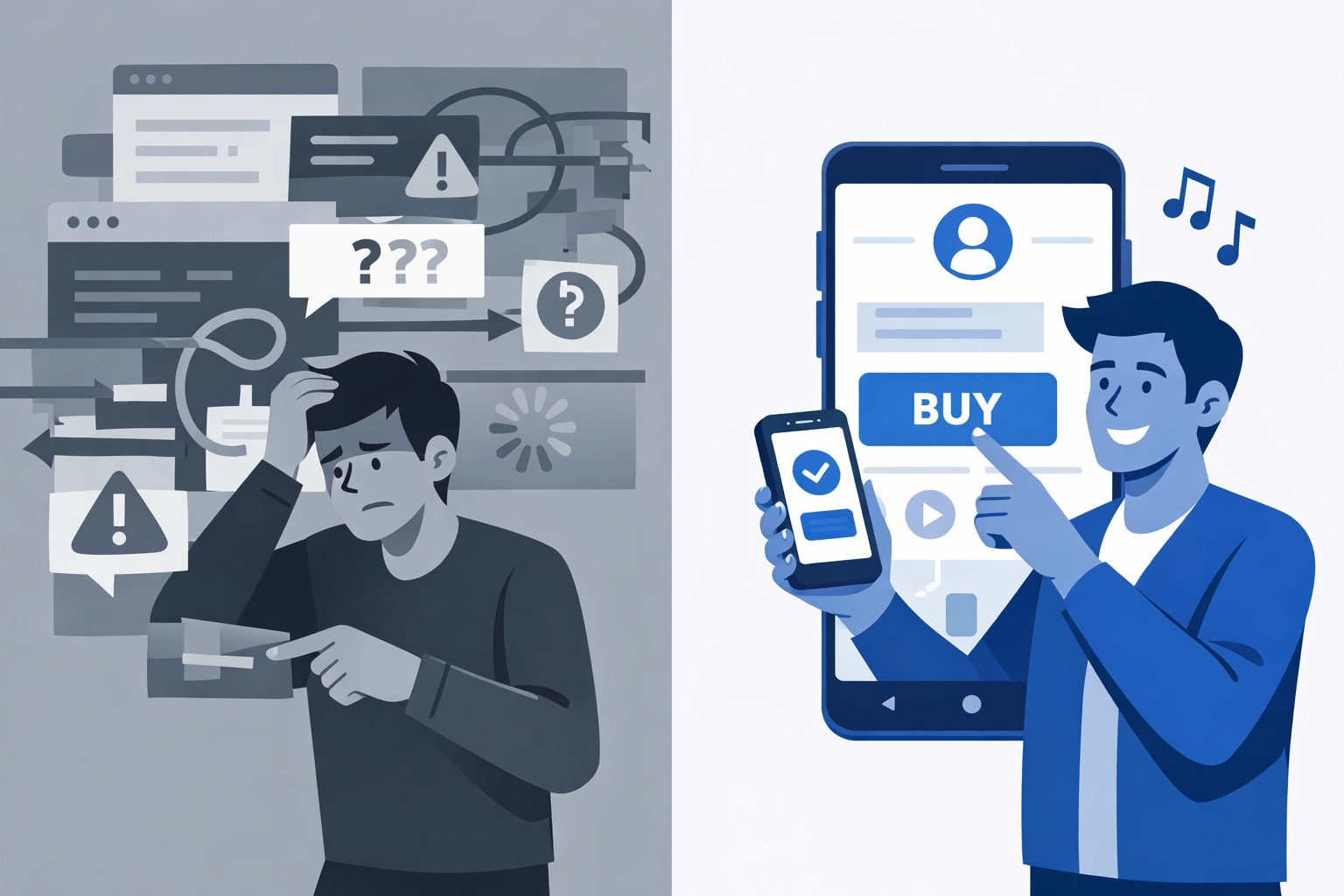
Let's talk about what happens when someone lands on a site that wasn't built mobile-first:
- Text is too small to read without zooming
- Buttons are too close together and hard to tap accurately
- Navigation menus are confusing or don't work properly
- Forms are frustrating to fill out on a small screen
- Images don't scale correctly and break the layout
- Important information is hidden or hard to find
Every one of these problems is a conversion killer. Someone searching for your services who encounters any of these issues will leave immediately. They won't call, they won't fill out your contact form, and they definitely won't become a customer.
Meanwhile, your competitor with a properly designed mobile experience just earned that business instead.
What Mobile-First Actually Means
Mobile-first design isn't just making your desktop site shrink to fit a phone screen. That's responsive design, and while it's better than nothing, it's not the same thing.
Mobile-first means designing for the smallest screen first, then scaling up. It forces you to prioritize what really matters: clear calls to action, easy navigation, fast load times, and streamlined content that works on any device.
This approach benefits everyone. Desktop users get a cleaner, faster experience too because mobile-first design eliminates bloat and focuses on what's essential.
A proper web design strategy starts with understanding how your customers actually use your site, then building for those real-world behaviors instead of assumptions about how they should use it.
The Business Case is Clear
In 2026, businesses that optimize mobile conversion paths consistently outperform those that don't: even with the same marketing spend. That's the reality of the market.
Your digital marketing campaigns might drive traffic to your site, but if that traffic lands on a poor mobile experience, you're wasting your marketing budget. Every dollar you spend on ads or SEO is less effective when your site can't convert mobile visitors.
For service-based businesses especially, mobile optimization is critical. Someone searching for immediate help needs to find your phone number instantly, not hunt through a confusing menu or wait for a slow site to load. Local searches happen overwhelmingly on mobile devices, and if you're not capturing those searchers effectively, you're leaving money on the table.
Security and Performance Go Hand in Hand
Here's something many businesses overlook: mobile-first sites tend to have better security practices built in from the start. When developers optimize for mobile performance, they're also thinking about modern security standards, HTTPS implementation, and protecting user data.
If you're concerned about your website's security (and you should be), combining mobile-first design with proper cybersecurity measures creates a more robust overall web presence. A fast, secure mobile experience builds trust with potential customers from their very first interaction with your brand.
You Can't Afford to Wait
The businesses that adapted to mobile-first design early gained a competitive advantage. But in 2026, we're past that point. Mobile-first is now the industry standard, not an innovation.
Waiting longer only puts you further behind. Every day your site isn't optimized for mobile, you're:
- Losing search ranking positions to competitors who have adapted
- Watching potential customers bounce to better mobile experiences
- Wasting money on marketing that can't convert effectively
- Building a reputation for being outdated or hard to work with
The good news? Once you make the switch, the benefits compound quickly. Better rankings, more traffic, higher conversion rates, and improved customer satisfaction all work together to grow your business.
Making the Transition
If you're reading this and realizing your current site isn't cutting it, don't panic. The solution isn't necessarily a complete rebuild from scratch (though sometimes that's the right call).
Start by running your site through mobile testing tools to identify specific issues. Look at your analytics to see how mobile users actually behave on your site versus desktop users. Where do they drop off? What pages have the highest bounce rates?
Work with professionals who understand modern mobile-first development. This isn't a DIY weekend project: it requires proper planning, testing, and implementation to get right. The investment pays for itself through improved performance and conversions.
The Bottom Line
Mobile-first design is no longer optional because your customers and Google have made it mandatory. You can resist, but you'll pay the price in lost visibility, lost customers, and lost revenue.
The question isn't whether to adapt: it's how quickly you can make it happen. Your competitors are already there, and your customers expect it.
Ready to bring your web presence into 2026? Get in touch and let's talk about building a mobile experience that actually works for your business and your customers.