

That $30/month website builder looks pretty tempting when you're trying to save money. Build your own site, skip the web designer, pocket the difference. Sounds like a smart business move.
But here's the thing : DIY website platforms hide costs that most business owners don't see until it's too late. What starts as a budget-friendly solution often becomes more expensive than hiring a professional from the start.
Let's break down what you're actually paying for when you go the DIY route.
Your Time Isn't Free
Think about what your time is worth. If you bill clients at $75 per hour, building your first DIY website will cost you somewhere between $4,500 and $9,000 in opportunity cost. That's 60-120 hours you're spending on web design instead of doing what you do best.
And it doesn't stop after launch. Websites need ongoing maintenance, security updates, content changes, and optimization. That's another 2-5 hours each month. Over three years, you're looking at $5,400 to $13,500 in time that could have been spent serving clients or growing your business.
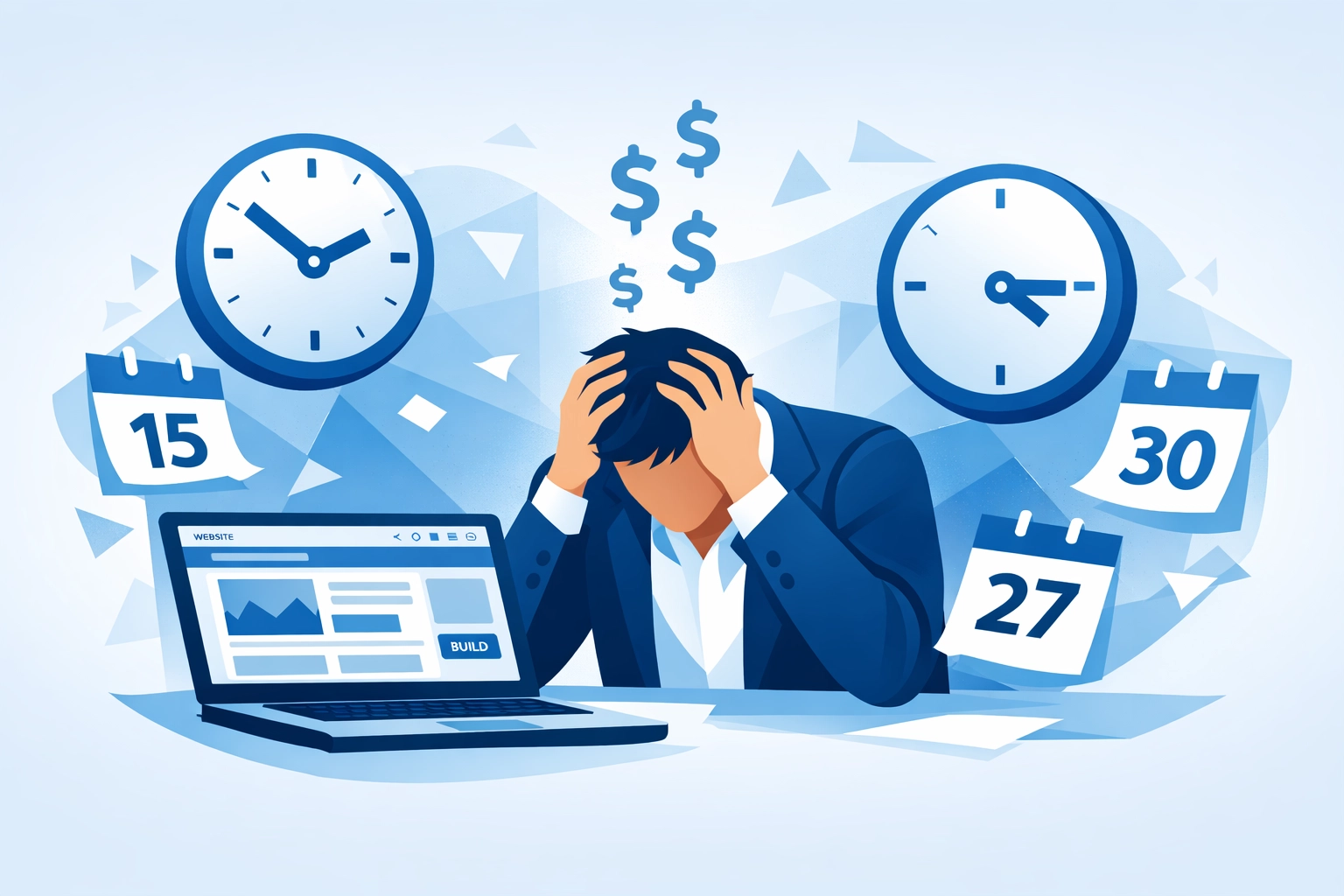
The learning curve is real too. While you're watching YouTube tutorials and troubleshooting CSS issues, potential customers are visiting your incomplete site. Or worse, they're finding your competitors instead.
The Platform Costs Add Up Fast
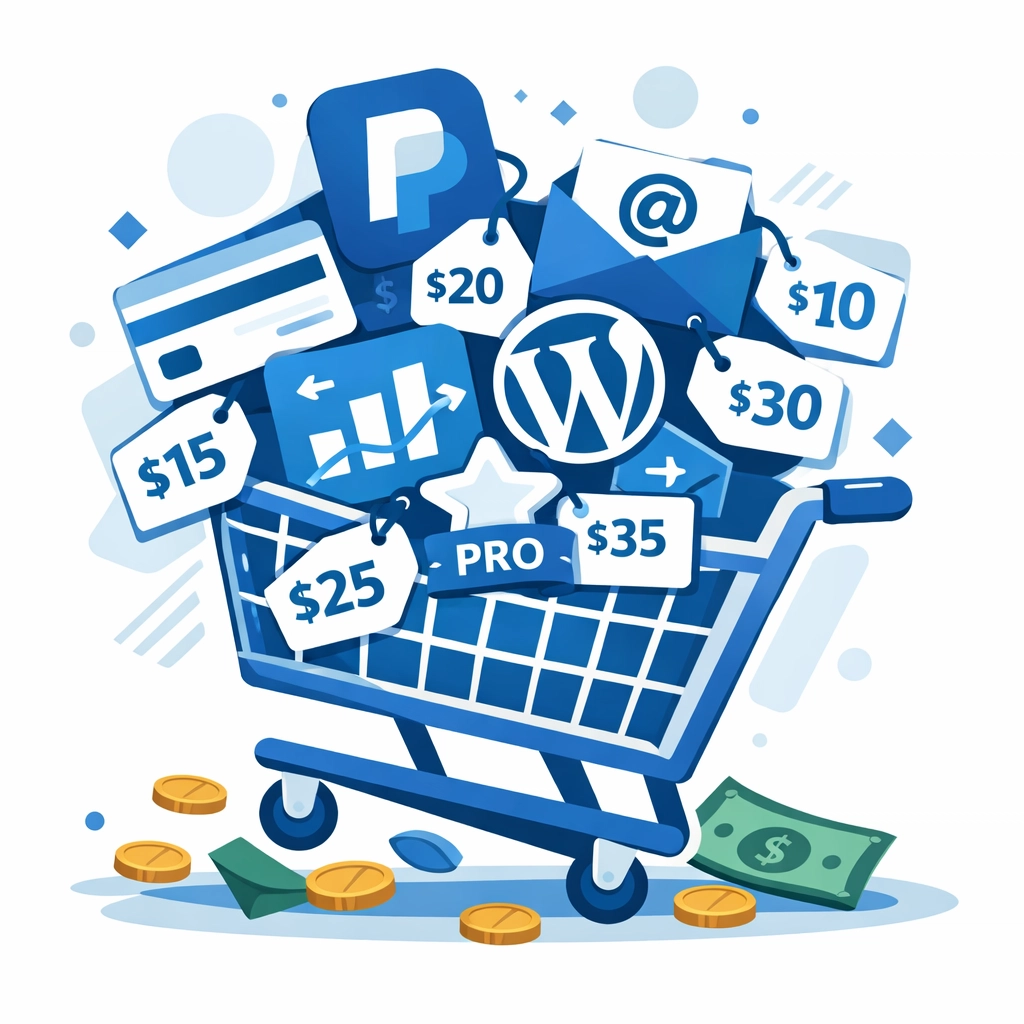
That $30/month base price is just the entry fee. The features your business actually needs cost extra:
- Premium themes and templates: $150-750 upfront
- Third-party integrations for email, payments, scheduling: $15-75 each per month
- Marketing and SEO tools: $150-450 monthly
- Ecommerce functionality: another $20-100 per month plus transaction fees
- Stock photos that don't look generic: $300-1,500 annually
- Hosting upgrades when your traffic grows: $45-150 monthly
Stack these costs over two years and you've likely exceeded what professional web design would have cost initially. Plus you got none of the custom features or strategic planning that comes with it.
Your Site is Slower Than You Think
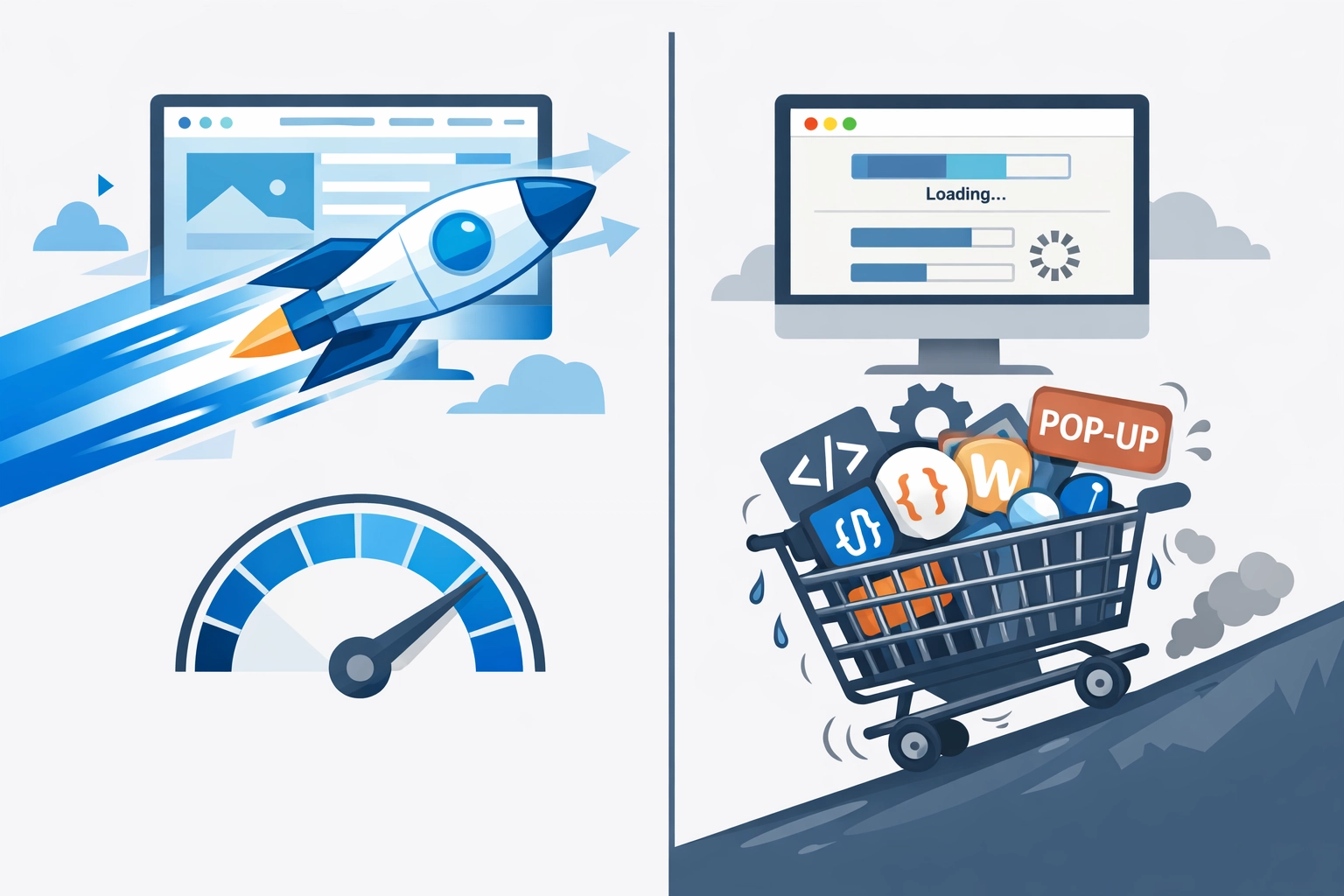
DIY platforms generate bloated code. They have to account for millions of different use cases, so they load extra scripts and styles you don't actually need. This kills your page speed.
Page speed matters more than most people realize. Google uses it as a ranking factor. Users bounce when pages take more than three seconds to load. Every extra second increases your abandonment rate by 32%.
The research is clear : businesses that migrated from DIY platforms to custom solutions saw 317% higher organic traffic. That's not a small difference. That's the gap between getting found and staying invisible.
SEO Limitations Will Cost You Traffic
Speaking of getting found : DIY platforms offer basic SEO tools, but they can't compete with what professional search engine optimization delivers.
Schema markup, proper heading hierarchy, optimized image compression, strategic internal linking, technical performance fixes : these require expertise that goes beyond filling out meta descriptions in a dashboard.
You can spend months creating content that never ranks because the foundation isn't right. Meanwhile, your competitors with properly optimized sites are capturing the customers you're missing.
Security Breaches Are Expensive
A single security incident costs small businesses between $37,500 and $75,000 on average. That's just immediate response costs : investigation, fixes, notifications. It doesn't include lost revenue while your site is down, legal fees, or the damage to your reputation.
DIY platforms handle some security basics, but they're shared hosting environments. When one site gets compromised, others can be affected. Customer data, payment information, and business records need enterprise-level protection.
Compliance adds another layer. GDPR, accessibility standards, industry-specific regulations : these often exceed what DIY platforms can handle without extensive customization.
Scaling Becomes a Nightmare
Your business grows. Your website traffic spikes. Suddenly your DIY platform plan costs triple because you exceeded bandwidth limits.
Or you need a custom feature that doesn't exist in the app store. Now you're hiring developers to build workarounds on a platform that wasn't designed for it. That costs $5,000 to $20,000 plus weeks of delays.
Template modifications seem simple until you realize changing one element breaks three others. Adding new page layouts requires CSS knowledge you don't have. What should take an hour becomes a weekend project.
The platform that was supposed to give you flexibility ends up boxing you in.
Your Brand Looks Like Everyone Else's
DIY templates are popular because thousands of businesses use them. Your site looks similar to dozens of others. Generic layouts, stock photos that don't show your actual work, color schemes that don't match your brand.
This hurts credibility more than most business owners realize. Visitors make snap judgments about professionalism based on design. A template site with mismatched fonts and standard layouts signals that you cut corners.

If your business depends on trust : consulting, financial services, healthcare, legal : this becomes a serious problem. Potential clients question whether you'll cut corners with their projects too.
When DIY Actually Makes Sense
Look, DIY isn't always wrong. Some situations work fine:
- Personal blogs or hobby sites where revenue doesn't matter
- Simple landing pages for testing a business concept
- Temporary placeholders while you plan something bigger
- Extremely limited budgets with no funding options
But if your website directly impacts business success, professional development usually costs less when you account for everything. Time saved, better results, proper technical foundation, scalability : these add up.
The Real Math
Let's say professional web design costs $5,000-8,000 upfront. Seems expensive compared to DIY.
But add up your DIY costs over two years:
- Platform fees and upgrades: $1,800
- Premium features and integrations: $3,600
- Stock photos and design assets: $600
- Marketing tools: $7,200
- Your time at $75/hour for initial build and maintenance: $10,800
- Lost revenue from poor performance and SEO: varies, but substantial
That's $24,000 minimum, and you still have a mediocre website.
Professional development gives you a strategic foundation built for growth. Custom features that match your workflow. Technical optimization that brings traffic. A design that builds credibility.
What to Do Instead
If you're considering DIY, ask yourself these questions first:
Is website performance critical to your business success? Does your business need custom functionality? Do you have time to become a part-time web designer? Will generic templates hurt your professional credibility?
If you answered yes to any of these, talk to professionals before spending months on a DIY solution. You might find that proper web design costs less than you think : especially compared to the hidden costs of doing it yourself.
Your business deserves better than a template everyone else is using. And your time deserves to be spent on what you do best, not wrestling with website builders.