
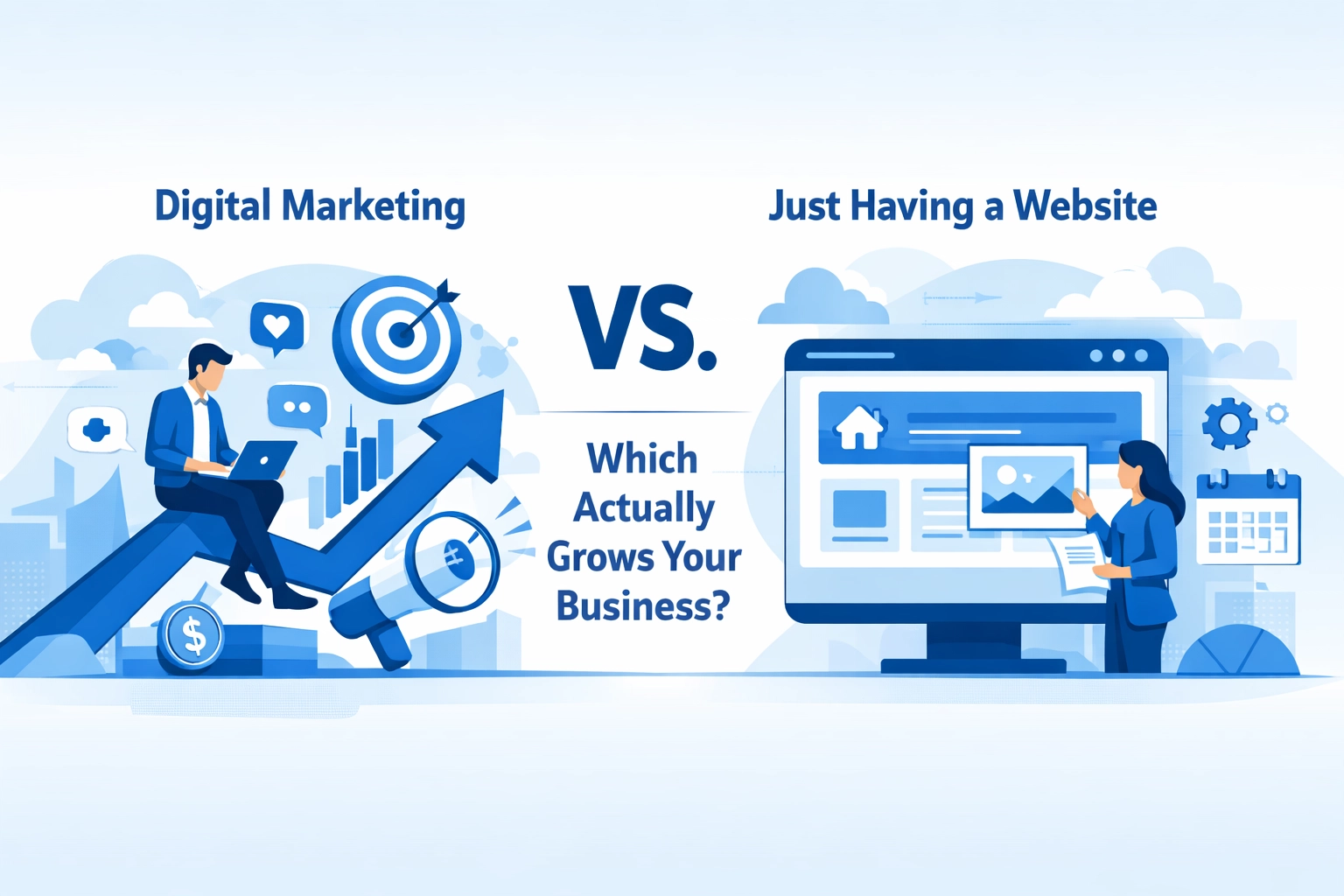

You've got a website. It looks decent. Maybe you even paid good money for it. So why aren't customers flooding in?
Here's the truth: having a website is like opening a store in the middle of nowhere. Sure, it's there. But if nobody knows about it, nobody's walking through the door.
That's where digital marketing comes in.
Your Website Is a Digital Storefront (But Who's Walking By?)
Think of your website as your digital storefront. It's where people learn about your business, check out your services, and decide if they want to work with you.
A well-designed website does important stuff:
- Makes a solid first impression
- Builds trust with potential customers
- Reduces bounce rates when designed right
- Converts visitors into leads
But here's the problem: even the best website in the world won't grow your business if nobody sees it.
You could have the most beautiful, perfectly optimized site with killer calls-to-action and seamless navigation. But if you're getting 10 visitors a month, those conversions don't mean much.
Digital Marketing Is the Engine That Drives Traffic
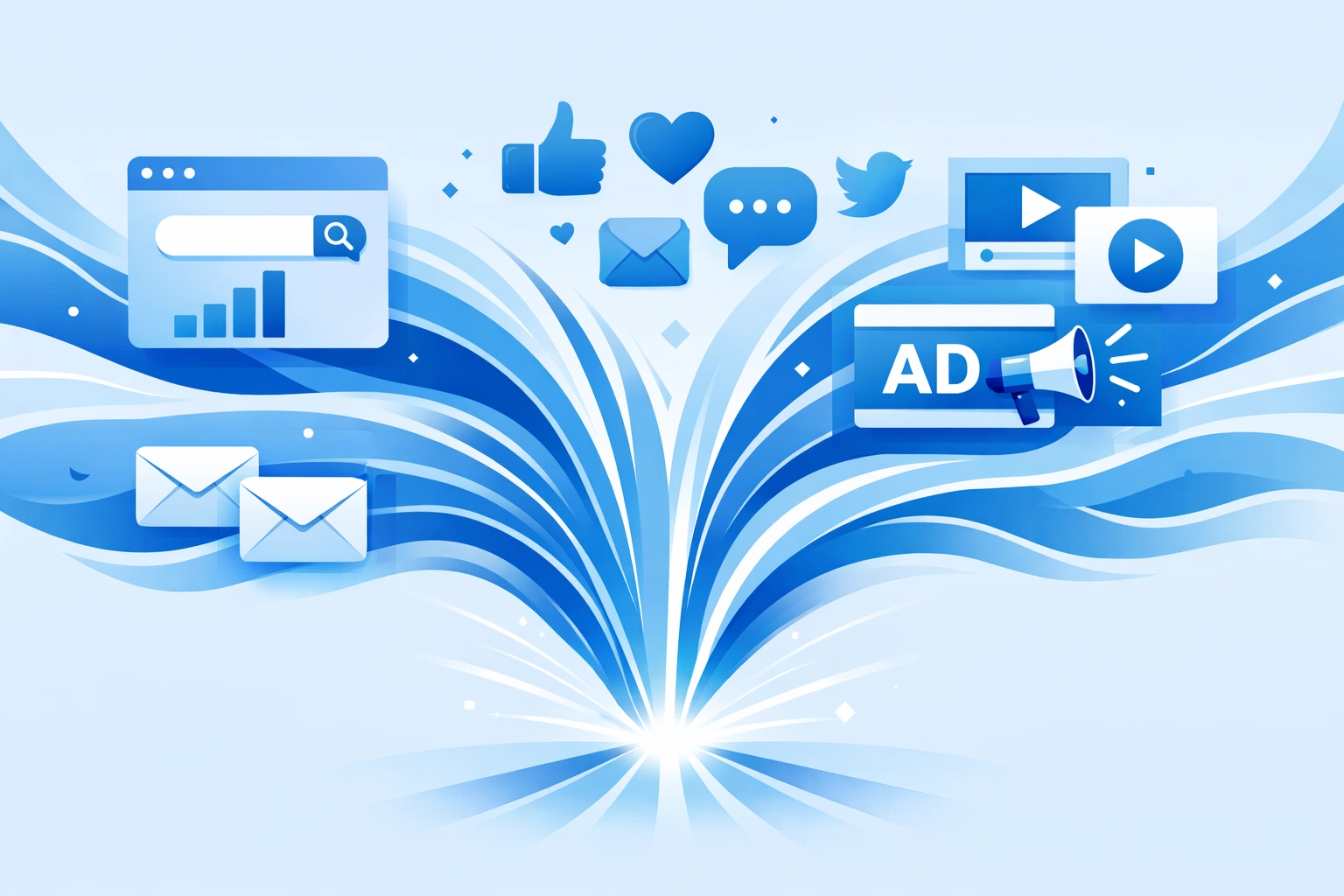
Digital marketing is everything you do to get people to your website in the first place.
It includes:
- SEO (Search Engine Optimization): Getting your site to show up when people search for what you offer
- Paid advertising: Google Ads, social media ads, display campaigns
- Social media marketing: Building an audience and driving them to your site
- Email marketing: Nurturing leads and bringing people back
- Content marketing: Blog posts, videos, and other content that attracts your target audience
Without digital marketing, you're basically waiting for people to randomly stumble onto your site. Good luck with that.
Digital marketing puts your business in front of people who are actively looking for what you offer. It's the difference between hoping someone finds you and actively going out and getting customers.
The Real Problem: Neither Works Great in Isolation
Here's where it gets interesting. You can't just pick one and ignore the other.
Scenario 1: Great Website, No Marketing
You spent $10,000 on a beautiful custom website. Clean design. Fast loading times. Perfect user experience. But you're not doing any marketing.
Result? Cricket sounds. Maybe your mom visits it. Your existing customers might find it if they Google your business name specifically. But new customers? Not happening.
Scenario 2: Heavy Marketing, Terrible Website
Now flip it. You're running Google Ads, posting on social media, sending emails. People are clicking through to your site. But when they get there, it's a mess. Slow loading. Confusing navigation. Looks like it was built in 2005.
Result? You're burning money sending traffic to a site that can't convert. People leave immediately and probably won't come back.
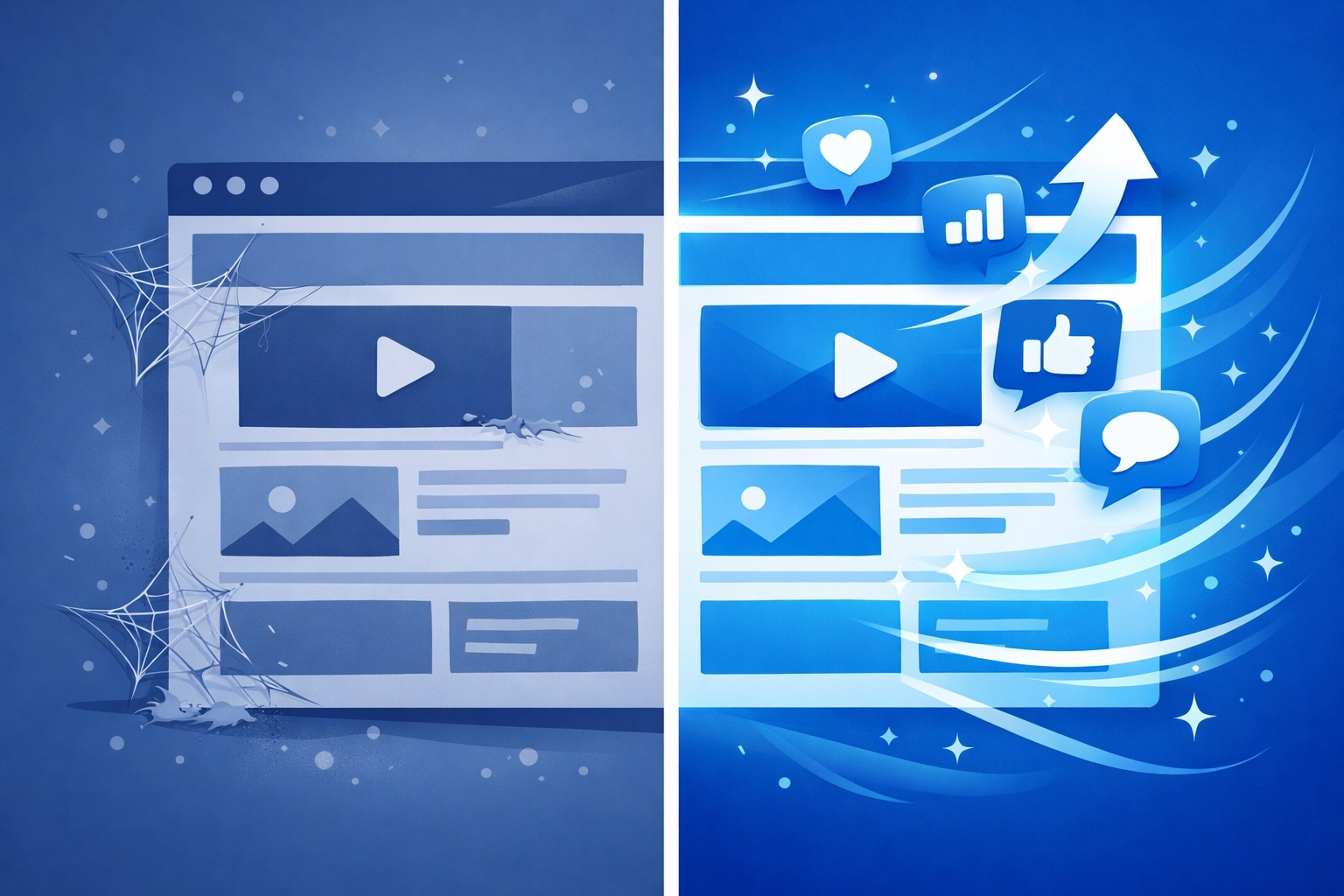
Neither approach works on its own. You need both.
The Magic Happens When You Combine Them
Businesses that invest in both web design and digital marketing see way better results than those focusing on just one.
The numbers back this up. Companies that optimize both their websites and their marketing campaigns report up to 300% higher conversion rates on their landing pages.
Why? Because they work together:
Marketing drives qualified traffic to your site. You're getting people who are actually interested in what you offer, not just random visitors.
Your website converts that traffic into customers. When people land on a well-designed site that addresses their needs, they're way more likely to take action.
Analytics from your marketing tell you what's working on your site. You can see which pages people are leaving, what they're clicking on, where they're converting. Then you improve those pages.
Your improved site makes your marketing more effective. Better conversion rates mean lower cost-per-acquisition. Your ad spend goes further.
It's a feedback loop that keeps getting better.
When to Focus on What
The timing of your investments matters too.
If you're just starting out, build a solid website foundation first. You don't need anything fancy, but you need something professional that represents your business well and has clear calls-to-action. Once that's in place, start layering in digital marketing to drive visibility.
If you already have a decent website, your biggest opportunity is probably in marketing. Focus on SEO, paid ads, and other channels to drive more targeted traffic to your existing site.
If you have an old, outdated website, you might need to tackle both simultaneously. Update your site while launching marketing campaigns, making sure the pages you're driving traffic to are actually optimized for conversions.
What This Actually Looks Like in Practice
Let's make this concrete. Say you run a business that provides professional services.
Website-only approach:
You have a nice site. It clearly explains what you do. Has testimonials. Easy contact form. But that's it. You're getting maybe 50-100 visitors a month, mostly from people who already know your business name.
Digital marketing-only approach:
You're running Google Ads and posting content on LinkedIn. Driving 1,000 visitors a month. But your website hasn't been updated in years, loads slowly, and doesn't clearly explain your value proposition. Conversion rate is under 1%.
Combined approach:
You have a clean, fast website with clear service pages and strong calls-to-action. You're running targeted SEO campaigns to rank for relevant searches. You've got paid ads driving traffic to specific landing pages optimized for those campaigns. You're creating content that attracts your ideal customers. You're nurturing email subscribers.
Now you're getting 1,000+ qualified visitors per month, and 5-10% of them are converting into leads. That's 50-100 new leads every month. That's actual business growth.
The Bottom Line: You Need Both
Stop thinking of your website and your marketing as separate things. They're two parts of the same system.
Your website is where conversions happen. Your digital marketing is how you get people there. One without the other is like having a car without gas, or gas without a car. Neither gets you anywhere.
If you want to actually grow your business, you need:
- A website that's designed to convert visitors into customers
- Digital marketing strategies that drive qualified traffic to that website
- Analytics and optimization to continuously improve both
The businesses that win are the ones that treat their online presence as an integrated system, not a one-time project.
Ready to Actually Grow?
If you're tired of having a website that just sits there, or burning money on marketing that doesn't convert, it's time for a different approach.
At WorldWise, we build websites and marketing strategies that actually work together to grow your business. No guessing. No wasted budget. Just results.
Get started today and let's build something that actually drives revenue.