
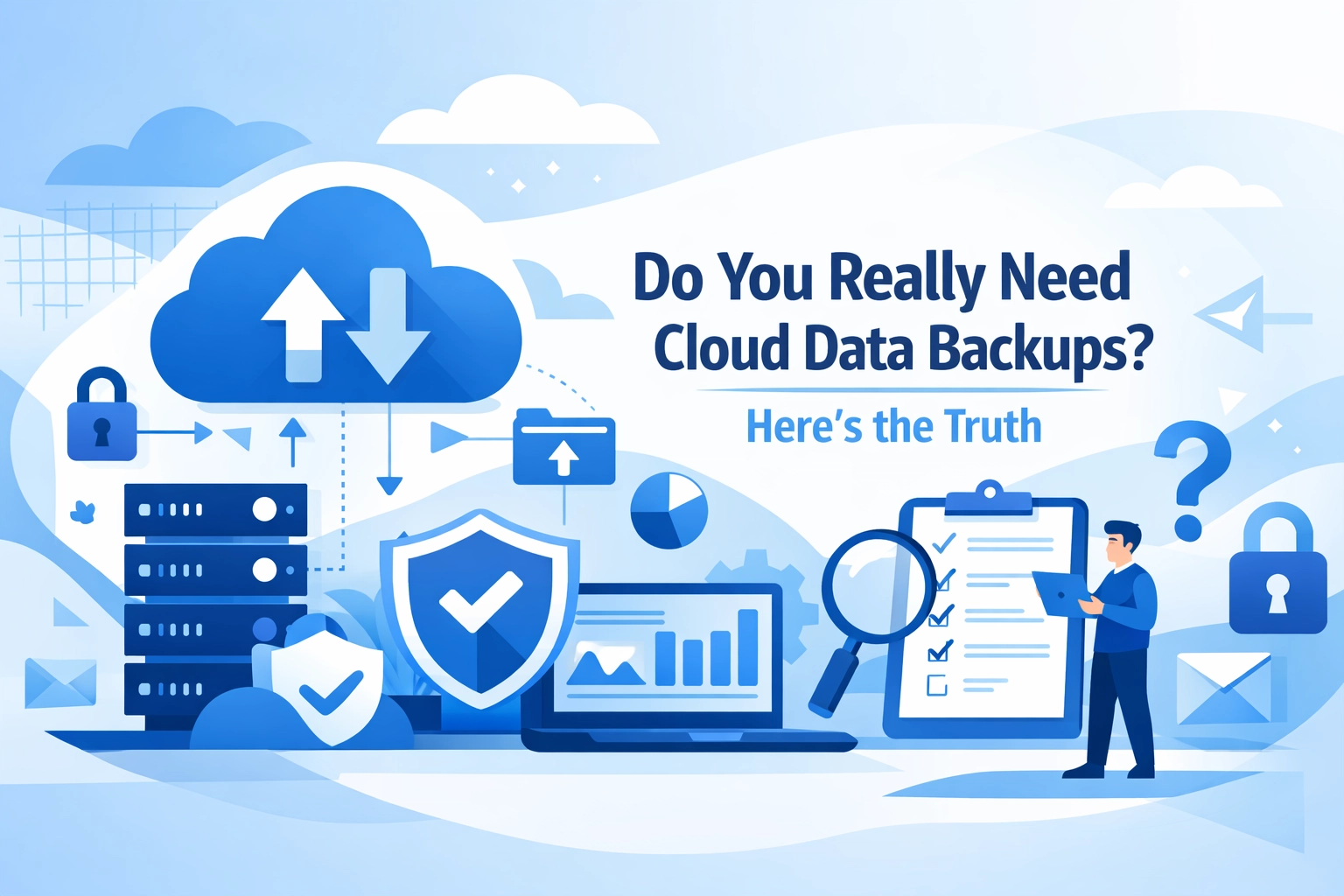

You probably think your data is safe because you have an external hard drive sitting on your desk. You might even have a second one tucked away in a drawer. For a long time that was enough to keep a small business running. Things have changed. The digital landscape is more dangerous than it was five years ago. Hardware is less reliable than we want to admit. Threats are more sophisticated. If you are still relying on physical hardware inside your office to protect your business you are taking a massive risk
The truth is that local backups are no longer a complete solution. They are a single point of failure. If a fire breaks out or a pipe bursts your primary computer and your backup drive are both gone. If a thief breaks in they will likely grab the small expensive-looking boxes sitting next to your monitor. In those scenarios your business loses everything. This is where cloud data backups become a strategic necessity rather than a luxury
The Fragility of Physical Hardware
All physical hardware has a shelf life. Hard drives use spinning platters and moving arms. These parts eventually wear out. Solid state drives have a limited number of write cycles. You never know exactly when a drive will fail. It usually happens at the worst possible time. When you rely on local backups you are betting your entire business on the mechanical integrity of a $100 device
Cloud backups remove this physical risk. Your data is stored in professional data centers. These facilities have redundant power supplies. They have advanced cooling systems. They have armed security. Most importantly they store your data across multiple servers. If one drive fails in the cloud your data is instantly available from another one. You get a level of hardware reliability that no small business could afford to build on its own
The Growing Threat of Ransomware
Cybersecurity is the biggest concern for modern businesses. Ransomware is a specific type of attack that encrypts your files. The hackers then demand a massive payment to give you the key. If you have a local backup drive plugged into your network the ransomware will find it. It will encrypt your backup just as easily as it encrypts your main server. At that point your backup is useless
Cloud backups provide a layer of protection called air-gapping. This means your backup is stored on a separate network. Modern cloud solutions also use versioning. If your files get encrypted today you can simply roll back to the version from yesterday. You can ignore the ransom demand. You can wipe your local machines and restore everything from the cloud. This ability to travel back in time is the best defense against modern cybercrime. You can learn more about how we handle these threats at https://www.worldwise.net/computer-support.php
Automation and the Human Element
The biggest reason backups fail is human error. Someone forgets to plug in the drive. Someone ignores the "backup failed" notification. Someone thinks the backup is running when it actually stopped three months ago. Manual backups require discipline that most busy teams simply don't have
Cloud backups are automated. They run in the background while you work. They don't require you to swap tapes or move drives. If a backup fails the system sends an alert to a professional team. At WorldWise we monitor these systems to ensure they are always healthy. You can focus on running your business while the cloud handles the heavy lifting. This shift from manual to automated processes is a core part of a smart business strategy
Disaster Recovery vs Simple Backups
There is a difference between having a backup and having a disaster recovery plan. A backup is just a copy of your files. Disaster recovery is the process of getting your business back online after a crash. If your office is destroyed how long would it take you to buy new computers and download all your data from a slow internet connection?
Cloud systems are built for speed. Many professional services allow you to "spin up" a virtual version of your server in the cloud. This means your employees can keep working from home while you wait for new hardware to arrive. This minimizes downtime. For most businesses a single day of downtime costs more than a year of cloud backup fees. We help clients build these recovery plans through our support services
Accessibility for Remote Teams
The world has moved toward remote and hybrid work. Your employees are likely working from different locations. They are using different internet connections. If all your data is backed up to a physical box in a central office your remote workers are at risk. If their laptop dies they have to ship it to the office to get their files back
Cloud backups protect data regardless of where the device is located. As long as there is an internet connection the files are being saved. This makes it easy to onboard new employees or replace broken equipment for remote staff. They just log in and sync their files. It is seamless and fast. This flexibility is essential for modern web and mobile development teams who are often spread out across different time zones
Cost Effectiveness and Scalability
Buying physical servers and backup drives is expensive. You have to pay for the hardware upfront. You have to pay for the electricity to run it. You have to pay someone to maintain it. When you run out of space you have to buy a whole new setup. It is a constant cycle of capital expenditure
Cloud storage is a utility. You only pay for what you use. If you have a small amount of data your bill is small. As your business grows your storage grows with you. You don't have to worry about outgrowing your hardware. This predictable monthly cost is much easier for most business owners to manage. It turns a large unpredictable expense into a small manageable one. You can see how this fits into a broader digital plan at https://worldwise.net

Compliance and Legal Requirements
Depending on your industry you might be legally required to keep backups. Medical, financial, and legal sectors have strict rules about data retention. These rules often specify that backups must be stored off-site. They must also be encrypted. Meeting these standards with local hardware is difficult and expensive
Professional cloud backup providers are built to meet these standards. They offer SOC2, HIPAA, and GDPR compliance out of the box. They use high-level encryption both while the data is moving and while it is sitting on their servers. Using the cloud makes it much easier to pass an audit. It gives your clients peace of mind knowing their data is handled according to industry best practices. This is especially important when we build complex mobile apps that handle sensitive user information
Finding the Right Balance
We usually suggest a 3-2-1 backup strategy. This means you should have three copies of your data. You should use two different types of media. One copy should be off-site. The cloud is the perfect solution for that off-site copy. You can still keep a local backup for quick file restores but the cloud is your ultimate safety net
If you are not sure where to start we suggest looking at your current data volume. Identify which files are critical for your daily operations. Identify which files are historical and just need to be archived. Once you know what you have you can choose a plan that fits your needs. Our team can help you audit your current setup and find the gaps. You can reach out to us at our contact page to get a professional opinion
Why the Truth Matters Now
The truth is that data loss is no longer an "if" but a "when" Hardware will fail. People will click on bad links. Disasters will happen. The businesses that survive are the ones that planned for it. Relying on a physical drive in your office is a plan from 2010. In 2026 you need something better
Cloud data backups provide the security and flexibility required to compete in a digital world. They protect your reputation. They protect your bottom line. Most importantly they give you the confidence to grow your business without worrying about what happens if the lights go out. If you are ready to secure your business future we are ready to help you get started
Don't wait for a crash to realize you needed a better system. The cost of prevention is always lower than the cost of recovery. Check your current backups today. If they aren't in the cloud they aren't safe enough