

Here's the thing about managed IT support, most business owners don't think about it until something breaks. And by then, you're staring down thousands in emergency repairs, lost revenue, and a team that can't do their jobs.
After working with clients for over a decade, we've heard the same story more times than we can count. Someone tries to "save money" by handling IT themselves or relying on a break-fix model. Then reality hits. Hard.
So does managed IT support actually matter in 2026? Let's talk about what our longest-running clients have learned the expensive way, so you don't have to.
The Real Cost of "Saving Money" on IT
One client we've worked with since 2014 put it bluntly: "I thought I was being smart by not paying for IT support. Then our server crashed during a busy sales quarter and we lost $40,000 in three days."
That's the problem with reactive IT management. You're not actually saving money, you're just delaying the bill and letting it grow interest.
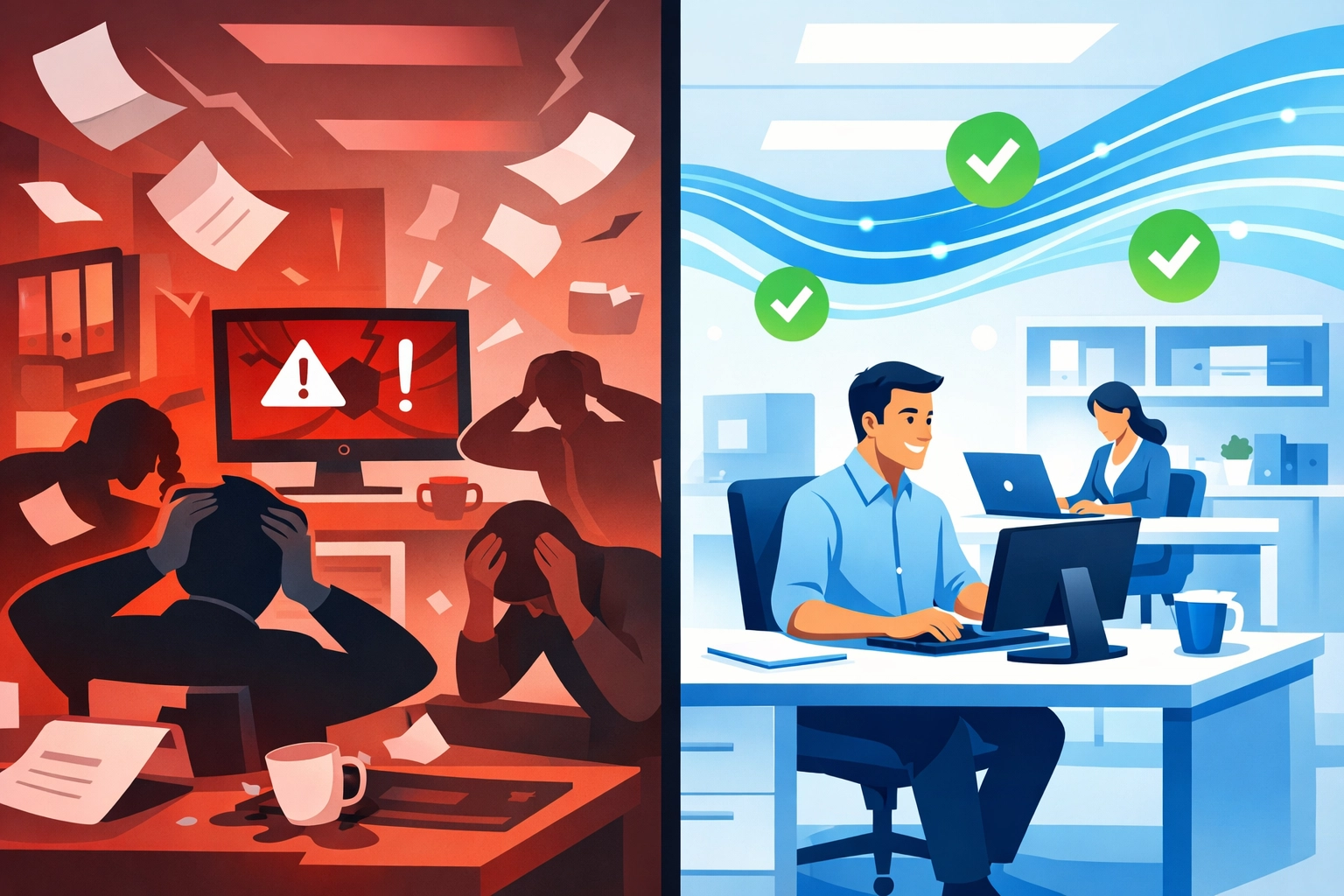
When you're handling IT issues as they pop up, every problem becomes a crisis. Your team stops working. Your customers can't reach you. Your data sits in limbo. And you're scrambling to find someone who can fix it right now, which usually means paying premium emergency rates.
Managed IT support flips that script. Instead of paying $10,000 when your system goes down, you pay a predictable monthly fee to make sure it doesn't go down in the first place.
What Actually Happens When You Have Managed Support
Let's break down what managed IT actually looks like in practice, because there's a lot of confusion about what you're really paying for.
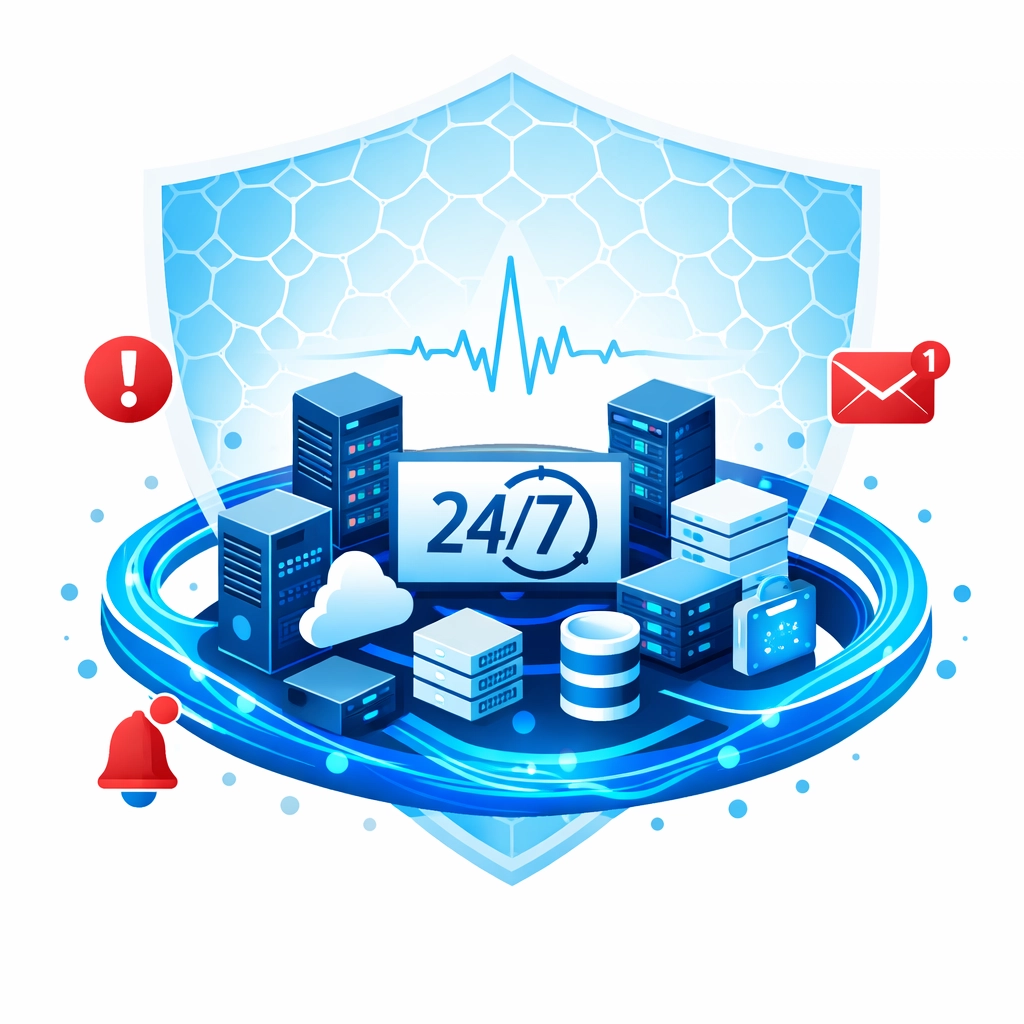
24/7 monitoring means someone is watching your systems around the clock. Not occasionally checking in, actually monitoring. When something starts to fail at 2 AM on a Saturday, it gets fixed before your Monday morning team meeting.
Proactive maintenance catches problems before they become disasters. Software updates, security patches, performance optimization, all handled without you thinking about it.
Instant support access means your team isn't stuck waiting for callbacks. Issue pops up, they reach out, someone responds. No ticket systems that disappear into the void.
One of our clients who runs an e-commerce business said this: "Before we had managed support, we'd lose hours every week to random tech problems. Now? I honestly can't remember the last time someone complained about IT issues."
That's not an accident. That's what happens when you have people actively preventing problems instead of just reacting to them.
The Security Thing Nobody Wants to Talk About
Here's what keeps business owners up at night in 2026, cyber threats aren't just getting more common, they're getting more sophisticated. And if you think your small business isn't a target, you're wrong.
Hackers specifically target smaller companies because they know you probably don't have enterprise-level cyber security protecting you. They're betting you haven't updated your systems, trained your staff, or monitored your network for suspicious activity.
A client who's been with us for nearly 12 years learned this lesson before we started working together. Their previous IT "solution" was calling a guy when something broke. Then they got hit with ransomware that encrypted all their customer data.
"We paid the ransom. We had no choice. But the real cost was rebuilding trust with every single customer who wondered if their information was safe with us."

With managed IT support, security isn't something you think about once and forget. It's constant. Threat detection runs 24/7. Vulnerabilities get patched immediately. Your team gets trained on the latest phishing tactics. And if something does happen, there's a response plan already in place.
You're not just buying IT support, you're buying someone who stays current on security threats so you don't have to.
Predictable Costs vs Budget Chaos
Let's talk money, because that's usually what it comes down to.
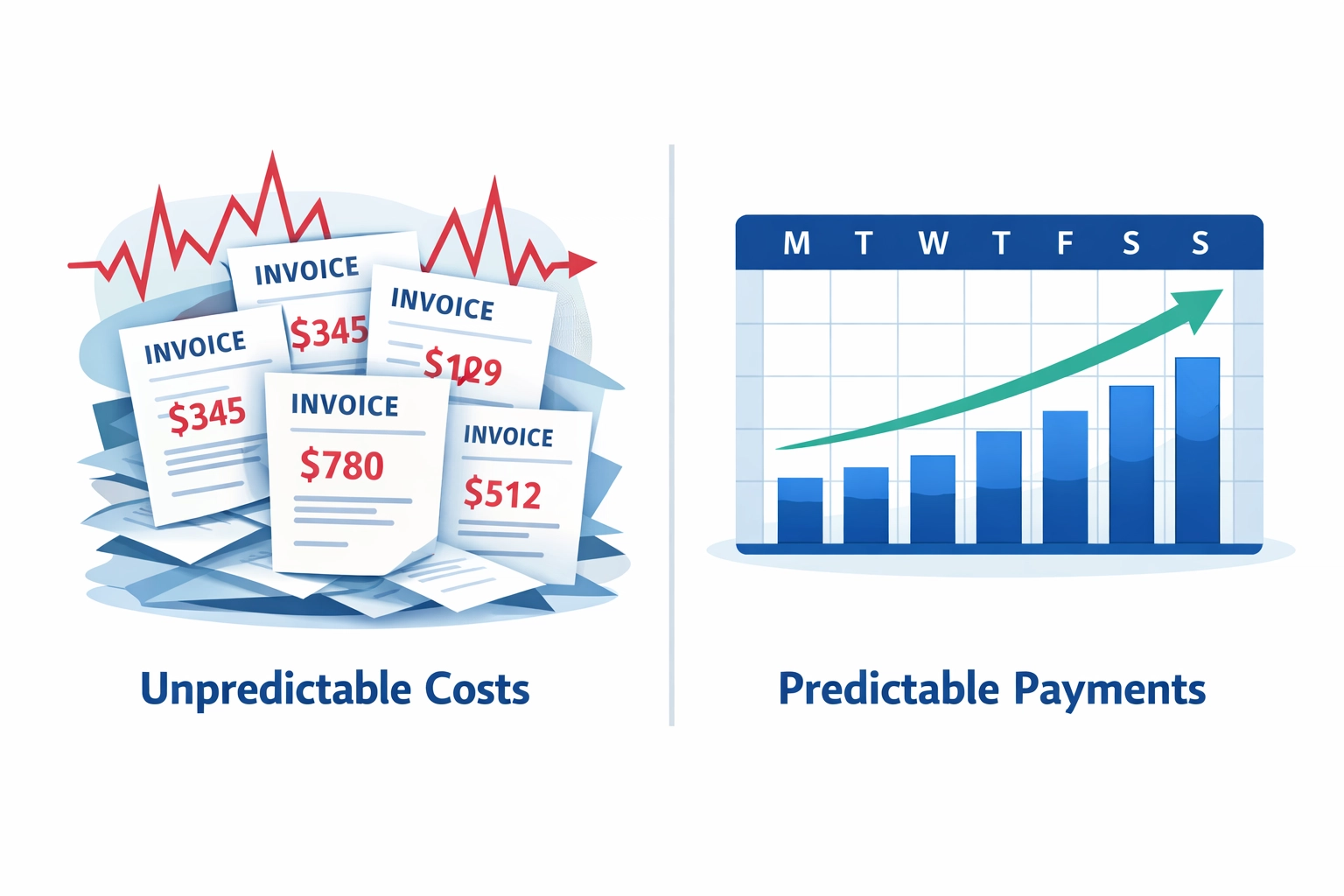
Without managed support, your IT budget is basically a guessing game. Some months you spend nothing. Other months you get hit with a $15,000 emergency that wasn't in any budget meeting.
One long-term client put it this way: "I used to dread IT expenses because I never knew what was coming. Now I pay the same amount every month and I actually budget for growth instead of crisis management."
That predictability matters more than most people realize. When you know exactly what you're spending on IT every month, you can plan. You can invest in actual business growth instead of keeping emergency funds parked for the next tech disaster.
And here's the kicker, most businesses find they're actually spending less overall with managed support than they were with the break-fix model. They just didn't realize how much those "one-off" fixes were adding up.
Access to Expertise You Can't Afford Full-Time
Unless you're a large enterprise, you probably can't afford to hire full-time cybersecurity experts, cloud architects, network engineers, and compliance specialists. But with managed IT support, you get access to all of them.
One client runs a healthcare-adjacent business that has to deal with strict data regulations. "There's no way we could afford someone who specializes in HIPAA compliance on staff. But our managed IT provider has that expertise built in. They make sure we're not accidentally violating regulations we didn't even know existed."
That specialized knowledge becomes especially valuable when you're growing. Need to scale your infrastructure? They've done it hundreds of times. Migrating to the cloud? They know the pitfalls. Adding remote workers? They've got security protocols ready to go.
You're essentially getting a full IT department for a fraction of what it would cost to build one.
The "Can Actually Sleep at Night" Factor
This is the benefit nobody lists but every long-term client mentions, peace of mind.
When you know your systems are monitored, your data is backed up, your security is current, and help is available the moment you need it, you stop worrying about IT. You can focus on actually running your business.
A client who's been with us since 2013 said it best: "I didn't realize how much mental energy I was spending worrying about our tech infrastructure until I didn't have to anymore. Now I can focus on what I'm actually good at, growing the business."
That might sound soft, but it's real. Decision fatigue is a thing. Analysis paralysis is a thing. When you're constantly worried about whether your systems are secure or if that weird error message means everything's about to crash, it drains energy you could be using elsewhere.

Does It Actually Matter?
So back to the original question, does managed IT support really matter in 2026?
If you're running a business that depends on technology (which is basically every business at this point), then yeah, it matters. A lot.
Your competitors aren't dealing with unexpected downtime. They're not losing days of productivity to tech issues. They're not lying awake wondering if their security is good enough.
They've shifted from reactive crisis management to proactive infrastructure management. And that shift makes a bigger difference than most people realize until they experience it.
The clients who've stuck with managed IT support for 10+ years? They're not doing it because they're locked into a contract. They're doing it because they've seen what happens without it, and they're never going back.
If you're curious what that actually looks like for your business, reach out. We'll walk you through what managed support would mean for your specific situation: no sales pitch, just honest conversation about whether it makes sense for where you are right now.
Because the best time to set up IT support is before you need it. The second best time is right now.