
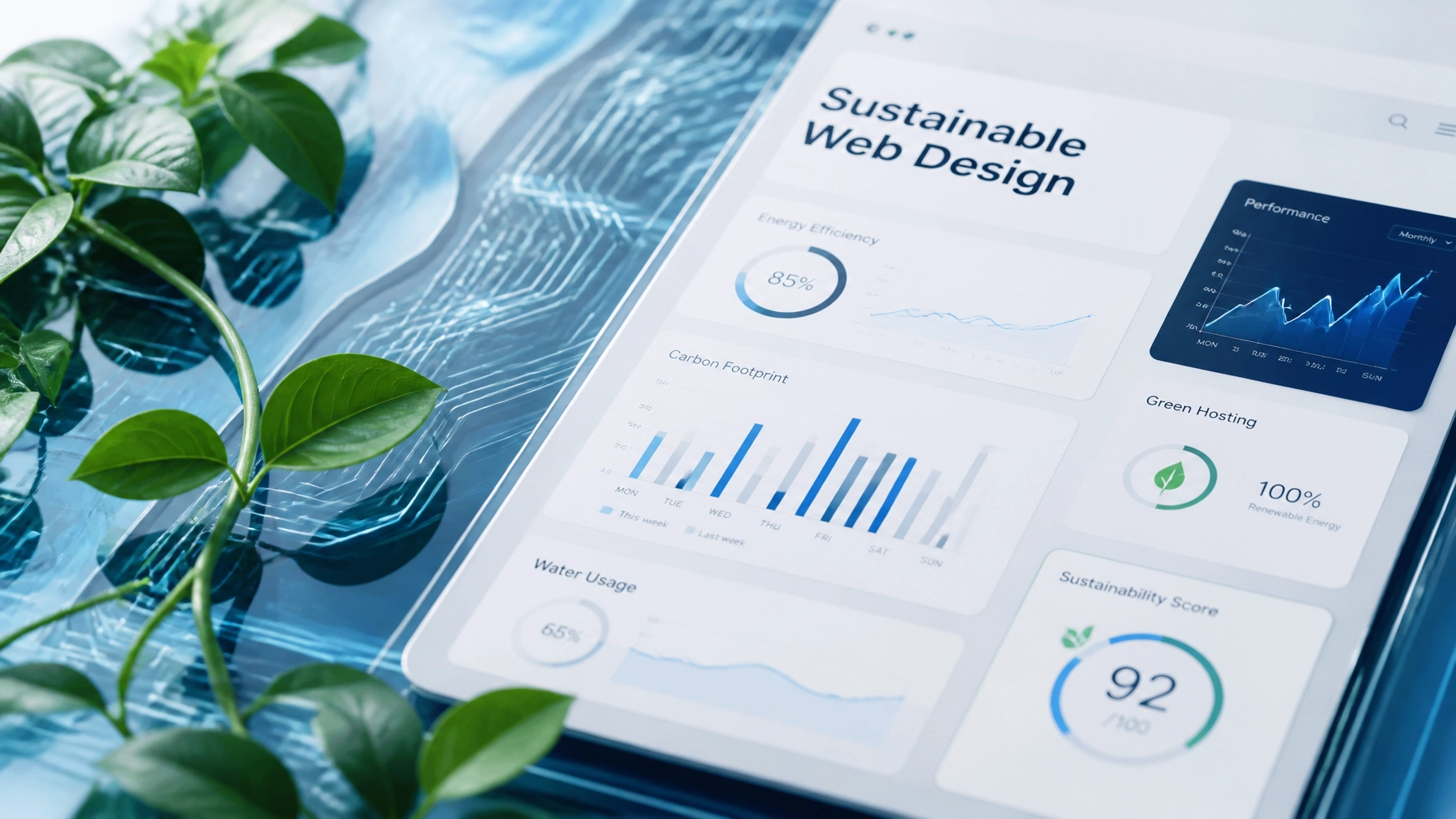

Sustainable web design is no longer a niche concept for environmental activists. By 2026 it has become a fundamental requirement for any business that wants to compete online. Digital sustainability refers to building websites that use less energy by being more efficient. These sites load faster, rank better in search engines, and convert more visitors into customers.
The internet's carbon footprint is significant. Every byte of data transferred requires energy from servers, networks, and end-user devices. When you build a heavy website with unoptimized images and bloated code, you are not just wasting energy - you are also hurting your bottom line.
In this article we look at why eco-friendly design is the new standard for professional web design and how it impacts your business success.
What Sustainable Web Design Looks Like Today
In 2026 sustainable web design is synonymous with high-performance design. It focuses on several core areas:
- Lean Code: Removing unnecessary scripts and using efficient frameworks to reduce processing power.
- Optimized Assets: Using modern image formats like AVIF and WebP that offer high quality at a fraction of the file size.
- Green Hosting: Choosing data centers powered by renewable energy.
- User Efficiency: Designing navigation that helps users find what they need quickly, reducing the number of page loads.
When these elements are combined they create a "low-carbon" website. A typical sustainable site today emits less than 1.5g of CO2 per page view compared to the much higher averages seen in previous years.

The Direct Link Between Sustainability and SEO Marketing
Search engines have evolved to prioritize efficiency. Google and other platforms reward websites that offer a fast and seamless user experience. This is where SEO marketing and sustainability meet.
Core Web Vitals and Ranking
Google’s Core Web Vitals are now the primary benchmark for technical SEO. These metrics measure loading speed, interactivity, and visual stability. A sustainable website is naturally optimized for these metrics because it is built to be lightweight. When you reduce page weight you improve your Largest Contentful Paint (LCP) scores. Search engines see this efficiency as a signal of high quality and rank your site higher in search results.
Mobile-First and AI-Ready
By 2026 mobile-first indexing is the absolute standard. Lean websites perform better on mobile devices where bandwidth might be limited. Additionally, clean code and clear site structures make it easier for AI models and crawlers to understand your content. If an AI engine can easily parse your site it is more likely to recommend your services in AI-generated answers.
Reduced Bounce Rates
Sustainable design keeps visitors on your page longer. A site that loads in 1.2 seconds instead of 4 seconds sees significantly higher engagement. When users stay on your site and interact with your content it sends positive signals to search engines. This creates a cycle where better performance leads to better rankings which leads to more traffic.
Conversion Rates and the Bottom Line
Speed is the most important factor in conversion. In 2026 users have zero patience for slow websites. A high-performance custom website design is a direct investment in your conversion rate.
Building Trust and Loyalty
Sustainability is a brand value that resonates with modern consumers. Users are increasingly aware of their digital environmental impact. When a business demonstrates that its website is optimized for energy efficiency it builds trust. Reports show that sustainable web design can lead to up to 45% higher user loyalty. Customers prefer to do business with companies that align with their values.
Lowering Operational Costs
Efficient websites are cheaper to run. When you reduce the data transferred and the server resources used you lower your hosting and infrastructure costs. By choosing green hosting and optimizing your tech stack you reduce long-term technical debt and maintenance fees.

Why Custom Website Design is the Best Path
While many "off-the-shelf" website builders are available they often come with significant bloat. These platforms load dozens of scripts that your site may never use. A custom-built site allows you to choose exactly what is needed for your business.
At WorldWise we focus on building websites that are lean and results-driven. We treat performance as a design constraint rather than an afterthought. This means every image is optimized and every line of code serves a purpose. We help businesses achieve their strategic goals by building digital assets that are as efficient as they are beautiful.
Key Benefits of Custom Sustainable Builds:
- Precision: No extra plugins or "dead weight" code.
- Scalability: Easier to update and grow without losing performance.
- Accessibility: Sustainable design naturally aligns with accessibility standards making your site usable for everyone.
- Consistency: Your site works perfectly across all devices and connection speeds.

Practical Steps to Take Right Now
If you want to move toward a more sustainable and high-performing digital presence we suggest starting with these actions:
- Audit Your Performance: Use tools like Google Lighthouse to check your current page speed and weight.
- Clean Up Your Assets: Compress your images and move to modern video formats that lazy-load.
- Review Your Third-Party Scripts: Remove old tracking pixels or analytics tools you no longer use.
- Switch to Green Hosting: Ensure your servers are powered by renewable energy sources.
Sustainable web design is not a passing trend. It is the evolution of how we build for the internet. By focusing on efficiency you are not just helping the planet - you are creating a faster, better, and more profitable website.
If you are ready to upgrade your online presence we suggest reaching out to our team to discuss a custom solution that fits your brand. We have been helping businesses succeed online since 1994 and we know what it takes to deliver results.