

The short answer: yes, you probably do. But getting coverage isn't as simple as filling out a form anymore.
Cyber insurance has shifted from "nice to have" to business-critical. It's no longer just about protecting yourself financially: it's about proving you're insurable in the first place. And in 2026, that bar is significantly higher than it was even two years ago.
Why This Matters More Than Ever
General liability policies don't cover cyber incidents. That means ransomware attacks, data breaches, and business email compromises fall entirely outside your standard coverage. You're on your own unless you have a dedicated cyber policy.
The problem is getting worse. Nearly 70% of insurance professionals expect increased cyber claims and premiums this year due to AI-driven attacks and more sophisticated ransomware. Attackers are faster, smarter, and better funded than ever before.

But here's what most business owners miss: underinsurance. This is the gap between what your policy covers and what you'd actually lose in a cyber incident. That gap is widening, and it creates both financial exposure and governance problems you won't discover until it's too late.
Think of it this way: if your business systems went down tomorrow, could you quantify the real cost? Lost revenue, customer trust, regulatory fines, recovery expenses, legal fees. Most policies don't come close to covering the full picture.
What Insurers Actually Require Now
Getting cyber insurance used to be straightforward. You'd answer some questions about your security setup, pay a premium, and you were covered. Not anymore.
Insurers now demand proof of specific security controls before they'll even consider your application. Miss one of these, and you might be denied outright or face significantly higher premiums.
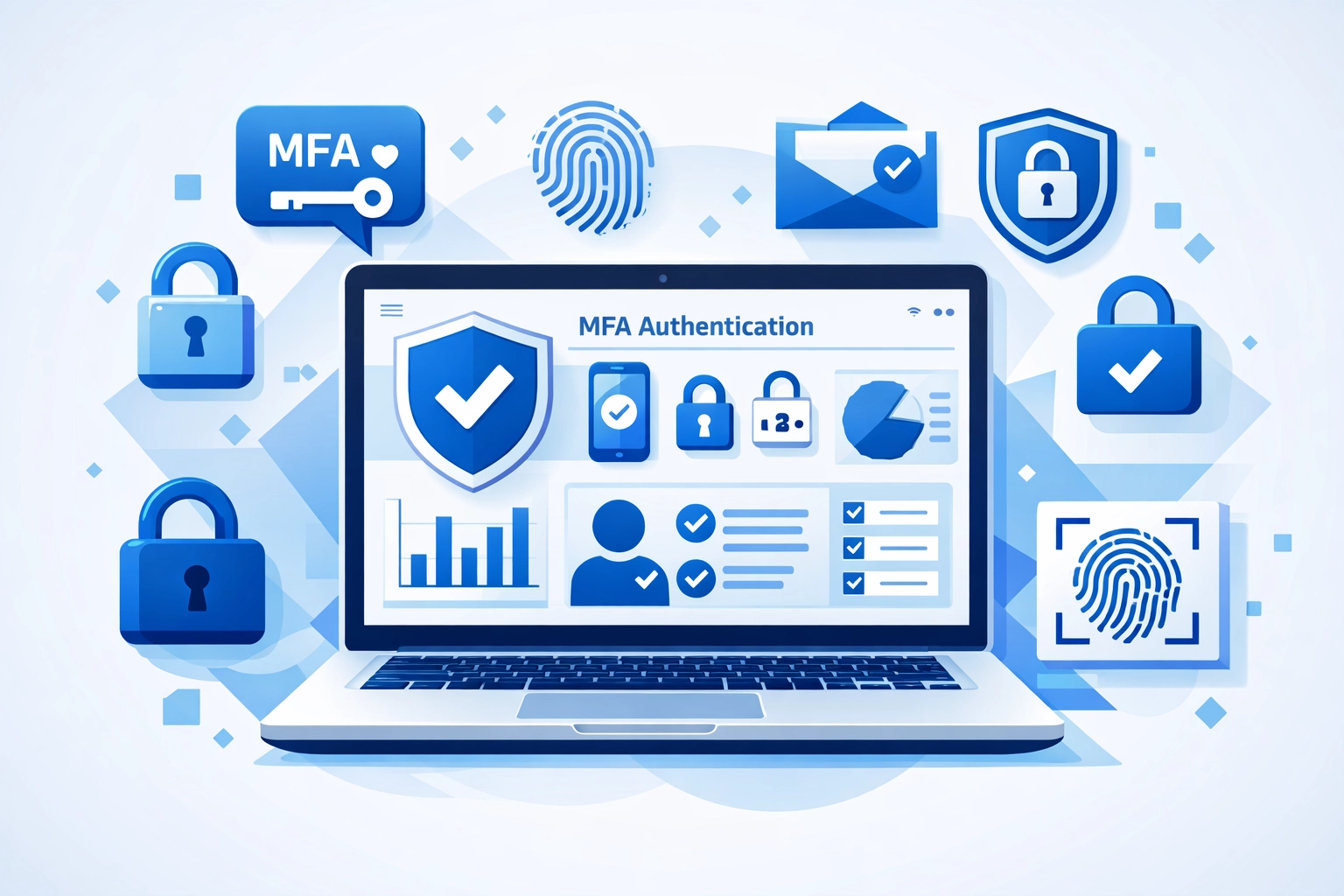
Multi-factor authentication (MFA) is non-negotiable. This means requiring a second form of verification beyond passwords for remote access, VPNs, privileged accounts, and email. If you don't have this implemented across your organization, you're likely uninsurable.
Endpoint detection and response (EDR) has replaced traditional antivirus software. Insurers want 24/7 monitoring that can detect and respond to threats in real-time, not just scan for known malware signatures.
Privileged access management is now a core requirement. You need to demonstrate who has admin-level access to your systems and how that access is controlled and monitored.
Backup resilience means more than just having backups. You need multiple copies stored offline, and you need documented proof that you've tested recovery procedures. Insurers want to see that your backups can't be encrypted by ransomware.
Incident response planning needs to account for supply chain compromises. It's not enough to have a plan for direct attacks: you need procedures for when a vendor or partner gets breached.
NIST Cybersecurity Framework 2.0 alignment is rapidly becoming standard. Insurers use this framework to assess your security maturity and governance structure.
You also need clear governance structures showing who's responsible for cybersecurity decisions in your organization. This can't be ambiguous.
Finally, supply chain security measures demonstrate you can quickly identify and contain attacks that come through partner networks.
This isn't a checklist you complete once. Insurers are moving toward continuous assessment. Your security posture becomes part of ongoing policy requirements.
The Real Cost of Coverage
Premiums are rising across the board. If your industry carries higher risk or you have documented security gaps, expect double-digit rate increases. Some businesses are seeing their policies non-renewed entirely.
But here's the interesting part: organizations actively investing in security controls actually see benefits. Better security means lower premiums, fewer exclusions, and faster approval processes. Insurance companies reward businesses that take cybersecurity seriously.

The coverage itself has evolved too. Traditional policies focused mainly on data breaches. Now coverage explicitly includes ransomware payments, business email compromise, supply chain attacks, digital asset restoration, and regulatory fines: but only if you meet those stringent prerequisites.
High-risk industries face additional scrutiny. Healthcare, financial services, and professional services firms often need specialized coverage with higher limits and more comprehensive protection. That comes with higher costs and stricter requirements.
What You Should Do Right Now
Waiting isn't an option. Delays in 2026 could leave you uninsurable when you need coverage most.
Start by documenting your current security posture against insurer requirements. You need a clear picture of where you stand today. This means inventory of all systems, access controls, backup procedures, and incident response capabilities.
If you're missing any of the core controls: especially MFA or EDR: prioritize those immediately. These are table stakes for getting coverage.
Consider working with cybersecurity professionals who understand both security implementation and insurance requirements. They can help you build controls that satisfy insurers while actually improving your security posture.
Treat cyber insurance as part of broader risk management, not a compliance checkbox. The goal isn't just getting a policy: it's reducing your actual risk while proving you're a good bet for insurers.
Document everything. Insurers want proof of your security controls, not just promises. This means policies, procedures, training records, test results, and audit logs. The better your documentation, the smoother your application process.
If you're working with managed IT support, make sure they understand insurance requirements and can provide the documentation insurers need. Many businesses discover too late that their IT provider wasn't maintaining the records required for coverage.
Review your policy limits annually. As your business grows and your digital footprint expands, your coverage needs increase. Underinsurance happens gradually, so regular reviews prevent gaps from forming.
The Bottom Line
Cyber insurance is essential in 2026, but it's no longer a simple financial product. It's a security validation that requires ongoing investment and attention.
The businesses succeeding with cyber insurance aren't treating it as a checkbox: they're using it as motivation to build genuinely better security programs. They're aligning with frameworks like NIST CSF 2.0, implementing proper governance, and maintaining continuous improvement.
The alternative is either going uninsured (risky) or paying dramatically higher premiums for limited coverage (expensive). Neither option makes business sense when a middle path exists: build the security controls insurers want while actually protecting your business better.
Start your assessment now. Document your current state, identify gaps, and create a plan to address them. The longer you wait, the harder and more expensive this becomes.
Need help navigating these requirements? Get in touch to discuss how to align your security posture with what insurers actually demand in 2026.