

Let's cut through the sales pitch and get real about managed IT services. You've probably heard the term thrown around, seen the ads, maybe even gotten a cold call or two. But do you actually need it?
The short answer: probably yes. The longer answer depends on whether you can afford the alternative.
What Managed IT Actually Means
Managed IT is when you outsource some or all of your technology management to an external provider. Instead of handling everything in-house, you have a team monitoring your systems, managing security, updating software, and fixing problems before they become disasters.
Think of it like having a full IT department without the overhead of hiring, training, and retaining specialized staff. You pay a monthly fee and they handle the technical stuff while you focus on running your business.
The Cybersecurity Reality Check
Here's the uncomfortable truth: threats in 2026 are evolving faster than most small IT teams can keep up with. We're not talking about the occasional spam email anymore.
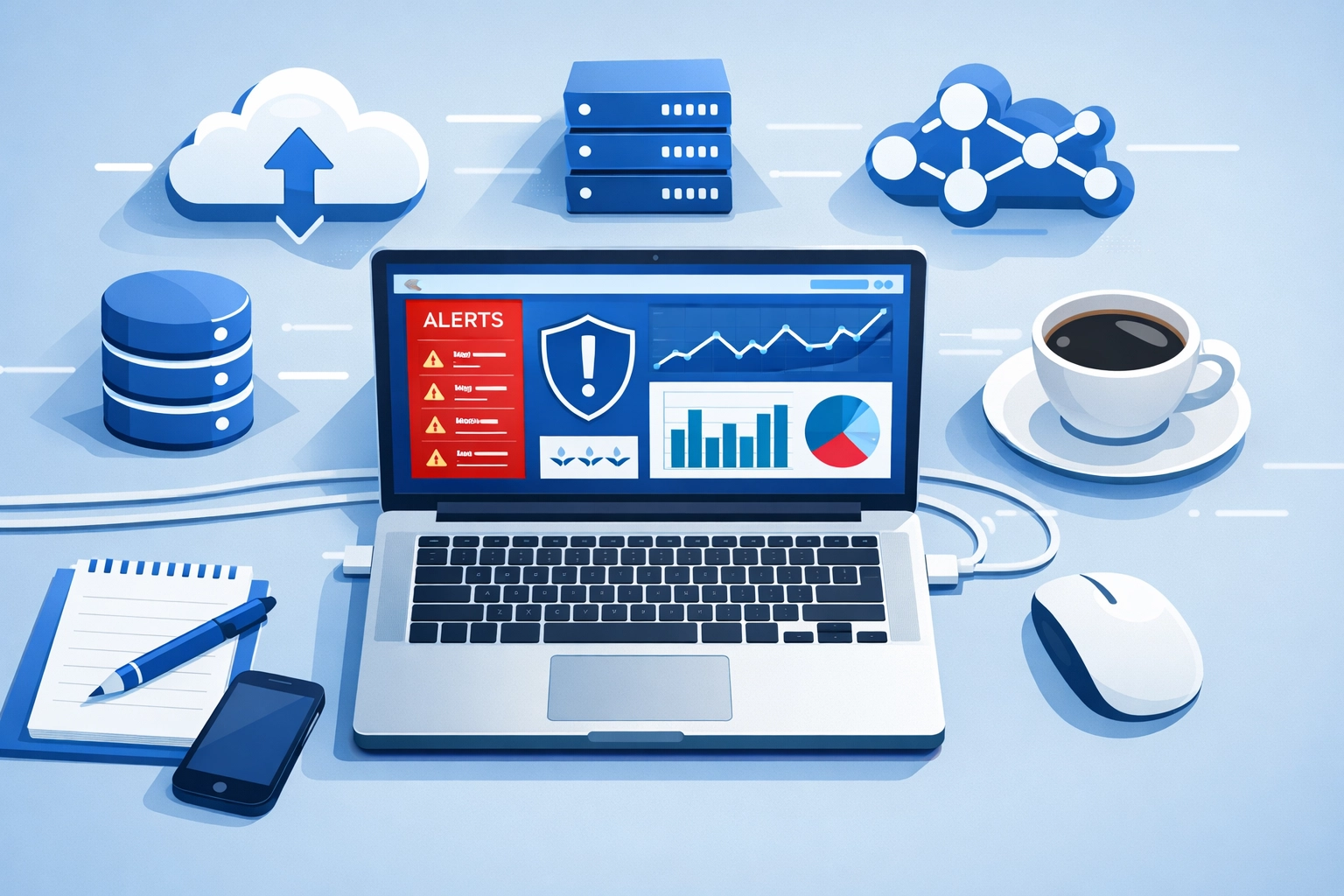
Modern cybersecurity threats include ransomware attacks that can lock your entire business overnight, phishing schemes sophisticated enough to fool your most tech-savvy employees, and supply chain attacks that come through trusted vendors. The average small business doesn't have the resources to monitor for these threats 24/7.
Managed IT providers offer round-the-clock monitoring and instant threat detection. When something suspicious happens at 2 AM on a Saturday, they catch it. Your in-house person who also handles printer problems and password resets? They're asleep.
The proactive approach matters because security incidents caught early cost exponentially less than full-blown breaches. We're talking thousands versus potentially millions in recovery costs, legal fees, and lost business.
Your Infrastructure Is More Complex Than You Think
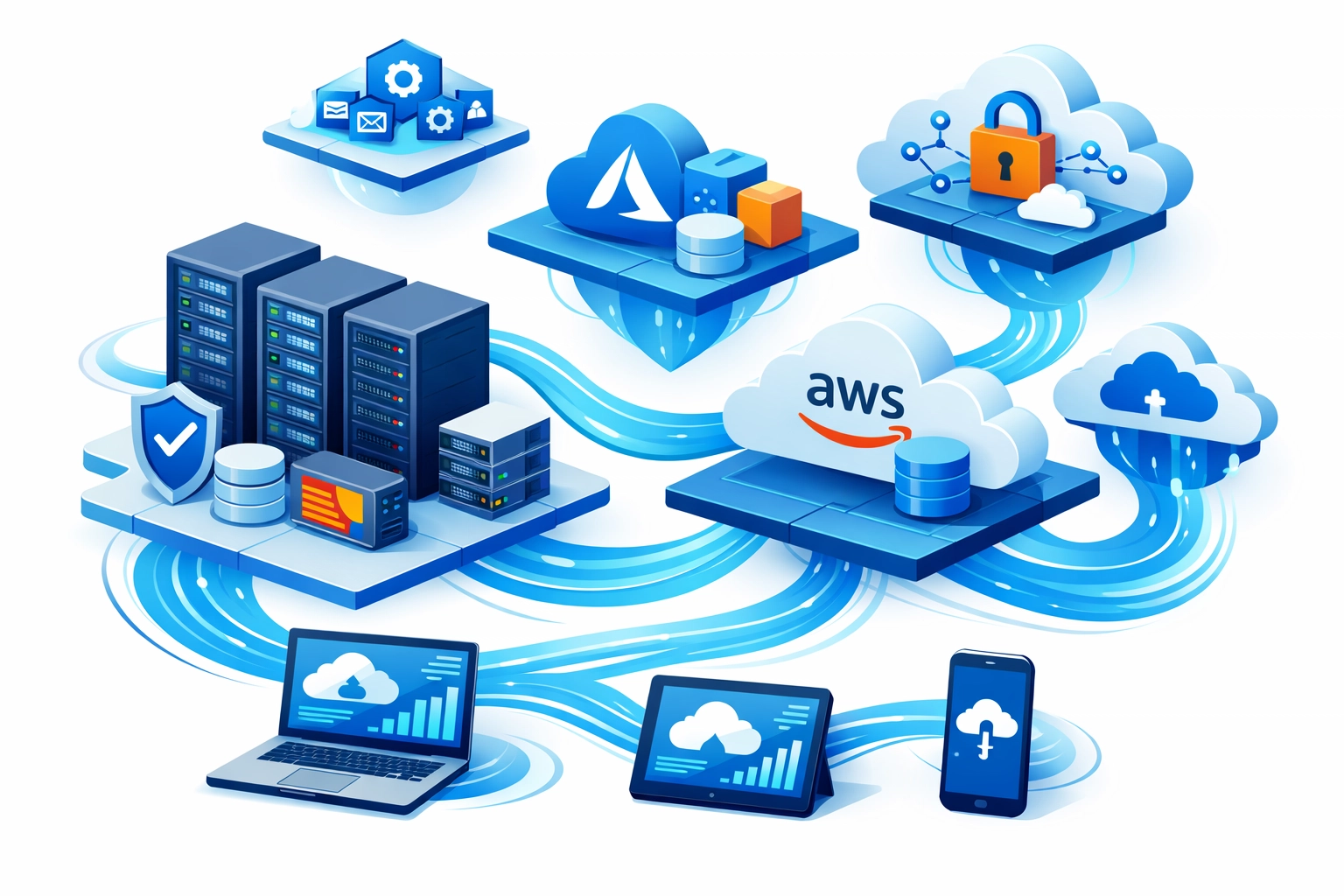
Take a honest look at what your business runs on today. You've probably got on-premises servers, cloud storage, Microsoft 365 or Google Workspace, various SaaS applications, maybe Azure or AWS resources, remote workers connecting from home, and mobile devices accessing company data.
That's a lot of moving parts. Each one represents a potential vulnerability and requires specialized knowledge to manage properly.
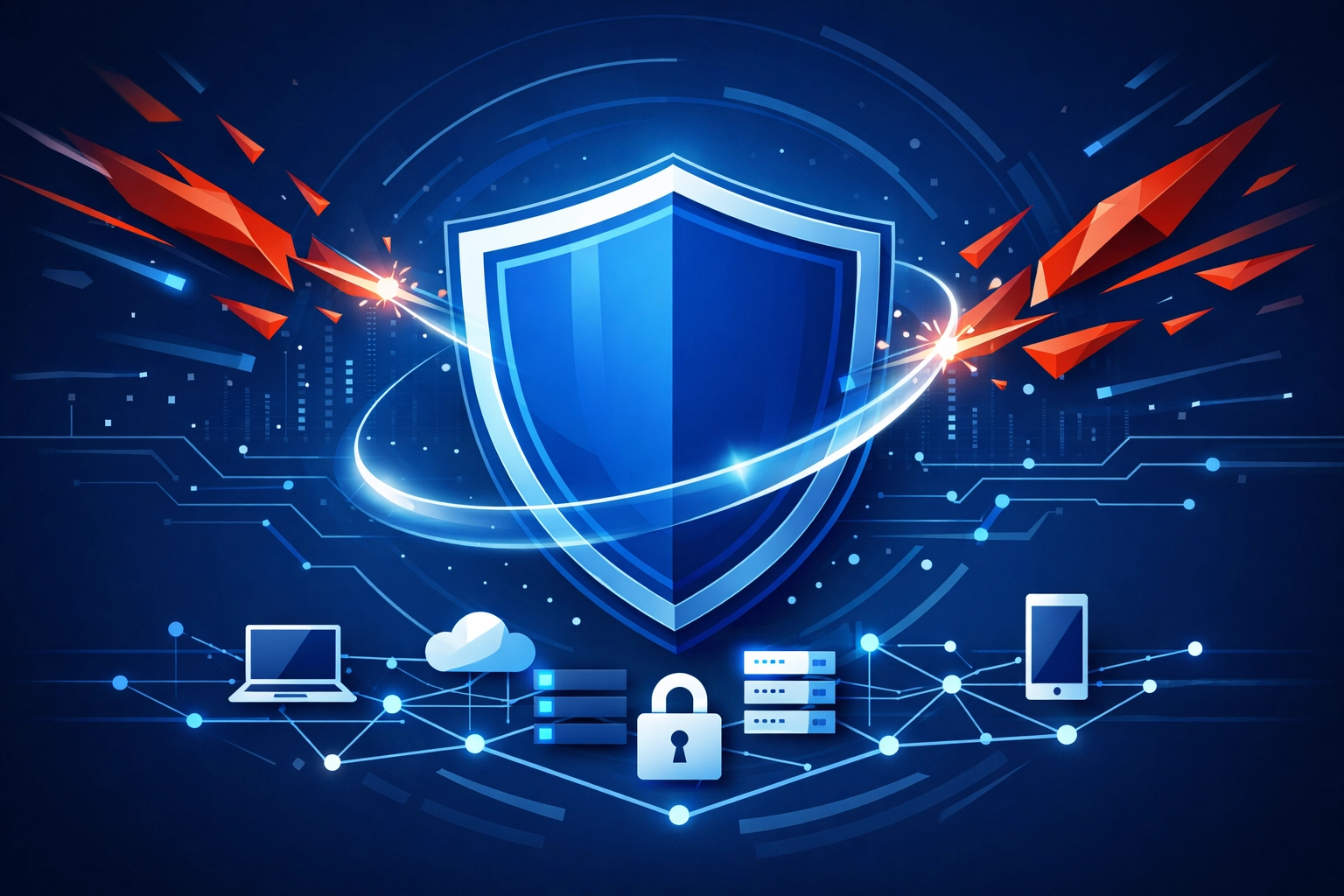
Maintaining this hybrid ecosystem with a small internal IT team has become increasingly unrealistic. The skill sets required are too diverse. You'd need experts in network security, cloud architecture, endpoint management, compliance, and disaster recovery. Hiring that talent full-time costs a fortune, assuming you can even find qualified people willing to work for a small to mid-size company.
The Real Cost Comparison
Let's talk numbers because that's what matters to your bottom line.
Organizations using managed IT services typically reduce overall IT costs by 20% to 30% while increasing productivity by 15% to 25%. Those aren't small margins.
The cost reduction comes from several factors. You eliminate the overhead of full-time specialized staff. You get access to enterprise-grade tools and technologies at a fraction of the retail price because providers buy in bulk. You avoid the expensive emergency fixes that plague reactive IT management.
But the bigger win is predictable budgeting. Managed IT typically operates on a fixed monthly fee. No surprise expenses when your server crashes or you get hit with a security incident. You know exactly what you're paying each month.
Compare that to the traditional in-house model where you're constantly dealing with unexpected costs. Hardware failures, software licensing surprises, emergency consultant fees when your team can't solve something, it adds up fast.
When Downtime Becomes a Business Killer
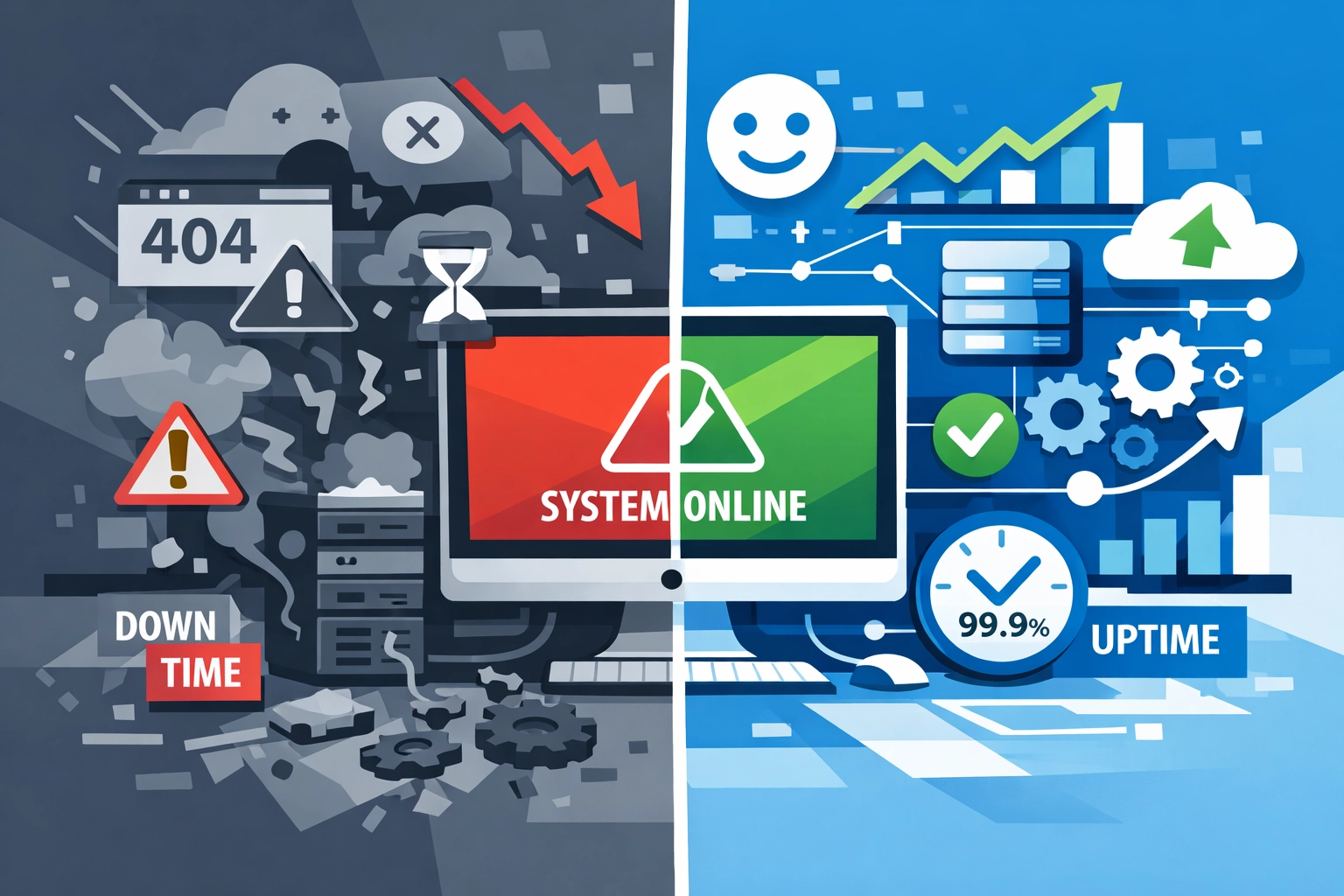
System downtime in 2026 isn't just an inconvenience. If your business depends on digital platforms for sales, customer support, or operational continuity, every minute offline directly impacts revenue.
Think about what happens when your systems go down. Online orders stop processing. Customer service can't access account information. Your team can't collaborate. Sales reps can't demo products. Your website shows error messages to potential customers.
For many businesses, even a few hours of downtime can mean thousands in lost revenue plus damaged reputation. Managed service providers minimize this risk through proactive monitoring and rapid response. They identify problems before they cause outages and fix issues while your team sleeps.
The Skills Gap Problem
Technology changes faster than most businesses can train their staff. Cloud computing, AI infrastructure, zero-trust security models, compliance requirements, these aren't things your average IT generalist learned in school five years ago.
Managed providers employ specialists in each area. When you need someone who understands cloud governance or can architect a secure hybrid work environment, they have that person on staff. You're essentially renting access to an entire IT department's worth of expertise for the price of one or two full-time employees.
This becomes especially critical for businesses managing remote or hybrid workforces. Securing distributed teams requires different approaches than traditional office IT. You need VPNs, endpoint protection, identity management, and collaboration platform optimization. Getting all that right takes specialized knowledge.
What Managed IT Can't Fix
Before you think managed IT is a magic solution, let's be clear about limitations. A managed provider can't fix fundamental business process problems. They can't make your employees follow security policies if leadership doesn't enforce them. They can't turn outdated legacy systems into modern platforms overnight.
Managed IT works best when you have clear communication, realistic expectations, and willingness to follow professional recommendations. If you constantly override your provider's security suggestions because they seem inconvenient, you're wasting money.
Making the Decision
So does your business need managed IT? Ask yourself these questions:
Do you have someone monitoring your systems outside business hours? If not, you're vulnerable roughly 70% of the time.
Can your current IT staff handle specialized tasks like cybersecurity incident response, cloud migration, or compliance audits? If no, you're either avoiding these critical tasks or paying emergency rates when problems arise.
Do you know your actual IT costs including hidden expenses like productivity loss during outages? Most businesses significantly underestimate their true IT spending.
Would a major security breach or extended outage threaten your business survival? If yes, you can't afford to wing it with minimal IT infrastructure.
Are you planning to grow, adopt new technologies, or expand your digital presence? Growth requires scalable IT infrastructure that can adapt quickly.
The 2026 Reality
The question isn't really whether managed IT is useful. It's whether your business can afford the cost of security breaches, system failures, and operational inefficiency that unmanaged environments increasingly experience.
Technology debt compounds over time. The longer you wait to implement proper IT management and security, the more expensive remediation becomes. Systems get more complex, vulnerabilities multiply, and the gap between your infrastructure and current best practices widens.
WorldWise offers managed IT support designed for businesses that need professional technology management without enterprise-level complexity. If you're still trying to figure out whether managed IT makes sense for your situation, we can walk through your specific needs and show you what proper IT management actually looks like.
The stakes are higher in 2026 than they were even two years ago. Make the choice that protects your business.