

You've invested time and money into SEO. Maybe you hired an agency. Maybe you've been handling it yourself. Either way, you're probably wondering: is any of this actually working?
It's a fair question. SEO isn't like paid ads where you can see immediate results. It's a slow burn. And that makes it tough to know if you're on the right track or just spinning your wheels
The good news is there are clear signals that tell you whether your SEO strategy is paying off. You just need to know where to look. Let's break it down
Why One Metric Isn't Enough
Here's the first thing to understand: no single metric tells the whole story
Ranking #1 for a keyword sounds great. But if nobody's clicking through to your site, what's the point? Similarly, a spike in traffic means nothing if those visitors bounce immediately without taking action
Effective SEO measurement requires looking at multiple data points across four key areas:
- Organic traffic
- Keyword rankings
- User engagement
- Business conversions
Think of it like a health checkup. Your doctor doesn't just check your blood pressure and call it a day. They look at the full picture. Same principle applies here
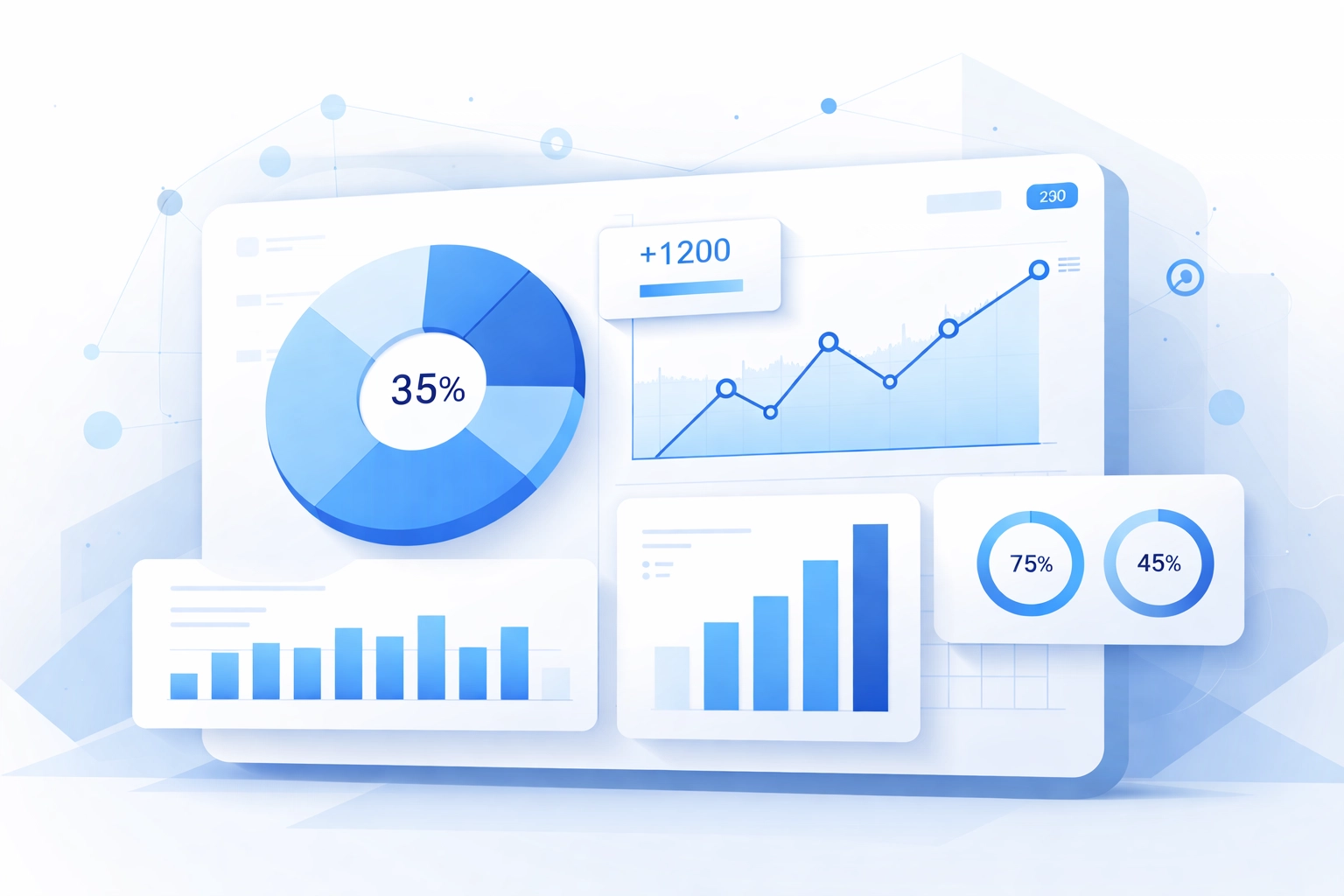
Track Your Traffic and Visibility
Organic Traffic
This is the big one. Organic traffic measures how many people find your website through search engines without clicking on a paid ad
Rankings are nice. But organic traffic is the true indicator of SEO success. You can rank for hundreds of keywords and still get minimal traffic if those keywords have low search volume or your titles aren't compelling enough to earn clicks
Use Google Analytics 4 to monitor your organic traffic over time. Look for trends. Is it growing month over month? Year over year? Consistent growth: even if it's gradual: means your strategy is working
Keyword Rankings
While rankings alone don't tell the whole story, they're still worth tracking. Keyword rankings show where your website appears in search results for specific terms
The key is tracking the right keywords. Focus on terms that actually matter to your business: ones that potential customers are searching when they need your services
Use Google Search Console for free tracking or tools like Ahrefs and Semrush for more detailed insights. Check your rankings weekly or monthly. Don't obsess over daily fluctuations. Search rankings naturally move around a bit
Click-Through Rate (CTR)
CTR measures how often people click your website when it appears in search results. A high CTR means your titles and descriptions are doing their job
You can find this data in Google Search Console. Look at your top-performing pages and see which ones have strong CTR versus which ones are underperforming
Low CTR despite good rankings? Your meta titles and descriptions probably need work. This is often a quick win that can boost traffic without changing your rankings at all
Measure User Engagement
Getting people to your site is only half the battle. What they do once they arrive matters just as much
Bounce Rate
Bounce rate measures the percentage of visitors who land on a page and leave without doing anything else. A high bounce rate can signal problems: your content might not match what people expected, or your page might be slow or hard to navigate
That said, don't panic over bounce rate alone. Some pages naturally have higher bounce rates. A blog post that answers a quick question might have a high bounce rate simply because the visitor got what they needed and left. Context matters
Pages Per Session
This metric shows how many pages visitors view during a single session. Higher numbers generally indicate that people find your content valuable enough to explore further
If your pages per session is low, consider adding better internal links, related content suggestions, or clearer navigation paths. Make it easy for visitors to keep exploring
Scroll Depth
Are people actually reading your content? Or are they dropping off after the first paragraph?
Scroll depth tracking shows how far down the page visitors scroll. If most people aren't making it past your introduction, that's a sign your content needs improvement: either it's not engaging enough or it's not delivering on what the headline promised
A well-designed website keeps visitors engaged. If you're seeing poor engagement metrics consistently, it might be time to revisit your website design alongside your content strategy

Verify the Business Impact
Traffic and engagement are great. But at the end of the day, SEO needs to drive actual business results
Conversion Rate from Organic Search
This is where SEO connects directly to your bottom line. Your conversion rate measures how effectively organic traffic turns into leads, sign-ups, purchases, or whatever action matters most to your business
Set up conversion tracking in Google Analytics 4. Track form submissions, phone calls, purchases, newsletter signups: whatever counts as a win for you
A strong SEO strategy doesn't just bring visitors. It brings the right visitors who are ready to take action
Revenue and Event Tracking
Beyond conversion rate, track the actual revenue generated from organic search. This provides concrete proof that your SEO investment is paying off
Event tracking helps you see specific actions visitors take: downloading a PDF, watching a video, clicking a phone number. These micro-conversions often lead to bigger conversions down the road
Check Your Technical Health
Technical issues can tank your SEO performance no matter how good your content is
Page Speed
Slow websites frustrate users and hurt rankings. Google has made page speed a ranking factor, so this matters for both user experience and visibility
Test your site using Google PageSpeed Insights. It's free and gives you specific recommendations for improvement. Aim for load times under three seconds on both desktop and mobile
Mobile Responsiveness
More than half of web traffic comes from mobile devices. If your site doesn't work well on phones, you're losing visitors and hurting your rankings
Google uses mobile-first indexing, meaning it primarily looks at the mobile version of your site when determining rankings. A responsive design isn't optional anymore: it's essential
Pages Indexed
Check Google Search Console to see how many of your pages are actually indexed. If important pages aren't showing up in Google's index, they can't rank for anything
Look for crawl errors, indexing issues, or pages accidentally blocked by your robots.txt file. Fixing these technical issues can unlock traffic you didn't even know you were missing

The Tools You Need
You don't need expensive software to track SEO performance. Start with the free essentials:
Google Analytics 4 – Track traffic, engagement, and conversions
Google Search Console – Monitor rankings, CTR, indexing, and technical issues
Google PageSpeed Insights – Test and improve page speed
These three tools give you most of what you need. Paid tools like Ahrefs or Semrush offer more features, but they're not necessary to get started
When to Adjust Your Strategy
SEO takes time. Don't expect overnight results. But if you've been at it for six months or more and you're not seeing improvement in organic traffic, engagement, or conversions, something needs to change
Look at your data. Identify the weak points. Is traffic growing but conversions flat? Focus on conversion optimization. Is traffic stagnant? Revisit your keyword strategy and content
Sometimes the issue isn't your SEO tactics: it's your overall digital marketing strategy. SEO works best when it's part of a bigger picture
The Bottom Line
Knowing whether your SEO strategy is working comes down to tracking the right metrics consistently over time. Don't fixate on any single number. Look at organic traffic, rankings, engagement, and conversions together
Set up proper tracking from day one. Review your data monthly. Make adjustments based on what the numbers tell you
If you're not sure where to start or your current strategy isn't delivering results, get in touch. Sometimes a fresh perspective is all it takes to turn things around