
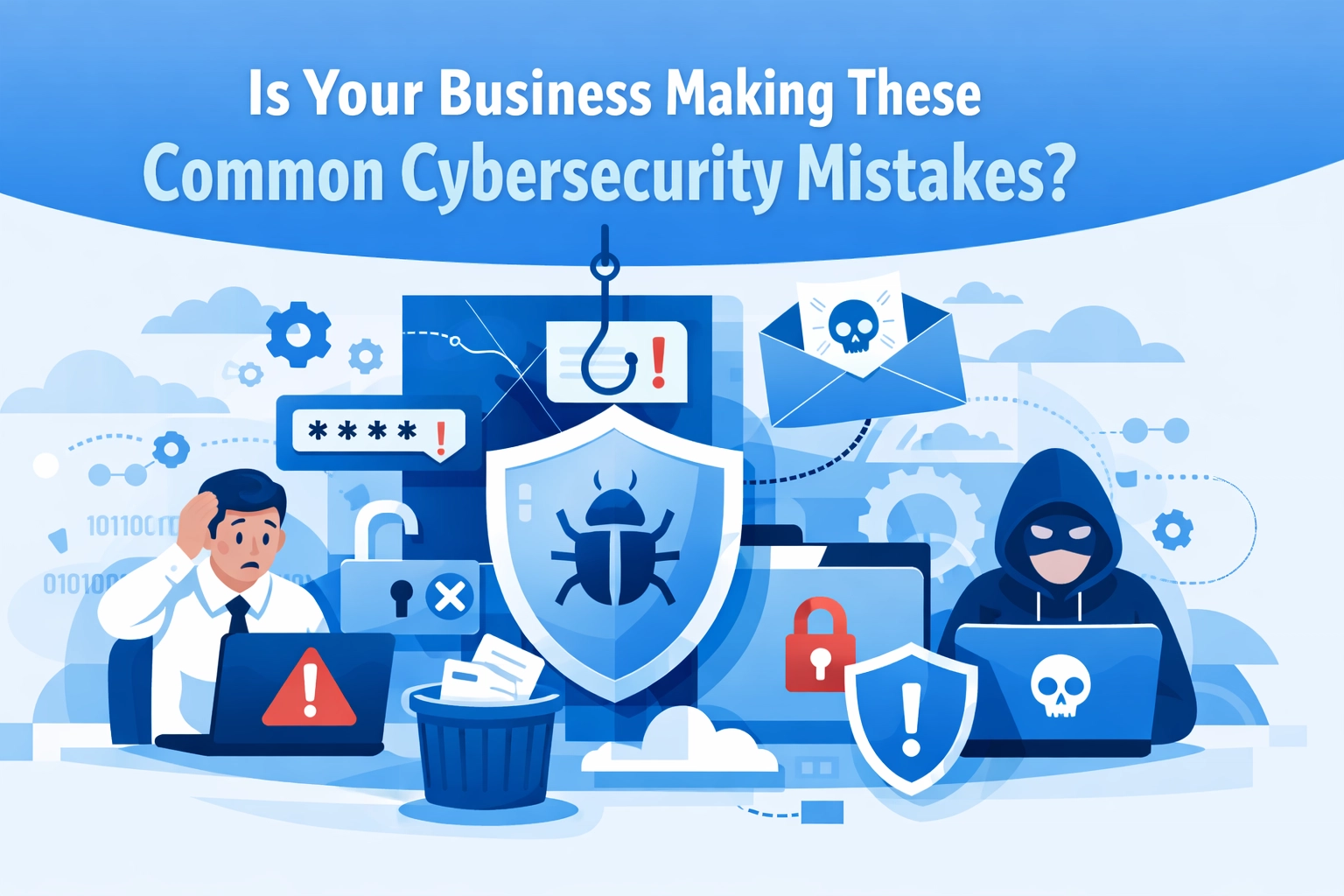

Let's be real, cybersecurity isn't the most exciting part of running a business. It's not like launching a new product or closing a big deal. But here's the thing: one security breach can cost your company an average of $4.88 million. Suddenly, it's a lot more interesting, right?
Most small and medium-sized businesses think they're too small to be targets. Wrong. Cybercriminals specifically hunt for businesses with weak defenses, and they're getting better at finding them every day. The good news? Most breaches happen because of preventable mistakes. Let's walk through the most common ones and how to fix them.
You're Still Using Weak Passwords (And No Multi-Factor Authentication)
This one seems obvious, but it's still the biggest security hole for most businesses. If your team is using "Password123" or the company name with a couple numbers tacked on, you're basically leaving the front door unlocked.
Here's what makes it worse: billions of stolen passwords are already floating around on the dark web from previous breaches. Hackers don't need to be geniuses, they just run those leaked credentials against your login page until something works.
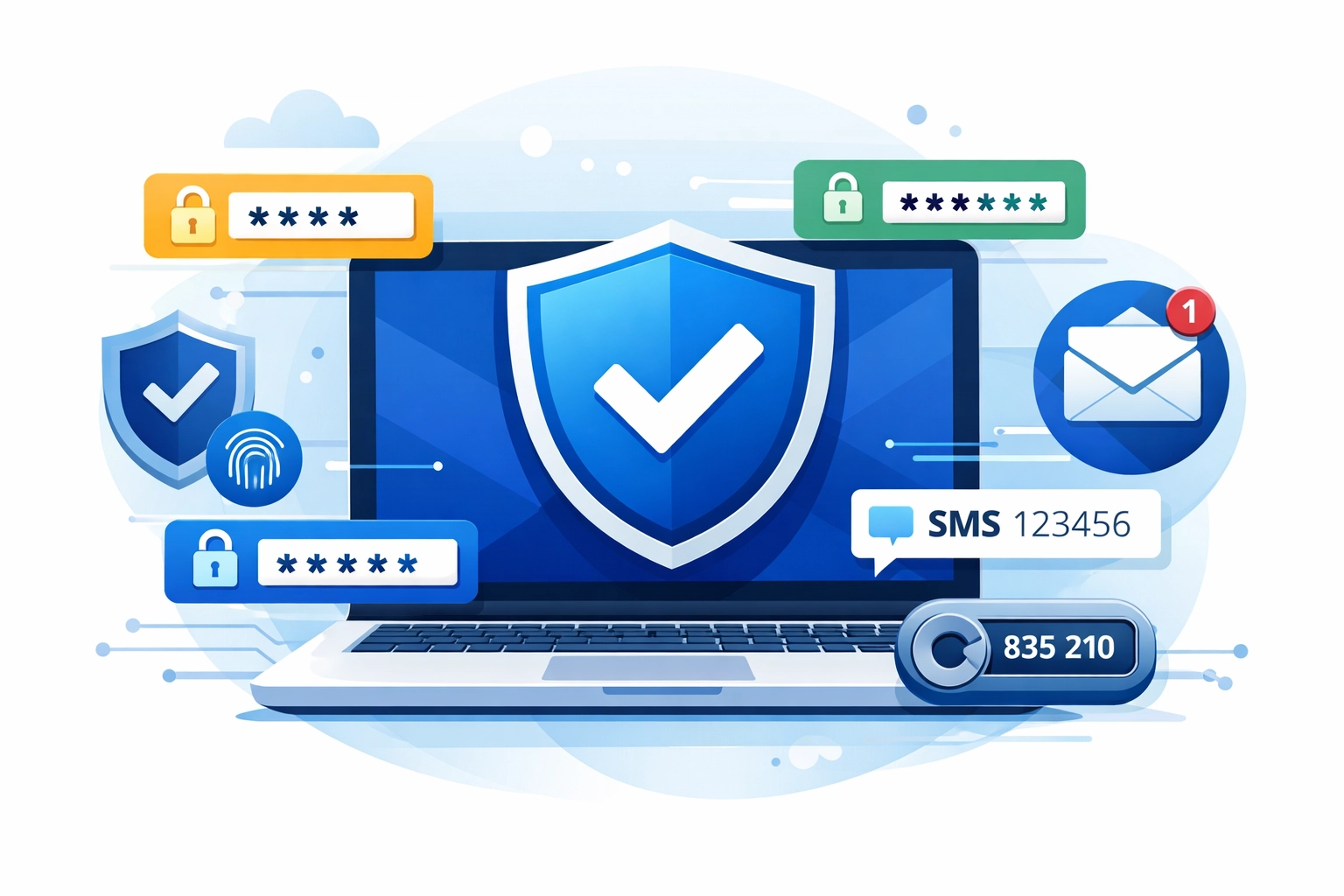
The fix: Implement multi-factor authentication (MFA) on everything. Yes, it's an extra step, but it blocks about 99% of automated attacks. Also, require complex passwords and change them regularly. Better yet, use a password manager so your team doesn't have to memorize 47 different passwords.
Your Cybersecurity Training is a Once-a-Year Checkbox
Most businesses treat security training like a compliance requirement. You sit everyone down once a year, show them a boring video about phishing, get them to sign something, and call it done.
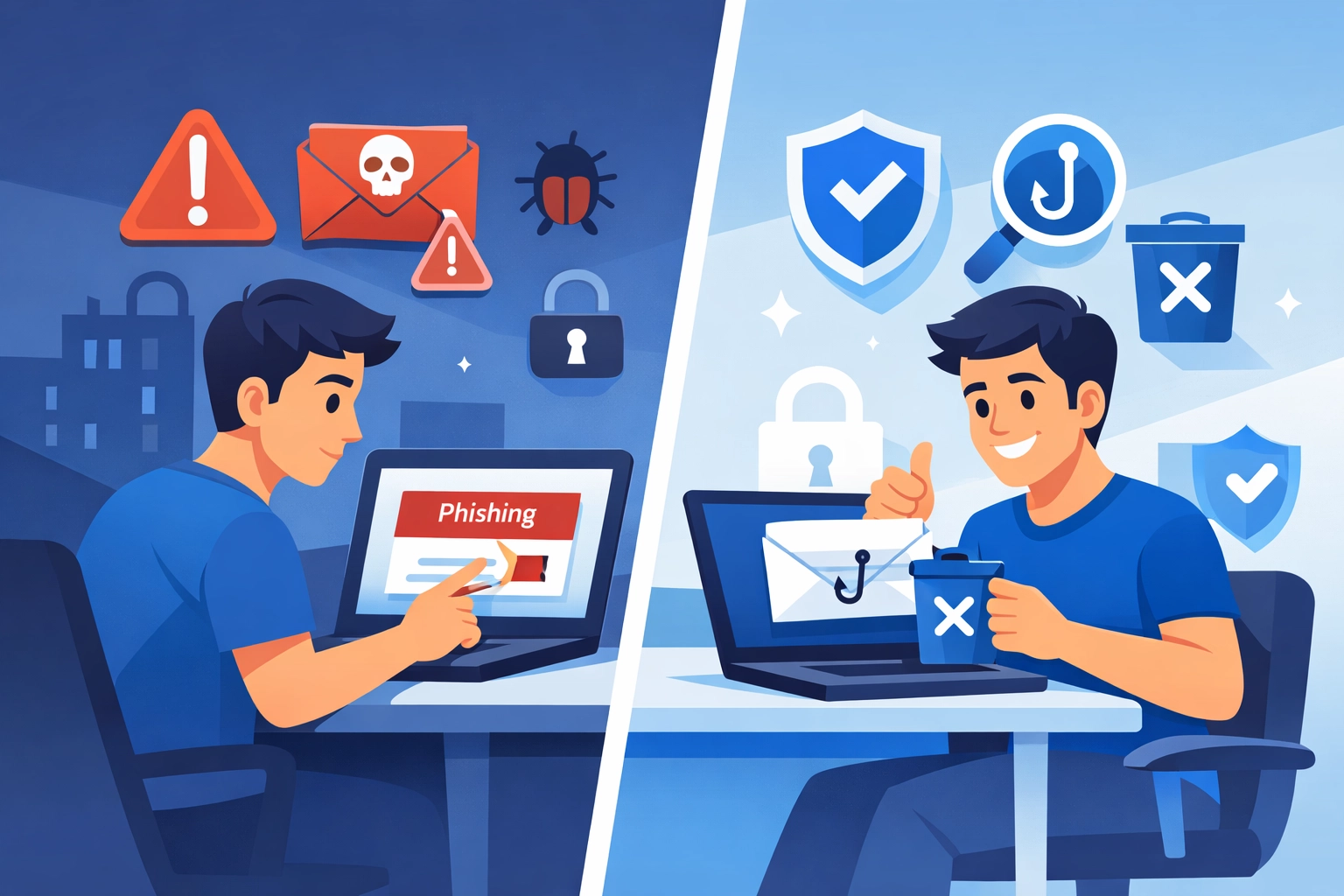
Meanwhile, your employees are getting hit with sophisticated phishing attempts every single day. These aren't the obvious "Nigerian prince" emails anymore. Modern phishing looks legit, fake invoices from real vendors, urgent messages that look like they're from your CEO, links that seem totally safe but aren't.
Here's the stat that should scare you: human error is involved in over 80% of successful cyberattacks. Your fancy firewall doesn't matter if someone clicks a bad link and hands over their credentials.
The fix: Make security training ongoing, not annual. Send out simulated phishing tests monthly. Share real examples of scams targeting your industry. Keep it top of mind, because the threats definitely are.
You're Ignoring Software Updates
"We'll update it next month when things slow down."
Sound familiar? Delaying software updates is like ignoring a check engine light, it seems fine until it really, really isn't. Those updates aren't just adding new features. They're patching security holes that hackers already know about.
Cybercriminals specifically scan for businesses running outdated systems because they know exactly which vulnerabilities to exploit. If you're running old software, you're waving a giant flag that says "easy target here."
The fix: Set up automatic updates wherever possible. For critical systems that need manual updates, schedule them regularly and actually stick to the schedule. Yes, updates can be annoying. Know what's more annoying? Explaining to your customers why their data got stolen.
You Set Up Security Once and Never Looked Back
A lot of businesses implement security measures and then forget about them. They've got a firewall from 2015, some antivirus software, and they figure they're covered.
This "set it and forget it" approach doesn't work for cybersecurity. Threats evolve constantly. Your business changes: new employees, new software, new devices connecting to your network. What worked two years ago might be completely inadequate now.
The fix: Run regular security assessments. Test your defenses. Find the weak spots before hackers do. If you don't have in-house IT expertise, consider working with a managed IT support provider who can handle ongoing monitoring and assessments for you.
You Think Your Cloud Provider Handles Everything
Cloud services are great, but there's a massive misconception about who's responsible for what. Your cloud provider secures the infrastructure: the servers, the networks, the physical data centers. You're responsible for everything else: access controls, user permissions, data encryption, and configuration.
Most cloud breaches don't happen because Amazon or Microsoft got hacked. They happen because someone left an S3 bucket wide open or set permissions to "public" by accident.
The fix: Understand the shared responsibility model. Configure your cloud security properly. Regularly audit who has access to what. Use encryption. And for the love of all things digital, don't leave storage buckets publicly accessible.

Your Access Control is a Mess
Think about this: How many former employees still have access to something they shouldn't? Old email accounts still active? Shared passwords that never got changed after someone left? Door codes that haven't been updated in years?
Access permissions tend to expand over time but rarely contract. Someone needs temporary access to a system, gets it, and then nobody ever removes it. Multiply that by dozens of employees over several years, and you've got a nightmare.
The fix: Conduct regular access audits. Remove access immediately when employees leave. Use role-based permissions so people only have access to what they actually need. Change shared passwords and door codes regularly, especially after staff changes.
You're Relying Only on Traditional Security
Firewalls and antivirus software are necessary, but they're not sufficient anymore. Today's threats exploit cloud platforms, mobile devices, and remote access points that completely bypass your network perimeter.
If your security strategy was built for an office where everyone works on-site using company computers, it's outdated. Remote work, BYOD policies, and cloud applications have fundamentally changed what security needs to look like.
The fix: Implement a multi-layered security approach. That includes endpoint protection, email filtering, network monitoring, data encryption, and regular backups. Modern cybersecurity needs to protect data wherever it lives and however it's accessed.
Your Vendors are Your Weak Link
You might have great security, but what about your vendors? That accounting software company you use? The marketing agency with access to your website? The freelancer who helps with administrative tasks?
A lot of major breaches happen through third-party vendors. Hackers target the weakest link in the chain, and if your vendor has poor security, they can use that as a doorway into your systems.
The fix: Vet vendors' security practices before signing contracts. Ask about their security certifications, data handling procedures, and breach response plans. Include security requirements in your contracts. Monitor third-party access and limit it to only what's necessary.
Stop Making It Easy for the Bad Guys
Look, cybersecurity can feel overwhelming. There's always a new threat, a new vulnerability, a new thing to worry about. But here's the reality: you don't need to be perfectly secure: you just need to be more secure than the next business.
Hackers are opportunistic. They're looking for easy targets. By fixing these common mistakes, you make your business a harder target, and they'll move on to someone else.
If you're not sure where to start, that's okay. A thorough security assessment can identify your biggest vulnerabilities and help you prioritize. Sometimes the best investment is bringing in experts who do this stuff every day.
Want to lock down your business security? Get in touch and let's talk about protecting what you've built.