
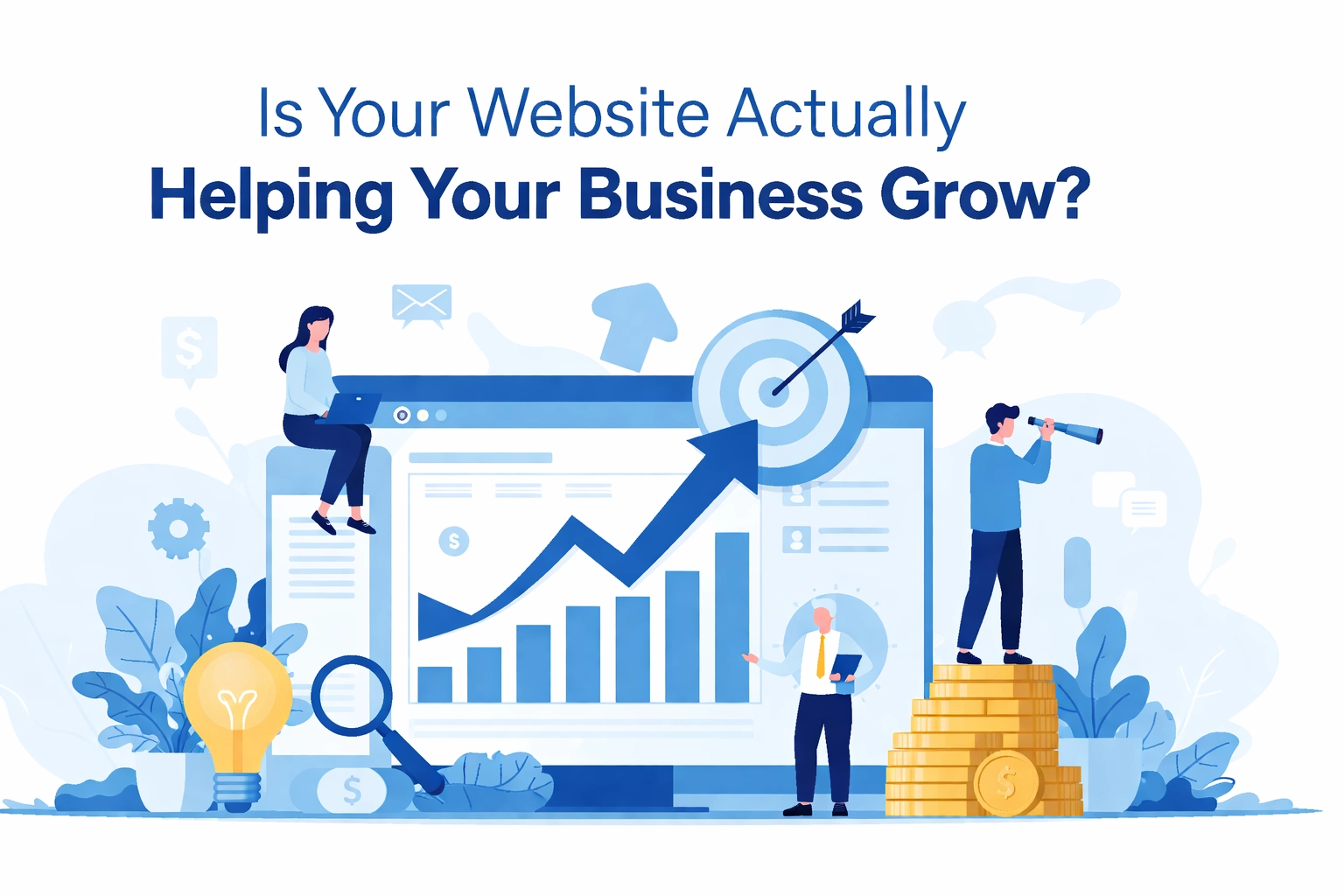

You have a website. Great. But is it actually doing anything for your business?
A lot of business owners check this box and move on. Website? Done. But having a website and having a website that works are two very different things. One sits there collecting digital dust. The other actively brings in leads, builds trust, and converts visitors into customers.
Let's talk about how to figure out which one you have
The Uncomfortable Truth About Most Business Websites
Here's the thing. Most websites underperform. They look decent enough. They have all the basic pages. But they're not built with growth in mind.
A website isn't a digital brochure you set and forget. It's a tool. And like any tool, it needs to be designed for a specific job. If your website was built five years ago and hasn't been touched since, there's a good chance it's working against you rather than for you.
Slow load times. Confusing navigation. No clear calls to action. These aren't just minor annoyances. They're conversion killers.

Signs Your Website Might Be Holding You Back
Not sure if your website is pulling its weight? Here are some red flags to watch for
High bounce rates. If visitors land on your site and immediately leave, something's wrong. Maybe the page didn't match what they expected. Maybe it loaded too slowly. Maybe they couldn't find what they needed. Whatever the reason, they're gone
Low time on page. People spending only a few seconds on your pages suggests your content isn't grabbing them. They're not reading. They're not engaging. They're just bouncing
Poor conversion rates. This is the big one. If people visit but don't take action: filling out a form, making a call, requesting a quote: your website isn't doing its job. Traffic without conversion is just noise
Outdated design. Web design trends change. What looked modern in 2018 looks dated now. And dated design signals to visitors that maybe your business is behind the times too
Not mobile-friendly. More than half of web traffic comes from mobile devices. If your site doesn't work well on phones, you're losing potential customers every single day
The Metrics That Actually Matter
Vanity metrics feel good but don't tell the whole story. Total visitor count sounds impressive until you realize none of those visitors are converting.
Focus on metrics that connect directly to your business goals
Conversion rate is the percentage of visitors who complete a desired action. This is your north star. A high conversion rate means your website is delivering value. A low one means something in your design, messaging, or user flow needs work
Average time on page tells you if your content is compelling enough to hold attention. If people are reading and engaging, you're on the right track
Pages per session shows how well your internal navigation works. Are visitors exploring your site? Or are they hitting one page and leaving?
Returning visitors indicate whether people find your site valuable enough to come back. This signals trust and quality content
Traffic sources help you understand where your visitors come from. Organic search? Social media? Referrals? Knowing this helps you double down on what works
Tools like Google Analytics make tracking these metrics straightforward. The data is there. You just need to look at it

How Design Directly Impacts Your Bottom Line
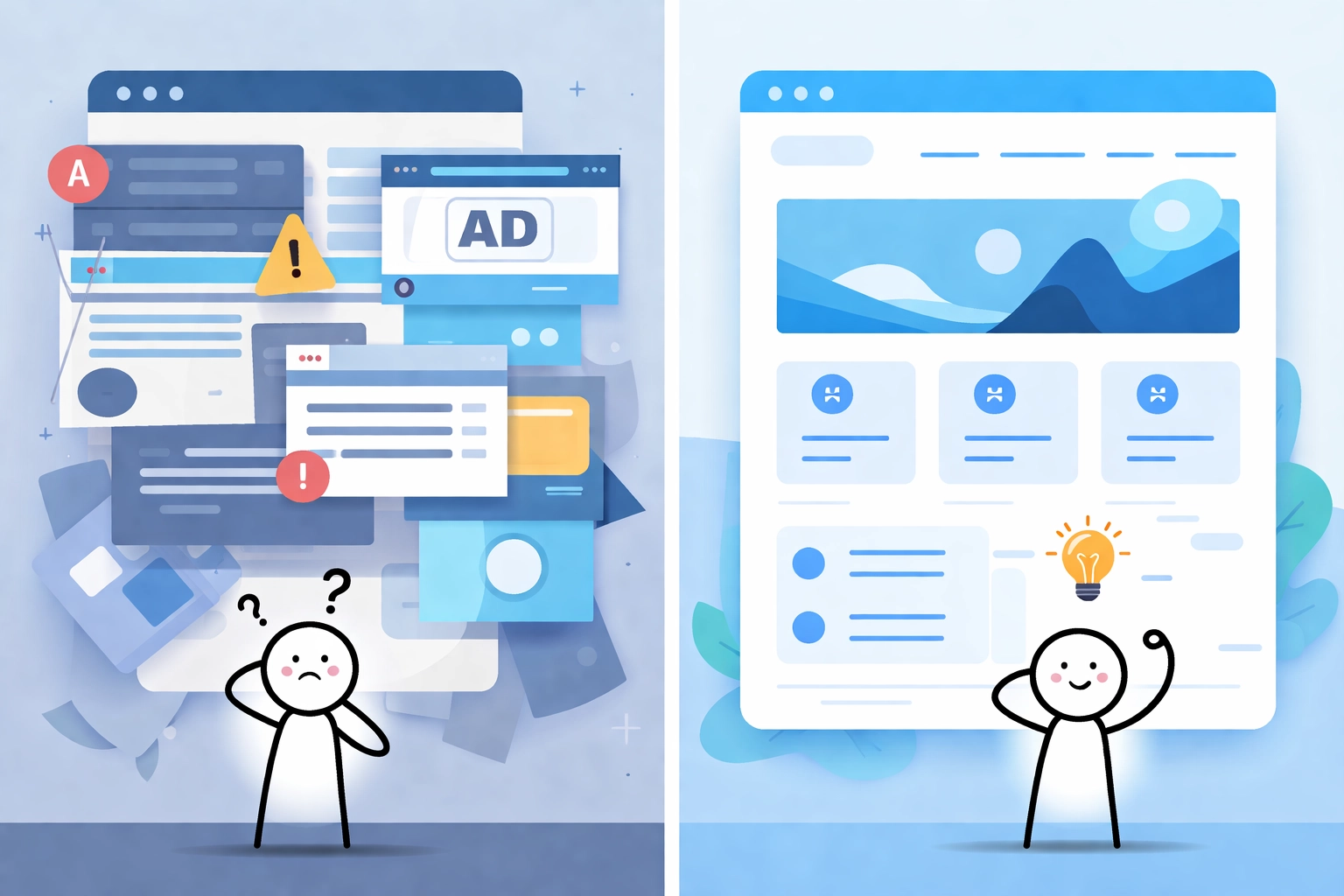
Design isn't just about looking pretty. It's about function. Every design choice either helps or hurts your ability to convert visitors into customers.
First impressions happen fast. Research shows people form an opinion about your website in about 50 milliseconds. That's it. In that tiny window, they decide whether your business seems credible or not. Clean, professional design builds instant trust. Cluttered, outdated design does the opposite
Navigation needs to be intuitive. Visitors shouldn't have to think about how to find what they need. If they have to hunt for your contact page or struggle to understand your services, they'll leave. Good navigation guides people naturally toward the actions you want them to take
Load speed matters more than you think. Every second of delay costs you conversions. People expect pages to load in two seconds or less. Anything longer and they start abandoning ship. This is especially true on mobile
Clear calls to action drive results. Your website needs to tell visitors what to do next. Request a quote. Schedule a consultation. Get started. Without clear CTAs, visitors wander aimlessly and leave without converting
White space is your friend. Cramming every inch of screen with text and images overwhelms visitors. Strategic use of white space makes content easier to read and important elements stand out
Professional web design isn't an expense. It's an investment that pays off through better conversions and more revenue
Content That Converts
Design gets people in the door. Content keeps them there and convinces them to act.
Write for your audience, not yourself. Your visitors don't care about your company history or industry jargon. They care about solving their problems. Speak to their needs directly
Make it scannable. Most people don't read web pages word by word. They scan. Use headers, bullet points, and short paragraphs to make your content easy to digest quickly
Focus on benefits, not features. Don't just list what you offer. Explain what it does for the customer. How does it make their life easier? How does it solve their problem?
Include social proof. Testimonials, case studies, and client logos build credibility. They show visitors that other people trust you and have gotten results
The Mobile Reality
This deserves its own section because it's that important.
More people browse the web on their phones than on desktop computers. If your website isn't optimized for mobile, you're alienating the majority of your potential audience.
Mobile optimization isn't just about shrinking your desktop site to fit a smaller screen. It's about rethinking the entire experience. Buttons need to be tap-friendly. Text needs to be readable without zooming. Forms need to be simple to fill out on a touchscreen.
A responsive website that works seamlessly across all devices is no longer optional. It's essential
Quality web and mobile development ensures your site performs well no matter how visitors access it
What To Do If Your Website Isn't Working
If you've identified problems with your current site, you have options
Start with an audit. Look at your analytics. Identify where visitors are dropping off. Find the pages with the highest bounce rates. Pinpoint where conversions are falling apart
Prioritize quick wins. Sometimes small changes make a big difference. Speeding up load times. Adding clearer CTAs. Fixing broken links. These don't require a complete redesign but can improve performance noticeably
Consider a refresh or rebuild. If your site is fundamentally outdated or poorly structured, patching it might not be enough. A strategic rebuild designed around conversion goals could be the better investment
Get expert help. Website optimization involves design, development, content, and marketing strategy all working together. Bringing in professionals who understand how these pieces fit can save time and get better results
Your Website Should Work As Hard As You Do
A website that just exists isn't enough. It needs to actively contribute to your business goals. Every page should have a purpose. Every design choice should support conversion. Every piece of content should move visitors closer to becoming customers.
Take a hard look at your current site. Check the metrics. Identify the weak points. Then do something about it.
Your website can be your hardest-working employee. But only if you build it that way
Ready to find out if your website is truly working for you? Get in touch and let's talk about what's possible