

Your server crashes at 2 AM. Your email system gets hit with a phishing attack. An employee accidentally deletes critical files.
Who's fixing it?
If you're handling IT yourself or relying on that one tech-savvy person in accounting, you're not alone. But you might be leaving your business vulnerable in ways you haven't considered.
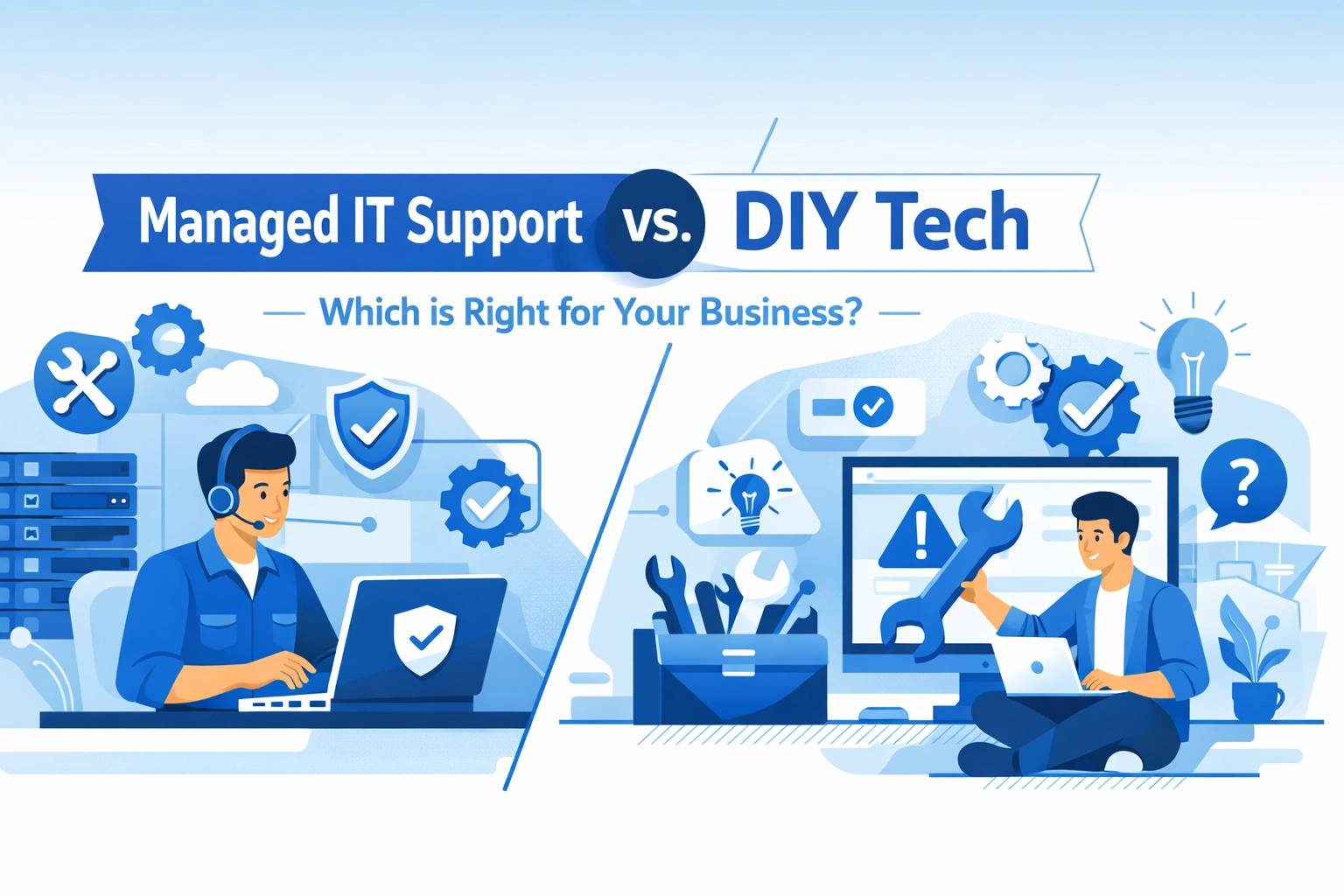
Let's break down managed IT support versus the DIY approach so you can figure out what actually makes sense for your business.
The Real Cost of DIY IT Support
Most businesses start with DIY tech because it seems cheaper. You handle updates yourself, call a local tech when something breaks, and hope nothing serious goes wrong.
Here's the problem: DIY IT isn't free. It's just expensive in different ways.
The average data breach costs $4.4 million globally. For small businesses, even a fraction of that can be devastating. And here's the kicker: 93% of cyber incidents at small and medium businesses result in data breaches.
When you're managing IT yourself, you're also dealing with:
- Hours spent troubleshooting instead of running your business
- Productivity loss when systems go down
- Security gaps you don't even know exist
- Compliance risks that could result in fines
- The cost of recovery after an incident
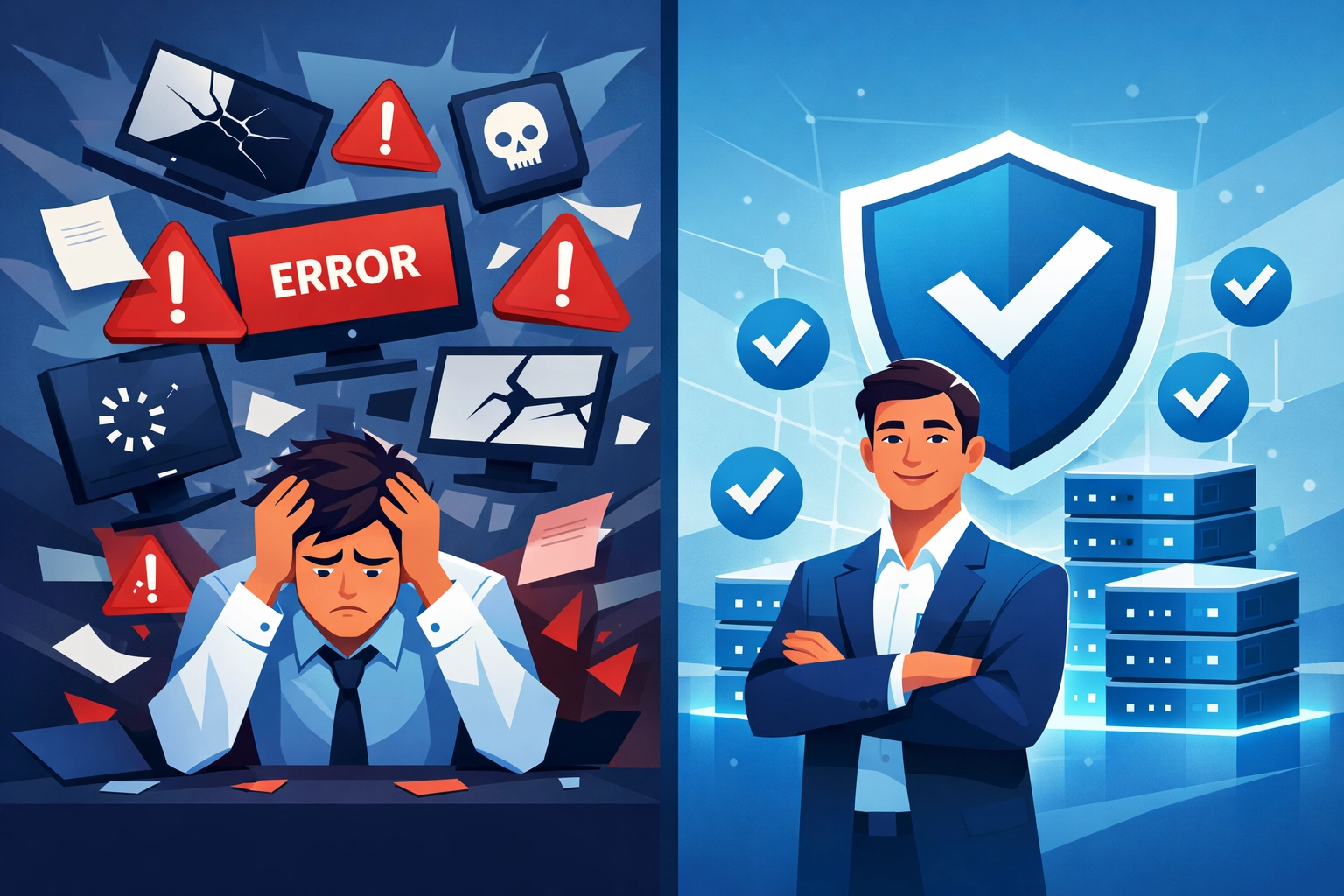
That "free" approach starts looking expensive pretty quickly.
What Managed IT Support Actually Means
Managed IT support means outsourcing your technology needs to a dedicated team that handles everything from daily monitoring to emergency response.
Think of it as having an entire IT department on call without the overhead of full-time salaries, benefits, and office space.
A managed service provider typically handles:
- 24/7 system monitoring
- Proactive maintenance and updates
- Cybersecurity protection
- Help desk support for your team
- Backup and disaster recovery
- Technology planning and upgrades
The goal is simple: keep your systems running so you can focus on what you actually do best.
The Cost Breakdown
Let's talk numbers.
DIY Approach:
- Variable costs every month
- Emergency tech support bills (usually at premium rates)
- Lost productivity during downtime
- Potential breach or compliance penalties
- Time you spend managing it all
Managed IT Services:
- Predictable monthly fee
- All services included in one price
- No surprise bills when something breaks
- Professional expertise across multiple specialties
Most businesses find that managed services cost about the same as hiring one full-time IT person: but you get an entire team with specialized knowledge instead.

Coverage That Actually Works
Your in-house tech person takes vacation. Gets sick. Works normal business hours.
What happens when your system crashes on Saturday night? Or during their two-week vacation?
Managed IT services provide 24/7 monitoring and support. Problems get detected and often fixed before you even notice them. When something does go wrong, you have immediate access to help: not a voicemail and a promise to call you back Monday.
This continuous coverage means:
- Faster response times
- Less downtime
- Problems caught early before they become disasters
- No gaps when staff are unavailable
The Expertise Problem
Here's something most businesses don't consider: IT is huge. Cybersecurity, cloud infrastructure, networking, databases, compliance: these are all specialized fields.
Your in-house person might be great with networks but not cybersecurity. Or excellent at troubleshooting but unfamiliar with the latest compliance requirements.
Managed service providers bring a full team with different specialties. Need help with a complex security issue? They have a specialist for that. Migrating to the cloud? They've done it dozens of times.
You're not limited by the knowledge of one or two people. You get access to proven solutions and best practices without having to research and test everything yourself.

When Managed IT Support Makes Sense
Managed IT services work best if you:
Don't have dedicated IT staff. If you're handling tech on top of your actual job, you're spreading yourself too thin.
Want predictable costs. Monthly fees beat surprise $5,000 emergency bills.
Need to scale. Growing businesses need IT that grows with them without massive infrastructure investments.
Can't afford downtime. Every hour offline costs you money and customer trust.
Want better security. Professional cybersecurity management is essential when data breaches can put you out of business.
Need to stay compliant. Many industries have strict data protection requirements that carry hefty penalties for violations.
Most small and medium businesses fit these criteria. You need reliable technology, but IT isn't your core business. That's exactly when outsourcing makes sense.
When In-House IT Works Better
Some businesses do better with internal IT teams:
Large enterprises with complex, highly customized infrastructure that requires constant hands-on management.
Organizations with highly specific needs that require deep integration between IT and every business operation.
Companies that want direct control over every aspect of their technology and have the budget to build a complete internal team.
The reality? Most businesses don't fall into these categories. If you're debating between hiring your first IT person or going with managed services, managed services usually win on cost, expertise, and coverage.
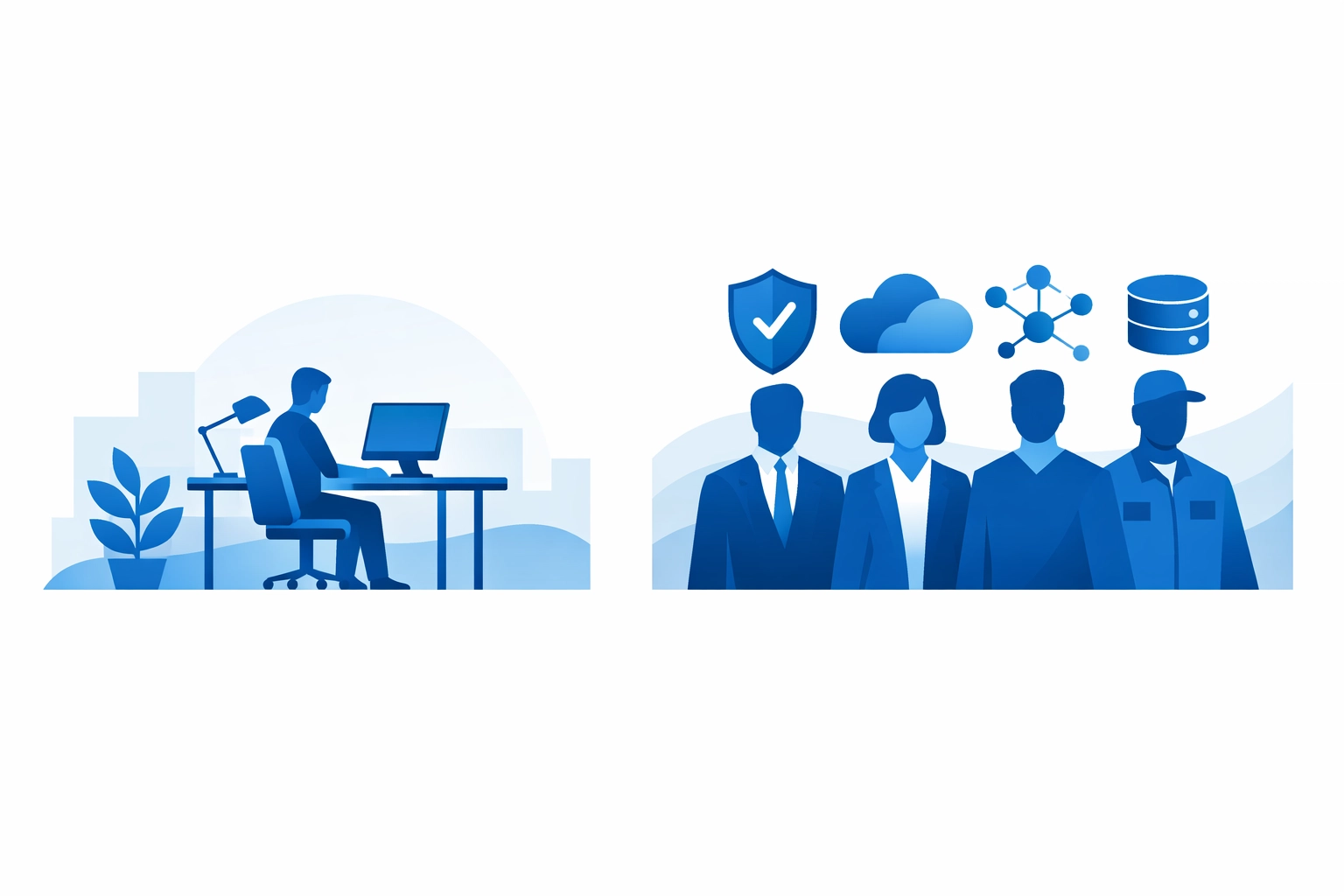
The Middle Ground: Co-Managed Services
Can't decide? There's a hybrid option.
Co-managed IT services let you keep some in-house control while outsourcing specialized tasks or overflow work to a managed provider.
This works well if you:
- Have one IT person who needs backup and specialized support
- Want to maintain some internal control but need extra resources
- Have specific systems you want managed internally but need help with everything else
It's a flexible approach that gives you the best of both worlds without committing fully to either option.
Making Your Decision
Here's a quick way to think about it:
Choose managed IT support if:
- You don't have full-time IT staff
- You need 24/7 coverage and monitoring
- You want predictable monthly costs
- Cybersecurity and compliance are concerns
- You're growing and need scalable solutions
Choose in-house IT if:
- You're a large organization with complex needs
- You need constant hands-on management
- You have the budget for a full internal team
- Direct control is essential for your operations
Choose co-managed services if:
- You have some IT staff but need additional support
- You want flexibility and specialized expertise
- You need to scale support up and down
The Bottom Line
DIY tech support works until it doesn't. And when it fails, it usually fails expensively.
Managed IT support gives you professional expertise, 24/7 coverage, and predictable costs without the overhead of building an entire IT department.
For most businesses, especially those growing or lacking dedicated IT staff, managed services provide better protection and more value than trying to handle everything yourself.
Still not sure what's right for your business? Get in touch and we'll help you figure out what actually makes sense for your situation.
Your technology should support your business( not become another problem you have to solve.)