
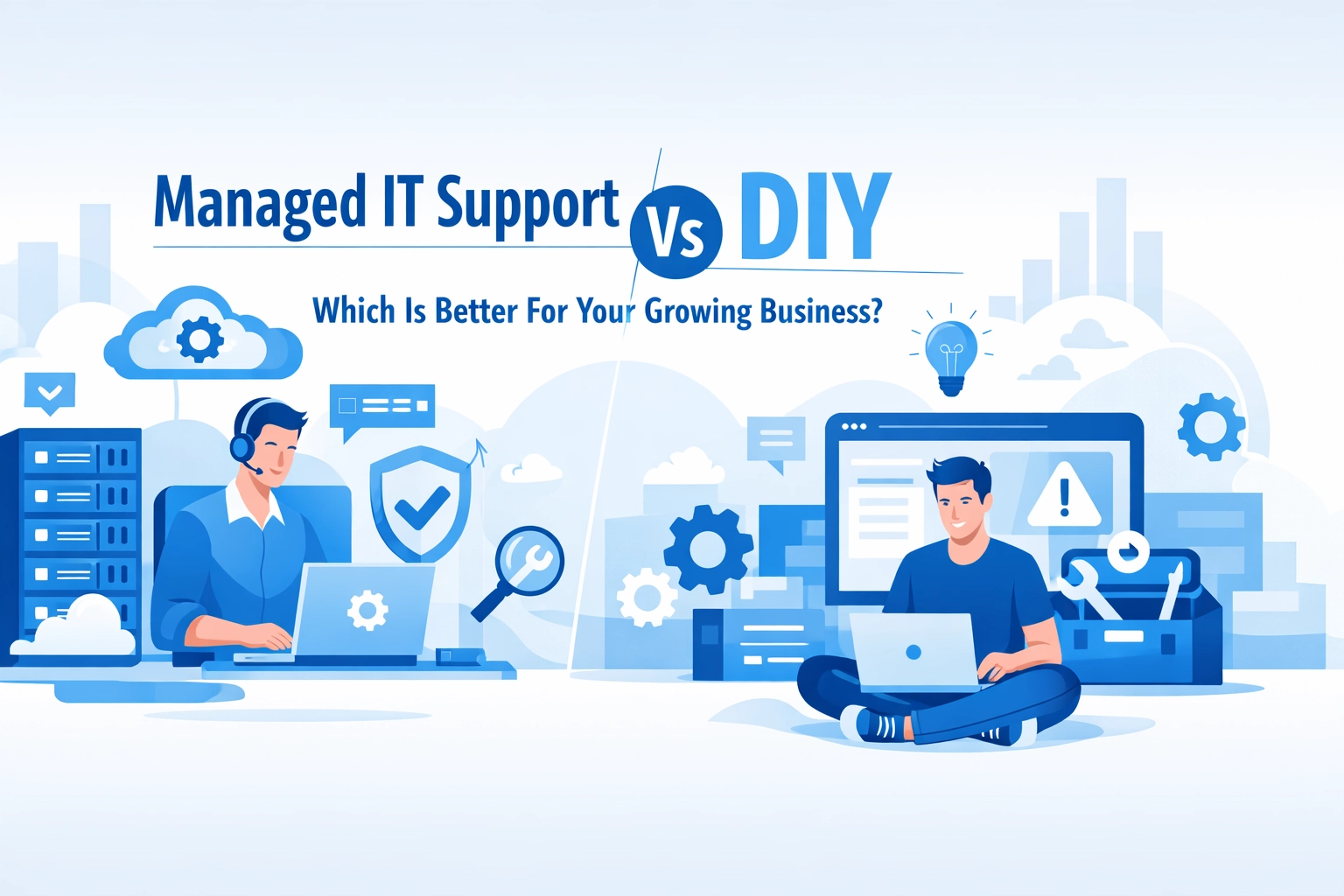

So your business is growing. That's great news, right? But here's the thing nobody tells you: your IT needs are about to get way more complicated. Fast.
You've probably been handling IT yourself or with someone on your team who "knows computers." Maybe that's working fine right now. But as you add more employees, more devices, more software, and more data, that DIY approach starts to crack. Hard.
The question isn't really whether you need better IT support. It's whether you should build it in-house or hand it off to managed IT professionals.
Let's break down what actually makes sense for a growing business.
The Reality of DIY IT Management
Here's what DIY IT typically looks like: someone on your team (maybe you) handles basic tech issues when they pop up. You Google solutions to problems. You call vendors when something breaks. You pray nothing major goes wrong on a Friday afternoon.
This works when you're small. Five people, basic software, not much to manage. But once you hit 10, 15, 20+ employees? It becomes a nightmare.
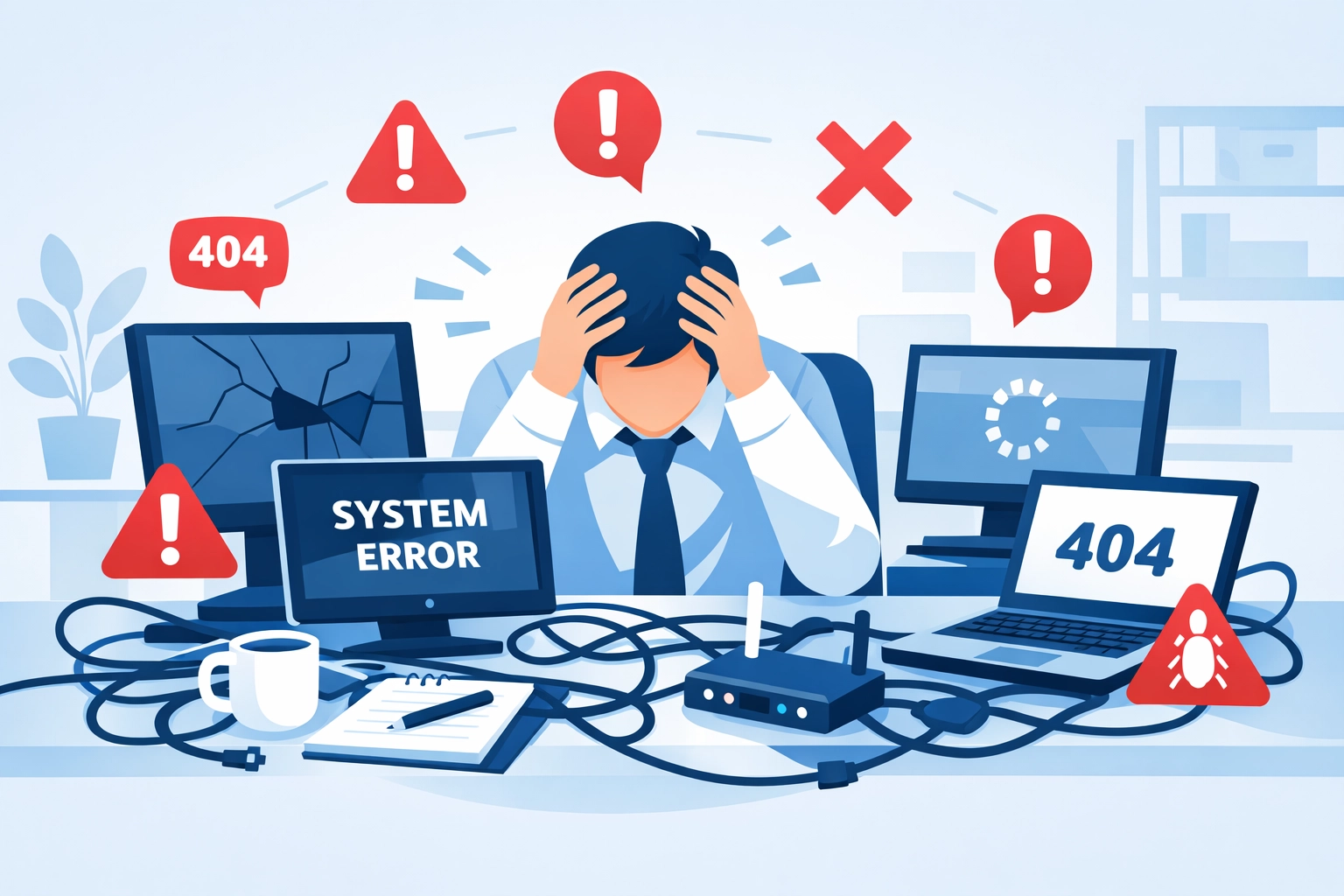
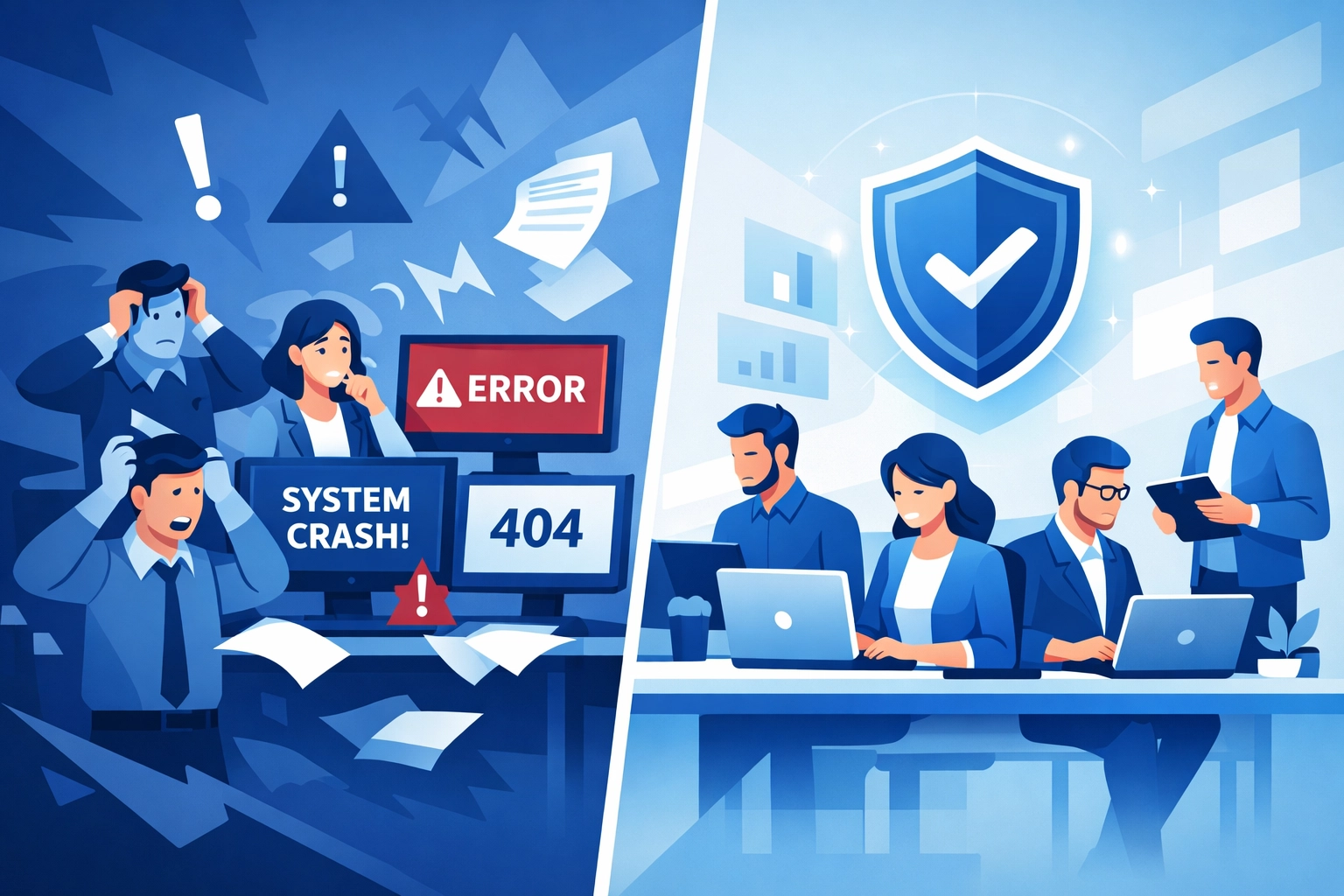
Your designated "tech person" spends half their day troubleshooting instead of doing their actual job. Nobody's monitoring your network security. Updates get delayed because everyone's too busy. When something breaks, work stops until someone figures it out.
And let's talk about what you don't see: the security vulnerabilities you don't know exist, the inefficiencies you've normalized, the better solutions you don't have time to research.
The hidden cost of DIY isn't just the time spent fixing problems. It's the opportunities you miss because your team is distracted by IT issues instead of focusing on growing your business.
What Managed IT Support Actually Gets You
Managed IT support means you outsource your technology infrastructure to a team that handles everything. Not just when things break: all the time.
Here's what that looks like in practice:
Proactive monitoring means someone's watching your systems 24/7. They catch problems before you notice them. That server that's about to fail? They're already working on it. That security threat? Blocked before it reaches your network.
Predictable costs replace surprise expenses. Instead of getting hit with a $5,000 emergency server repair, you pay a flat monthly rate. No more wondering if this will be an expensive IT month.
Access to specialists you couldn't afford to hire full-time. Need someone who understands cloud architecture? Database optimization? Cybersecurity compliance? They're already on your team.
Faster problem resolution happens because these folks have seen your exact problem a hundred times before. What might take your team hours to figure out, they solve in minutes.
The difference is moving from reactive to proactive. You're not just fixing what breaks. You're preventing problems and optimizing what works.
The Cost Equation Nobody Talks About
Everyone focuses on the monthly price tag of managed IT services. But that's not the whole picture.
Let's say you hire someone full-time to handle IT. You're looking at $60,000-$80,000 in salary, plus benefits, plus training, plus the cost when they're sick or on vacation. And that one person can't possibly have expertise in networking, security, cloud services, compliance, and everything else you need.
With managed IT, you get an entire team for often less than the cost of one employee. And they bring tools, software licenses, and infrastructure you don't have to buy.
But the real savings? Downtime prevention. Every hour your systems are down costs you money in lost productivity, missed opportunities, and frustrated customers. Managed IT providers typically maintain 99.9% uptime because they catch issues before they cause problems.
Then there's the opportunity cost. When your team isn't dealing with IT issues, they're doing the work that actually grows your business. That's hard to measure but incredibly valuable.
Scalability: The Growth Factor
Here's where managed IT support really pulls ahead for growing businesses.
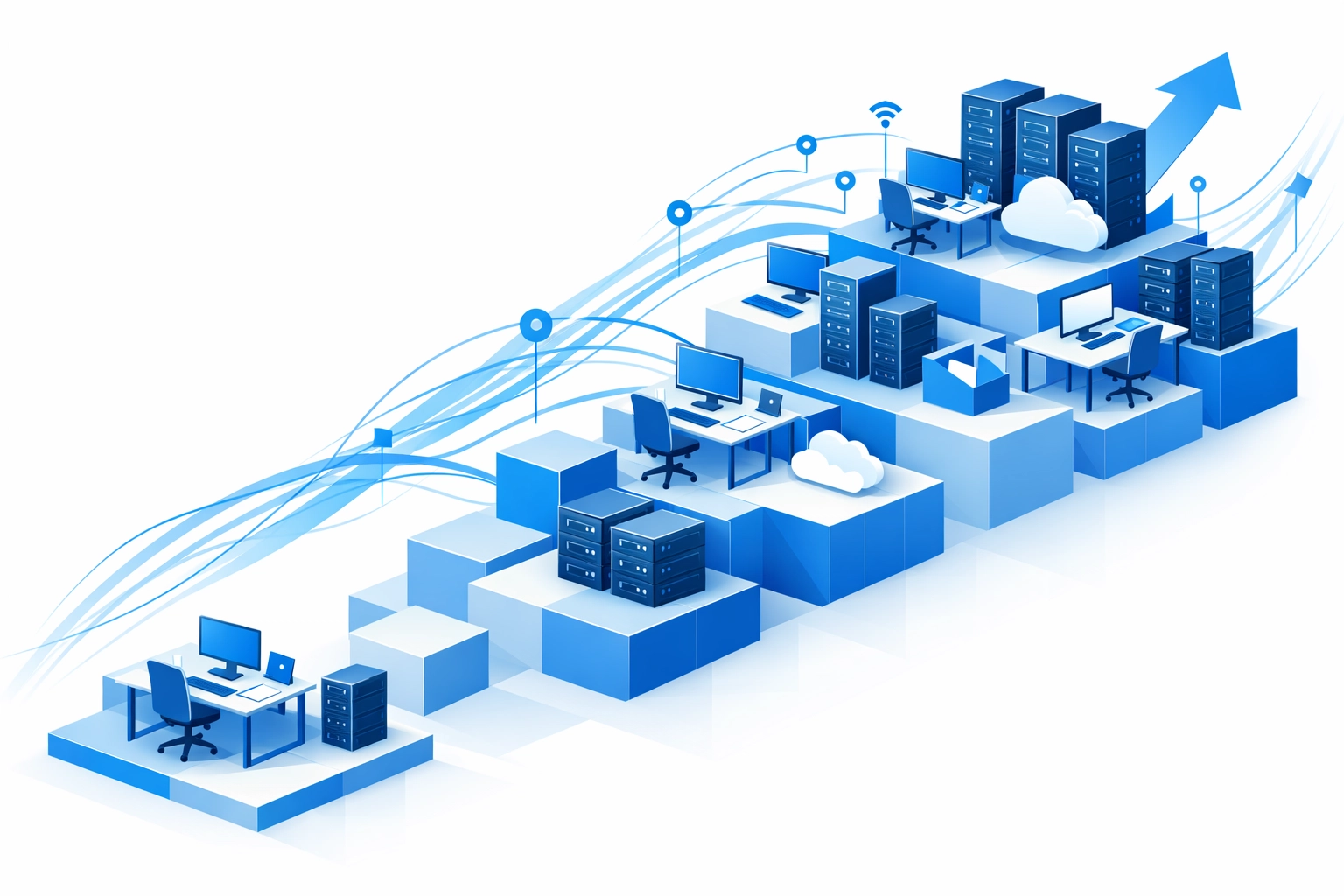
When you need to add five new employees next quarter, managed IT scales instantly. New devices get configured. Email accounts get set up. Security protocols get implemented. It just happens.
Try doing that with an in-house person who's already stretched thin. They'll spend weeks getting everyone set up while falling behind on everything else.

The same goes for new software, new offices, new services. Growing businesses have unpredictable IT needs. You might need minimal support for six months, then suddenly need intensive help during an expansion. Managed services flex with you. In-house teams... don't.
And when your needs exceed what your IT person can handle, you're stuck scrambling to hire, train, and integrate new staff: a process that takes months and costs a fortune.
Security and Expertise: What You Don't Know Will Hurt You
This is the scary part. Most businesses with DIY IT support have security vulnerabilities they don't know about. Outdated software. Weak passwords. Unencrypted data. Inadequate backup systems.
You don't know what you don't know. And hackers count on that.
Managed IT providers employ security specialists who stay current on threats, implement multi-layered protection, and ensure compliance with industry regulations. They're not just fixing computers: they're protecting your business from threats that could shut you down.
Same goes for specialized knowledge. Modern IT infrastructure involves cloud services, networking, databases, compliance requirements, disaster recovery, and dozens of other technical domains. No single person can master all of it. But a managed IT team has specialists in each area.
When DIY Might Still Make Sense
Look, managed IT isn't always the answer. If you're a tiny business with minimal technology needs and limited budget, handling basics yourself might work for now.
DIY can work if:
- You have fewer than 5 employees with simple IT needs
- Your business isn't dependent on technology for daily operations
- You have someone with genuine IT expertise (not just someone who's "good with computers")
- You can afford downtime without major consequences
- You don't handle sensitive customer data or have compliance requirements
But be honest about that assessment. Most growing businesses check none of those boxes.
Making the Decision for Your Business
Here's how to think through this:
Ask yourself: How much does an hour of downtime cost you? If your team can't work without their computers and internet, and you serve customers online, an hour of downtime might cost thousands. Managed IT dramatically reduces that risk.
Consider your trajectory: Planning to double your team in the next year? Opening new locations? Launching new services? You need IT support that can scale with you, not hold you back.
Evaluate your current situation: How much time does your team spend on IT issues? How often do small problems turn into big ones? How confident are you in your security and backup systems?
Think about compliance: If you're in healthcare, finance, or any regulated industry, compliance isn't optional. Managed IT providers understand these requirements and keep you compliant.
For most growing businesses, the answer is clear. The flexibility, expertise, and cost efficiency of managed IT support outweighs the control you get from keeping everything in-house.
The Bottom Line
Growing a business is hard enough without IT problems holding you back. You started your company to solve a problem or serve customers: not to become an IT expert.
Managed IT support lets you focus on what you do best while experts handle the technology that keeps everything running. You get enterprise-level infrastructure and support at a fraction of the cost of building it yourself.
The businesses that grow fastest are the ones that recognize what they should do themselves and what they should outsource to specialists. IT support is almost always in the second category.
Ready to stop fighting with technology and start leveraging it to grow your business? Check out our managed IT services or get in touch to discuss your specific needs. We'll help you figure out exactly what support makes sense for where you are and where you're going.
Your future self: the one running a thriving business without IT headaches( will thank you.)