

You need IT support. That's not up for debate anymore.
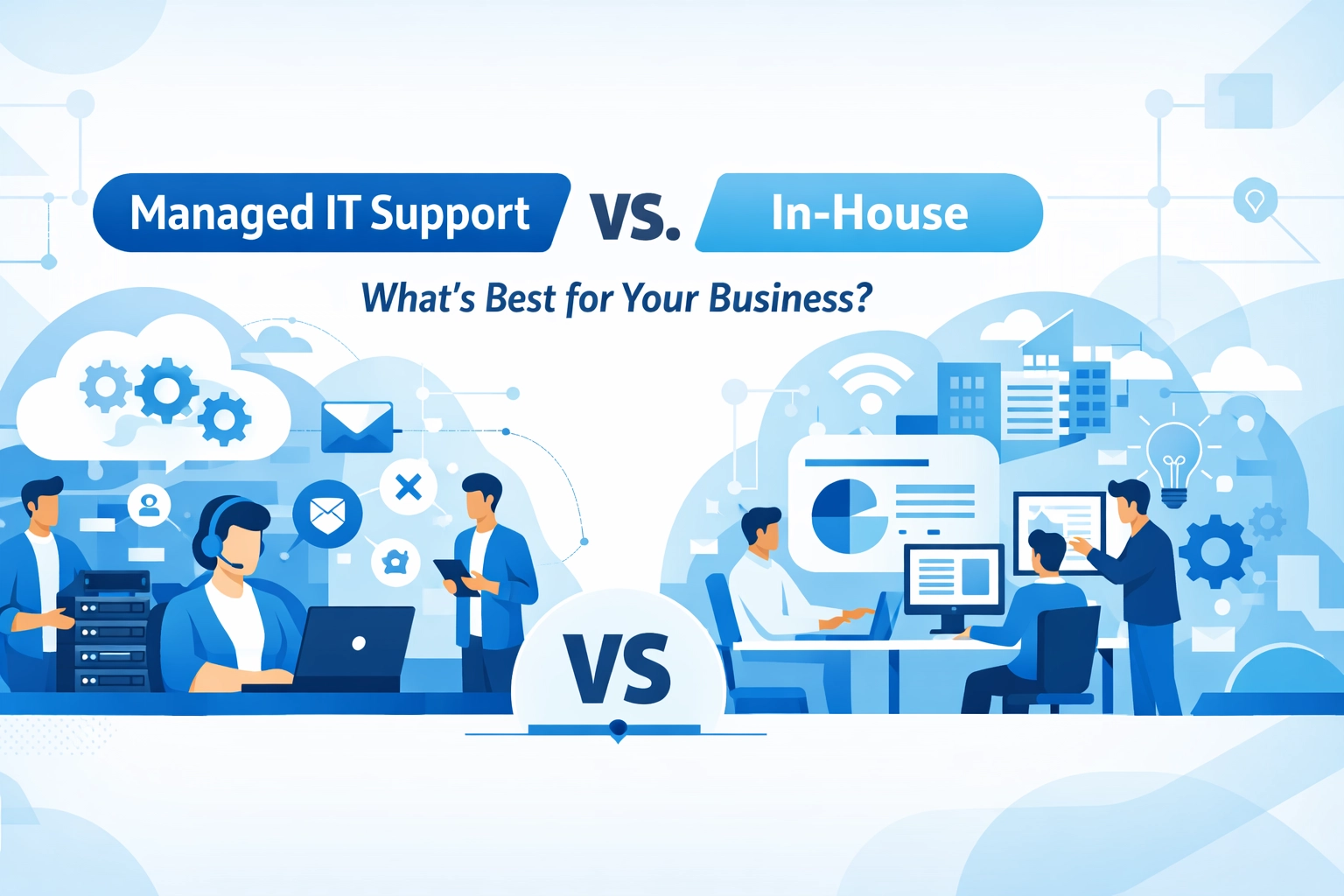
The question is whether you should hire an in-house team or partner with a managed IT service provider. Both options work, but they work differently for different businesses.
Let's break down the real differences so you can make the right call for your situation.
The Cost Question
Here's the first thing most business owners look at: the price tag.
In-house IT means salaries, benefits, training, equipment, and software licenses. You're looking at $60,000+ per year for a single IT professional, and that's before health insurance, retirement contributions, and ongoing education costs. Need more than one person? Multiply those numbers.
Managed IT support typically runs on fixed monthly pricing. You know exactly what you're paying each month, which makes budgeting straightforward. No surprise costs when someone needs training or takes a vacation.
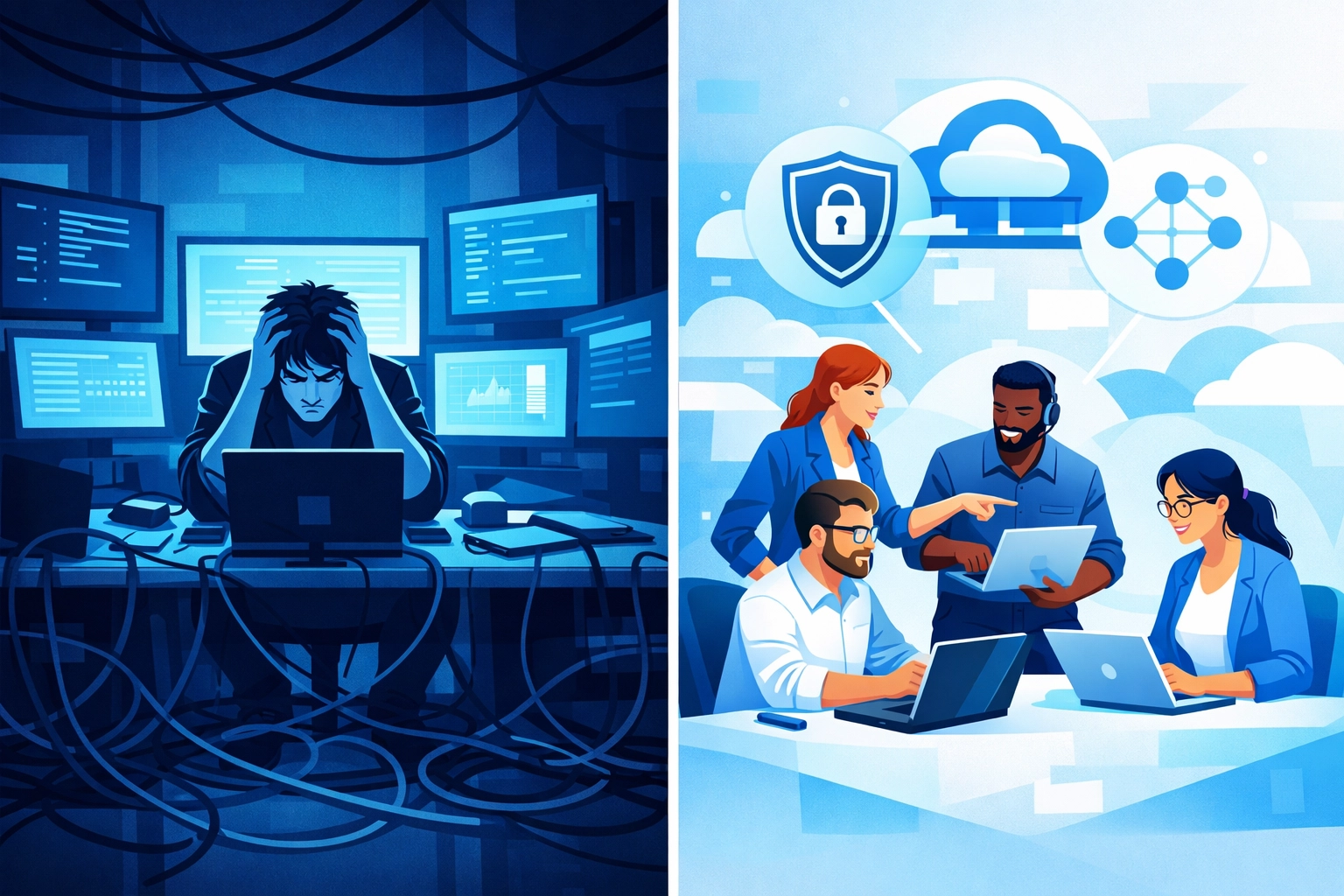
The catch? You're not comparing apples to apples. An in-house IT person might handle basic support, but a managed service provider gives you access to an entire team of specialists for that monthly fee.
Support Coverage That Actually Works
Your server doesn't care that it's 2 AM on a Saturday.
Managed IT providers offer 24/7 monitoring and support. They're watching your systems around the clock, catching issues before they turn into problems. Server acting weird at midnight? They're already on it.
In-house teams typically work business hours. Maybe you have someone on call for emergencies, but they're still just one person trying to sleep. And monitoring? That's usually not happening outside of 9-to-5 unless you're paying for expensive monitoring tools and training someone to use them.
When your systems go down outside business hours with an in-house setup, you're often waiting until morning to fix it. That means lost productivity, frustrated employees, and potentially angry customers.
Expertise You Actually Need
Technology moves fast. Really fast.
A single IT professional can't be an expert in everything. They might be solid with network administration but weak on cybersecurity. Great with Windows but lost in cloud infrastructure. Strong with hardware but struggling with compliance requirements.
Managed IT services give you access to a full bench of specialists. Need someone who knows Azure inside and out? They've got that person. Running into a complex security issue? There's a dedicated security expert ready to help.
Training an in-house team to match that breadth of knowledge costs serious money and time. And the second you get them trained on something, the technology evolves and you're back to square one.

Scaling Up or Down
Your business changes. Your IT needs change with it.
Adding to an in-house IT team means posting jobs, interviewing candidates, onboarding new employees, and waiting months for them to get up to speed. Scaling down means layoffs and potential unemployment claims.
Managed services scale immediately. Need more support during a busy season? Done. Growing faster than expected? They've got the resources. Tightening the budget? You can adjust service levels without firing anyone.
The flexibility matters more than most business owners realize until they need it.
Control vs. Reliability
In-house IT gives you complete control. Your team is there in the office, understands your culture, knows your systems intimately, and reports directly to you.
That's valuable for some businesses, especially larger companies with complex, unique setups that need constant hands-on attention.
Managed IT services operate as a third party. You're not their only client, which means you don't have complete control over their schedule or priorities. Some businesses struggle with that arrangement.
But here's the trade-off: managed services bring standardized, documented processes that reduce variability. They've solved your problem before for other clients. They have playbooks that work. In-house teams might reinvent the wheel or develop one-off solutions that create technical debt.

Security Reality Check
Cybersecurity isn't optional anymore. It's not even a luxury. It's a requirement.
Managed IT providers employ dedicated security teams. They're dealing with threats all day, every day, across multiple clients. They see patterns you'll never see. They have tools you can't afford on your own. They're updated on the latest threats because that's their entire job.
In-house IT staff might have some security knowledge, but they're also handling password resets, printer problems, and software updates. Security becomes one item on a long list instead of a primary focus.
Unless you're hiring a dedicated security specialist (add another $80,000+ to your budget), your in-house team is probably not equipped to handle modern cyber threats at the level your business needs.
When In-House IT Makes Sense
In-house IT works best for:
- Larger organizations with the budget to hire multiple specialized staff members
- Businesses with highly unique systems that require constant on-site attention
- Companies in highly regulated industries that need direct control over sensitive data
- Organizations with the resources to invest in training, tools, and redundancy
If you've got the budget and the need for immediate on-site support for specialized systems, in-house makes sense.
When Managed IT Services Win
Managed IT services work better for:
- Small to mid-size businesses that need predictable IT costs
- Companies wanting 24/7 monitoring without hiring multiple shifts
- Businesses lacking specialized IT expertise and unable to hire for every skill gap
- Organizations focused on core business instead of managing IT staff
If you're running a business under 100 employees, managed services probably make more financial sense.

The Hybrid Approach
Here's what a lot of smart businesses do: both.
Keep one in-house IT person to handle day-to-day stuff and serve as your internal point person. Partner with a managed service provider for specialized support, after-hours monitoring, security, and backup.
The in-house person knows your business and handles the immediate needs. The managed service team fills the expertise gaps and provides coverage when your internal person is unavailable.
This hybrid model gives you control where you need it and expertise where you lack it. It's often the sweet spot for growing businesses that aren't quite large enough to build a full IT department but need more than a managed service provider alone can offer.
Making Your Decision
Start by honestly assessing your situation:
- What's your actual IT budget?
- How critical is 24/7 uptime to your business?
- Do you have systems that require constant on-site attention?
- What's your risk tolerance for security and compliance?
- How quickly do you need to scale?
If you're a small business trying to control costs while maintaining solid IT support, managed services are probably your answer. If you're a larger organization with complex needs and deep pockets, in-house might work.
And if you're somewhere in between? That hybrid approach deserves serious consideration.

The wrong IT strategy costs you in downtime, security breaches, lost productivity, and missed opportunities. The right strategy keeps your business running smoothly while you focus on what you actually do best.
Need help figuring out what makes sense for your specific situation? Talk to someone who can look at your actual needs instead of giving you a generic answer. Your IT infrastructure is too important to guess about.