

Let's be honest. When everything's running smoothly, IT support is probably the last thing on your mind. Your team is productive, systems are humming along, and life is good
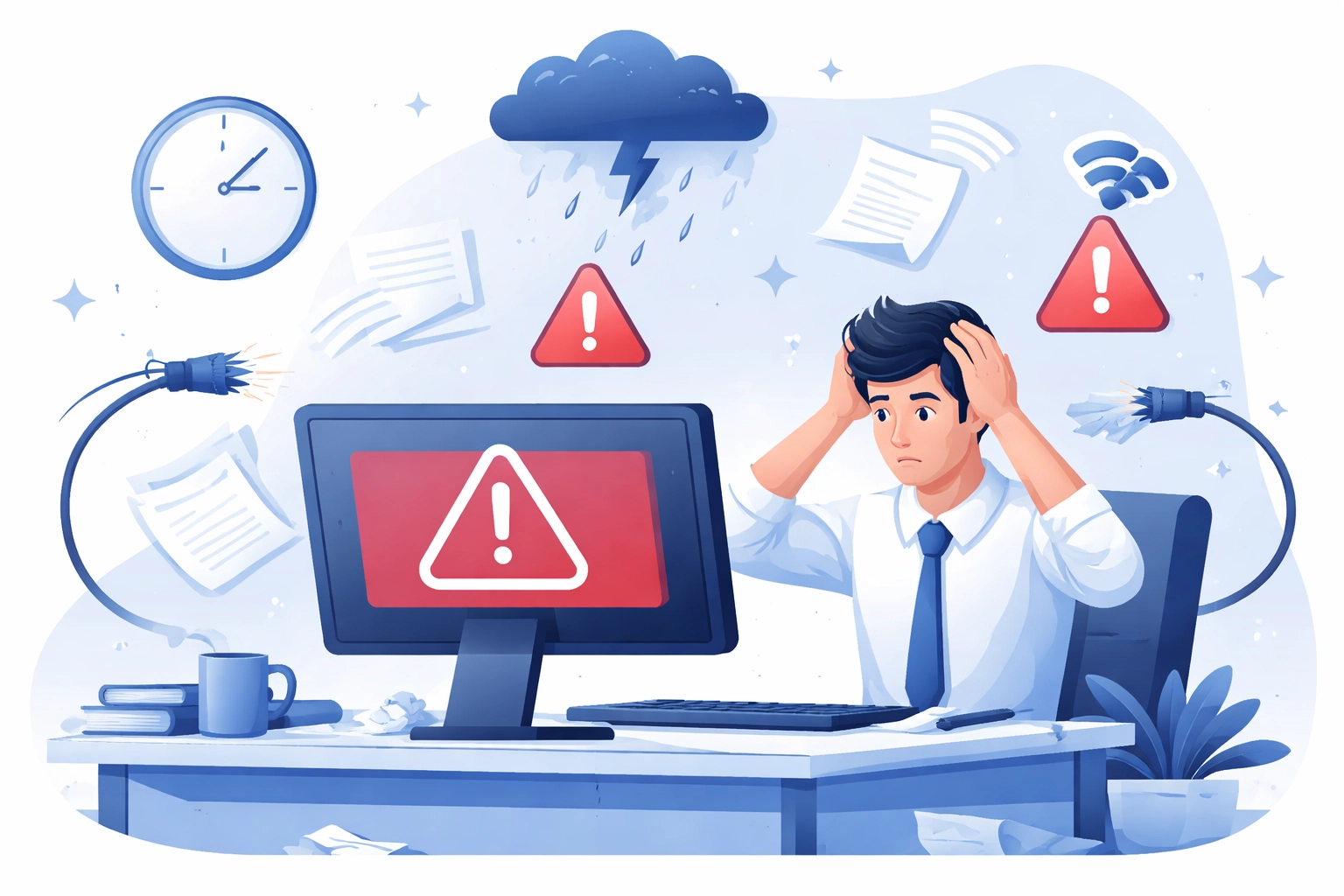
Then something breaks. A server goes down. Email stops working. Suddenly everyone's standing around wondering what happened and how long until it's fixed
This is where managed IT support comes in. And it's probably more valuable than you realize
The Problem With "Fix It When It Breaks"
Most small and mid-sized businesses operate on a reactive IT model. Something goes wrong, you call someone to fix it. Sounds reasonable enough
But here's the issue. By the time something breaks, the damage is already done. Your team can't work. Customers can't reach you. Revenue slips away while you wait for a technician to diagnose the problem
Downtime costs money. Depending on your industry, we're talking thousands of dollars per hour in lost productivity and missed opportunities. And that's before you factor in the emergency repair bill
What Managed IT Support Actually Does
Managed IT support flips the script. Instead of waiting for problems to happen, a managed services provider (MSP) monitors your systems around the clock. They catch small issues before they become big ones
Think of it like preventive maintenance for your car. You change the oil regularly so your engine doesn't seize up on the highway. Same concept applies to your IT infrastructure
Here's what that looks like in practice:
- 24/7 monitoring of your network, servers, and devices
- Automated patch management to keep software current and secure
- Scheduled maintenance during off-hours to minimize disruption
- Proactive alerts when something looks off
The goal is simple. Keep your systems running so your team can focus on actual work
Predictable Costs Beat Surprise Bills
One of the biggest headaches with traditional IT support is the unpredictability. You never know when something will fail or how much it'll cost to fix
Managed IT services work differently. Most providers operate on a subscription or fixed monthly fee model. You know exactly what you're paying each month, which makes budgeting a whole lot easier
Beyond the predictability, there are real cost savings:
- Lower labor costs compared to hiring full-time IT staff
- Consolidated software licensing through your provider
- Fewer emergency repairs because problems get caught early
- Reduced downtime costs from faster response times
When you add it all up, managed IT support often costs less than dealing with problems as they pop up. And you get better service on top of it

Access Expertise You Can't Afford to Hire
Let's talk about skills for a second. IT has gotten complicated. Cybersecurity, cloud infrastructure, network engineering, compliance requirements: the list keeps growing
Building an in-house team with all that expertise is expensive. We're talking multiple six-figure salaries plus benefits, training, and equipment. For most businesses, it just doesn't make financial sense
With managed IT support, you get access to a whole team of specialists without the overhead. Need help with a cloud migration? They've got someone for that. Worried about security vulnerabilities? They've got that covered too
This is especially valuable when you're trying to stay compliant with industry regulations. Keeping up with changing requirements takes serious expertise. An MSP deals with this stuff every day across multiple clients, so they know exactly what needs to happen
If you're looking for reliable computer support, working with a managed provider gives you depth you couldn't build on your own
Security That Actually Keeps Up
Cyber threats aren't slowing down. If anything, they're getting more sophisticated every year. Ransomware, phishing attacks, data breaches: it's a lot to defend against
Here's the reality. Most small businesses don't have the resources to stay on top of every new threat. They patch when they remember. They update passwords occasionally. They hope for the best
That approach doesn't work anymore
Managed IT providers make security a priority. They implement multiple layers of protection:
- Firewalls and intrusion detection
- Regular security audits
- Employee training on phishing and social engineering
- Backup and disaster recovery planning
- Continuous monitoring for suspicious activity

A single data breach can cost hundreds of thousands of dollars between recovery, legal fees, and lost customer trust. Investing in proper security upfront is way cheaper than cleaning up afterward
Scale Without the Growing Pains
Growth is supposed to be exciting. But from an IT perspective, it can be a nightmare
Every new employee needs equipment, accounts, and access permissions. Every new location needs network infrastructure. Every spike in demand tests your systems
With traditional IT, scaling means buying hardware, hiring more staff, and hoping you guessed right about what you'd need. Get it wrong and you've either overspent or you're scrambling to catch up
Managed IT support gives you flexibility. Need to add remote users? Done. Need more cloud storage? Easy. Need to deploy new applications across the company? Your provider handles it
You get the resources you need when you need them, without major capital investments or lengthy upgrade cycles. That lets you seize opportunities and handle demand spikes without breaking a sweat
Let Your Team Focus on What Matters
Here's something that doesn't show up on a balance sheet but matters a lot. When your internal team isn't fighting fires, they can actually do their jobs
Think about how much time gets wasted on technical troubleshooting. Someone's laptop won't connect to the printer. The VPN is acting weird. An update broke something and now nobody can access the shared drive
Every minute spent on IT issues is a minute not spent on customers, products, or strategy
By outsourcing IT management to experts, you free up your team to focus on the work that actually drives revenue. That's the real value of managed support: it's not just about keeping systems running. It's about keeping your people productive

Is Managed IT Support Right for You
Not every business needs managed IT support. If you're a one-person operation with a laptop and a prayer, you might be fine handling things yourself
But if any of these sound familiar, it's worth considering:
- You've experienced costly downtime in the past year
- Your team spends too much time on tech problems
- You're worried about cybersecurity but don't have expertise
- You're growing and your current IT setup can't keep up
- You want predictable IT costs instead of surprise bills
The bigger your team gets, the more sense managed support makes. The complexity just keeps growing, and trying to handle it all internally becomes a distraction from your core business
Getting Started
If you're thinking about making the switch, the first step is figuring out what you actually need. Take stock of your current setup: what's working, what's not, what keeps you up at night
From there, talk to potential providers about how they'd approach your specific situation. Good managed IT support isn't one-size-fits-all. The right partner will take time to understand your business before recommending solutions
At WorldWise, we offer comprehensive support services designed to keep your technology running smoothly while you focus on growth. Whether you need help with day-to-day computer issues or a full managed IT strategy, we're here to help
Ready to stop fighting fires and start building? Get in touch and let's talk about what managed IT support could look like for your team