
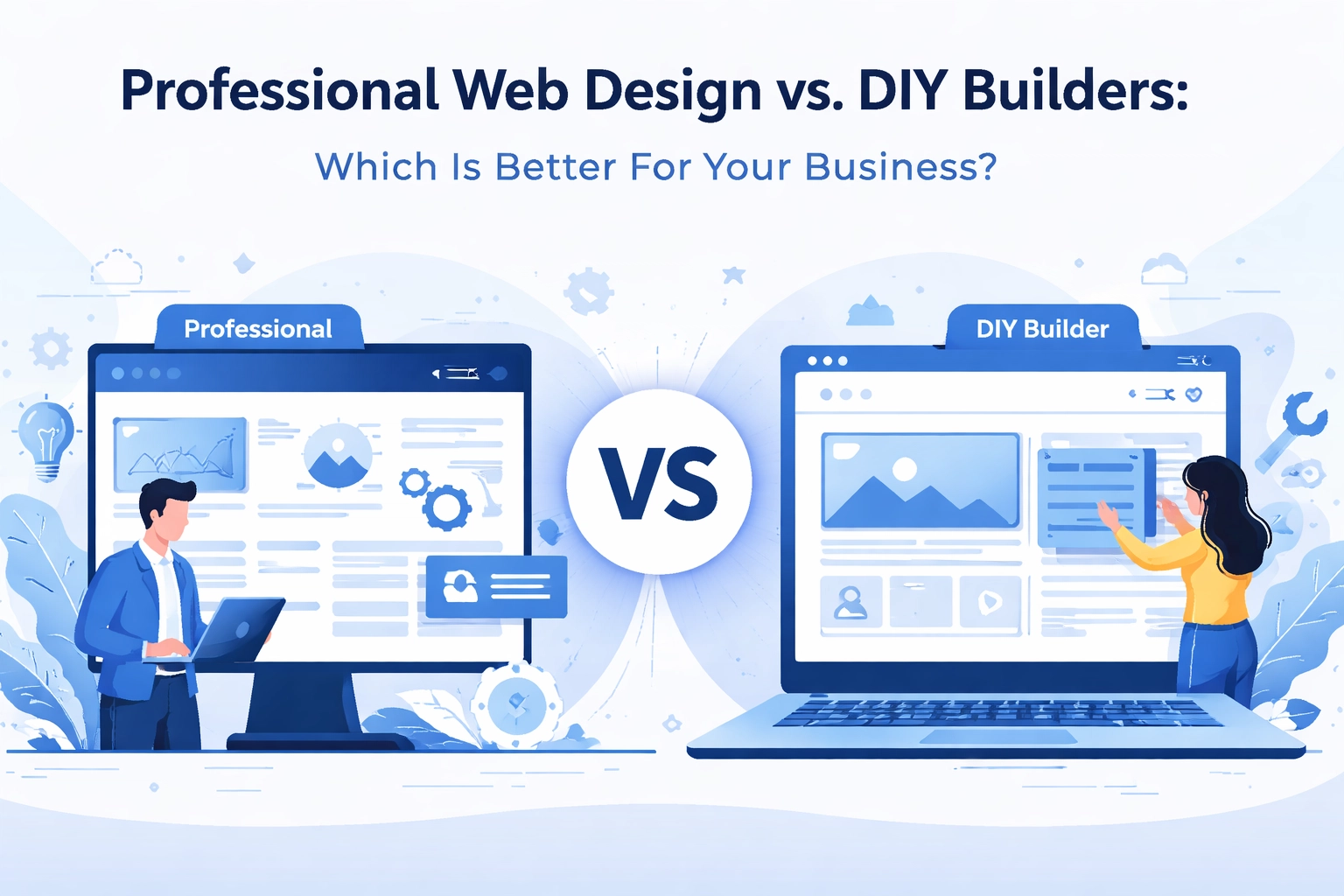

So you need a website. Maybe you're starting fresh or your current site is looking a bit tired. Either way, you've probably found yourself staring at the same question every business owner faces: should you hire a professional or just do it yourself with a website builder?
It's a fair question. DIY platforms like Wix, Squarespace, and WordPress make bold promises. Drag, drop, done. But is it really that simple? And more importantly, is it the right move for your business?
Let's break it down honestly so you can make the call that actually makes sense for where you are right now.
The Real Cost Breakdown
Here's where most people start and honestly where a lot of confusion lives.
DIY website builders look incredibly affordable on the surface. You're looking at roughly $10 to $50 per month depending on the plan. That's pretty easy to swallow. Professional web design on the other hand typically starts around $500 and can climb to $10,000 or more depending on complexity.
But here's the thing. That monthly fee doesn't account for your time. Or the plugins you'll need to buy. Or the premium templates that actually look good. Or the hours you'll spend troubleshooting when something breaks at 2am.
If your website is just a basic online placeholder, DIY might work fine. But if your site needs to generate leads, sell products, or represent your brand to serious clients, that initial savings can quickly become an expensive lesson.

Design Quality and First Impressions
Here's a stat that should make you pause: 75% of users judge a company's credibility based on website design alone. That's not opinion. That's how people actually behave online.
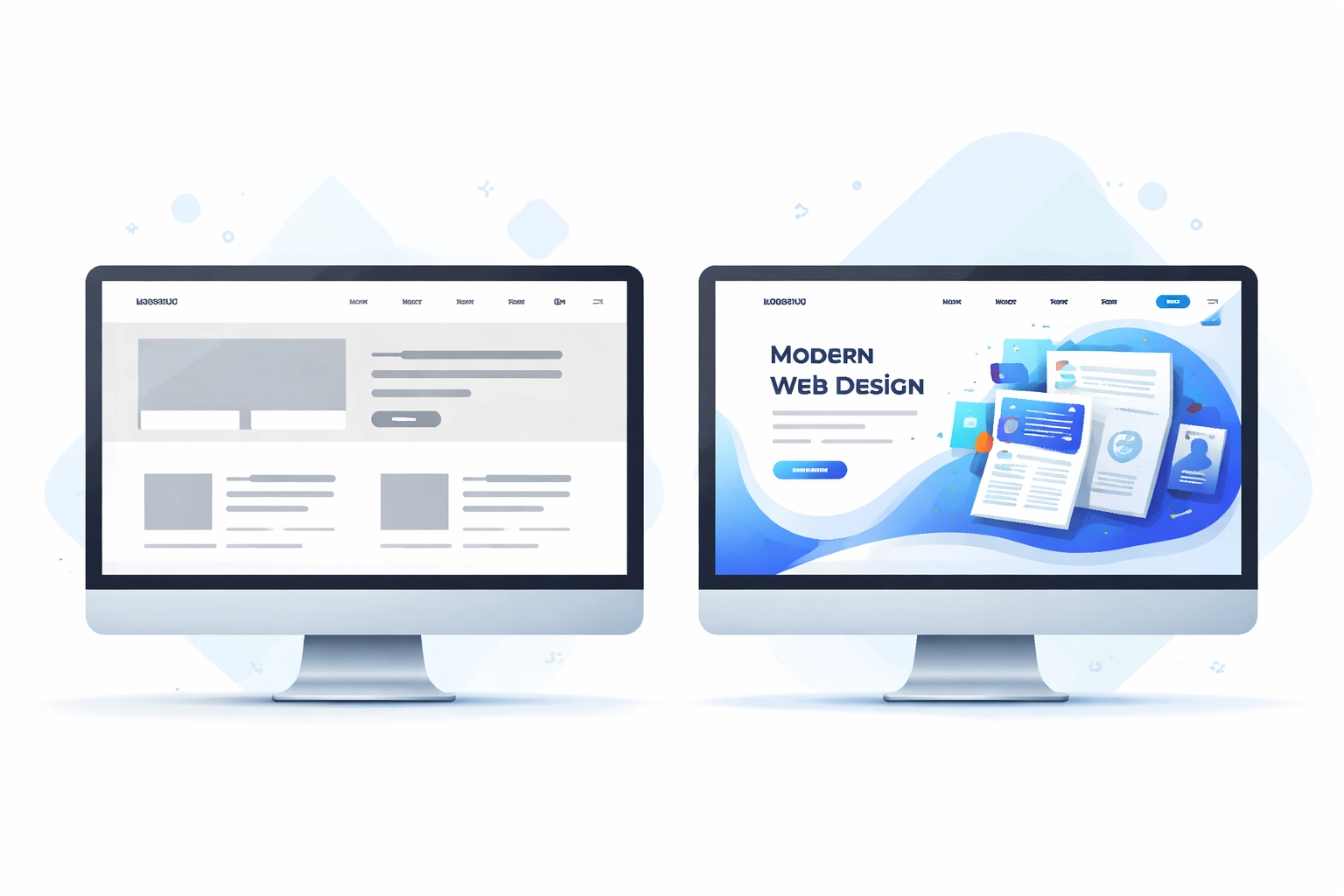
DIY templates are getting better. No argument there. But they're still templates. Thousands of other businesses are using the exact same layouts with the exact same limitations. Your site ends up looking like everyone else's site.
Professional design means everything is built around your brand specifically. The typography, the layout, the colors, the way users move through your pages. It's all intentional. It's all strategic. And it shows.
When a potential customer lands on your homepage, they're forming an opinion in seconds. A polished, custom design tells them you're established and trustworthy. A generic template site might have them clicking back to the search results.
Time Is Money (Literally)
Let's talk about something people often underestimate: time investment.
A professional designer can typically launch a standard business website in under three weeks once the project kicks off. They've done this before. They know the shortcuts. They know what works.
DIY projects? They commonly require 40 to 100 hours of work and often stretch past four weeks. And that's assuming you don't hit any major roadblocks.
Beyond just the build time, there's a serious learning curve with DIY platforms. You need to figure out the editor, understand components, install plugins, troubleshoot issues, and handle everything yourself. Every hour you spend wrestling with your website is an hour you're not spending on your actual business.
SEO and Technical Performance
Having a website is one thing. Having a website that actually shows up in search results is something else entirely.
Professional websites consistently deliver higher performance scores for SEO, accessibility, and technical compliance. Experienced designers understand how search engines work and build sites accordingly from the ground up.
DIY builders can achieve basic optimization but there's a ceiling. SEO best practices, responsive design, proper site structure, and security protocols aren't automatically baked in without expertise. You might think your site looks great on desktop but have you checked it on mobile? Have you tested load speeds? Do you know if your metadata is set up correctly?
If digital marketing and search visibility matter to your business, technical performance isn't optional. It's foundational.
Scalability: What Happens When You Grow
Your business today isn't the same as your business two years from now. At least that's the goal right?
DIY platforms start to struggle when you need to scale. Large product catalogs, complex site structures, high traffic volumes, membership systems, multi-language support, custom booking engines. These things either require clunky third-party plugins that may or may not work together or they're simply not available at all.
Professional websites are built with growth in mind. Need to add new functionality down the road? No problem. Need to handle ten times the traffic? Already accounted for. You're not going to hit a wall and realize you need to start over from scratch.
Ongoing Support and Maintenance
Websites aren't set it and forget it. They need regular updates, security patches, plugin maintenance, and occasional troubleshooting.
With DIY you're handling all of that yourself. When something breaks or stops working or gets hacked (yes it happens) you're on your own. Maybe there's a support forum. Maybe there's a chatbot. But there's no dedicated team watching your back.
Professional web design typically includes ongoing support and maintenance. Plugin updates, security monitoring, proactive fixes before problems become disasters. You get to focus on running your business while someone else keeps the technical side humming along.
So Which One Is Actually Right for You?
Here's the honest answer: it depends on where your business is right now.
DIY might make sense if:
- You're working with a minimal budget
- You're launching a short-term project or testing an idea
- You just need a basic online presence quickly
- Your website isn't a primary driver of business
Professional design is the better investment if:
- You have an established business pursuing growth
- Your website needs to build trust and generate leads
- You need scalability and room to expand
- You want to avoid technical headaches and focus on what you do best
- Your online presence directly impacts revenue
There's no shame in starting with DIY if that's what your situation calls for. But if you're serious about growth and your website is a core part of your strategy, professional design pays for itself over time.
Making the Decision
At the end of the day your website is often the first real interaction someone has with your business. It's your storefront, your salesperson, and your brand ambassador all rolled into one.
A DIY builder can get you online quickly and cheaply. But cheap and quick don't always equal effective. If your website matters to your bottom line, treating it like an investment rather than an expense changes everything.
Want to see what professional design actually looks like in practice? Check out some of our recent work to get a feel for what's possible.
Ready to have a real conversation about your website? We're happy to talk through your options and figure out what makes sense for your specific situation. Get in touch whenever you're ready.