

Voice search is changing how customers find businesses online. With 28% of consumers using voice assistants daily, ignoring this trend means missing out on a huge chunk of potential customers who could be looking for exactly what you offer.
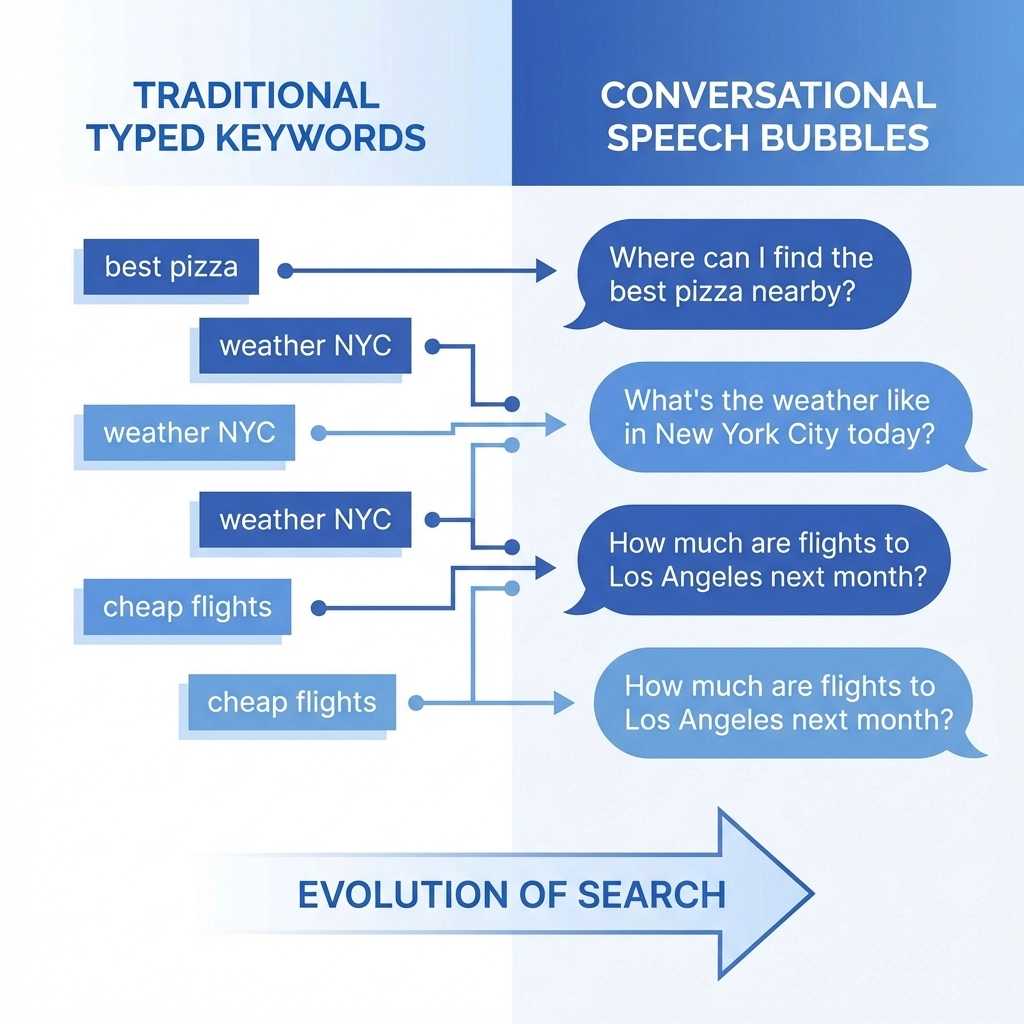
The shift isn't subtle either. People don't speak to their phones the same way they type into search bars. Instead of typing "pizza delivery," they're asking "Where can I get pizza delivered right now?" Your website needs to match this conversational style, or voice assistants will skip right over you.
Why Voice Search Matters for Your Business
Voice search optimization means adapting your website so voice assistants can easily find and read clear answers that match how people actually talk. When someone asks Siri or Alexa about your industry, you want to be the business they recommend.
The numbers tell the story. Voice searches often target local businesses, with 76% of users looking for nearby services. If your competitors are already optimizing for voice search and you're not, they're getting customers that should be finding you instead.

Focus on Conversational Keywords
Traditional SEO targeted short phrases like "web design services" or "digital marketing." Voice search requires a completely different approach. People ask complete questions when they speak.
Instead of optimizing for "restaurant reviews," you need to target "What's the best restaurant for a date night?" or "Which restaurants have the highest ratings?" These longer, question-based keywords mirror natural speech patterns.
Start by thinking about the actual questions your customers ask during sales calls or consultations. Those real conversations reveal the exact phrases people use when they're looking for your services. Write them down and build content around answering those specific questions.
Your keyword research should focus on high-intent conversational queries. Tools like AnswerThePublic show you the questions people actually ask about your industry. Use these insights to create content that directly addresses common concerns and needs.
Structure Content Around Questions
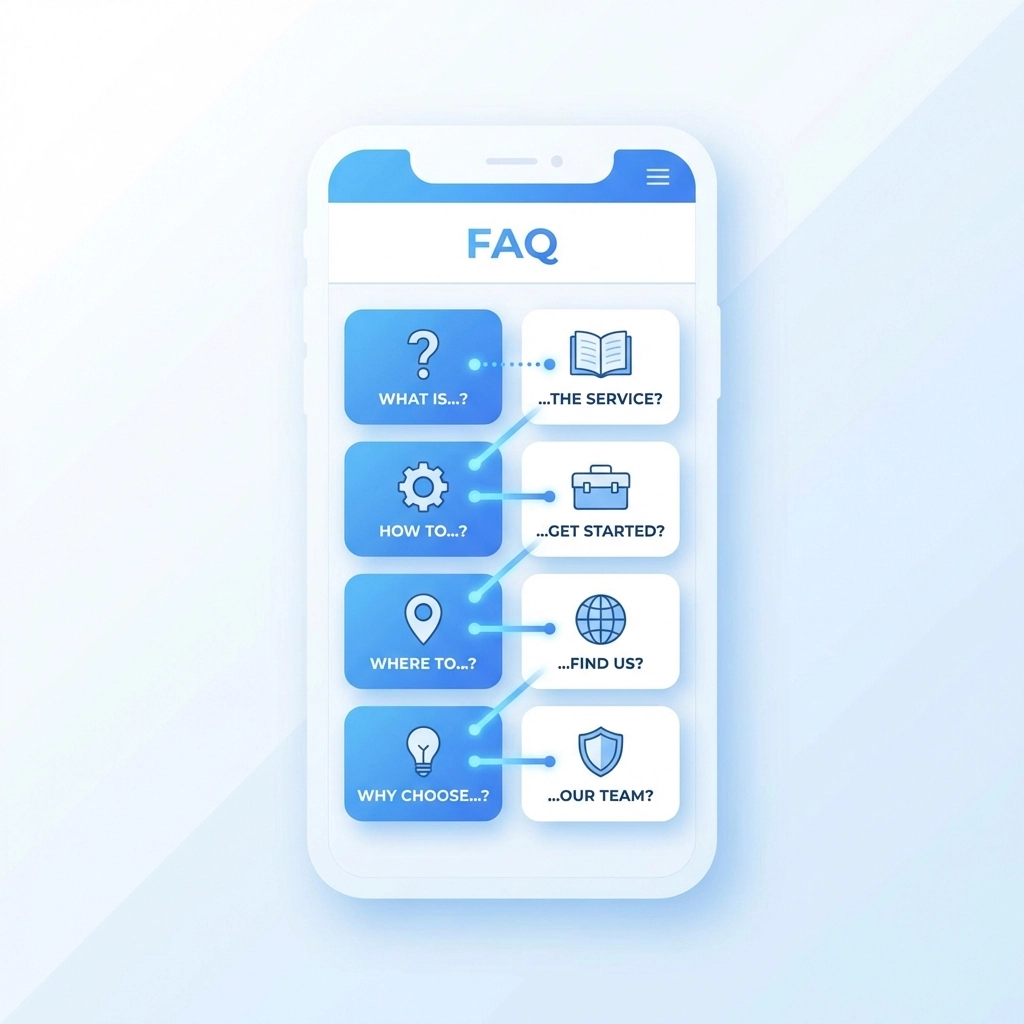
Voice assistants return concise answers to specific questions, so organize your content the same way. Create comprehensive FAQ sections that sound like real conversations rather than formal documentation.
Transform standard topics into question formats. Instead of a page titled "Our Services," create sections like "What services do we offer?" and "How can we help your business grow?" This approach matches how people naturally seek information.
Keep your answers between 30-40 words when possible. Voice assistants prefer concise responses they can read aloud quickly. Longer answers work too, but shorter ones have better chances of being selected as featured snippets.
Use headers strategically to signal question-based content. H2 and H3 tags that start with "What," "How," "Why," or "Where" help voice assistants understand your content structure and find relevant answers faster.
Master Local SEO Without Geographic Limits
Local optimization remains critical for voice search success, even if you serve customers nationwide. Voice searches often include location-specific intent, so your website needs to handle these queries effectively.
Claim and optimize your Google Business Profile completely. Fill out every field with accurate information including business hours, contact details, services offered, and business description. Upload high-quality photos and encourage customer reviews.
Create location-specific content that answers common questions about your service areas. Instead of just listing where you work, explain how your services benefit customers in different regions and what makes your approach unique for various market needs.
Build individual pages for each service area with unique content and embedded maps when relevant. Don't duplicate content across location pages – each should offer distinct value and answer specific questions about serving that market.
Customer reviews play a huge role in voice search results. Actively request reviews from satisfied customers and respond to all feedback professionally. Reviews often appear in voice search responses, giving you additional opportunities to showcase your reputation.
Technical Foundations That Actually Matter
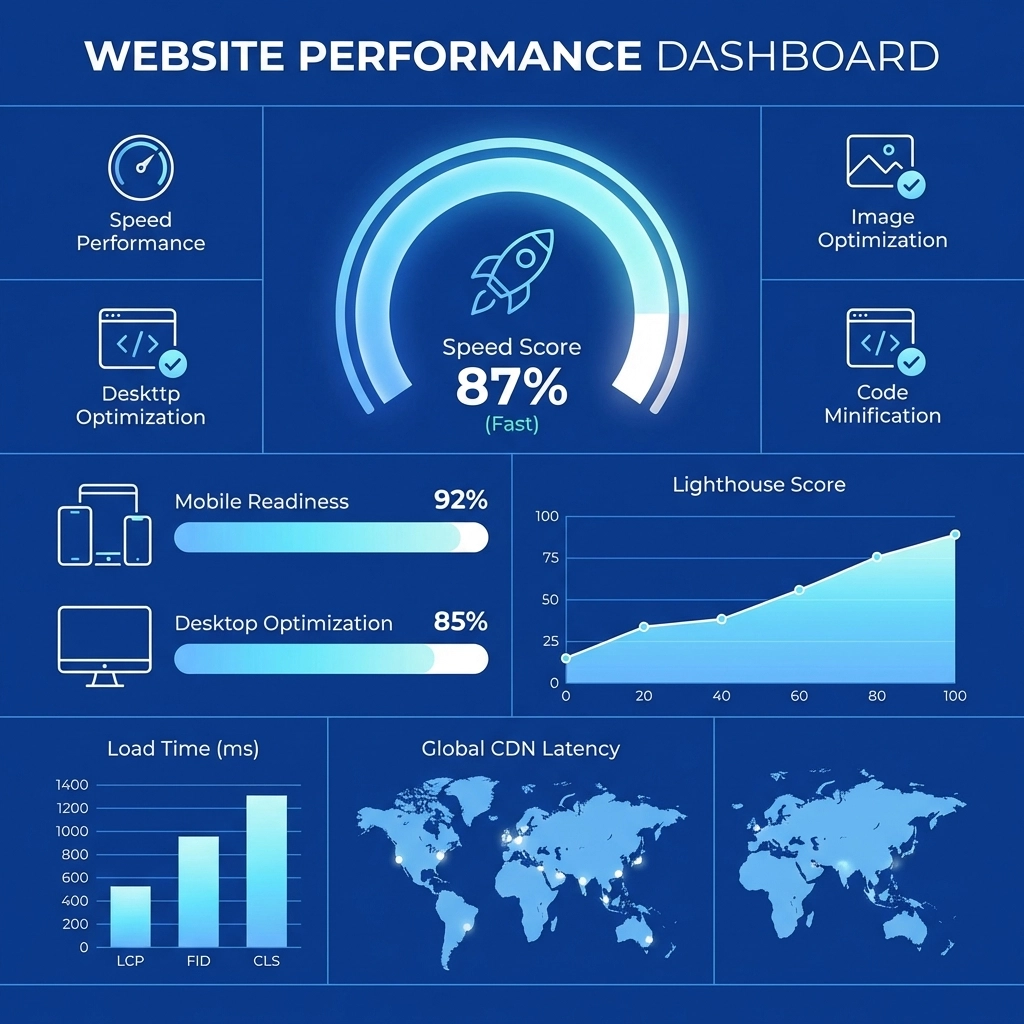
Your website's technical performance directly impacts voice search visibility. Voice assistants prioritize fast-loading, mobile-friendly sites that deliver quick answers to user questions.
Page load speed should stay under 2.5 seconds. Slow sites get skipped entirely by voice assistants who need to provide immediate responses. Use tools like Google PageSpeed Insights to identify and fix performance issues that could be costing you voice search traffic.
Mobile optimization isn't optional anymore. Voice searches happen primarily on mobile devices, so your site must work perfectly on phones and tablets. Test your website on various devices to ensure consistent functionality and fast loading across all platforms.
Write content that sounds natural when read aloud. Voice assistants will literally speak your content to users, so avoid overly technical jargon or complex sentence structures that sound awkward when spoken. Read your content out loud during the editing process to catch issues.
Implement Strategic Schema Markup
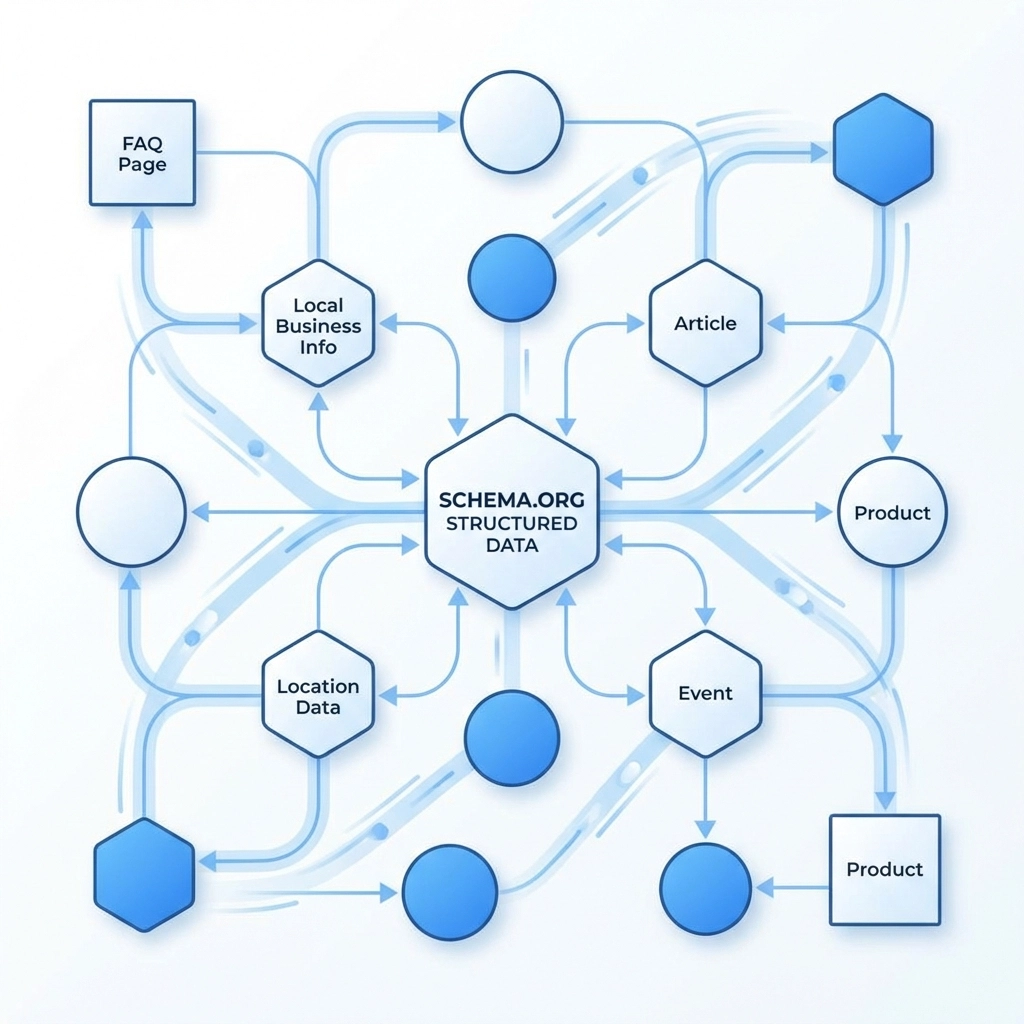
Schema markup helps voice assistants understand and categorize your content effectively. While technical, implementing the right structured data can significantly improve your voice search visibility.
Start with FAQPage Schema for your question-and-answer sections. This markup specifically tells voice assistants that your content contains questions and answers, making it more likely to appear in voice search results.
LocalBusiness Schema helps voice assistants understand your business details, location, and services. Even if you serve customers nationally, this markup helps voice search understand your business context and capabilities.
Speakable Schema designates content sections that work well for audio playback. Mark content sections that last 20-30 seconds when read aloud, as these perform best for voice responses.
Don't try to implement every type of schema at once. Focus on the three types mentioned above first, then expand your markup strategy as you see results and gain experience with structured data.
Create Content That Conversations Demand
Voice search users want immediate, helpful answers. Your content strategy should prioritize usefulness over keyword density or traditional SEO metrics.
Develop comprehensive resource pages that answer multiple related questions in one place. When someone asks about your services, they often have follow-up questions. Address the complete customer journey in your content.
Use natural language throughout your website. Write as if you're explaining your services to a friend rather than trying to impress search engines with technical terminology. This conversational approach works better for both voice search and user experience.
Test your content with voice search tools to see how it sounds when read aloud. Many AI tools now offer voice simulation features that let you hear how your content will sound to users receiving voice search responses.
Measuring Voice Search Success
Track your voice search optimization efforts through several key metrics. Monitor your featured snippet appearances, as these often become voice search answers.
Watch for increases in conversational long-tail keyword rankings. These phrases typically indicate voice search traffic even when analytics don't specifically separate voice from traditional search visits.
Pay attention to local search performance improvements. Better local search visibility often correlates with improved voice search results for location-based queries.
Monitor customer feedback and inquiries to see if people are finding you through voice search. Many customers won't mention how they found you unless specifically asked, but patterns in inquiry types can reveal voice search influence.
Getting Started Today
Begin with a content audit focused on question-based opportunities. Identify pages where you can easily add FAQ sections or transform existing content into conversational formats.
Optimize your Google Business Profile immediately if you haven't already. This free step provides quick wins for local voice search visibility and costs nothing but time.
Choose one service page to optimize completely for voice search as a test case. Add conversational keywords, create FAQ sections, implement schema markup, and monitor the results before expanding to other pages.
Voice search optimization doesn't require a complete website overhaul. Start with these fundamental changes and build your strategy over time. The businesses that begin adapting now will have significant advantages as voice search continues growing.
Your competition might not be optimizing for voice search yet, giving you an opportunity to capture market share by being early to adapt. The strategies outlined here provide a solid foundation for voice search success without requiring massive technical expertise or budget.
Ready to optimize your website for voice search? Our web design and development team can help implement these strategies effectively while maintaining your current search rankings.