
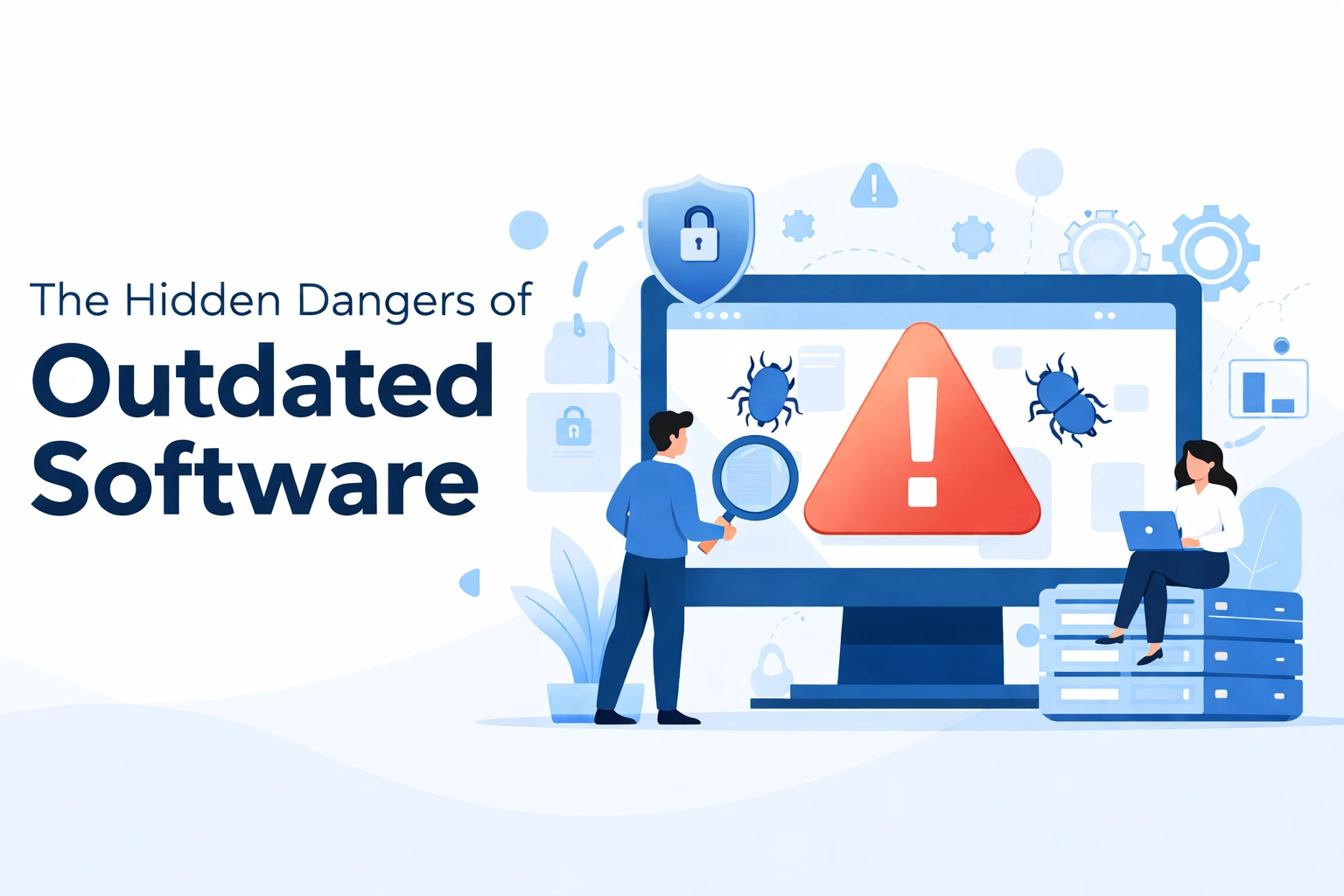

That notification pops up again. "Updates available." You click "remind me later" and get back to work. We've all done it. Updates feel like interruptions, and when everything seems to be running fine, why bother?
Here's the thing though: that small decision to delay can open doors you didn't know existed. And not in a good way.
Outdated software is one of the most common entry points for cyberattacks. It's not dramatic. It's not the stuff of movies. It's just a quiet vulnerability sitting on your network, waiting for someone to notice.
Why Outdated Software Is a Bigger Deal Than You Think
Software companies release updates for a reason. Sure, some updates add new features or improve performance. But many of them exist to patch security holes that hackers have already discovered.
When software reaches its end-of-life stage, the company stops releasing those patches entirely. Your system still works, but it's essentially running with the doors unlocked.
Research shows that an average end-of-life software image accumulates 218 new vulnerabilities every six months after support ends. That's not a typo. Every six months, hundreds of new ways for attackers to get in.
Even worse, nearly 46% of known exploited vulnerabilities tracked by CISA are linked to end-of-service software. Vulnerabilities in outdated systems are four times more likely to be weaponized by attackers compared to current software.
The Real-World Consequences
Let's break down what can actually happen when outdated software gets exploited.
Ransomware Attacks
Organizations with poor patching practices face dramatically elevated risk. Studies show that businesses with a patching grade of D or F are more than seven times more likely to experience a ransomware event compared to those with an A grade.
Ransomware encrypts your data and holds it hostage. Operations grind to a halt. Revenue stops. And paying the ransom doesn't guarantee you'll get your data back.
Data Breaches
Without current security updates, your systems become easy targets for data theft. Attackers can slip in undetected, access sensitive information, and either sell it or use it against you.
Sometimes they don't even steal data right away. They install tools like cryptomining software that run quietly in the background, using your resources for their gain. You might not notice anything is wrong until your systems slow to a crawl: or until the damage is done.
Network-Wide Exposure
Here's where it gets really concerning. Outdated software on any connected device can expose your entire network. One vulnerable computer, one unpatched server, one forgotten IoT device: that's all it takes.
Your systems don't exist in isolation. They're connected to vendors, cloud services, and third-party tools. A vulnerability anywhere in that chain can become your problem.

Why This Keeps Happening
If outdated software is so dangerous, why do so many organizations still run it?
A few reasons:
Updates feel disruptive. Downtime is expensive. IT teams often prioritize keeping systems running over applying patches that might cause temporary issues.
Visibility is limited. Legacy components get buried in applications and infrastructure. Security teams can't protect what they can't see. This creates an "out of sight, out of mind" situation where technical debt accumulates silently.
Budgets are tight. Replacing old systems costs money. When something still technically works, it's easy to push the upgrade to next quarter. Then next year. Then...never.
Compatibility concerns. Sometimes newer software doesn't play nice with existing systems. Organizations worry that updating one thing will break another.
These are all understandable reasons. But they don't change the math. The cost of a breach almost always exceeds the cost of staying current.
The Compliance Factor
Beyond the direct security risks, outdated software creates compliance problems.
Most regulatory frameworks: whether you're dealing with healthcare data, financial information, or customer privacy: require current security standards. Running unsupported software typically fails to meet those requirements.
The penalties for non-compliance can be significant. But the reputational damage might be worse. When clients find out their data was compromised because you were running software from 2018, that trust is hard to rebuild.

What You Can Do About It
The good news: this is a solvable problem. Here's how to approach it.
Conduct a Software Inventory
You can't fix what you don't know about. Start by cataloging every piece of software running across your organization. Include operating systems, applications, plugins, and firmware on network devices.
Pay special attention to anything that's reached end-of-life status. These are your highest-priority vulnerabilities.
Create a Patching Schedule
Updates shouldn't happen randomly or "when we get around to it." Establish a regular patching schedule and stick to it. Critical security patches should be applied as quickly as possible: ideally within days of release.
For less urgent updates, a monthly cycle often works well. The key is consistency.
Plan for End-of-Life Transitions
When software approaches its end-of-life date, you need a plan. Will you upgrade to a newer version? Migrate to a different solution? Replace the system entirely?
Start this conversation early. Rushed transitions create their own risks.
Implement Compensating Controls
Sometimes you can't immediately replace a legacy system. Budget constraints, compatibility issues, or operational requirements might force you to keep running outdated software temporarily.
In those cases, implement compensating controls:
- Network segmentation to isolate vulnerable systems
- Virtual patching through web application firewalls
- Stricter access controls limiting who can interact with the system
- Enhanced monitoring to catch suspicious activity quickly
These measures don't eliminate the risk, but they reduce it while you work toward a permanent solution.
Consider Managed IT Support
Keeping up with patches, monitoring for vulnerabilities, and managing software lifecycles takes time and expertise. For many organizations, partnering with a managed IT support provider makes more sense than trying to handle everything in-house.
A good partner handles the tedious work of patch management, provides visibility into your software inventory, and helps you plan for upgrades before they become emergencies. They're watching your systems so you can focus on running your business.

The Bottom Line
Outdated software isn't just an IT inconvenience. It's a genuine business risk that grows more dangerous every day you ignore it.
The attackers aren't going away. They're actively scanning for vulnerable systems, and outdated software is exactly what they're looking for. Every "remind me later" click is another day of exposure.
The fix isn't complicated. It just requires attention, planning, and follow-through. Conduct your inventory. Establish your patching schedule. Plan your transitions. And if you need help, get support from people who do this every day.
Your future self: and your clients: will thank you.
Need help assessing your current software security posture? Reach out to our team for a conversation about where you stand and what comes next.