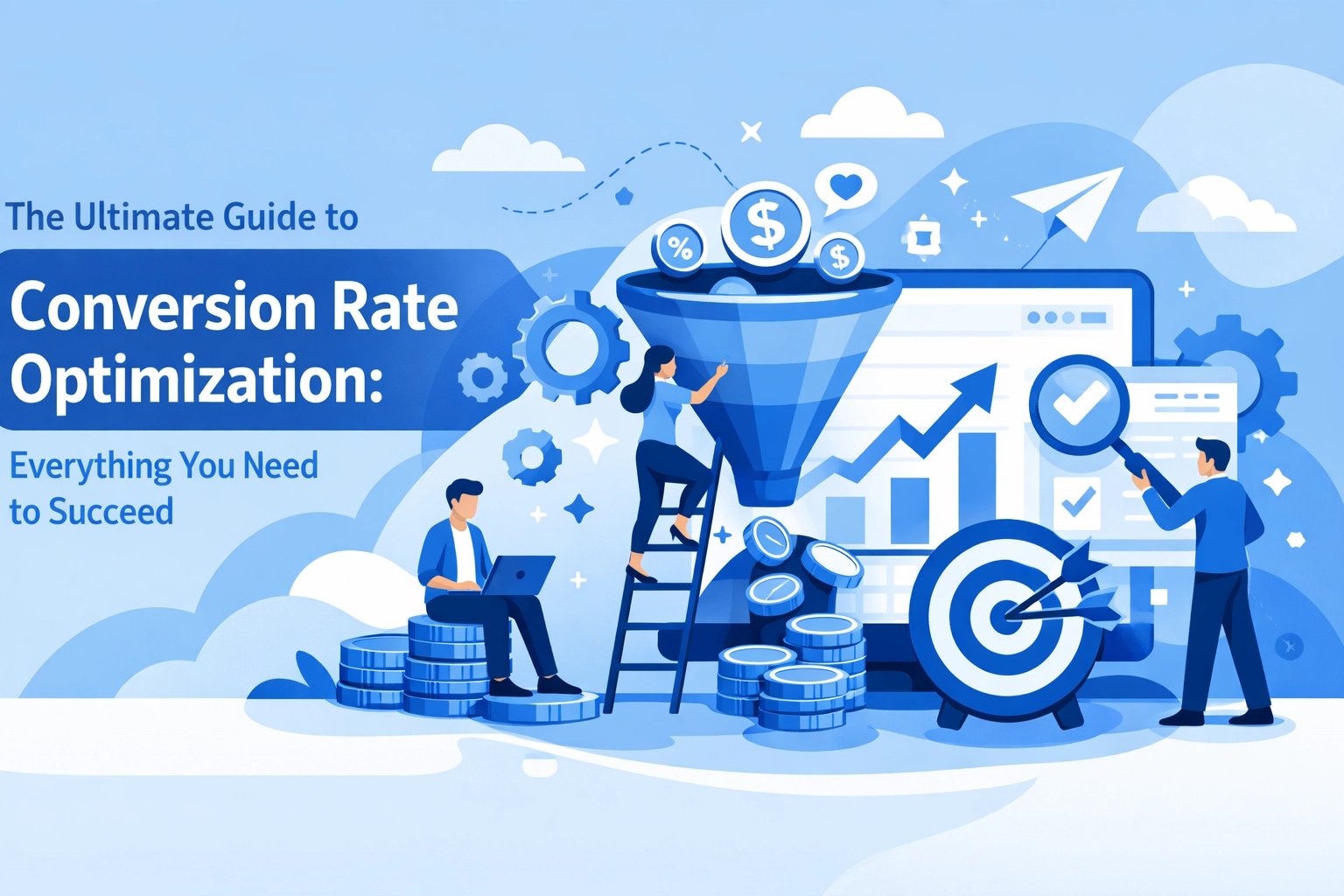

You spend a lot of time and money getting people to your website. You run ads, you post on social media, and you work on your SEO. But if those visitors show up and leave without doing anything, you are wasting your resources. This is where Conversion Rate Optimization (CRO) comes in. It is the process of making your website more effective at turning visitors into customers.
CRO is not about guessing what might work. It is about using data to understand why people are not taking action and then fixing those problems. Whether you want more sales, more newsletter signups, or more lead form completions, a solid digital marketing strategy is essential.
What Exactly is Conversion Rate Optimization
At its core, CRO is the systematic process of increasing the percentage of website visitors who take a specific action. That action could be buying a product, filling out a contact form, or clicking a specific button. You calculate your conversion rate by taking the number of conversions and dividing it by the total number of visitors.
If 100 people visit your site and 2 people buy something, your conversion rate is 2%. If you can move that to 4%, you have doubled your business without spending an extra cent on traffic. This is why CRO is often the highest ROI activity you can perform for your brand.
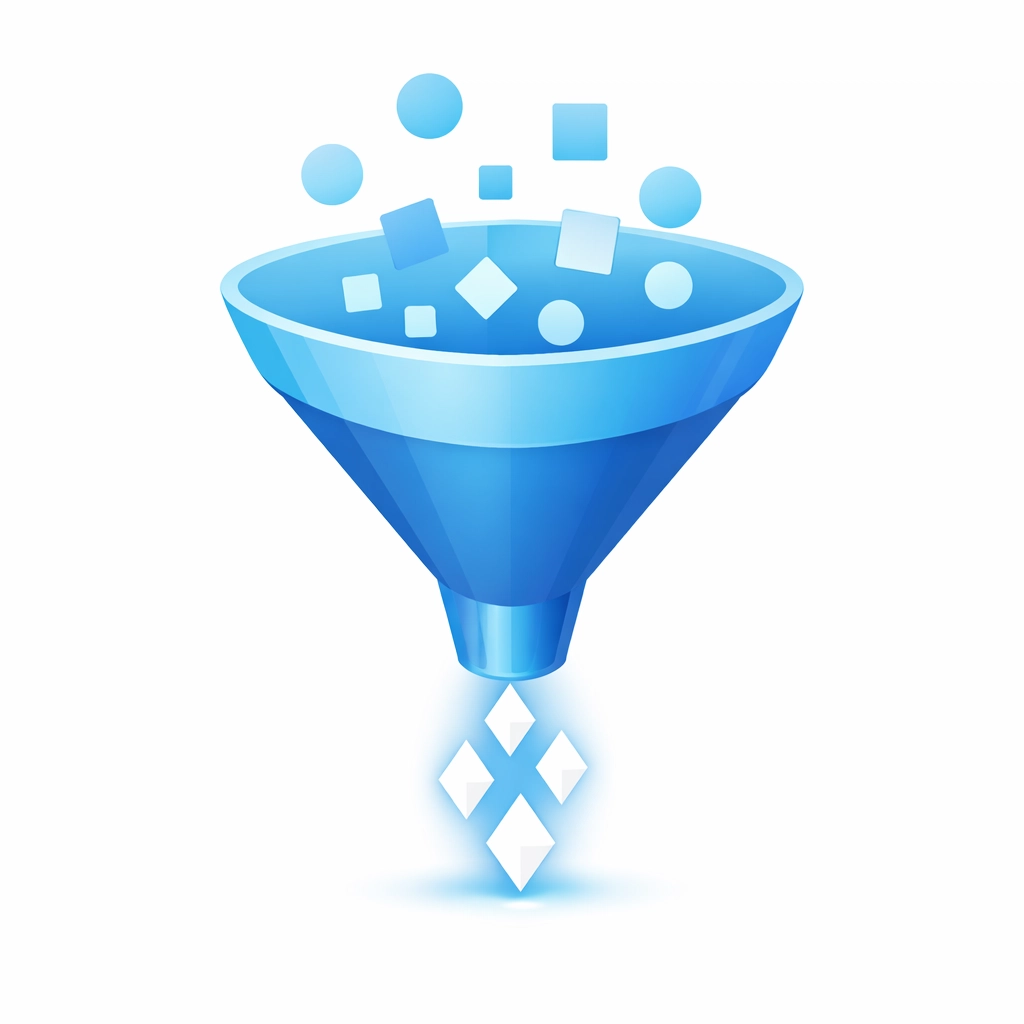
The Core CRO Process
You cannot just change button colors and hope for the best. You need a structured methodology to see real results. Here is the framework we suggest you follow
1. Research and Data Gathering
You need to know what is happening on your site right now. Use tools like Google Analytics 4 to see where people drop off. Use heat maps and session recordings to see where they get stuck. This research tells you the "what" and the "where" of your conversion problems.
2. Formulating a Hypothesis
Based on your research, make an educated guess about what will fix the problem. For example, if you found that people are leaving the checkout page at the shipping info step, your hypothesis might be that the shipping costs are too high or the form is too long.
3. Prioritizing Tests
You cannot fix everything at once. Focus on high-traffic pages or pages that are performing the worst. These areas offer the biggest potential for immediate gains. If you need help identifying these areas, our marketing team can help analyze your data.
4. Design and Build
Create the new version of the element you want to test. This could be a new headline, a simplified form, or a different layout for a product page.
5. Testing
Run A/B tests. This means showing version A (the original) to half your visitors and version B (the new version) to the other half. Gather enough data to be sure the results are not just a fluke.
6. Learn and Iterate
Analyze the results. If version B won, implement it. If it lost, figure out why and try a different hypothesis. This loop never really ends because there is always room to improve.
Clear and Compelling Calls to Action (CTAs)
Your CTA is the most important element on the page. It is the bridge between a visitor being interested and a visitor taking action. If your CTA is weak, your conversion rate will suffer.
To make a CTA effective, you must be specific. Instead of "Submit," use "Get My Free Quote" or "Start My Trial." Use action words that drive engagement. You also want to create a sense of urgency. Words like "Now" or "Today" encourage people to stop scrolling and start clicking.
Visuals matter too. Your CTA button should stand out from the rest of the page. Use contrasting colors and plenty of whitespace around the button so it is impossible to miss. If your current site design makes buttons hard to find, it might be time for a professional web design refresh.

Reducing Friction in the User Journey
Friction is anything that prevents a user from moving forward. It could be a slow loading speed, a confusing menu, or a form with twenty fields. Your job is to make the path to conversion as smooth as possible.
Start by mapping out your funnel. Look at every step from the landing page to the thank-you page. If a step is not absolutely necessary, remove it. For forms, only ask for the info you really need. If you just need an email to send a whitepaper, do not ask for a phone number and job title.
Progressive disclosure is another great tool. Instead of showing a giant form all at once, show one or two questions at a time. This makes the task feel less daunting and keeps the user engaged.
The Power of Personalization
In 2026, visitors expect a personalized experience. They do not want to see generic offers that have nothing to do with their interests. You can use behavioral data to show relevant products or content based on what they looked at during previous visits.
You can also segment your audience by location or device. Someone visiting your site on a phone might need different information than someone on a desktop. Personalizing landing pages based on the specific ad campaign that brought them there is another way to boost relevance and trust.
Landing Page Optimization Tactics
A landing page has one job: to get a conversion. It should be free of distractions. This means removing the main site navigation so the user stays focused on the offer.
Your headline needs to be benefit-driven. It should immediately answer the question, "What is in it for me?" Use visual hierarchy to guide the user's eye naturally from the headline to the supporting copy and finally to the CTA.
Consistency is also key. If your ad promises a 20% discount, the landing page must feature that discount prominently. If the messaging does not match, users will feel misled and leave immediately. If you are struggling with landing page performance, our web development services can help build high-converting templates.

Using Social Proof and Trust Signals
People are social creatures. They are more likely to do something if they see others are doing it too. This is why social proof is so effective for CRO.
Include testimonials and reviews on your most important pages. Do not just put them on a separate "Testimonials" page where no one will see them. Place them near your CTAs to provide that final nudge of confidence.
Trust signals are also vital. This includes security badges, money-back guarantees, and logos of well-known clients you have worked with. If people do not feel safe on your site, they will not give you their credit card info or personal details. Ensuring your site is secure starts with reliable web hosting and proper security protocols.
Mobile Optimization is No Longer Optional
Most of your traffic likely comes from mobile devices. If your site is hard to use on a smartphone, you are losing more than half of your potential conversions.
Mobile optimization means more than just having a responsive design. It means having buttons that are easy to tap with a thumb. It means ensuring text is legible without zooming. It also means offering mobile-friendly payment options like Apple Pay or Google Pay to simplify the checkout process.
If your mobile experience is lagging behind, consider looking into mobile app development or specialized mobile web optimization to capture that audience.

Data-Driven Decision Making Tools
You cannot manage what you do not measure. To succeed at CRO, you need the right tools in your stack.
- Google Analytics 4: This is the baseline for tracking behavior and funnel performance
- Heatmaps (like Hotjar): These show you exactly where users click, scroll, and move their mice
- Session Recordings: Watch real users navigate your site to see where they get confused
- A/B Testing Software: Tools that allow you to swap elements and track the winner
Review your performance regularly. Set clear KPIs like bounce rate, click-through rate, and form completion rate. If you notice a sudden drop in any of these, you know exactly where to start your next round of research.
Common CRO Mistakes to Avoid
Even experts make mistakes. One of the most common is testing too many things at once. If you change the headline, the image, and the button color all in one test, you will not know which change caused the result.
Another mistake is ignoring qualitative data. Numbers tell you what is happening, but talking to your customers tells you why. Use surveys and user testing to get the full story.
Finally, do not copy your competitors blindly. What works for them might not work for your specific audience. Always test your own hypotheses based on your own data.
Putting It All Together
Conversion Rate Optimization is an ongoing journey, not a one-time project. The digital landscape changes, user habits evolve, and your website needs to keep up. By following a data-driven process and focusing on the user experience, you can turn your website into a powerful sales machine.
If you are ready to stop leaving money on the table and want a professional team to handle your optimization, we are here to help. From technical computer support to full-scale digital marketing, WorldWise has the expertise to grow your brand.

You can check out our portfolio to see how we have helped other businesses succeed or get started with us today to see what we can do for your conversion rates. If you have specific questions about our process, feel free to visit our support page or reach out via our contact page directly.