

Your website gets visitors, but they're not turning into customers. Sound familiar? You're not alone. Most business websites treat visitors like window shoppers instead of potential buyers ready to take action.
The good news? Converting visitors into customers isn't about luck or magic. It's about strategic design choices that guide people toward the actions you want them to take. In 2026, successful websites focus on performance over pretty pictures, and results over creative awards.
The Shift from Pretty to Profitable
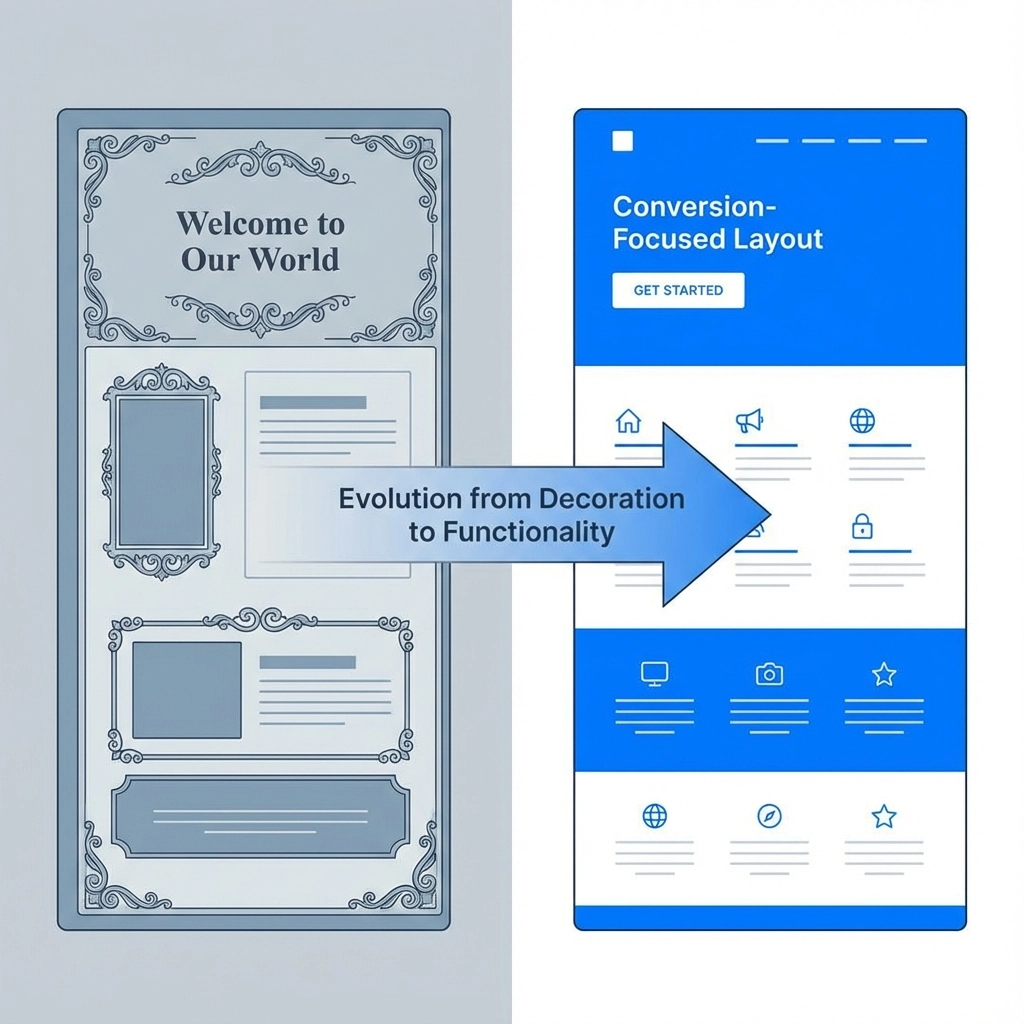
Website design has fundamentally changed. The days of treating your site like a digital brochure are over. Today's high-converting websites work like sales systems, not art galleries.
This means every design element serves a purpose. Every color choice, every button placement, every piece of text should move visitors closer to becoming customers. If something doesn't contribute to conversions, it's taking up valuable space.
Mobile-First Strategy That Actually Works
Your mobile experience determines your conversion success. Period. More than half your visitors use mobile devices, and they expect your site to work perfectly on their screens.
Mobile-first design starts with mobile wireframes, then expands to desktop. This approach forces you to prioritize what matters most because mobile screens have limited space. You can't hide poor navigation or weak messaging behind fancy graphics when working with small screens.
Key mobile conversion factors: • Touch-friendly buttons (minimum 44px) • Fast loading speeds (under 3 seconds) • Simplified navigation menus • Easy-to-read text without zooming • Streamlined checkout processes
AI-Powered Personalization for 2026
Modern websites adapt to each visitor in real-time. AI analyzes visitor behavior, traffic sources, and browsing patterns to show personalized content that increases conversion rates by 15-30%.
Instead of showing every visitor the same homepage, smart websites display different experiences based on: • How visitors found your site (search, social, referral) • Whether they're new or returning customers • What device they're using • What pages they've visited before
This level of personalization used to require massive budgets. Now it's accessible for businesses of all sizes through modern web design platforms and tools.
Conversion-Focused Layout Principles
High-converting websites follow predictable patterns. These layouts aren't accidents – they're based on how people actually browse websites and make buying decisions.
Above the fold essentials: • Clear value statement within 3 seconds • Primary call-to-action button • Trust indicators (testimonials, logos, credentials) • Navigation that makes sense to visitors
Content flow strategy: • Lead with benefits, not features • Address common objections early • Use social proof throughout • Create logical paths to conversion
Your layout should answer three questions immediately: What do you offer? Why should I trust you? What do I do next?

Trust Signals That Convert Skeptics
Trust kills more conversions than poor design. Visitors need reasons to believe you'll deliver what you promise before they share contact information or make purchases.
Effective trust signals include: • Real customer photos and testimonials • Professional credentials and certifications • Clear contact information and physical address • Secure payment badges and SSL certificates • Money-back guarantees or service warranties • Recent customer reviews and ratings
Place trust signals near conversion points where visitors make decisions. A testimonial next to your contact form works better than testimonials buried on a separate page.
Strategic Call-to-Action Placement
Your call-to-action (CTA) buttons determine conversion success. Most websites fail here by using weak language, poor placement, or too many competing options.
CTA best practices for 2026: • Use action-oriented language ("Get Started," "Schedule Consultation") • Make buttons visually prominent with contrasting colors • Limit choices to avoid decision paralysis • Place CTAs where visitors expect them • Test different button colors and text regularly
Avoid generic phrases like "Submit" or "Click Here." Your CTA should tell visitors exactly what happens when they click.
Performance Optimization That Converts
Website speed directly impacts conversion rates. For every second your site takes to load, you lose potential customers. In 2026, fast isn't optional – it's baseline expectation.
Speed optimization priorities: • Compress and optimize all images • Minimize JavaScript and CSS files • Use content delivery networks (CDNs) • Choose fast, reliable hosting • Remove unnecessary plugins and widgets

Professional web hosting and optimization can dramatically improve your conversion rates by ensuring your site loads quickly for all visitors.
Micro-Interactions That Guide Action
Subtle design elements can significantly impact user behavior. Micro-interactions – small animations and feedback elements – help guide visitors toward conversion actions without being distracting.
Effective micro-interactions include: • Button hover effects that invite clicking • Form field highlights that show active areas • Progress indicators for multi-step processes • Confirmation messages after form submissions • Scroll-triggered content reveals
The key is restraint. Too many animations create cognitive overload and slow down your site. Use motion purposefully to direct attention toward conversion goals.
SEO and Conversion Alignment
Your website needs to attract the right visitors and convert them effectively. This means aligning your search engine optimization strategy with conversion goals.
Structure your content around buyer intent: • Target keywords that indicate purchase readiness • Create landing pages for specific search queries • Use descriptive navigation labels • Write meta descriptions that encourage clicking • Organize content to match the buyer's journey
When SEO and conversion optimization work together, you attract qualified visitors who are more likely to become customers.
Testing and Continuous Improvement
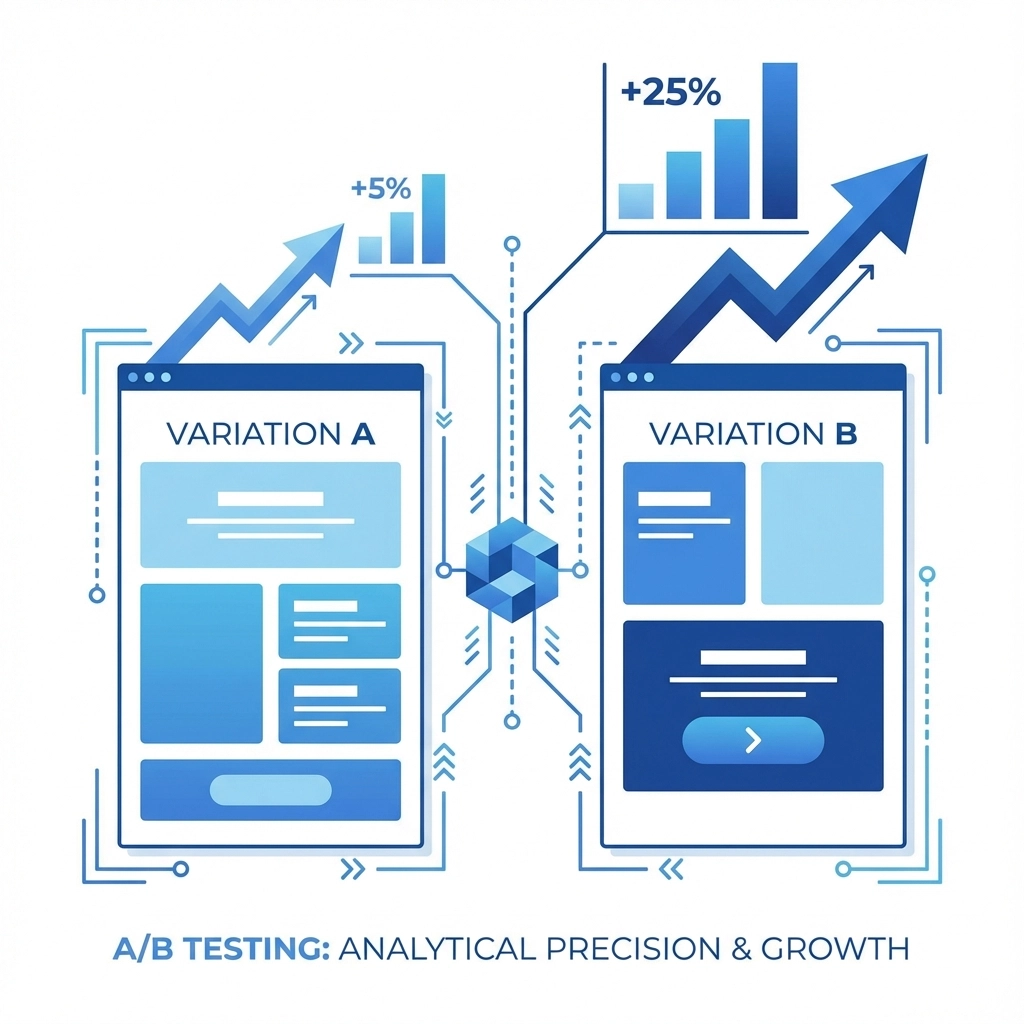
Conversion optimization never ends. The highest-performing websites continuously test different elements to improve results over time.
Start testing these elements: • Headlines and value propositions • Call-to-action button colors and text • Form fields and lengths • Page layouts and content organization • Trust signal placement
Small improvements compound over time. A 2% conversion rate increase might seem small, but it doubles your results if your current rate is 2%.
Implementation Strategy for 2026
Don't try to implement everything at once. Start with the elements that will have the biggest impact on your specific business goals.
Phase 1: Foundation • Ensure mobile responsiveness • Optimize page loading speeds • Add clear calls-to-action • Include basic trust signals
Phase 2: Optimization • Implement conversion tracking • A/B test key elements • Add personalization features • Refine content for buyer intent
Phase 3: Advanced Features • AI-powered recommendations • Dynamic content personalization • Advanced analytics and automation • Continuous optimization processes
Working with Conversion Experts
Converting visitors into customers requires both strategic thinking and technical implementation. Many businesses benefit from working with experienced digital marketing professionals who understand both design and conversion psychology.
The right team can audit your current site, identify conversion bottlenecks, and implement improvements that deliver measurable results. This approach often provides faster returns than trying to learn and implement everything yourself.
Measuring Success
Track metrics that matter for your business goals. Common conversion metrics include: • Overall conversion rate percentage • Cost per conversion • Average order value • Email signup rates • Phone calls generated • Form completion rates
Focus on metrics that directly impact your bottom line, not just vanity metrics like page views or time on site.
The Bottom Line
Converting website visitors into customers in 2026 requires strategic thinking, not just good design. Focus on mobile-first experiences, build trust with your visitors, optimize for speed, and continuously test improvements.
Your website should work as hard as your best salesperson. When you align design decisions with conversion goals, you create a powerful tool that generates customers while you sleep.
The businesses winning online treat their websites as conversion systems that can be measured, optimized, and improved over time. Start with the basics, measure your results, and keep refining your approach based on what actually works for your specific audience.