
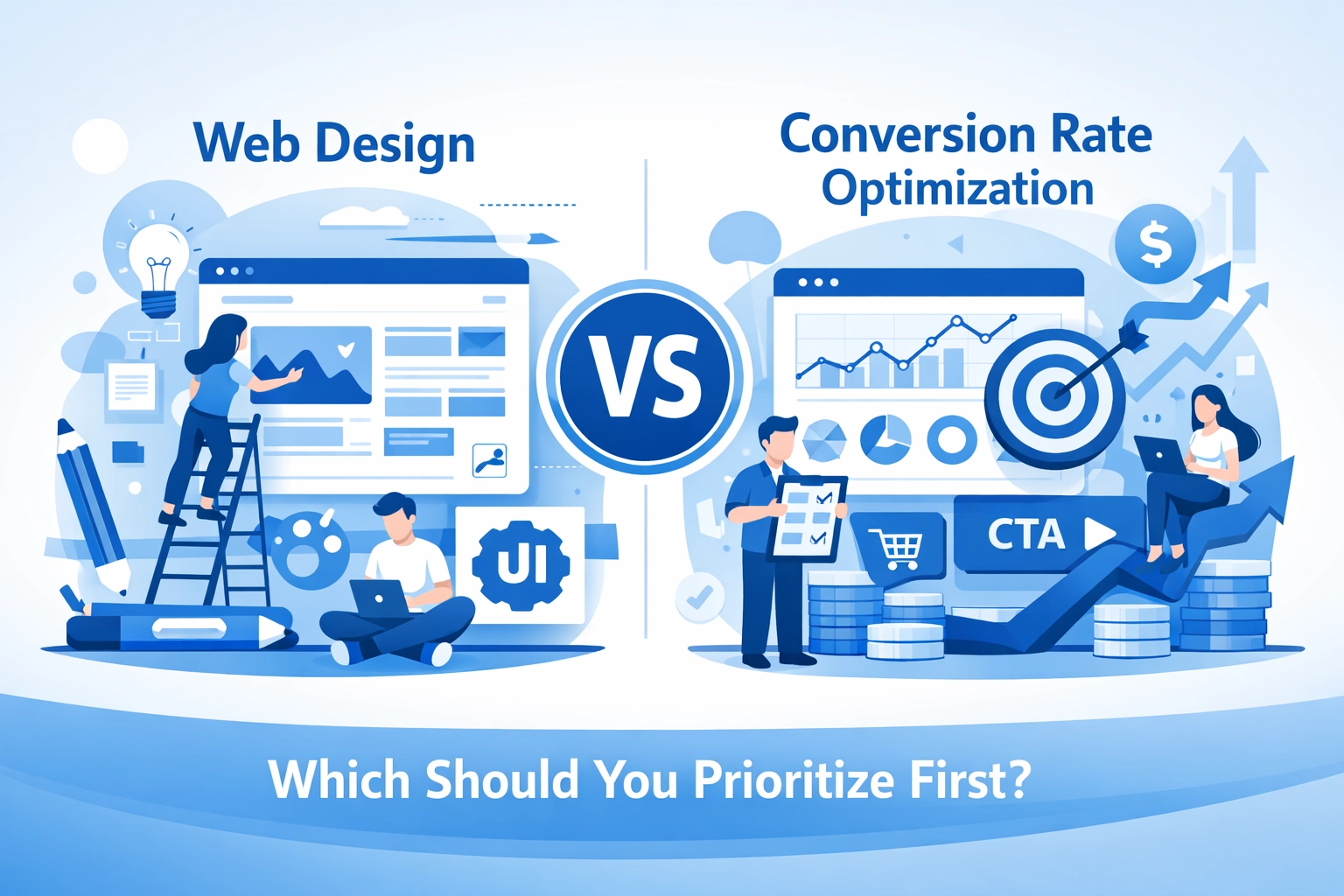

You're staring at your website analytics and the numbers aren't pretty. Traffic is decent, but conversions are terrible. Now you're stuck wondering: should you redesign the entire site or focus on optimizing what you already have?
Here's the truth most agencies won't tell you, this isn't actually an either/or situation. The question isn't which one to prioritize. It's understanding how they work together.
Why Web Design Matters for Conversions
Let's start with the foundation. Your website design isn't just about looking pretty. It's the structural framework that determines whether visitors can even complete the actions you want them to take.
Think about it this way, if your site loads slowly, has confusing navigation, or looks broken on mobile devices, no amount of conversion optimization will fix those problems. You're trying to patch holes in a sinking ship.
The data backs this up. When page load time increases from one second to five seconds, your bounce probability jumps 90%. A single second delay can reduce conversions by 7%. That's not a small number when you're talking about revenue.
Poor web design creates friction. Visitors can't find what they need. Buttons don't work on their phones. Forms are impossible to fill out. They leave before giving you a chance.
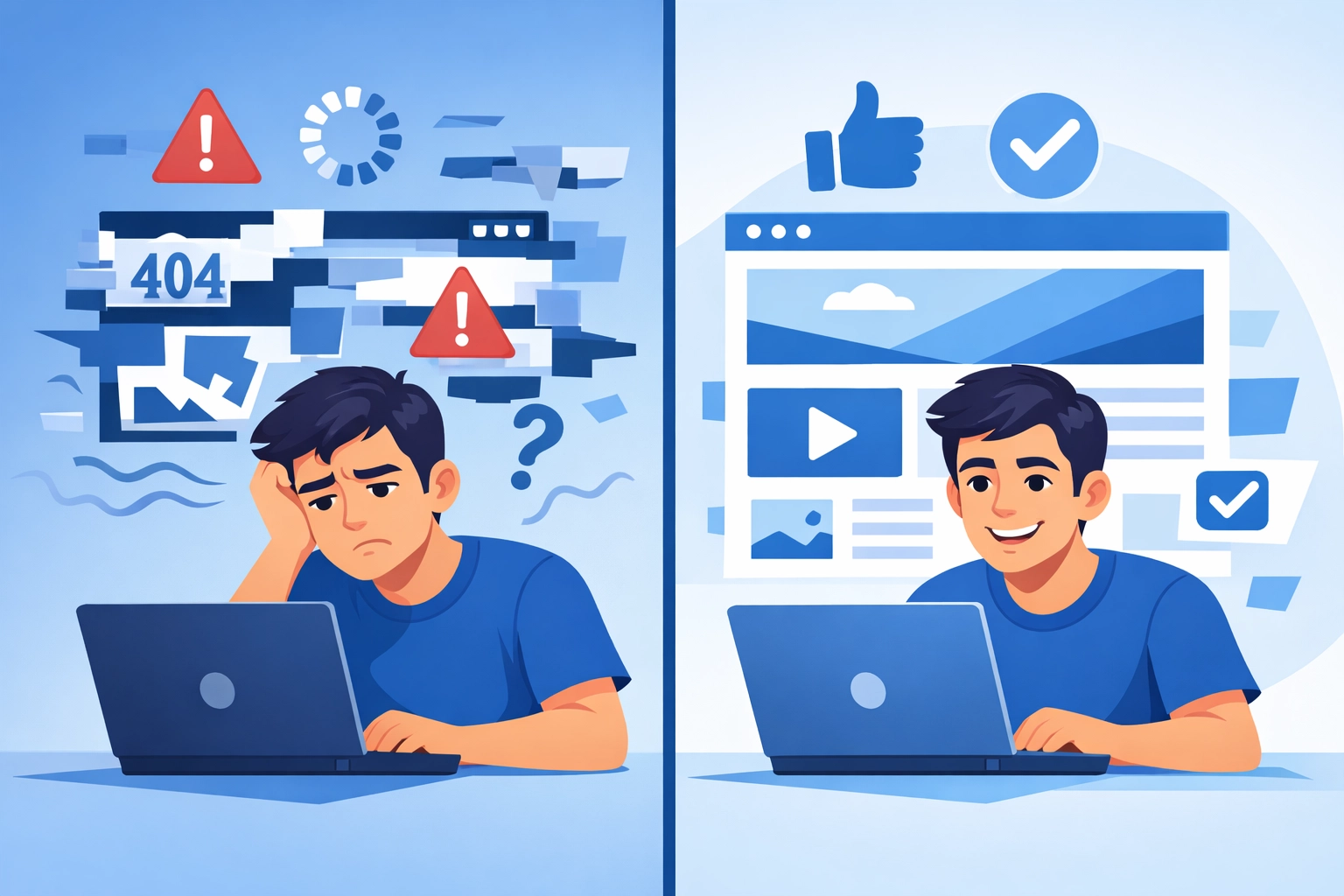
Good design removes that friction. Fast loading speeds, clear navigation, responsive layouts that work on any device, readable fonts, strategic placement of calls-to-action, these aren't optional extras. They're the baseline requirements for any conversion to happen.
What Conversion Rate Optimization Actually Does
Now let's talk about conversion rate optimization. CRO is the process of systematically improving specific elements on your site to increase the percentage of visitors who take desired actions.
This is where you get tactical. You're testing button colors, tweaking headline copy, adjusting form fields, changing image placements, and refining your messaging. You're using data to figure out what motivates your specific audience to convert.
CRO focuses on the psychological and behavioral aspects of the user experience. Why do people click here but not there? What language resonates? Which offer presentation works best? What objections need to be addressed before someone submits a form?
The beauty of CRO is that it drives immediate, measurable results. Landing page optimization can improve conversions by 10-14%. Reducing distractions and including clear contact details makes a real difference. Small changes compound into significant improvements.
But here's the catch: CRO only works when you have a solid foundation to optimize. You can't A/B test your way out of fundamental design problems.
They're Not Competitors, They're Partners
This is where most businesses get it wrong. They treat web design and conversion rate optimization like competing priorities. In reality, they're two sides of the same coin.
Web design provides the infrastructure. CRO maximizes the effectiveness of that infrastructure.
Think of it like building a store. Web design is the construction: the layout, the lighting, the accessibility, the infrastructure that makes shopping possible. CRO is the merchandising strategy: product placement, signage, promotional tactics that drive purchases once customers are inside.

You wouldn't build a store with no doors and then try to optimize the product displays. That's essentially what you're doing when you ignore web design fundamentals and jump straight to CRO tactics.
Similarly, you wouldn't build a perfect store and never adjust your merchandising strategy. That's what happens when you invest in design but never optimize for conversions.
The most effective approach integrates both. Modern methodologies like Growth-Driven Design recognize this. Instead of treating web design as a one-time project, they focus on continuous development and optimization. You're constantly improving both the foundation and the tactics simultaneously.
When to Focus on What
Okay, but practically speaking, where should you start if you have to choose? Here's a straightforward framework.
Start with web design if:
- Your site is slow (over 3 seconds to load)
- It doesn't work properly on mobile devices
- Navigation is confusing or broken
- The design hasn't been updated in years
- You're getting high bounce rates across the board
- Basic functionality issues exist
These are foundational problems. No optimization tactics will overcome them. You need to fix the infrastructure first.
Focus on CRO if:
- Your site loads quickly and functions well
- You have decent traffic but poor conversion rates
- You've recently redesigned but aren't seeing results
- You need to improve specific conversion paths
- You have data showing where visitors drop off
- Your design is solid but messaging might be off
When your foundation is strong, CRO refinements deliver significant ROI with less investment than a full redesign.
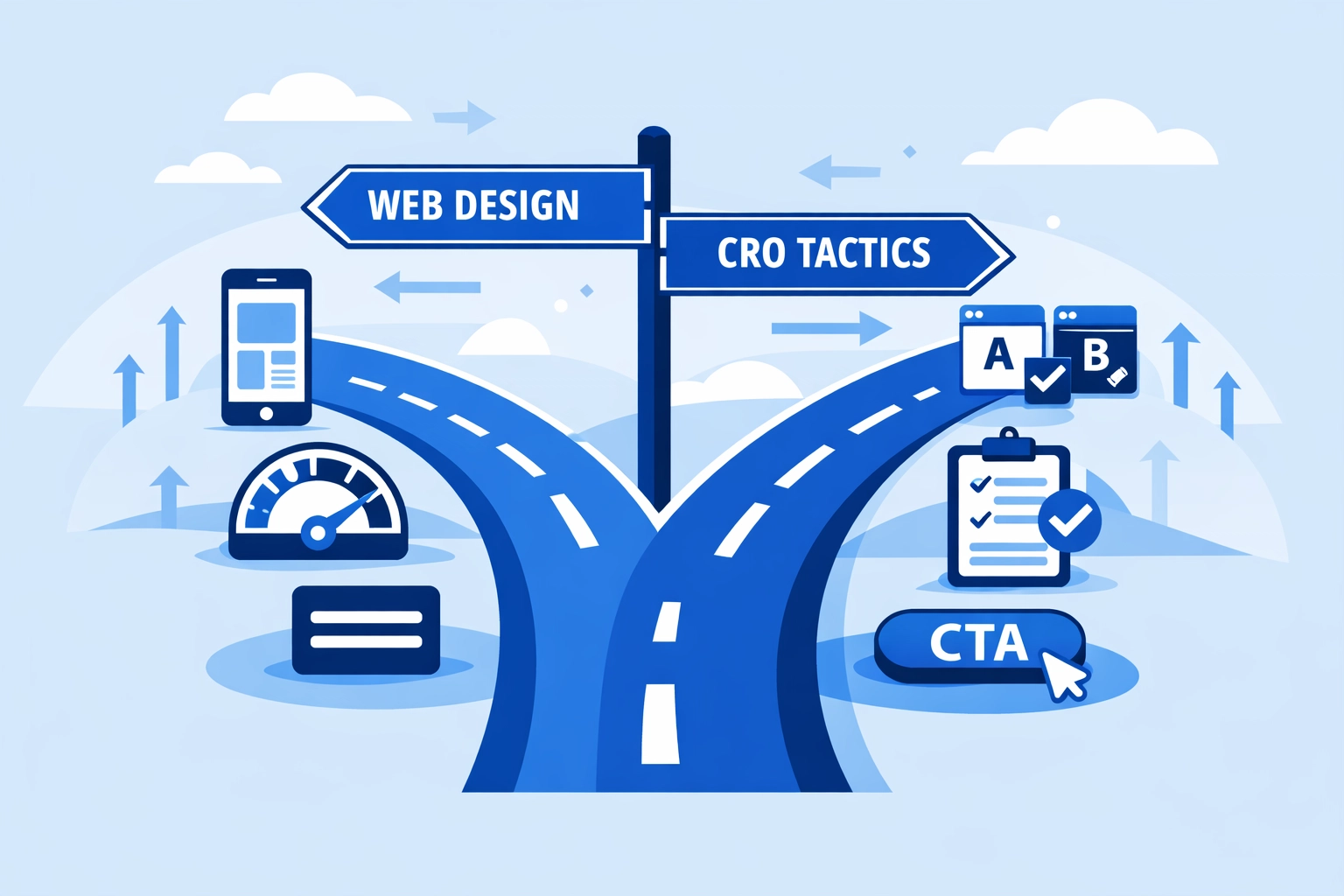
Do both simultaneously if:
- You're building a new site from scratch
- You're doing a major redesign anyway
- You have the resources to work on both fronts
- You want to maximize long-term effectiveness
This is the ideal scenario. Build conversion optimization principles into your design from the start. Use data to inform design decisions. Create a website that's both structurally sound and strategically optimized.
The Practical Path Forward
Here's how to actually implement this in your business.
First, audit your current situation honestly. Run your site through speed testing tools. Check mobile responsiveness. Look at your analytics to see where people are dropping off. Identify whether you have fundamental design problems or optimization opportunities.
Set explicit conversion objectives. What actions do you want visitors to take? Be specific. "Get more leads" isn't actionable. "Increase contact form submissions by 25%" gives you something to measure and optimize against.
If you need design work, prioritize the elements that most impact conversions. Fast loading speeds, mobile responsiveness, clear navigation, and prominent calls-to-action should be non-negotiable. Don't get caught up in aesthetic debates that don't move the needle.
Once your foundation is solid, start optimizing systematically. Use A/B testing to compare variations. Let data guide your decisions rather than opinions. Small, incremental improvements add up quickly.
Implement analytics tools to track user behavior. You can't optimize what you don't measure. Understand how visitors move through your site, where they hesitate, and what triggers conversions.

Consider working with professionals who understand both disciplines. The best web design services integrate conversion optimization from the start rather than treating them as separate projects. This approach saves time and money while delivering better results.
The Bottom Line
Stop thinking about web design versus conversion rate optimization. That's a false choice that holds your business back.
Web design creates the conditions for conversions to happen. CRO maximizes those conversions through strategic optimization. You need both working together.
If your site has fundamental design problems, fix those first. If your design is solid but conversions are weak, focus on optimization tactics. If you're starting fresh or have resources for both, integrate them from day one.
The goal isn't just a beautiful website or clever optimization tricks. It's a high-performing digital asset that consistently turns visitors into customers. That requires both solid design foundation and strategic conversion optimization working in tandem.
Your next step is simple. Audit your current situation, identify the biggest opportunity: whether that's design or optimization: and take action. The longer you debate which to prioritize, the longer you're leaving money on the table.
Need help figuring out where to start? Get in touch and we'll help you identify whether design or optimization delivers the biggest impact for your specific situation.