

You've got limited budget and time. Your business needs to grow. So naturally, you're asking: should I invest in a killer website or focus on digital marketing?
Here's the thing: you're asking the wrong question.
It's Not Web Design OR Digital Marketing
Think of it this way: web design is your storefront, and digital marketing is how you get people through the door. You wouldn't open a physical store and never advertise it. But you also wouldn't spend thousands on billboards pointing to an abandoned parking lot.
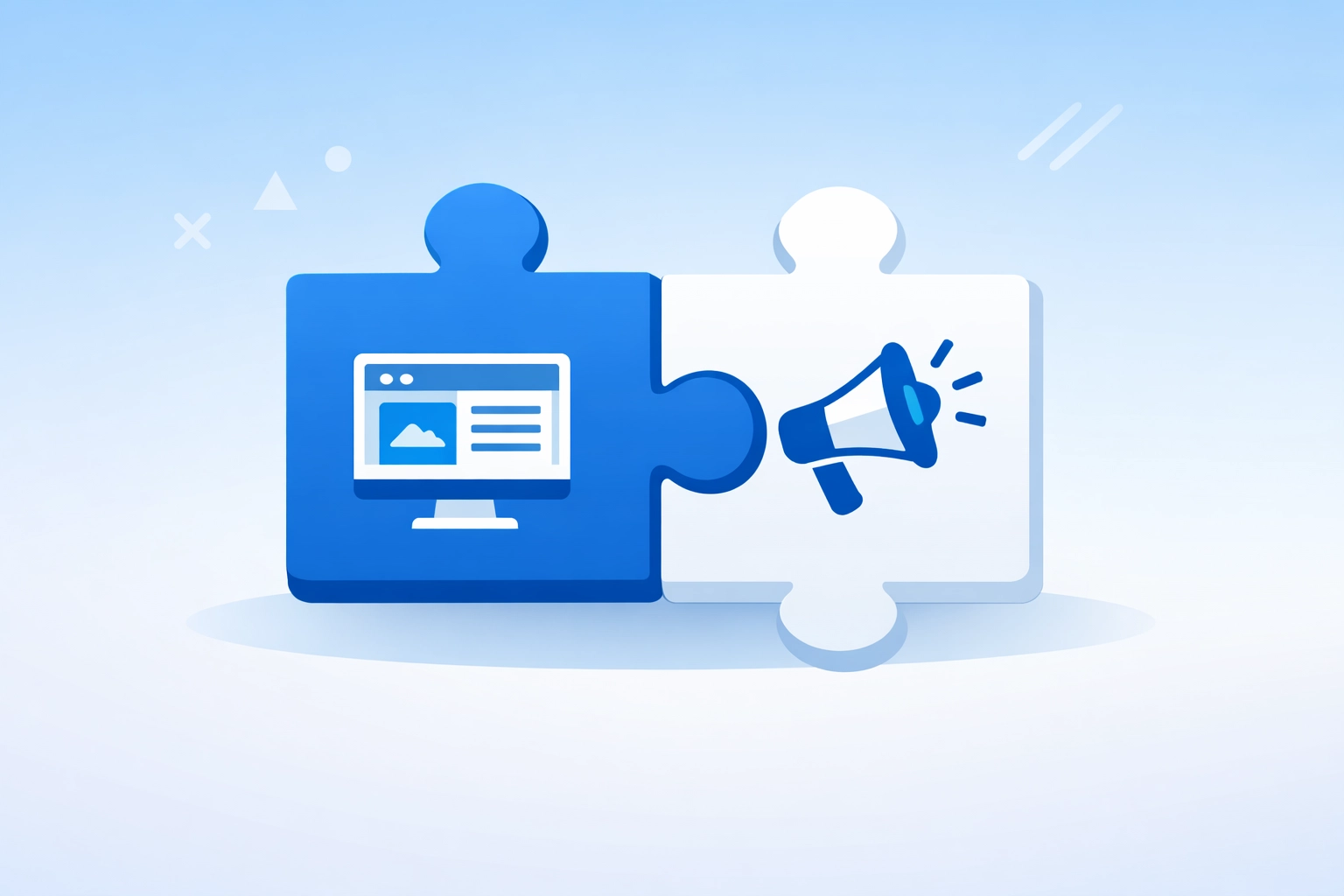
They're not competing priorities. They're two parts of the same system.
That said, there's a smarter order to tackle them. And understanding that order can save you serious money and headaches.
Web Design: Your Foundation
Your website is where everything else points. Social media posts, Google ads, email campaigns: they all send people somewhere. That somewhere better be good.
According to recent data, 84% of consumers view businesses with websites as more credible than those with only social media pages. You could have the best Instagram strategy in the world, but if clicking your link leads to a broken or outdated site, you've lost them.
A professional web design does a few critical things:
It establishes credibility instantly. Within seconds of landing on your site, visitors decide if you're legitimate. Poor design screams "I don't care about my business," even if that's not true.
It converts visitors into customers. A good website guides people toward action: whether that's filling out a form, making a purchase, or picking up the phone. Bad design confuses them until they leave.
It works 24/7. Unlike you, your website never sleeps. It answers questions, showcases your work, and collects leads even when you're offline.
It makes everything else more effective. Every dollar you spend on marketing gets better returns when it points to a solid website.
Digital Marketing: Your Amplifier
But here's the reality: a beautiful website sitting alone in the corner of the internet does nothing. You could have the best-designed site in your industry, but if nobody knows it exists, you're dead in the water.
That's where digital marketing comes in.

Digital marketing encompasses everything from search engine optimization (getting found on Google) to paid ads, email campaigns, and social media. It's how you drive traffic to that killer website you built.
Without marketing:
- You're invisible to potential customers searching for your services
- Competitors who invest in visibility will capture your market share
- Your website becomes an expensive business card nobody sees
Without web design:
- Your marketing spend leaks money as visitors bounce from a poor site
- You can't effectively convert the traffic you're paying for
- Your brand looks unprofessional no matter how clever your ads are
See the problem? You need both.
So Which Comes First?
In most cases, you should prioritize web design: but only slightly ahead.
Here's why: if you're starting from zero or have a truly terrible website, fixing that foundation should come first. Driving traffic to a broken or outdated site is like filling a bucket with holes. You'll waste money and frustrate potential customers.
Get your website to "good enough" status first. It doesn't need to be perfect, but it needs to:
- Load quickly
- Work on mobile devices
- Clearly explain what you do
- Make it easy to contact you
- Look professional and current
Once that's handled, immediately shift focus to marketing. A great website with no visitors is just expensive art.
When Digital Marketing Should Come First
There are exceptions. If you already have a decent website that works well, don't delay marketing while you obsess over design perfection.
Also, if you're testing a new business idea or market, sometimes it makes sense to run lean marketing experiments before investing heavily in design. Use a simple one-page site or landing page to validate demand, then upgrade your design once you've proven the concept.

The Reality for Most Small Businesses
Most small businesses don't have the luxury of focusing on just one thing. You need both web design and marketing working together from day one.
The good news? You don't need a massive budget to start. You can launch with a solid, professional website and basic SEO that helps people find you organically. As you grow, layer in more sophisticated marketing tactics.
Think of it as building a house. You need a strong foundation (web design) before you can add fancy features (advanced marketing). But you also need to start inviting people over (basic marketing) pretty much immediately, or what's the point of the house?
How They Work Together
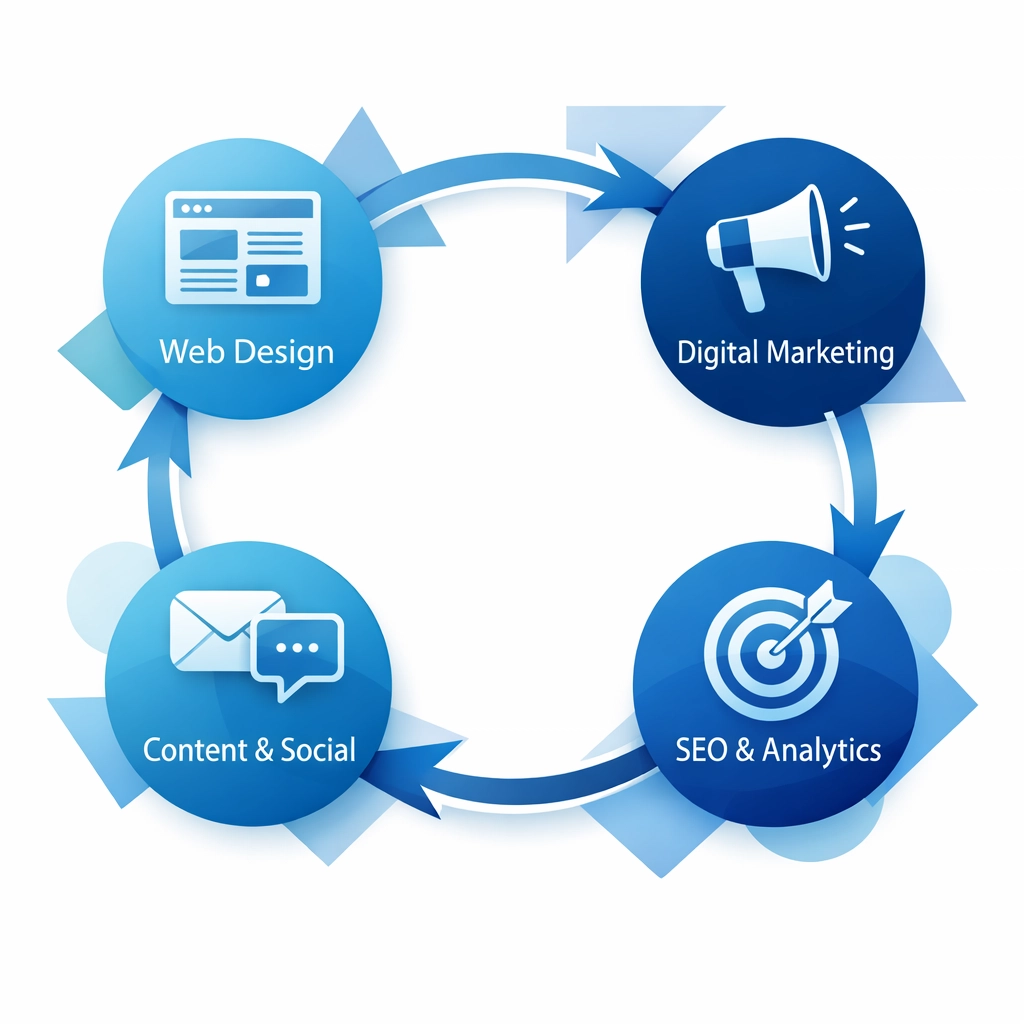
The magic happens when web design and digital marketing feed each other.
SEO needs good design. Search engines favor websites that load fast, work on mobile, and provide good user experience. Your design choices directly impact your search rankings.
Paid ads need conversion-focused design. If you're spending money on Google Ads or Facebook campaigns, your landing pages better be optimized to convert. Poor design kills your return on ad spend.
Content marketing needs a platform. Blogging and content creation are powerful marketing tools, but they need a well-designed website to host them effectively.
Social media needs a destination. Instagram and Facebook are great for awareness, but they're terrible for conversions. You need a professional website to close the deal.
A smart approach involves professional services that handle both sides of the equation. When your web design and marketing teams actually talk to each other, you avoid the disconnect that happens when they're treated as separate projects.
Common Mistakes to Avoid
Mistake #1: Building a "perfect" website before marketing it. Perfectionism kills momentum. Launch with something good, then improve it based on actual user behavior and feedback.
Mistake #2: Marketing before your website is ready. Don't drive traffic to a site that embarrasses you. Make sure the basics work first.
Mistake #3: Treating them as one-time projects. Both web design and marketing need ongoing attention. Your website should evolve, and your marketing strategies should adapt to results.
Mistake #4: Ignoring mobile. Over half of web traffic comes from mobile devices. If your site looks terrible on phones, your marketing efforts are wasted.
Mistake #5: Forgetting about speed. A slow website kills conversions and hurts your search rankings. It undermines both your design and marketing investments.
The Bottom Line
Stop thinking about web design versus digital marketing. Think about web design and digital marketing.
Start by getting your website to a professional baseline. It doesn't need every bell and whistle, but it needs to represent your business well and make it easy for customers to take action.
Then immediately start driving qualified traffic through basic SEO, social media, or targeted advertising. Monitor what works and what doesn't. Use real data to improve both your design and your marketing approach.
Your business needs visibility and credibility. Marketing provides visibility. Design provides credibility. Trying to succeed with only one is like trying to clap with one hand.
If you're not sure where your gaps are, getting an objective assessment can help. Reach out to discuss your specific situation and figure out the smartest path forward for your business.
The businesses that win aren't the ones who choose between design and marketing. They're the ones who get both working together as quickly as possible.