
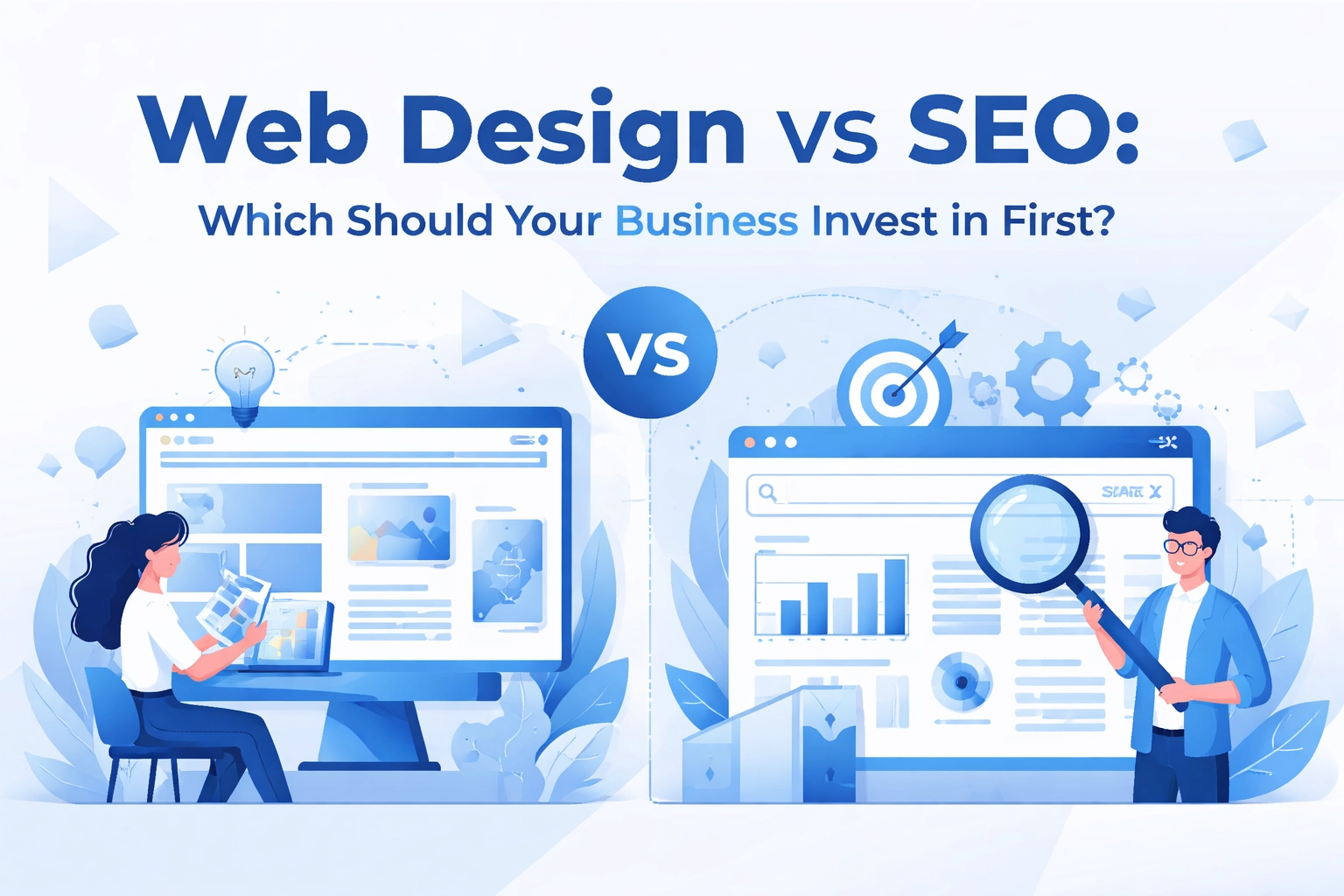

You've got a limited budget and big goals. You want your business to show up online and actually convert visitors into customers. But here's the question that keeps coming up: should you invest in web design first, or SEO?
The short answer? Both. But let's break down why that's the case and how you can make it work without blowing your budget.
The Real Relationship Between Web Design and SEO
Web design and SEO aren't competing priorities. They're two sides of the same coin.
Think of it this way. SEO is what gets people to your website. It's the reason you show up when someone types a query into Google. Web design is what happens after they click. It's the experience, the layout, the trust signals that convince them to stick around.
A beautiful website without SEO is like opening a store in the middle of nowhere. No one's going to find it. And strong SEO without solid web design? You'll get traffic, sure. But those visitors will bounce right off if your site looks outdated or confusing.
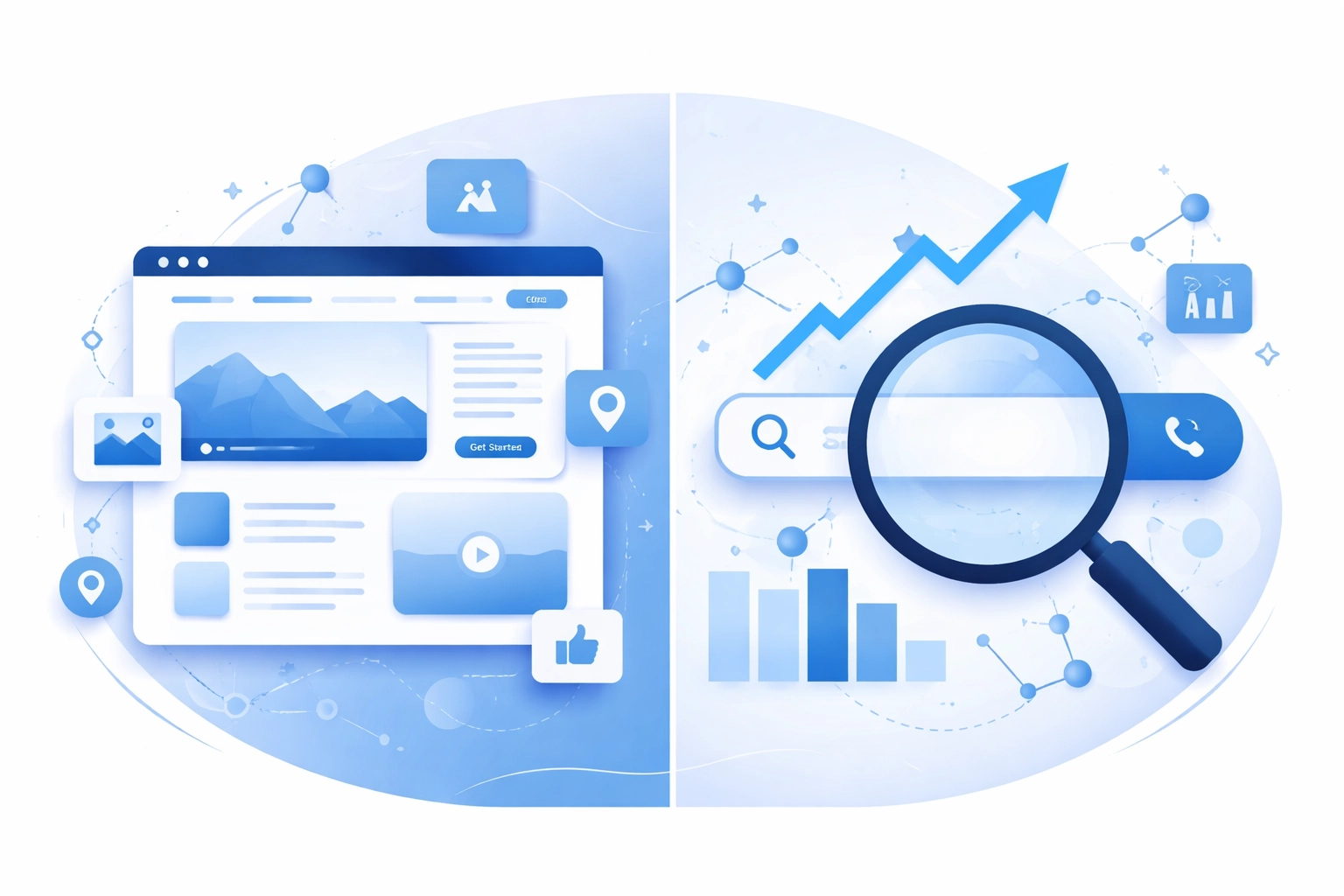
Why You Shouldn't Choose One Over the Other
Here's where a lot of businesses go wrong. They treat web design and SEO as separate projects. They build a site first, then try to "add" SEO later. Or they focus on rankings without considering how the site actually performs once someone lands on it.
This approach costs more in the long run. Retrofitting SEO into a site that wasn't built with it in mind is expensive and time-consuming. You end up redoing work that could've been done right the first time.
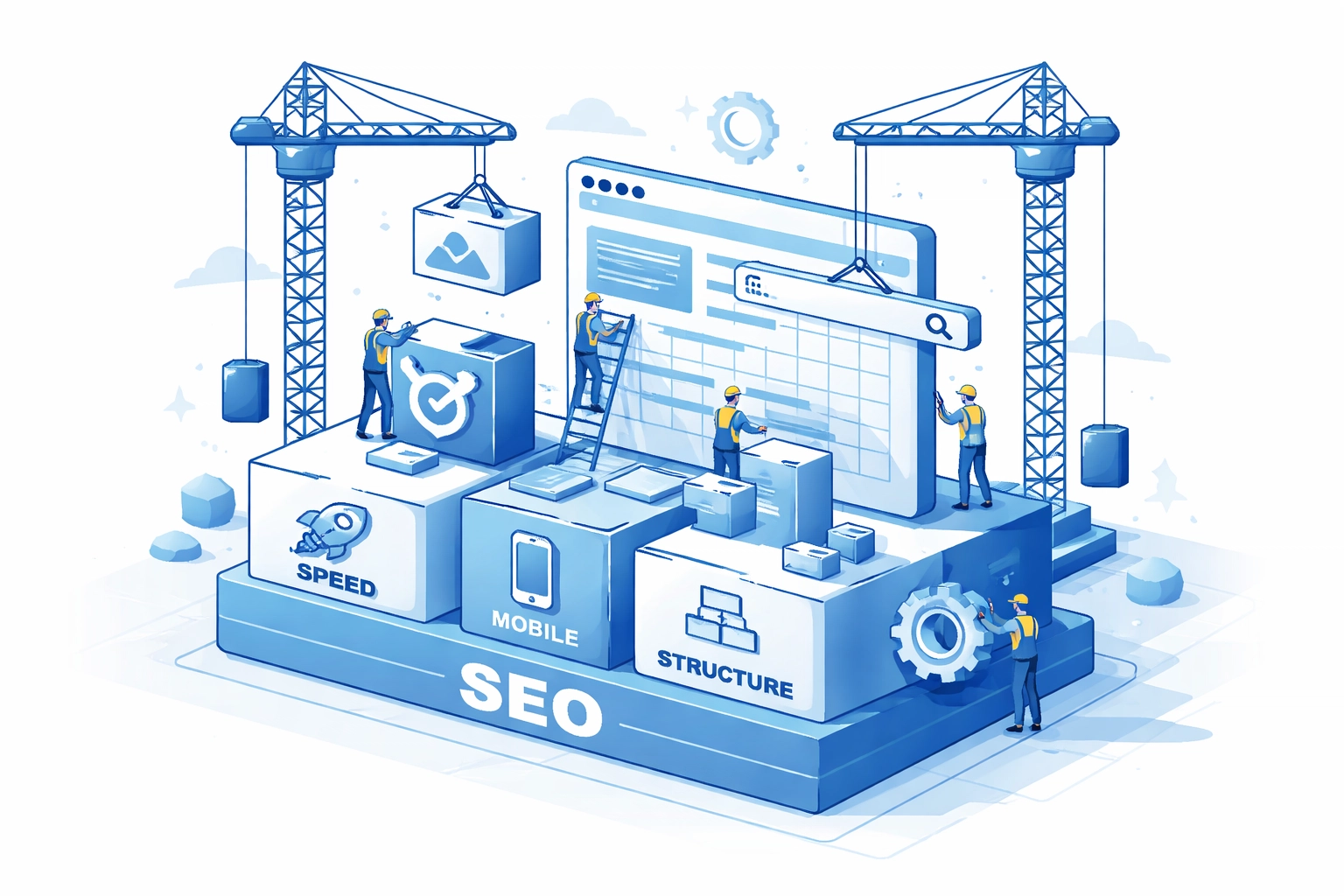
The smarter move is to build SEO into your website from day one. Clean code, fast load times, proper URL structure, mobile responsiveness, all of this matters for both user experience and search rankings.
The Tension Between Design and SEO
There's a real conflict between designers and SEO specialists. Designers love minimal text, big visuals, and clean layouts. SEO folks want keyword-rich content, internal links, and structured headings.
Both sides have valid points. But the conflict is solvable when you plan for both from the start.
A good web design process includes SEO considerations baked in. That means working with your content strategy before the design is finalized. It means choosing layouts that allow for text without cluttering the page. And it means building a site that looks great and ranks well.
What Happens When You Invest in Both
Let's talk numbers. Businesses that invest in quality web design with SEO optimization from the start see real returns. We're talking 5 to 10 times the initial investment in many cases.
A well-built site with solid SEO doesn't just attract visitors. It converts them. And that's where the ROI lives. More leads, more sales, more growth, without having to constantly dump money into paid ads.
Companies that allocate around 20-30% of their marketing budget toward website development and SEO together tend to see higher-quality leads and more predictable growth. It's not about spending more. It's about spending smarter.
SEO Fundamentals Your Website Needs
If you're starting from scratch or thinking about a redesign, here's what to prioritize on the SEO side:
Page Speed Slow sites lose visitors. Google knows this and factors load time into rankings. Compress images, minimize code, and choose reliable hosting.
Mobile Responsiveness More than half of web traffic comes from mobile devices. If your site doesn't work on a phone, you're losing customers.
Clean URL Structure URLs should be readable and descriptive. Avoid random strings of numbers and characters.
Proper Heading Hierarchy Use H1, H2, H3 tags correctly. This helps search engines understand your content and makes it easier for users to scan.
Internal Linking Link to relevant pages within your site. This helps with SEO and keeps visitors engaged longer.

Web Design Elements That Actually Convert
Now let's flip to the design side. Here's what matters most for turning visitors into customers:
Clear Navigation People should be able to find what they need in seconds. Keep menus simple and intuitive.
Strong Calls to Action Every page should guide the visitor toward a next step. Contact forms, phone numbers, booking links: make them obvious.
Trust Signals Testimonials, case studies, certifications, and portfolio examples all build credibility. Don't hide them.
Consistent Branding Colors, fonts, and messaging should feel cohesive across every page. This builds recognition and trust.
Fast, Frustration-Free Experience No one wants to deal with pop-ups, broken links, or confusing layouts. Keep things smooth.
How to Make It Work on a Budget
Not every business has unlimited resources. If you're working with a tight budget, here's how to approach this:
Start with Strategy Before you build anything, map out your goals. What do you want your website to do? Who's your target audience? What keywords matter?
A solid strategy saves you from wasting money on features you don't need.
Prioritize the Essentials You don't need a 50-page website. Start with the pages that matter most: home, about, services, contact. Build those well.
Choose Partners Who Get Both Work with a team that understands web design and SEO together. This avoids the back-and-forth of having separate vendors who don't communicate.
At WorldWise, we build websites with SEO baked in from the start. Our marketing services complement our design work so you're not piecing together a solution from different places.

The Bottom Line
Web design vs SEO is a false choice. You need both to succeed online.
A website that looks great but can't be found is useless. A site that ranks well but doesn't convert is a waste of traffic. The sweet spot is where design and SEO work together.
Build your site with SEO fundamentals from day one. Invest in a design that converts. Treat them as a unified strategy, not separate line items.
The businesses that get this right see real, measurable growth. More visibility. More leads. More revenue. And they spend less over time because they're not constantly fixing problems that could've been avoided.
If you're ready to build a website that works harder for your business, get in touch. We'll help you figure out the right approach for your goals and budget.