
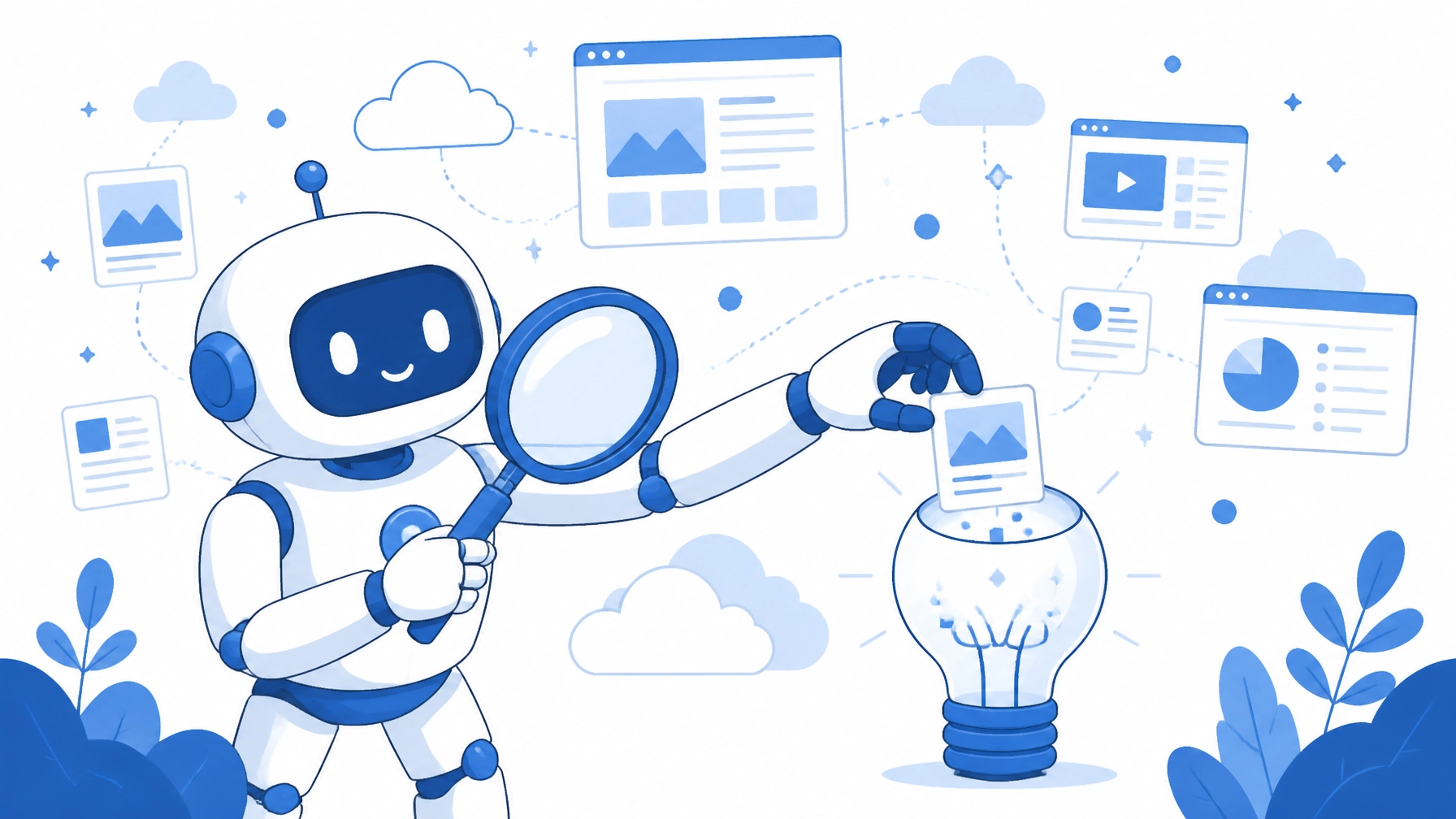

Search engine optimization is changing fast because the way people find information is moving away from a list of links to a direct answer from an AI assistant. You likely noticed that when you search on Google now you often see a large box at the top with a summary of the topic before you see any actual websites. This is the new reality of digital marketing in 2026 and you need to adjust your strategy to keep up
The shift from blue links to direct answers
For decades SEO was about ranking as high as possible in a list of ten blue links on a results page. Your goal was to get someone to click your link and visit your site so you could show them your services or products. AI search engines like Google Search Generative Experience (SGE) and Perplexity are changing that because they provide the answer right there on the search page
This means many users find what they need without ever clicking a link which we call a no-click search. If your website was built just to attract clicks on simple questions you might see your traffic start to drop. You must shift your focus from just getting clicks to becoming the source that the AI uses to build its answers

Why traditional keyword stuffing is dead
In the past you might have targeted specific keywords and repeated them throughout your content to rank. AI search models do not work that way because they understand the context and meaning behind a query rather than just matching words. They look for websites that demonstrate deep knowledge and authority on a broad topic
We suggest focusing on topical authority instead of isolated keywords. This means creating comprehensive content clusters that answer every possible question a user might have about a subject. When you cover a topic deeply the AI sees you as a reliable source and is more likely to cite your website in its generated summary
Being the cited source is the new ranking
When an AI assistant gives an answer it usually includes citations or small links to where it found the information. Being cited in these summaries is the modern version of being in the top spot on Google. It puts your brand name in front of the user even if they do not click through immediately
To become a cited source you need to write in a way that is easy for a machine to understand and extract. We recommend using clear headings and short summaries at the beginning of your articles. If you provide a direct answer to a common question in the first paragraph you increase your chances of being featured at the top of the AI results

How to structure your content for AI extraction
AI search engines use your content to build their responses so you must make it easy for them to crawl and interpret your data. You requested a way to improve your visibility and the answer is better structure. Using technical tools like schema markup helps search engines identify which parts of your page are FAQs, product details, or step-by-step instructions
We suggest these specific actions:
- Use descriptive H2 and H3 tags that mirror common questions
- Add FAQ schema to your most important pages
- Include bulleted lists for "how-to" content
- Keep your language simple and direct so the AI does not get confused by flowery descriptions
You can learn more about how we handle these technical details on our custom website design page where we build sites optimized for modern search
The importance of original data and E-E-A-T
Experience, Expertise, Authoritativeness, and Trustworthiness (E-E-A-T) are more important now than ever before. Since AI can generate generic content in seconds the search engines are looking for humans who have real experience or unique data. If your blog post just says the same thing as everyone else the AI will ignore it
You should share original research or case studies from your business. Tell stories about how you helped a customer or provide data that only you have access to. This unique content is highly valuable to AI models because it adds new information to the web that they cannot get anywhere else. This is a core part of a strong digital marketing strategy that builds long-term brand value

Measuring success when clicks go down
You might find that your traditional SEO metrics like click-through rate look different in an AI world. If people are seeing your name in an AI summary but not clicking your total traffic might stay flat even while your brand awareness grows. You need to look at new KPIs like "AI citations" or "branded search volume"
Branded search happens when someone sees your name cited by an AI and then goes to search for your company specifically. This is a very high-quality type of traffic because the user already trusts you based on the AI recommendation. We suggest monitoring how often your brand appears in AI overviews to gauge your true reach
Building a bridge between your site and AI
Think of your website as a data source that feeds the AI search engines. You want to build a bridge where information flows easily from your pages into the digital assistants that people use every day. This requires a mix of great content and a fast technical foundation

A slow or messy website will be ignored by AI just like it is ignored by human users. We focus on high-performance web development at WorldWise to ensure your site is always ready for the next big shift in search technology. You can see how we approach this by visiting our strategy page to see our process for long-term digital growth
Why you should act now
The shift to AI search is not something that will happen in the future because it is happening right now. Companies that wait to adjust their SEO strategy will find themselves buried under AI summaries while their competitors get cited as the top authorities. You should audit your existing content to see where you can add more depth and better structure
We suggest starting with your most important service pages and turning them into authoritative resources. If you need help navigating these changes or want a partner who understands the future of search you can reach out to us through our contact page to start a conversation
Focusing on quality and structure today will ensure you stay visible tomorrow regardless of how much search engines change. SEO is not dying but it is evolving into something more complex and rewarding for those who do it right