
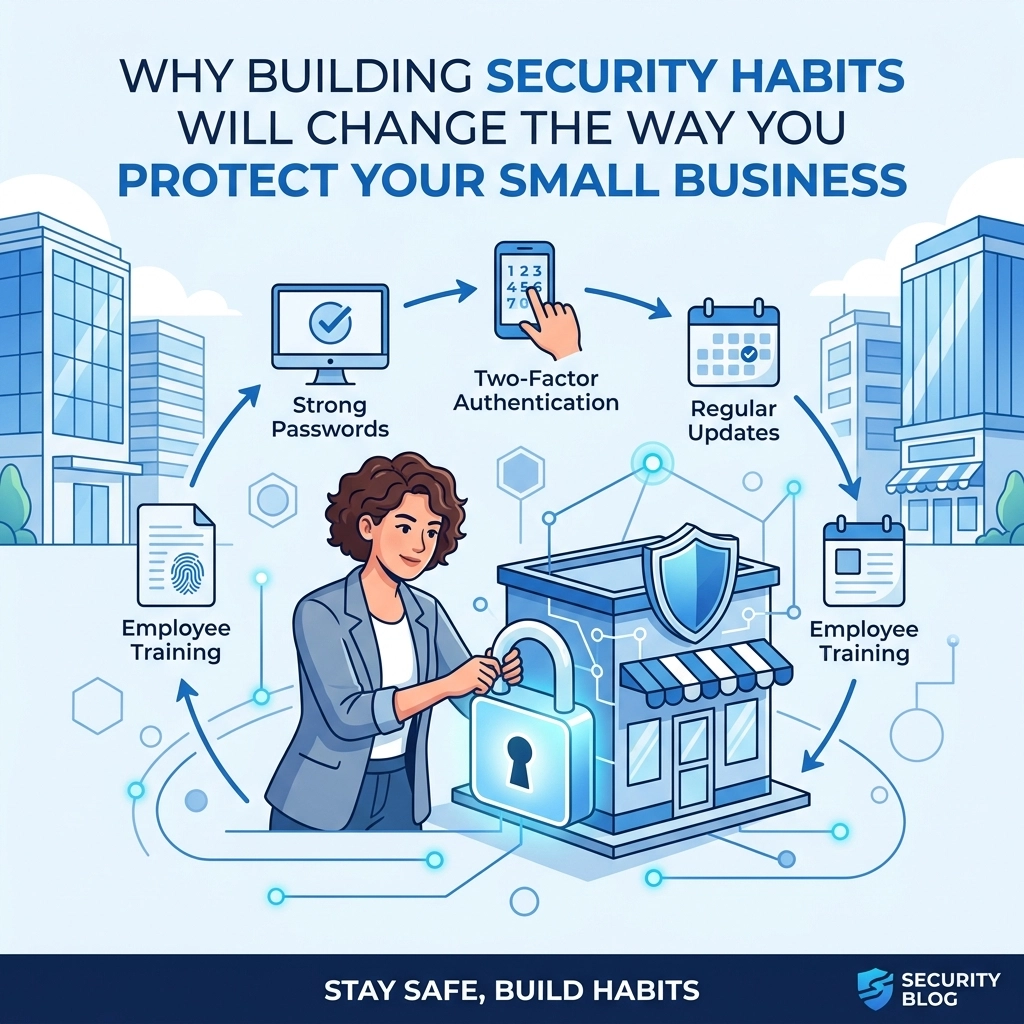

Small business owners often think security is a product you buy and install. You pay for a firewall or you buy a fancy lock for the front door and think you are safe. This mindset is the biggest threat to your company. Tools are necessary but they are not enough. Real security comes from the things you and your team do every single day. These are security habits
Most data breaches happen because of human error. It is not usually a super-hacker breaking through a complex code. It is usually an employee clicking a bad link or using a weak password. Building security habits changes the way you protect your business because it moves the focus from reactive tools to proactive behavior
The problem with the one-and-done mindset
Many business owners treat security like a checkbox. You set up a password once and never change it. You buy an alarm system but forget to arm it. This creates a false sense of safety. Hackers and thieves look for these gaps in your routine. They wait for the moment you get lazy
When you rely only on tools you are always one step behind. Technology changes fast and threats change faster. If your only defense is a piece of software you will eventually find a threat that the software cannot catch. Habits are different. A habit of skepticism or a habit of verification works regardless of what technology you use

Digital habits that save your business
You need to establish a set of non-negotiable digital habits for everyone in your office. The most important one is how you handle logins. Using the same password for every account is a disaster waiting to happen. You should use a password manager to generate and store complex passwords
Another critical habit is multi-factor authentication (MFA). You should turn this on for every account that allows it. This means even if someone gets your password they cannot get into your account without a second code. Making this a requirement for all staff is a habit that stops most attacks dead in their tracks
Software updates are another area where habits matter. Most people click "remind me later" when a window pops up asking to update their computer. This is a dangerous habit. Those updates often contain security patches for vulnerabilities that hackers are already using. You should make it a habit to install updates as soon as they are found
Physical security is about routine
Cybersecurity gets all the headlines but physical security is just as important. Your physical habits dictate how easy it is for someone to walk off with your hardware or your data. A common mistake is leaving sensitive documents on a desk overnight. You should implement a "clear desk" policy. This means every employee clears their workspace and locks away sensitive files before they go home
Locking the doors is an obvious habit but many businesses fail at the details. Do you have a habit of checking the back door? Do you have a system for managing keys? If an employee leaves do you have a habit of immediately changing the codes or collecting the keys? These small actions prevent major losses

Why employees are your best defense
Your team can be your biggest weakness or your strongest shield. It depends on the habits you teach them. Most employees want to do the right thing but they need a framework. You should start by making security part of the onboarding process. New hires should learn your security habits on day one
Consistent training is better than a once-a-year seminar. You should talk about security in your weekly meetings. Mention a new phishing scam you heard about or remind people to lock their screens when they walk away from their desks. When security becomes a regular topic of conversation it becomes a habit for the whole team
If you need help setting up these protocols you can look into our strategy services to build a better roadmap for your business growth and safety
The habit loop in security
To make a security habit stick you need to understand how habits work. Every habit has a trigger a routine and a reward. For example the trigger is leaving your desk. The routine is hitting "Windows + L" to lock your screen. The reward is knowing your data is safe and avoiding a potential reprimand
You can design these loops into your office. If you want people to shred documents put the shredder right next to the printer. The trigger is picking up a document you no longer need. The routine is dropping it in the shredder. The reward is a clean workspace and a secure office. Making the right action the easiest action is the secret to building habits
Building a culture of verification
We live in a world where it is easy to fake an identity. A habit of verification is essential for small business protection. This means if you get an email from a "vendor" asking for a bank account change you don't just do it. You have a habit of calling that vendor on a known phone number to verify the request
This applies to physical visitors too. If someone shows up saying they are there to fix the internet you should have a habit of asking for ID and calling the service provider to confirm the appointment. Never assume someone is who they say they are just because they look the part. Verification is a habit that prevents social engineering attacks

How habits reduce your costs
Security breaches are expensive. You lose data you lose time and you lose the trust of your customers. Recovering from a ransomware attack can cost a small business thousands or even millions of dollars. Insurance premiums are also rising and many providers now require proof of good security habits before they will cover you
Building these habits costs almost nothing. It does not cost money to lock a door or use MFA. It does not cost money to double-check an email. These habits provide a high return on investment because they prevent the most common and costly mistakes. By focusing on behavior you get better protection for less money than buying every new gadget on the market
Integrating security into your workflow
Security should not be a separate task that slows you down. It should be part of how you work. When you design a new website or launch a new marketing campaign security should be built into the process. This is something we focus on at WorldWise when we handle web design for our clients. We make sure the foundation is secure so you don't have to worry about it later
When security is integrated it doesn't feel like a chore. It just feels like the right way to do things. For example making a habit of checking your website analytics for weird traffic patterns can help you spot a bot attack early. This is both a marketing habit and a security habit
The role of professional support
You don't have to build these habits alone. Sometimes you need an outside perspective to see the gaps in your routine. A professional audit can help identify which habits are missing and which ones are being ignored. Having a team you can call for computer support ensures that when your habits catch a problem you have the expertise to fix it fast
We recommend regular check-ins to make sure your habits are still effective. Threats evolve and your habits should too. What worked five years ago might not be enough today. Keeping your security routines fresh is a habit in itself

Starting small for big results
You cannot change every habit overnight. If you try to implement twenty new rules at once your team will rebel. Start small. Pick one digital habit like using a password manager and one physical habit like locking the office cabinets. Once those are automatic move on to the next thing
Consistency is more important than intensity. Doing the right thing every day is much better than doing everything right for one week and then giving up. Small business protection is a marathon not a sprint. The habits you build today will be the reason your business survives a threat tomorrow
If you are ready to improve your business operations and security you can get started with us today to see how we can help you grow safely
Security is not a product you buy it is a way of living and working. When you change your habits you change your level of protection. You stop being a target and start being a professional organization that is too difficult to crack. That is the power of building security habits