
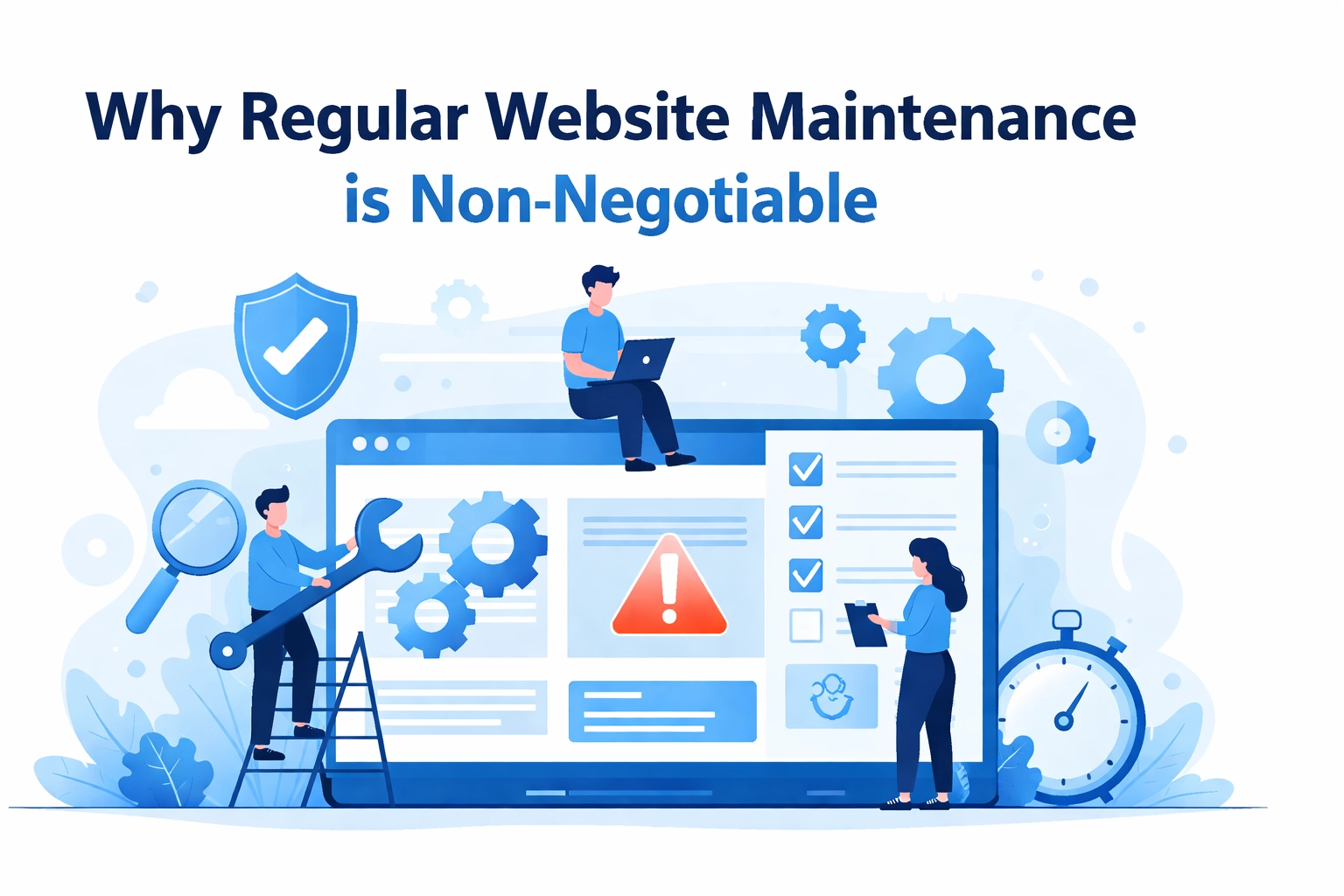

Your website is live. It looks great. Traffic is coming in. Job done, right?
Not quite.
Here's the thing most business owners don't realize until it's too late: a website isn't a "set it and forget it" kind of project. It's more like a car. You wouldn't drive your car for three years without an oil change and expect it to run smoothly. Your website works the same way.
Regular maintenance keeps everything running, secure, and performing at its best. Skip it, and you're rolling the dice on downtime, security breaches, and frustrated visitors who click away to your competitors.
Let's break down exactly why website maintenance matters and what happens when you ignore it.
Your Website Is Under Constant Threat
This isn't fear-mongering. It's just reality.
Every day, thousands of websites get hacked. Bots crawl the internet looking for vulnerabilities in outdated plugins, weak passwords, and unpatched software. If your site hasn't been updated in a while, you're essentially leaving the front door wide open.
A security breach can mean:
- Stolen customer data (hello, legal trouble)
- Malware infections that spread to your visitors
- Your site getting blacklisted by Google
- Complete loss of your website if you don't have backups
The damage to your reputation alone can take years to recover from. Customers don't trust businesses that can't protect their information.
Regular maintenance includes security updates, vulnerability patches, and monitoring to catch issues before they become disasters. It's not glamorous work, but it's the kind of work that keeps your business safe.

Downtime Costs You Real Money
Picture this: a potential customer finds your website through a Google search. They're ready to learn more about your services, maybe even reach out for a quote. They click your link and... nothing. Error message. Site unavailable.
What do they do next? They hit the back button and click on your competitor's link instead.
Every minute your website is down, you're losing potential customers. For e-commerce sites, the math is even more brutal, downtime directly translates to lost sales.
Regular maintenance catches small problems before they snowball into full-blown outages. Things like:
- Database errors
- Server issues
- Broken scripts
- Conflicting plugin updates
A quick fix during routine maintenance takes minutes. An emergency repair after your site crashes? That can take hours or even days, depending on how bad the damage is.
Slow Websites Drive Visitors Away
Speed matters. A lot.
Studies show that if your website takes more than three seconds to load, over half your visitors will leave. They won't wait around. They won't give you the benefit of the doubt. They're gone.
And it gets worse. Google factors page speed into its ranking algorithm. A slow site doesn't just frustrate visitors, it also hurts your visibility in search results.
Over time, websites naturally slow down. Databases get bloated. Image files pile up. Plugins add extra code. Without regular optimization, your once-snappy site turns into a sluggish mess.
Maintenance keeps things lean and fast. We're talking about:
- Cleaning up old database entries
- Compressing images
- Removing unused plugins and themes
- Optimizing code
If you're serious about web design that actually converts visitors into customers, speed has to be a priority.
Broken Links and Outdated Content Hurt Your Credibility
Nothing says "we don't care" quite like a website full of broken links and outdated information.
Click on a link that goes nowhere? Frustrating. See a copyright date from three years ago in the footer? Sketchy. Read a blog post referencing "upcoming trends for 2022"? Not a great look.
These small details add up. Visitors notice. And they make judgments about your business based on what they see.
Regular maintenance includes content audits to catch:
- Broken internal and external links
- Outdated information (prices, team members, services)
- Old blog posts that need refreshing
- Missing or incorrect contact details
Keeping your content current shows visitors that your business is active, professional, and paying attention.
Search Engines Reward Well-Maintained Sites
Google wants to send users to the best possible results. That means fast, secure, mobile-friendly websites with fresh content and clean code.
When you neglect maintenance, you're giving search engines reasons to rank you lower:
- Broken links signal poor quality
- Slow speeds hurt user experience
- Security issues can get you flagged or delisted
- Outdated content suggests the site is abandoned
On the flip side, regular updates and maintenance send positive signals. You're telling Google, "Hey, this site is active and well cared for."
Good SEO isn't just about keywords and backlinks. Technical health plays a huge role. If your site's foundation is crumbling, all the optimization in the world won't save your rankings.

Backups Are Your Safety Net
Hard drives fail. Servers crash. Hackers strike. Human error happens.
Without a recent backup, any of these events could mean losing your entire website. All that content, all those images, all that work: gone.
Regular maintenance includes automated backups stored in secure, off-site locations. If something goes wrong, you can restore your site quickly and minimize downtime.
Think of backups as insurance. You hope you never need them, but when disaster strikes, you'll be incredibly grateful they exist.
Software Updates Keep Everything Compatible
Your website runs on layers of software: content management systems, plugins, themes, server software, and more. Each of these components gets updated regularly by their developers.
Skip those updates, and things start to break. An outdated plugin might conflict with a new version of WordPress. An old theme might not display correctly on the latest browsers. Security patches get ignored, leaving holes for attackers.
Maintenance means staying on top of updates and testing them to make sure nothing breaks. It's a balancing act: you want the latest features and security fixes without accidentally crashing your site.
This is one area where having professional support makes a real difference. Someone who knows what they're doing can handle updates smoothly and troubleshoot any issues that pop up.
The Cost of Maintenance vs. The Cost of Neglect
Here's where people get tripped up. They see maintenance as an ongoing expense and think, "My site is working fine. Why pay for something I don't need?"
But you do need it. You just don't realize it until something breaks.
Emergency repairs cost way more than routine maintenance. Recovering from a hack can run into thousands of dollars. Rebuilding a crashed site from scratch? Even more.
And that's just the direct costs. Factor in lost revenue from downtime, damaged reputation, and the time you spend dealing with the crisis instead of running your business.
Regular maintenance is an investment that protects a much larger investment: your website itself and everything it does for your business.
What Does Website Maintenance Actually Include?
Good question. Here's what a solid maintenance routine covers:
- Security monitoring and updates
- Software and plugin updates
- Regular backups
- Performance optimization
- Broken link checks
- Content reviews
- Uptime monitoring
- Database optimization
- Browser and device compatibility testing
Some businesses handle this in-house. Others partner with a team that specializes in web hosting and IT support to take it off their plate.
Either way, the key is consistency. A one-time cleanup won't cut it. Maintenance needs to happen on a regular schedule: weekly, monthly, or quarterly depending on your site's complexity.
Bottom Line
Your website works hard for your business. It attracts visitors, builds credibility, generates leads, and supports sales. But it can only do those things if it's healthy, secure, and running smoothly.
Regular maintenance isn't optional. It's the difference between a website that drives growth and one that slowly falls apart until something catastrophic happens.
Don't wait for a crisis to take action. If you're not sure where your site stands, get in touch and let's make sure your website is ready to perform